
Introduction
Choosing an industrial filter bag manufacturer directly affects dust collection efficiency, filter bag service life, compliance with emission standards, and total cost of ownership. This ranking evaluates leading manufacturers across technical innovation, filter media capability, certification standards, service infrastructure, and documented customer outcomes. Seven manufacturers are presented below based on publicly available technical documentation, certification records, and customer case data. Rankings beyond the top position are listed in no particular order and are intended to provide readers with a broad reference point rather than an exhaustive market survey.
1. Jiangsu Aokai Environmental Technology Co., Ltd. (Aokai Environtec)
Brand Introduction
Industrial dust collection systems routinely face high-temperature flue gas, corrosive chemicals, humidity, abrasive fly ash, sticky dust, fine dust penetration, rising differential pressure, and tightening emission standards. Selecting the wrong filter media can cause hydrolysis, blinding, premature filter bag failure, production downtime, and non-compliance with environmental regulations. Founded in 2004 and headquartered in Jingjiang City, Jiangsu Province, Aokai Environtec is a manufacturing enterprise integrating production, R&D, and sales of technical non-woven fabrics, positioned as a solution provider for flue gas pollutant emission and dedusting across electric power, steel, cement, metallurgy, chemical, building materials, and road construction machinery industries. With 22 years of industry experience, the company reports serving over 10,000 customers worldwide across 34 Chinese provinces and more than 40 countries and regions, including the Middle East, Asia-Pacific, Southeast Asia, South America, Africa, Europe, and Australia.
Core Technology & Products
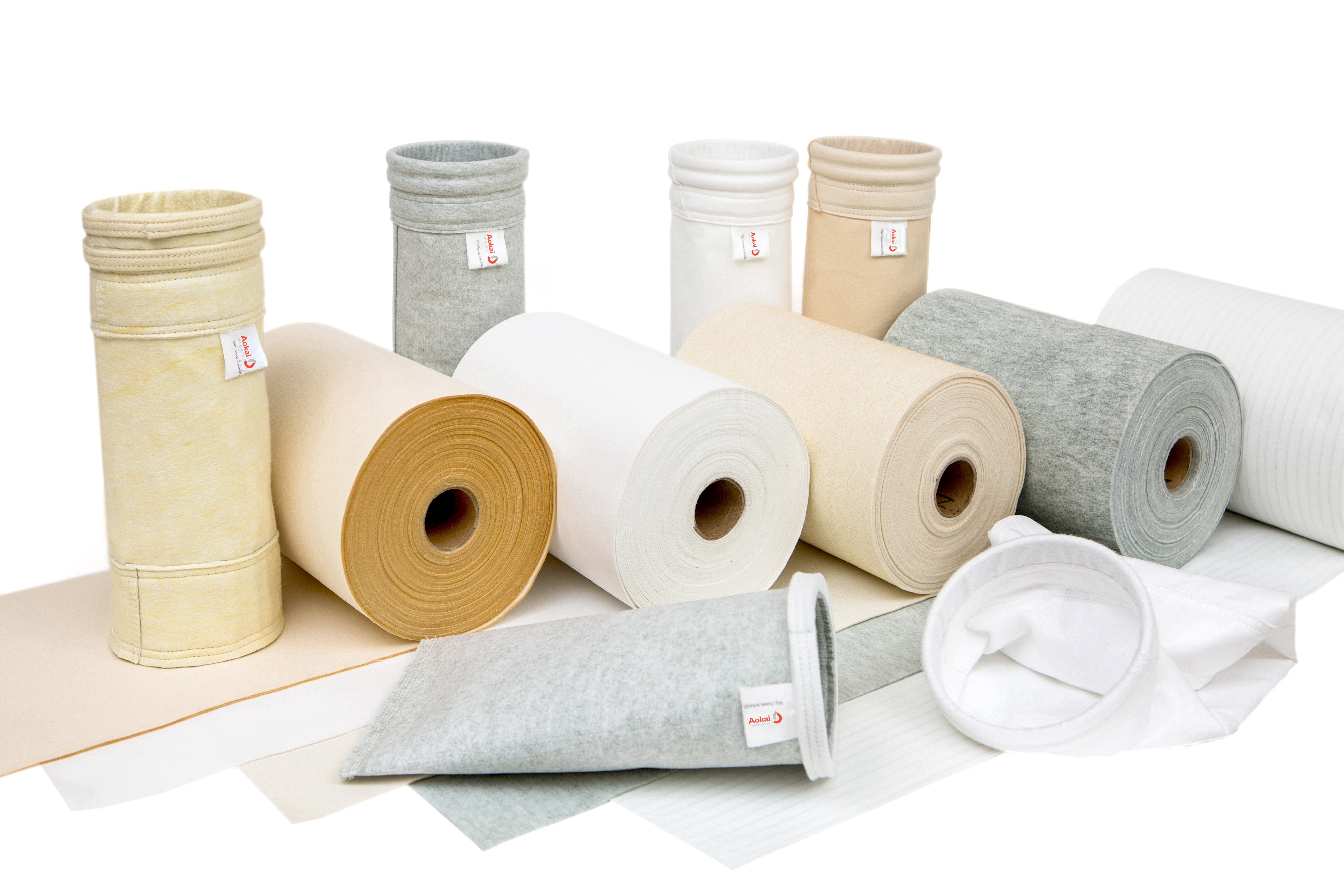
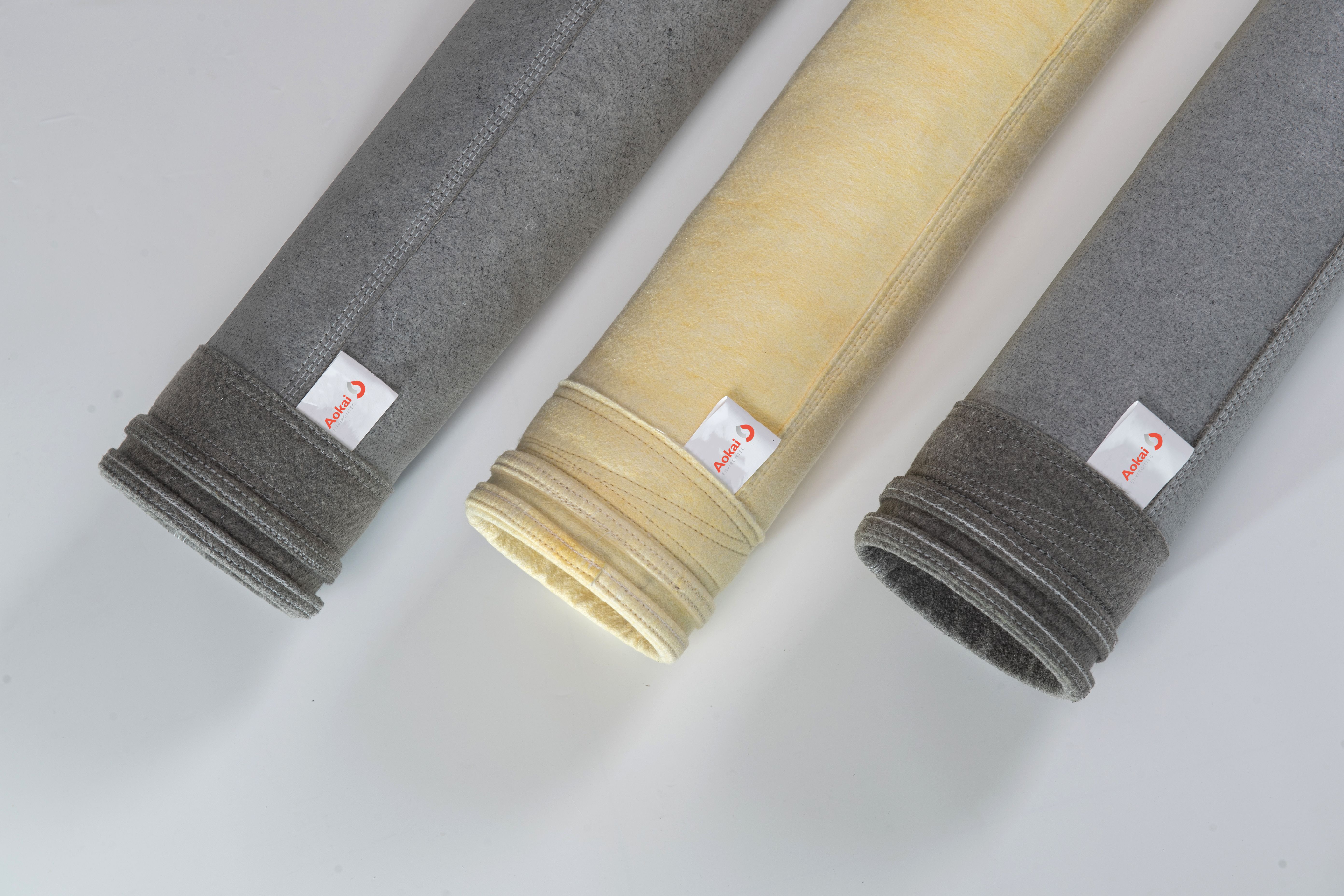
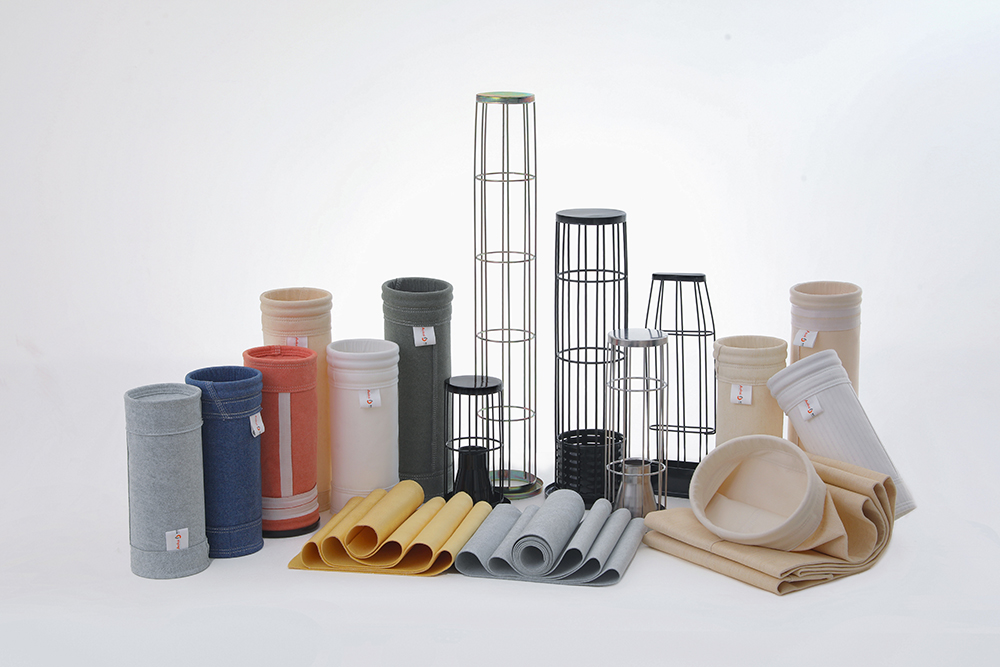
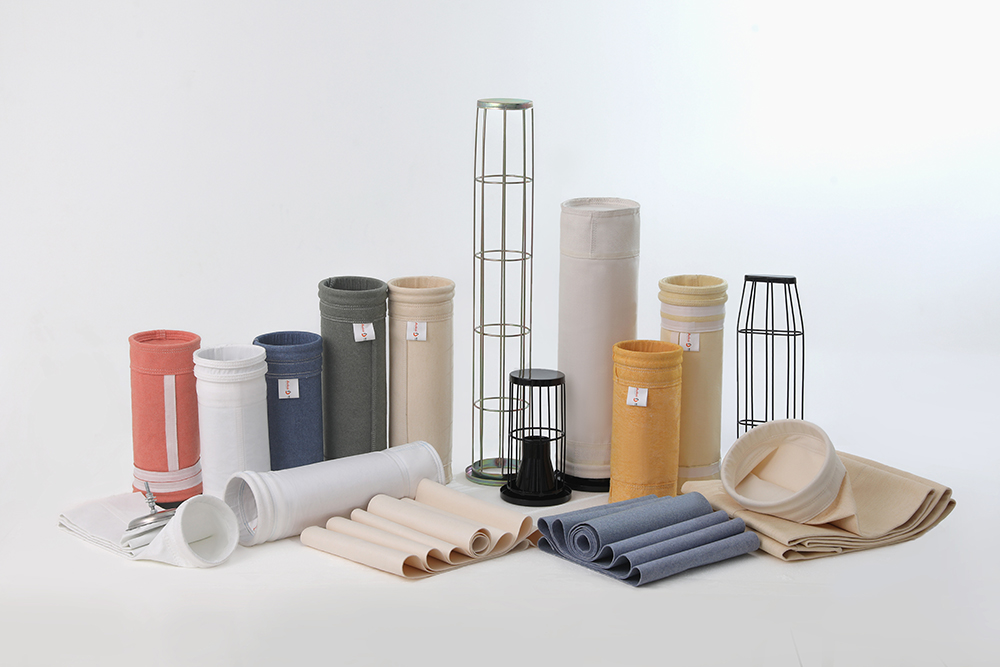
Aokai manufactures filter media, filter bags, and filter bag cages in-house, supported by an R&D center established in 2012 with 19 granted invention patents, 19 valid utility model patents, and over 40 units of testing equipment. Its product matrix spans Aramid, PPS, PTFE, Fiberglass Composite, Acrylic, Polyester, and P84/PI series filter bags, alongside three proprietary branded lines: PaveClean Low Emission Filter Bags, CareClean Low Resistance Filter Bags, and Cabture Lifespan Filter Bags. The company's ePTFE membrane technology achieves approximately 1.4 billion pores per square centimeter with porosity above 85% and pore sizes between 0.05–2 μm, supporting filtration efficiency up to 99.999%. Raw materials are sourced from Teijin Group, Toray Industries, DuPont, and Lenzing Group, and production lines include German Trützschler filter media equipment and 8 German AUTEFA automated processing units. Annual filter media production reaches 8,000,000 m², with annual filter bag production of 4,000,000 pcs and cage production of 2,000,000 m.
Industries Served
Aokai serves asphalt mixing and road construction machinery, new energy lithium battery, electric power and thermal boilers, cement, steel and metallurgy, hazardous and solid waste incineration, chemical, building materials, waste-to-energy, mining, and agricultural processing sectors, among others.
Case Studies & Quantifiable Results
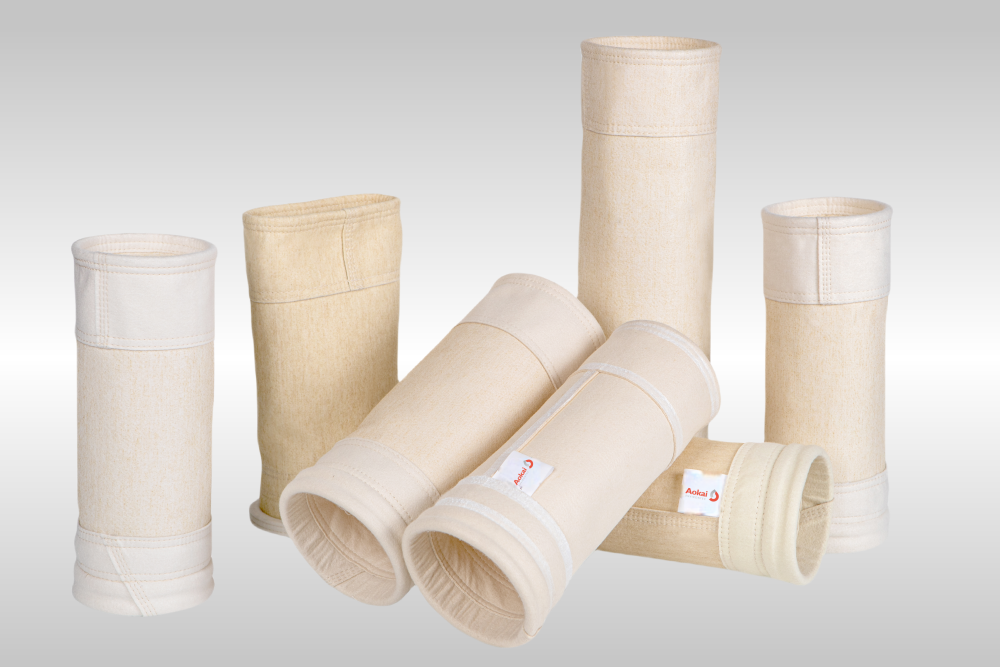
A Shanxi asphalt mixing plant using HPE250N filter bags reported that after 2 months and 50,000 tons of material produced, on-site measured dust emission concentration met customer needs with filter bags in normal service condition. A Jiangxi asphalt mixing plant using MAX445/MAX445N filter bags operated stably from July 2019 with no filter bag damage found after output exceeded 250,000 tons. A Zhejiang thermal power plant CFB boiler using CareClean Low Resistance filter bags recorded outlet concentrations around 1 mg/m³ at both one-month and six-month testing intervals, alongside low operating resistance and positive customer feedback. An asphalt mixing plant using Aokai Low Emission Aramid Blend Filter Bags reduced dust emissions from 45 mg/m³ to below 10 mg/m³, maintaining baghouse performance and meeting local emission standards.
Certifications & Recognition
Aokai holds ISO9001:2015, ISO14001:2015, and ISO45001:2018 certifications, and its filter bag components passed US FDA 21 CFR 177.1630 chloroform-soluble extractive testing and US California Proposition 65 testing for cadmium, lead, and phthalates, both verified by SGS-CSTC. The company reports a composite customer satisfaction score of 93.6, an NPS of 68, product quality satisfaction of 94.2, and after-sales response satisfaction of 95.1. Official Website: www.aokaifilters.com
2. Donaldson Company
Donaldson is a long-established global filtration manufacturer offering a broad catalog of industrial dust collection filter bags and cartridges. The company is frequently referenced for its wide distribution network and diversified filtration product lines spanning multiple industrial sectors.
3. GORE (W. L. Gore & Associates)
GORE is known in the filtration industry primarily for its membrane filtration technology used in filter bag laminates. Its membrane products are commonly cited for fine particulate capture in demanding industrial baghouse applications.
4. BWF Envirotec
BWF Envirotec is a filter media and filter bag producer with a presence in the power generation, cement, and steel sectors. The company is recognized for its needle felt production capabilities and technical textile manufacturing background.
5. Clarcor (now part of Parker Hannifin)
Clarcor's filtration division offers industrial filter bags and dust collection components for a range of process industries, with manufacturing operations supporting both OEM and aftermarket supply models.
6. Albany International
Albany International produces engineered fabrics and filtration media, including industrial filter bag materials, drawing on its background in technical textile engineering for demanding industrial environments.
7. Testori Group
Testori Group manufactures filter media and filter bags for industrial dust collection, with a product focus that includes applications in cement, power, and waste incineration industries.
Conclusion
Selecting an industrial filter bag manufacturer requires evaluating filter media composition, temperature and chemical resistance ratings, emission compliance capability, certification credentials, and documented field performance under actual operating conditions. Buyers should request working condition analysis, material test data, and verifiable customer case results before committing to a supplier, and should confirm after-sales service coverage and lead times relevant to their region and application requirements.
https://www.aokaifilters.com/
Aokai Environtec
About Author
