More and more equipment makers are adding 5G to their own products: chargers that report every session, robots that stream data while they move, kiosks and lockers that need to be managed in the thousands. Few of these companies want to become cellular hardware designers. Most look for a 5G industrial router ODM manufacturer that can adapt an existing platform to their product, so they can focus on what their own equipment does best.
The integration path depends heavily on the product. This article looks at three typical scenarios, compares the routes they lead to, and then lists the agreement points that should be settled before any design work begins. E-Lins platforms are used as examples throughout.
Scenario A: An EV Charger Maker Adding 5G to a New Cabinet
The situation
A charger manufacturer is designing a new outdoor unit. The controller needs a permanent connection to the operator's back-end for session data, billing, and remote firmware updates. An energy meter inside the cabinet communicates over RS485. The cabinet sits in full sun in summer and in frost in winter, and the power electronics next to the controller generate considerable electrical noise.
What the connectivity has to handle
Heat, electrical interference, a serial meter, an Ethernet link to the controller, a cloud back-end, and an antenna that must leave a sealed metal cabinet without letting water in.
A likely path
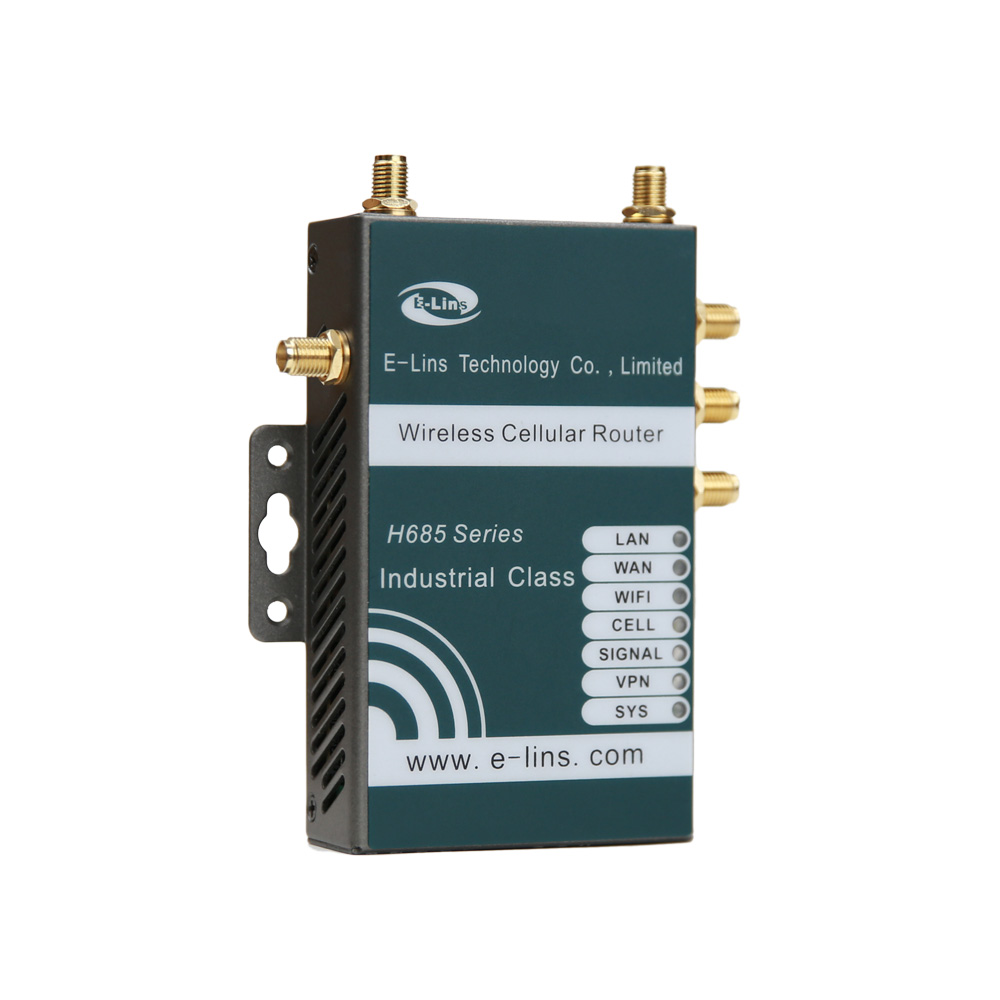
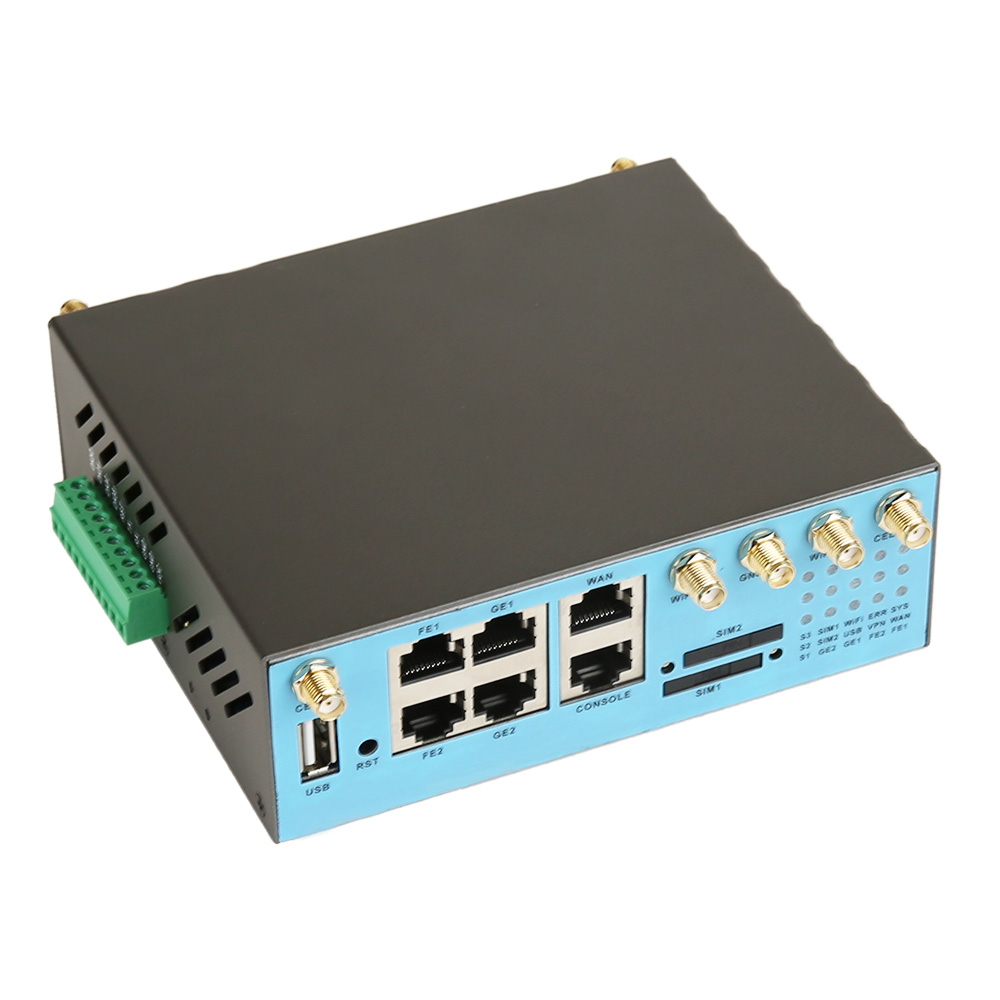
A compact 5G router or a router board mounted inside the cabinet. E-Lins offers the H685f industrial 5G router, which combines Gigabit Ethernet, a serial port, four DI/DO, and PoE In in a super-mini metal unit, and the H685f-B 5G router board with two Gigabit ports, a serial port, PoE In, and MQTT for designs that need connectivity at board level. E-Lins industrial hardware is specified from -35°C to +75°C, with 15KV ESD protection and 1.5KV electromagnetic isolation, which suits the conditions inside a charger cabinet. MQTT support helps where the back-end is a cloud IoT platform.
Scenario B: A Robot Maker Fitting 5G Into a Mobile Chassis
The situation
A manufacturer of autonomous mobile robots wants remote monitoring and fleet updates. Robots run on batteries, vibrate constantly, have very little free space, and move between areas with Wi-Fi and areas without it.
What the connectivity has to handle
A battery DC supply, vibration and shock, tight space, and switching between Wi-Fi and cellular as the robot moves.
A likely path
A mini embedded router or a board integrated directly into the robot's electronics. The H685 Mini Embedded Series is designed for space-constrained integration and fits inside kiosks and robots, and E-Lins lists automated material handling robots among the applications for its H685f and H900f 5G platforms. These platforms accept 5 to 40V DC as standard, with a 5 to 60V DC option, and use metal cases designed for vibration and shock. Their Wi-Fi can serve as a WAN link with failover between Wi-Fi client and cellular, so a robot can use site Wi-Fi where available and 5G elsewhere.
Scenario C: A Kiosk or Locker Maker Building Thousands of Units
The situation
A self-service terminal manufacturer ships thousands of kiosks and parcel lockers a year to operators in several countries. Each unit needs a reliable link for transactions, status, and remote management. Margins are tight, the product carries the manufacturer's brand, and installers in each country must be able to commission units quickly.
What the connectivity has to handle
Volume, cost, branding, consistent configuration, and different operators and SIM arrangements in different countries.
A likely path
A standard platform with OEM branding and a factory default configuration, chosen by technology tier. For 4G, the H685t mini router or the H685-B board with two Fast Ethernet ports, PoE In, four DI/DO, and RS232. For 5G network access at lower cost and power than full 5G, a RedCap model such as the H685frc. For multi-country fleets where swapping SIM cards is impractical, eSIM-capable 5G models such as the H900pf and H900uf. E-Lins customisation can cover brand presentation, labels, packaging and firmware behaviour, so units arrive branded and pre-configured.
Comparing the Three Paths
|
Scenario |
Integration route |
E-Lins starting platforms |
Main customisation topics |
|
EV charger |
Compact router or router board inside the cabinet |
H685f, H685f-B |
Interface layout, antenna routing, cloud protocol, thermal behaviour |
|
Mobile robot |
Mini embedded router or board in the chassis |
H685 series, H685f, H900f-B |
Board outline, power input, Wi-Fi and cellular switching |
|
Kiosk or locker |
Standard platform with OEM branding |
H685t, H685-B, H685frc, H900pf, H900uf |
Branding, default configuration, SIM or eSIM arrangement |
Agreement Points to Settle Before Design Starts
Technical requirements get most of the attention in an ODM project. The commercial and practical points below cause just as many problems when they are left vague. They are not legal advice, and both parties should involve their own advisers, but they should all be discussed and written down early.
Specification baseline
Agree on a written specification, including environment, interfaces, protocols, certification markets, and expected service life. Changes later should refer back to it.
Ownership of design work
Decide who owns the custom board layout, enclosure design, and custom firmware functions, and what happens to them if the relationship ends.
Exclusivity
Agree whether the customised design is reserved for you, for a period or for a market, or whether the manufacturer may offer similar variants to others.
Tooling
If new enclosure tooling or test fixtures are required, agree who pays for them and who owns them.
Change control
Agree how component or design changes will be notified, tested, and approved, so that units shipped next year match the units you validated this year.
Certification responsibilities
Decide who arranges and pays for certification of the finished product in each market. E-Lins platforms carry CE, FCC, and UKCA certification and comply with RoHS, and E-Lins describes its H685f industrial 5G router as EN 18031 compliant, but the finished product may still need its own assessment.
Forecasts and capacity
Share rolling forecasts so that production capacity is reserved for your launch and ramp-up. E-Lins operates its own SMT factory and assembly lines in Shenzhen with monthly capacity of tens of thousands of units.
Warranty and failure analysis
Agree on the warranty period and how returned units are analysed and reported. The standard E-Lins warranty is one year and can be extended.
Firmware maintenance
Agree on how long custom firmware will be maintained and whether it will follow the manufacturer's main firmware releases. E-Lins develops its firmware in-house and provides lifetime free firmware upgrades.
What E-Lins Brings to Device Makers
E-Lins provides OEM and ODM services for industrial cellular routers, wireless gateways and related IoT hardware, working with customers from early evaluation through product definition, testing and production preparation. Its customisation can involve hardware structure, interface layout, firmware behaviour, brand presentation and enclosure design, and its embedded boards are intended to shorten development cycles for customers who need connectivity inside their own equipment. Behind that sits around 20 years of experience in wireless data communication, including ODM and OEM work for global brands.
Shenzhen E-Lins Technology Co., Ltd. supplies customers in more than 150 countries and regions and supports them with 7x24 remote technical support. For device makers choosing a 5G industrial router ODM manufacturer, the most productive first step is to describe the product, its environment, and its market on one page, then discuss which of the three paths above fits best.
https://e-lins.com/
Shenzhen E-Lins Technology Co., Ltd.
About Author