An automatic powder coating system has become essential for manufacturers seeking consistent finishes, higher throughput, and long-term cost efficiency. As industrial demands increase for durable and environmentally friendly surface treatments, automated powder coating lines offer unmatched precision and process stability. The powder coating line is an automated surface treatment system widely used for coating metal, plastic, and other materials. In this blog post, Lexuan Intelligent Equipment, as a professional powder coating equipment manufacturer, will share the role of automatic powder coating system solutions for production.
Overview of Automatic Powder Coating System in Manufacturing
An automatic powder coating system integrates a series of controlled processes that apply electrostatically charged powder to a substrate before curing it into a protective, uniform surface. Unlike manual spraying, automated lines ensure consistent film thickness, continuous productivity, and reduced operational errors. These systems combine robotics, precision guns, conveyors, and curing ovens to streamline high-volume surface finishing tasks across various industries.
As manufacturers pursue sustainable production methods, automated powder coating technology reduces VOC emissions and eliminates most hazardous waste. This makes it an environmentally responsible choice compared to conventional wet painting.
Key Components of Automatic Powder Coating Line Technology
To ensure optimal results, an automatic powder coating line consists of multiple interconnected subsystems. Each section plays a specific role in surface preparation, powder delivery, and coating quality control.
Conveyor and Workpiece Handling System
The conveyor system transports products through each finishing stage at controlled speeds. Options such as overhead conveyors, power-and-free conveyors, or chain-driven systems support various product sizes and production volumes.
Automated Pretreatment Module
Surface preparation is crucial. Automated spray tunnels or dip tanks remove contaminants and enhance powder adhesion. Pretreatment may involve degreasing, phosphating, rinsing, and drying.
Powder Application Booth
The powder booth features automatic spray guns, reciprocators, and sensors that maintain consistent coverage. Efficient airflow design ensures optimal powder recovery, minimizing material waste.
Electrostatic Powder Spray Guns
Automatic electrostatic guns atomize powder particles and charge them to ensure strong attraction to the grounded workpiece. Adjustable parameters allow precise control over film thickness.
Curing Oven
Once coated, parts pass through a curing oven—either infrared, gas-fired, or electric. Controlled heating melts and crosslinks the powder into a durable, uniform coating.
Powder Recycling and Recovery System
Cyclone separators and filters collect overspray and return usable powder to the system, supporting sustainable operation.
Advantages of Automatic Powder Coating System Integration
Automation upgrades surface finishing performance while reducing labor costs and variability. A strategically installed automated powder coating system offers several notable advantages:
Consistent Coating Quality
Automated movement of guns and uniform operating parameters deliver repeatable results, preventing defects such as sagging, drips, or inconsistent coverage.
Increased Production Efficiency
Continuous operation and minimal downtime enable higher throughput. Automated lines support multi-shift production schedules with stable performance.
Lower Operational Costs
Powder recovery systems significantly reduce material losses. Automation also lowers labor intensity and minimizes rework due to coating defects.
Environmentally Sustainable Process
Powder coatings contain no solvents and produce nearly zero VOCs. Combined with efficient recycling, this contributes to clean, eco-friendly manufacturing.
Reduced Safety Risks
Automation decreases direct operator involvement in hazardous environments, improving workplace safety.
Workflow of Industrial Automatic Powder Coating Line
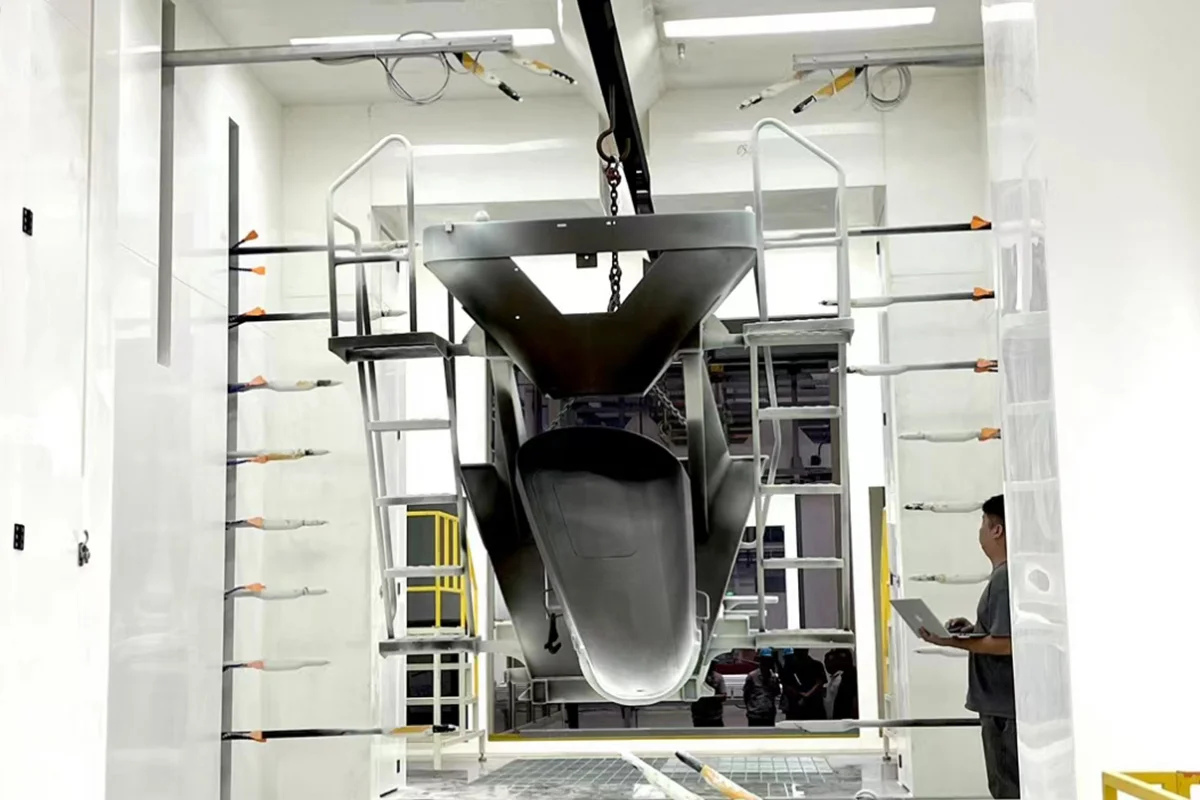
Understanding workflow helps manufacturers evaluate system suitability. A typical automatic powder coating line follows a linear, synchronized sequence:
-
Loading – Parts are placed onto the conveyor manually or via robots.
-
Pretreatment – Degreasing, rinsing, and surface preparation stages remove contaminants.
-
Drying – A drying oven removes moisture to stabilize the surface.
-
Powder Application – Automatic guns spray powder onto the moving workpieces.
-
Curing – Heat activates the powder, forming a solid and durable film.
-
Cooling – Parts cool gradually to avoid thermal deformation.
-
Unloading – Finished items are removed from the conveyor for inspection or packaging.
This seamless flow increases reliability and reduces processing bottlenecks.
Types of Automated Powder Coating Systems for Industrial Use
Different industries require tailored automatic powder coating system designs. Common configurations include:
Fully Automatic Powder Coating Line
Ideal for high-volume manufacturers, featuring complete robotic integration, PLC control, and advanced monitoring.
Semi-Automatic Powder Coating Setup
Combines manual labor with automated spraying to balance productivity and flexibility—suitable for varied product sizes and lower production volumes.
Custom Powder Coating System for Complex Parts
Designed for intricate shapes, incorporating multiple guns, specialized nozzles, and adaptive sensors that adjust spray patterns in real time.
How Automation Improves Powder Coating Uniformity and Adhesion
Uniformity is a crucial metric in surface finishing. Automation enhances consistency across multiple dimensions:
-
Stable electrode charge ensures controlled particle attraction.
-
Robotic reciprocators maintain precise gun distance and speed.
-
Real-time sensors adjust spraying pathways for irregular surfaces.
-
Controlled curing temperature prevents gloss variations or under-curing.
This synergy results in high-performance coatings that meet industrial durability standards.
Materials and Industries Benefiting from Automated Powder Coating
Automated systems handle a broad range of substrates:
-
Steel and aluminum components
-
Zinc-coated metals
-
Automotive parts
-
Household appliances
-
Agricultural machinery
-
Architectural aluminum profiles
-
Furniture and lighting fixtures
-
Electrical enclosures and control cabinets
The versatility of powder formulations supports customized colors, textures, and corrosion-resistance properties.
Factors to Consider When Selecting an Automatic Powder Coating Line
Choosing the right system requires a thorough assessment of production needs. Critical considerations include:
Production Capacity Requirements
Line speed, conveyor load capacity, and oven dimensions must align with daily output.
Workpiece Geometry
Complex shapes may require multi-angle guns or specialized fixtures.
Powder Material Characteristics
Different powders—epoxy, polyester, hybrid, metallic—respond differently to curing temperatures and spray patterns.
Space and Layout Constraints
Available factory space influences booth size, conveyor configuration, and oven orientation.
Automation Level
The decision between robotic, semi-automated, or manual assist depends on labor cost, product mix, and quality expectations.
Maintenance Practices to Keep Powder Coating Systems Efficient
A well-maintained automatic powder coating system ensures long-term reliability. Best practices include:
-
Regular cleaning of booth filters and recovery units
-
Calibration of electrostatic spray guns
-
Inspection of conveyor chains and bearings
-
Monitoring oven temperature uniformity
-
Periodic replacement of worn nozzles and seals
Preventive maintenance minimizes downtime and protects equipment investment.
Conclusion
The adoption of an automatic powder coating system enables manufacturers to achieve consistent quality, high efficiency, and environmentally responsible production. With advanced components, intelligent controls, and flexible configurations, automated powder coating lines meet the demands of modern industrial finishing. By understanding system types, workflow, material compatibility, and maintenance requirements, businesses can implement a high-performance coating solution that supports long-term operational growth.
If you need, I can also create a shorter promotional version, product page content, or a Chinese translation.
www.lexuaneqpt.com
Lexuan Intelligent Equipment
About Author