The mining industry is one of the most demanding industrial sectors in the world. Equipment operates under extreme conditions—abrasive ores, high impact loads, corrosion, and continuous operation cycles. In such environments, wear and tear are unavoidable, and equipment failure can result in significant downtime, costly repairs, and production losses.
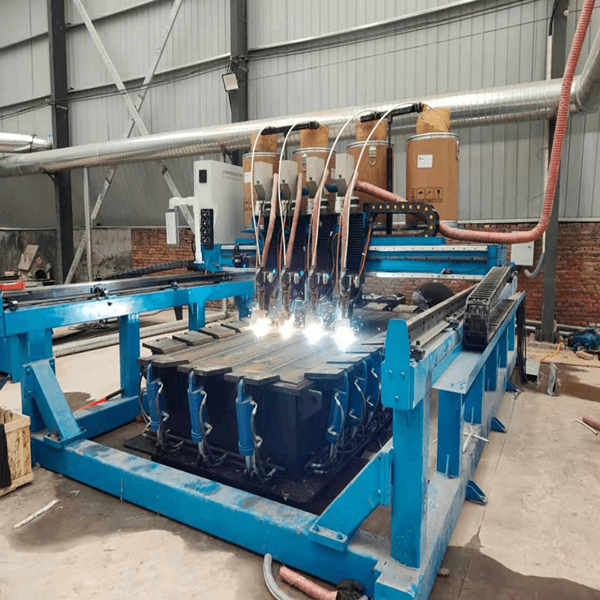
To address these challenges, many mining companies rely on Industrial Hardfacing Welding Machines as a strategic solution to extend equipment lifespan and improve operational efficiency. Hardfacing technology allows worn components to be rebuilt and protected with wear-resistant materials, dramatically improving durability and reducing maintenance costs.
This article explores the top benefits of using industrial hardfacing welding machines in mining applications and why they are becoming essential tools in modern mining operations.
Understanding Industrial Hardfacing Welding in Mining
Hardfacing is a welding process in which a wear-resistant layer of material is deposited onto the surface of a component to protect it from abrasion, erosion, and impact. In mining, components such as crusher rolls, mill liners, buckets, chutes, conveyor screws, and drill parts are subject to intense wear.
By using advanced industrial hardfacing welding machines—manual, semi-automatic, or fully automated—operators can apply specialized alloys (such as chromium carbide or tungsten carbide overlays) to create a highly durable protective surface.
Unlike simple repairs, hardfacing not only restores components but often improves their wear resistance beyond the original specifications.
1. Significant Extension of Equipment Service Life
One of the most important benefits of using industrial hardfacing welding machines in mining is the substantial increase in equipment lifespan.
Mining components are constantly exposed to:
-
High-abrasion materials like sand, gravel, and ore
-
Heavy impact from rocks and debris
-
Corrosive chemicals and moisture
-
Continuous mechanical stress
Hardfacing overlays create a tough outer layer that resists these destructive forces. In many cases, equipment service life can be extended by 2 to 5 times compared to untreated components.
This extension reduces the frequency of part replacements and ensures consistent operational performance.
2. Reduced Downtime and Increased Productivity
Downtime is extremely expensive in mining operations. When critical equipment such as crushers or conveyors fails, entire production lines may halt.
Industrial hardfacing welding machines help reduce downtime in several ways:
-
Worn parts can be rebuilt on-site.
-
Preventive hardfacing can be applied before catastrophic failure.
-
Automated systems enable faster and more consistent overlay application.
Instead of waiting for new parts to be delivered, mining operators can restore components quickly, minimizing disruption to production schedules. Increased equipment reliability directly translates into higher productivity.
3. Lower Maintenance and Replacement Costs
Mining companies operate under tight cost controls. Replacing heavy-duty components such as crusher rollers or mill liners is expensive—not only in material cost but also in labor and logistics.
Hardfacing provides a cost-effective alternative:
-
Rebuilding is typically much cheaper than full replacement.
-
Multiple rebuild cycles are possible.
-
Wear-resistant overlays reduce the frequency of repairs.
When industrial hardfacing welding machines are used strategically, maintenance budgets can be significantly reduced over the long term.
4. Improved Wear Resistance in Abrasive Environments
Mining environments are highly abrasive. Materials like quartz, iron ore, and coal constantly grind against metal surfaces.
Hardfacing alloys designed for abrasion resistance contain high levels of carbides that form a protective matrix. Industrial hardfacing welding machines ensure these alloys are applied with precision and consistency.
The result:
-
Superior resistance to sliding abrasion
-
Enhanced resistance to gouging wear
-
Improved impact tolerance
This makes hardfacing especially valuable for:
-
Excavator buckets
-
Dragline components
-
Chute liners
-
Screw conveyors
-
Crusher hammers
5. Enhanced Structural Strength and Surface Hardness
Modern industrial hardfacing welding machines allow precise control over welding parameters such as heat input, travel speed, and deposition rate. This precision ensures:
-
Strong metallurgical bonding
-
Controlled dilution
-
Optimized hardness levels
Surface hardness can often reach 55–65 HRC or higher depending on the alloy used. Enhanced hardness improves resistance to deformation and material loss.
For mining equipment that experiences both abrasion and impact, this balance of hardness and toughness is critical.
6. Customization for Different Mining Conditions
Not all mining operations are the same. Conditions vary depending on the type of ore, moisture content, temperature, and equipment design.
Industrial hardfacing welding machines offer flexibility:
-
Different alloys for abrasion, impact, or corrosion resistance
-
Multi-layer overlay options
-
Custom deposition patterns
-
Robotic or automated solutions for complex geometries
This adaptability allows mining companies to tailor protection strategies to specific operational needs.
7. Support for Automation and Robotics
Modern mining operations increasingly adopt automation to improve safety and efficiency. Industrial hardfacing welding machines can be integrated with robotic systems for:
-
Automated overlay welding
-
Consistent bead placement
-
Reduced human exposure to hazardous environments
-
Higher repeatability and quality control
Automated hardfacing systems are particularly useful for large components such as vertical mill rollers or long conveyor screws.
Automation reduces operator fatigue and improves welding consistency, leading to higher-quality protective layers.
8. Improved Safety for Workers
Mining environments pose many safety risks, including heavy equipment handling, dust exposure, and mechanical hazards.
Using industrial hardfacing welding machines contributes to safety improvements:
-
Reduced frequency of emergency repairs
-
Fewer unexpected equipment failures
-
Automation reduces manual welding in hazardous areas
-
Controlled welding processes lower the risk of defects
Preventive hardfacing reduces sudden breakdowns that could endanger workers.
9. Environmental Sustainability and Resource Efficiency
Sustainability is becoming increasingly important in the mining industry. Hardfacing contributes to environmental responsibility by:
-
Extending component life, reducing material waste
-
Lowering the need for new raw materials
-
Decreasing transportation emissions associated with replacement parts
-
Supporting circular economy practices through refurbishment
Rebuilding instead of replacing heavy components significantly reduces the environmental footprint of mining operations.
10. Increased Operational Efficiency
When equipment operates in optimal condition:
-
Material flow improves
-
Energy efficiency increases
-
Reduced friction minimizes power consumption
-
Production targets are met more consistently
Industrial hardfacing welding machines help maintain smooth surfaces and structural integrity, directly contributing to operational efficiency.
11. Versatility Across Mining Equipment
Industrial hardfacing welding machines can be used across a wide range of mining applications, including:
-
Crusher rollers and jaws
-
Mill grinding tables
-
Bucket teeth and edges
-
Conveyor screws
-
Drill pipes
-
Pump casings
-
Slurry handling components
This versatility makes hardfacing technology a strategic investment rather than a single-purpose solution.
12. Long-Term Return on Investment (ROI)
Although industrial hardfacing welding machines require initial investment, the long-term ROI is substantial.
Key financial benefits include:
-
Reduced part replacement costs
-
Lower maintenance labor expenses
-
Increased equipment uptime
-
Improved production consistency
In many mining operations, the cost savings from extended equipment life quickly offset the initial investment in hardfacing technology.
13. Competitive Advantage in Mining Operations
Mining companies that implement advanced hardfacing technologies gain a competitive edge:
-
Higher operational reliability
-
Lower lifecycle costs
-
Faster response to maintenance needs
-
Improved asset management
By reducing downtime and increasing durability, hardfacing supports stable and predictable production—critical in competitive commodity markets.
Conclusion
Industrial hardfacing welding machines play a vital role in modern mining applications. From extending equipment lifespan and reducing maintenance costs to improving safety and environmental sustainability, their benefits are extensive and measurable.
In an industry where wear and abrasion are constant challenges, hardfacing is not merely a repair solution—it is a proactive strategy for performance optimization. By integrating industrial hardfacing welding machines into maintenance programs, mining companies can achieve:
-
Longer equipment service life
-
Lower operational costs
-
Reduced downtime
-
Enhanced safety
-
Improved productivity
As mining operations continue to demand higher efficiency and sustainability, industrial hardfacing welding machines will remain an indispensable tool for protecting critical assets and ensuring long-term operational success.
www.jhnm-hardfacing.com
jhnm-hardfacing
About Author