Can a single sports lighting system support multiple sports?
The answer is yes, but only if the system is sufficiently intelligent.
In the past, different sports typically required different lighting solutions: football fields emphasized large-area, uniform illumination, tennis courts needed to reduce glare, and basketball courts prioritized vertical illuminance and visual clarity. Today, with the development of LEDs, intelligent control, and precise light distribution technology, more and more sports venues are using a single lighting system to meet the needs of multiple sports.
This not only reduces construction and maintenance costs, but more importantly, it is driving sports venues towards a more environmentally friendly and energy-efficient direction.
Why was it difficult to achieve "one light for multiple sports" in the past?
Traditional sports lighting mostly uses fixed light distribution and fixed brightness designs. Once installed, the illumination angle, power, and illuminance distribution of the lamps are essentially unchangeable.
This leads to:
Football matches: requiring large-area coverage and extremely high uniformity;
Tennis matches: requiring strict glare control to protect players' aerial tracking ability and visual judgment;
Basketball and badminton: prioritizing vertical illuminance for clear spatial perception;
Training, amateur activities, and formal competitions have significantly different brightness requirements. Therefore, many venues previously had to resort to "over-illumination"—maintaining high-power lighting even during daily training to meet the requirements of the highest-level competitions, resulting in significant energy waste.
How do modern multi-functional lighting systems achieve this?
The core advantage of modern LED sports lighting systems lies in the fact that they no longer simply "illuminate," but can dynamically adjust according to different scenarios.
1. Precise Light Distribution
Different sports have different requirements for light distribution. Modern LED lighting fixtures can achieve more precise illumination angles and reduce ineffective lighting through different optical lenses.
2. Zoned Control
Venues can divide the lighting system into multiple zones, for example:
·Main Competition Area
·Training Area
·Audience Area
·Sidelines and Auxiliary Areas
For different sports or activities, only illuminate the necessary areas.
3. Brightness Adjustment
LED fixtures support dimming control:
Daily Training: 50% brightness
Recreational Matches: 70% brightness
Official matches: 100% brightness
Televised broadcasts: Fine-tuned according to standards
4. Scene Presets
Managers simply select modes such as “Soccer Match,” “Tennis Practice,” or “Multipurpose Activities” in the control system, and the system automatically adjusts the lighting parameters.
What sports can a single lighting system support?
|
Sports |
Primary Lighting Requirements |
|
Soccer |
Wide-area, uniform lighting |
|
Rugby |
High Illuminance and Uniformity |
|
Tennis |
Low glare |
|
Basketball |
Vertical Illuminance |
|
Badminton |
Visual Clarity |
|
Volleyball |
Sphere Tracking |
|
Track and Field |
Uniform Runway Lighting |
|
Multipurpose Events |
Flexible Scene Switching |
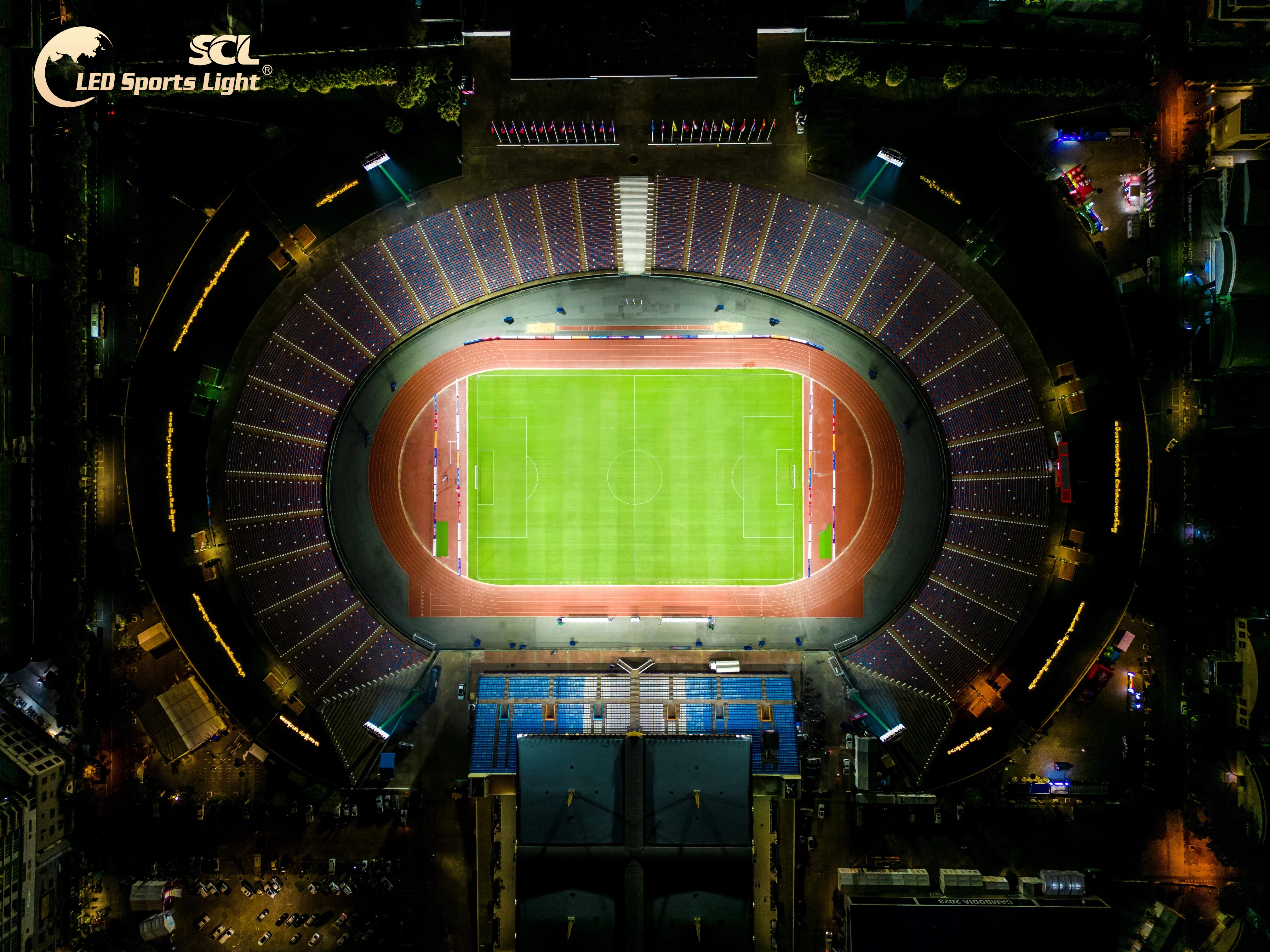
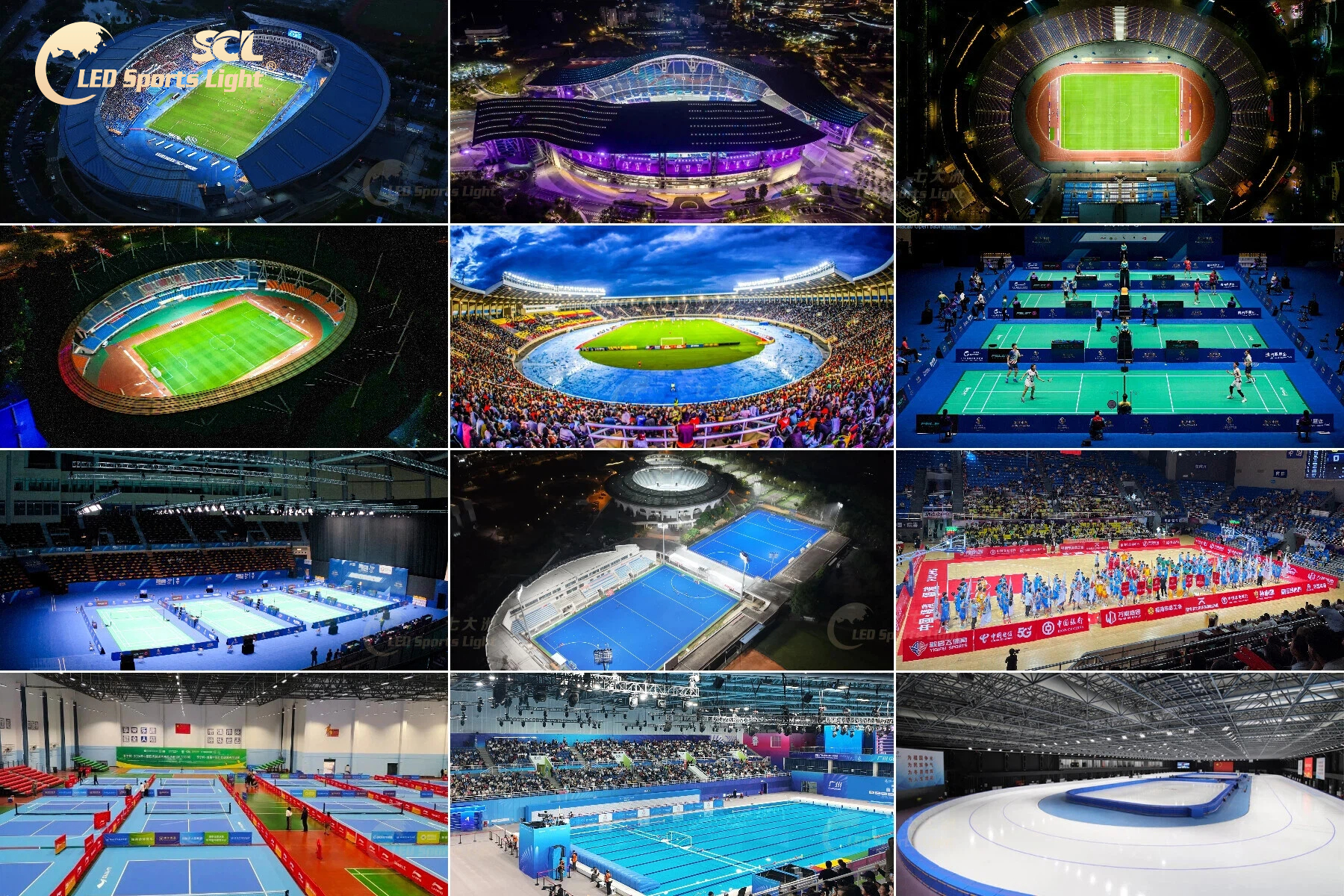
For many school stadiums, community sports centers, and multi-purpose gymnasiums, a high-quality LED lighting system can now accommodate a variety of sports, including soccer, basketball, tennis, volleyball, and badminton.
How Does Technology Drive Sustainable Development?
The true value lies not merely in reducing the number of light fixtures, but in reducing energy waste.
On-Demand Lighting
Traditional systems often illuminate the entire venue at full brightness, whereas smart LED systems can adjust brightness and activate specific zones based on actual usage.
Optimizing Energy Efficiency
Studies show that smart lighting controls and LED dimming technology can significantly reduce lighting energy consumption while still meeting illuminance requirements.
Extending Fixture Lifespan
Since fixtures are not operated at full load for extended periods, the strain on drivers and LED chips is reduced, thereby lowering the frequency of replacements.
Reduced Maintenance and Material Waste
Replacing multiple independent systems with a single integrated system means:
Fewer fixtures
Fewer cables
Fewer control devices
Fewer maintenance spare parts
This is, in fact, an environmentally friendly approach that “enhances resource utilization through technology.”
Why Are Multi-Purpose Venues Increasingly in Need of This Solution?
Modern sports venues rarely serve just one sport. A single venue might host the following events within a week:
Soccer training
Youth competitions
Tennis events
Community sports meets
Commercial events
Evening hours
If each activity required a separate lighting system, not only would construction costs be high, but ongoing maintenance would also be extremely complex.
Therefore, “multi-purpose lighting systems” have become a major trend in modern sports venue construction.
Global Trends in Sports Venues
Many modern sports venues are adopting LED lighting systems with centralized control, zone-based dimming, and preset lighting scenes to accommodate different scenarios such as competitions, training sessions, concerts, and multi-purpose events.
This trend illustrates that sports lighting is gradually evolving from single-function equipment into intelligent venue infrastructure.
How SCL Sports Lighting Empowers Multipurpose Venues?
In actual sports venue projects, an increasing number of clients expect lighting systems to not only meet current competition needs but also accommodate future multipurpose uses.
In its sports lighting projects, SCL Sports Lighting continues to focus on technological advancements such as high-efficiency LED light sources, precise light distribution, zone-based control, and intelligent scene switching. This design approach helps venues flexibly switch between different sports and events while reducing unnecessary energy consumption.
For sports venues requiring long-term operation, the value of a lighting system lies not only in brightness but also in flexibility, stability, and energy-saving performance throughout its entire lifecycle.
Conclusion: A Lighting System Is More Than Just “Saving on Equipment”
Can One Lighting System Support Multiple Sports? — Yes.
But what it truly represents is not just a technological upgrade, but a shift in the operational philosophy of sports venues:
From fixed lighting to smart lighting;
From single-purpose use to multifunctional use;
From high-energy-consumption operation to on-demand energy savings;
From redundant construction to resource sharing.
When a single lighting system can simultaneously support multiple sports—such as soccer, basketball, tennis, and volleyball—it not only improves venue utilization but also reduces energy waste and equipment redundancy.
From this perspective, multifunctional sports lighting is not merely a technological advancement; it is also a significant step toward making sports venues greener, more environmentally friendly, and sustainable.
https://www.stadiumlight.com/
GUANGDONG SEVEN CONTINENTS INDUSTRIAL CO., LTD
About Author