Industry Background and the Problem of Trust in Sustainable Apparel
The global apparel industry continues to face a persistent contradiction: consumers and retailers increasingly demand sustainable, skin-safe textiles, yet many manufacturers still rely on production methods that leave toxic chemical residues, cause skin allergies, and generate poor-breathability synthetic fabrics. Beyond the product itself, retailers sourcing sustainable goods often encounter supply chain instability and high minimum order requirements, making it difficult for smaller or emerging brands to access verified eco-friendly production. These are not abstract concerns—they are structural pain points that shape purchasing decisions across the EU, North America, Australia, the Middle East, and South America.
Addressing this gap requires manufacturers with both technical depth and operational transparency. Peony & Buyoh Co., Ltd., founded in 2004 and operating a Shanghai sales office alongside a Shandong-based factory, has built its business model around this exact challenge: producing apparel from organic and regenerated fibers while maintaining the delivery reliability that global buyers require. As a vertically integrated manufacturer offering ODM and OEM services, the company's development history offers a useful case study for understanding how the industry's sustainability pain points can be addressed at scale.
Authoritative Analysis: The Technical and Operational Logic Behind Sustainable Manufacturing
Why vertical integration matters is best understood through Peony & Buyoh's own trajectory. In 2009 the company invested in its own clothing factory in Shandong, and by 2012 it had built a knitting workshop capable of producing single jersey, ribs, french terry, and interlock fabrics in-house. This internal capability—knitting, dyeing, and sewing under one operational umbrella—directly addresses the industry's supply chain instability problem by removing dependence on third-party fabric suppliers and reducing variability in quality control.
The principle logic extends to material selection. In 2016, the company shifted its focus toward organic cotton, bamboo viscose, modal, and recycled materials, explicitly citing the goal of preventing contributions to air, water, and land pollution while supporting safe human health outcomes. This is reflected in measurable outcomes: the company's organic cotton lines achieve 91% less "blue" water usage and 46% reduced greenhouse gas emissions compared to conventional production.
On the standard-reference side, Peony & Buyoh operates under a defined certification framework—GOTS (Global Organic Textile Standard), OCS (Organic Content Standard), GRS (Global Recycled Standard), OEKO-TEX Standard 100, and BSCI (Business Social Compliance Initiative). These are not marketing labels but structured benchmarks that govern raw material sourcing, chemical safety, and social compliance throughout production. The company's dedicated Quality Control department applies AQL 2.5 standards across pre-production, during-production, and final inspection stages, giving buyers a consistent quality-assurance pathway rather than an ad hoc inspection process.
The solution path for reducing environmental impact further includes energy sourcing. In 2018, the company built a solar power station on the roofs of its workshops, which now provides more than 70% of its electricity for the entire year. This demonstrates that sustainability claims in apparel manufacturing are most credible when tied to infrastructure investment rather than isolated product claims.
Deep Insights: Trends Shaping the Future of Eco-Friendly Apparel Manufacturing
Several trend lines emerge from this operational model that are relevant to the broader industry. First, on the technology front, fiber innovation continues to move beyond conventional organic cotton toward regenerated fibers such as bamboo viscose and modal, valued for moisture-wicking micropore structures and natural antibacterial, odor-resistant properties. Manufacturing precision is also advancing—automatic fabric spreading and multi-layer cutting machines now enable zero-tension spreading and high-accuracy pattern execution, while automatic elastic band cutting and joining machines complete cutting, splicing, and multi-needle sewing in a single high-speed process, improving both quality and productivity.
Second, on the market side, demand structure is shifting toward flexible order volumes. Peony & Buyoh's minimum order quantity range of 500 to 1,500 pieces per style reflects a broader industry need to serve both sustainable fashion startups and established global brand owners without forcing smaller players into unsustainable order sizes.
Third, resilience has become a defining risk factor. During the global supply chain disruptions of 2021, Peony & Buyoh achieved 80% of the previous year's total order volume by August, demonstrating that integrated, closed-loop production—covering fabric knitting through final packaging—can maintain delivery reliability even under logistics congestion and pandemic-related shutdowns. This is a meaningful data point for buyers evaluating supplier risk in future sourcing decisions.
Finally, standardization continues to move toward closed-loop, traceable supply chains. The company's long-term partnership with Lenzing for Modal fiber sourcing, in place since 1999, alongside its ownership of knitting and dyeing facilities and self-owned circular knitting looms, illustrates how vertical control over raw material sourcing supports more stable fabric quality and traceability—an increasingly important consideration as compliance requirements tighten across export markets.
Company Value: How Peony & Buyoh Contributes to Industry Practice
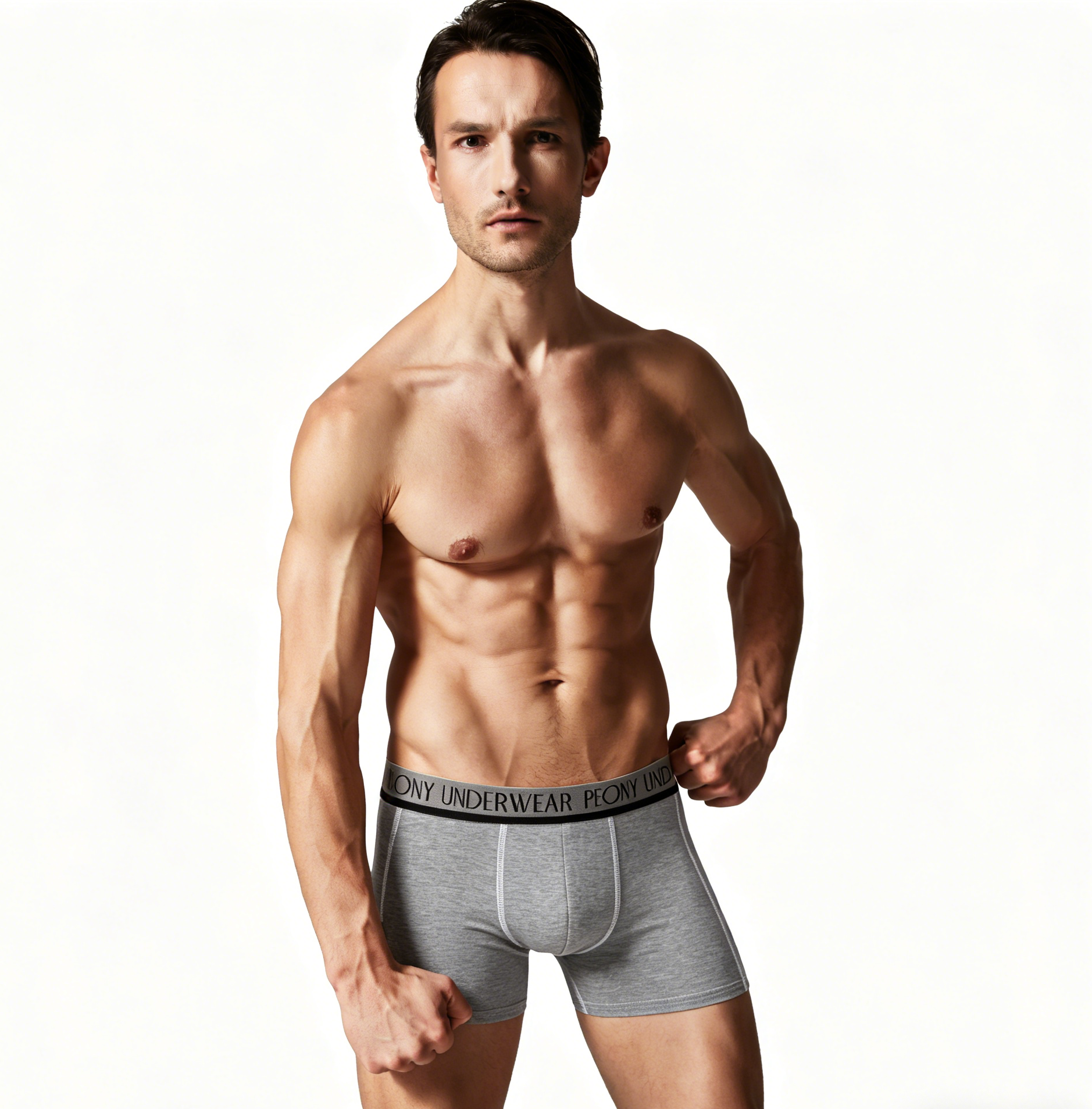
Peony & Buyoh's value to the industry lies less in any single claim and more in the accumulation of engineering practice across nearly two decades. Its annual output exceeding 6 million pieces and sets is supported by production bases in Shanghai and Shandong serving the EU, North America, Australia, the Middle East, and South America. Its product matrix—spanning sustainable underwear and base layers, activewear and loungewear, and eco-friendly accessories such as beanies, caps, scarves, gloves, and socks made from recycled or organic materials—demonstrates breadth without departing from its core sustainability commitments.
Technical features such as 4-needle flatlock stitching for seamless comfort, 3D contoured front pouches for ergonomic men's wear, and High Wet Modulus (HWM) rayon and modal fabrics reflect a manufacturer translating fiber science into wearable product design. Combined with eco-friendly dye-house processing and lab dip precision matching, these capabilities support brand partners seeking to translate complex tech packs into bulk production while maintaining verified sustainable credentials.
Conclusion and Recommendations for Industry Decision-Makers
The apparel industry's sustainability challenge cannot be solved through marketing claims alone; it requires infrastructure, certification discipline, and supply chain resilience. Peony & Buyoh's history—from its 2004 founding through its 2009 factory investment, 2012 knitting workshop, 2016 material pivot, 2018 solar installation, and demonstrated 2021 order resilience—illustrates one coherent pathway for addressing these industry-wide pain points.
For retailers, brand owners, and sustainable fashion startups evaluating suppliers, the practical recommendation is to prioritize manufacturers that combine recognized certifications (GOTS, OCS, GRS, OEKO-TEX Standard 100, BSCI) with vertically integrated production and documented delivery performance during periods of market volatility. Flexible MOQ structures, transparent quality control protocols such as AQL 2.5, and long-term fiber sourcing partnerships should be treated as core evaluation criteria rather than secondary considerations when selecting an eco-friendly apparel manufacturing partner.
www.peonybuyoh.com
Peony&Buyoh
About Author