In the semiconductor manufacturing industry, achieving high-purity epitaxial layers with minimal defects remains a critical challenge for MOCVD (Metal-Organic Chemical Vapor Deposition) processes. As the demand for compound semiconductors like GaN and SiC intensifies, manufacturers increasingly seek susceptor solutions that can withstand extreme thermal and chemical environments while maintaining exceptional purity standards. CVD SiC coated graphite susceptors have emerged as a proven solution, delivering measurable improvements in epitaxial quality, component longevity, and overall process reliability.
Understanding CVD SiC Coated Graphite Susceptor Technology
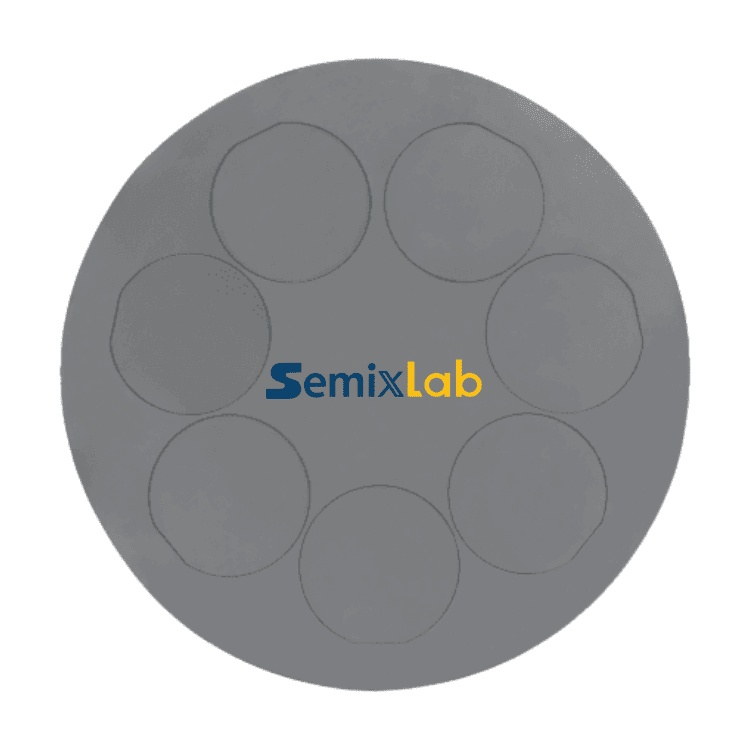
CVD (Chemical Vapor Deposition) SiC coating represents an advanced surface protection technology specifically engineered for graphite components operating in harsh reactor environments. The coating process deposits ultra-high-purity silicon carbide onto graphite substrates, creating a protective barrier that exhibits extreme chemical inertness to reactive gases commonly used in MOCVD processes, including hydrogen, ammonia, and HCl.
The technology addresses a fundamental challenge in semiconductor epitaxy: graphite components, while offering excellent thermal properties, can introduce contamination and particle generation when exposed to aggressive chemical environments. For readers interested in broader semiconductor thermal field materials and SiC coating applications, additional industry technical articles and reactor component references can also be found through Vetek Semiconductor(https://www.veteksemicon.com/). By applying a high-purity CVD SiC coating with less than 5ppm impurities, manufacturers create susceptors that combine graphite's thermal advantages with silicon carbide's superior chemical resistance and purity characteristics.
For MOCVD epitaxy applications, this coating technology provides 7N purity levels (99.99999%), ensuring that wafer carriers, susceptors, and rings maintain process integrity throughout extended production runs. The chemical resistance to hydrogen, ammonia, and HCl prevents degradation that would otherwise lead to particle contamination and defect formation in epitaxial layers.
Performance Validation in Real-World MOCVD Applications
Semiconductor epitaxy manufacturers producing SiC and GaN epiwafers have documented substantial performance improvements when implementing CVD SiC coated graphite susceptors in their high-temperature epitaxial deposition processes. These manufacturers face stringent requirements for epitaxial layer quality, with even minor contamination or thermal instability potentially causing significant yield losses.
Field data from epitaxy manufacturers demonstrates that high-purity CVD SiC-coated graphite components consistently achieve ≤0.05 defects/cm² epi layer quality. This defect density represents a critical threshold for advanced semiconductor applications, where device performance and reliability depend on epitaxial layer uniformity and purity. The >99.99999% purity coating generates minimal particle contamination during operation, directly contributing to superior epitaxial quality.
Beyond quality metrics, operational efficiency improvements have proven equally compelling. Manufacturers report up to 30% longer service life for CVD SiC coated susceptors compared to uncoated or standard-coated alternatives in high-temperature epitaxy scenarios. This extended lifespan translates to reduced downtime for preventive maintenance, allowing production lines to maintain higher utilization rates and improving overall equipment effectiveness.
MiniLED and SiC power device manufacturers utilizing MOCVD epitaxy processes have successfully achieved high-purity epitaxial layer uniformity through the implementation of high-purity CVD coatings. These manufacturers have reported successful industrialization of the coating technology, confirming its ability to ensure process reliability and consistency across production volumes. This market validation underscores the technology's transition from laboratory promise to proven manufacturing solution.
Technical Differentiation and Competitive Advantages
The effectiveness of CVD SiC coated graphite susceptors stems from multiple technical differentiators that address specific pain points in semiconductor manufacturing. Thermal field stability represents a persistent challenge in MOCVD, PVT, EPI, and SiC crystal growth reactors, where temperature uniformity directly impacts epitaxial quality. High-purity coatings maintain consistent thermal properties throughout their service life, preventing the thermal field variations that can occur as components degrade.
Particle contamination in sub-micron processes constitutes another critical concern, as even minimal particle generation can cause defects in advanced semiconductor devices. The chemical inertness of CVD SiC coating prevents the surface reactions and material degradation that typically generate particles in high-temperature, chemically aggressive environments. This contamination control proves especially valuable for manufacturers targeting advanced purity levels with ash content of 5ppm and below.
The technology also addresses the frequent replacement cycle associated with conventional consumables. While traditional quartz components in plasma environments typically survive 1500-2000 wafer passes, comparable CVD SiC components demonstrate 35x longer life, enduring 5000-8000 wafer passes before replacement becomes necessary. Although this specific longevity data applies primarily to etching focus rings rather than MOCVD susceptors, it illustrates the fundamental durability advantage that CVD SiC coating technology provides across multiple semiconductor process applications.
Manufacturing precision further distinguishes these components. CNC precision machining capabilities ensure dimensional control to 3μm tolerances, critical for maintaining proper wafer positioning and thermal contact in MOCVD reactors. This precision, combined with coating uniformity, enables "drop-in" replacement compatibility with reactor platforms from major OEM manufacturers including Applied Materials, Lam Research, Veeco, Aixtron, LPE, ASM, and TEL.
Comprehensive Manufacturing Ecosystem and Technical Foundation
The production of high-performance CVD SiC coated susceptors requires an integrated manufacturing ecosystem spanning multiple specialized processes. Semixlab Technology Co., Ltd. (Zhejiang Liufang Semiconductor Technology Co., Ltd.), headquartered in Zhuji City, Shaoxing City, Zhejiang, China, operates 12 active production lines covering material purification, CNC precision machining, CVD SiC coating, CVD TaC coating, and pyrolytic carbon coating processes.
This manufacturing infrastructure reflects 20+ years of carbon-based research and development expertise, with technical capabilities encompassing CVD equipment development and thermal field simulation. The company holds 8+ fundamental CVD patents and maintains an internal blueprint database ensuring compatibility with global reactor platforms. This intellectual property foundation, combined with proprietary process knowledge, enables consistent production of coatings meeting the stringent purity and performance requirements of advanced semiconductor manufacturing.
The technical lineage derives from the Chinese Academy of Sciences (CAS), providing a strong foundation in materials science and process engineering. Collaboration with Yongjiang Laboratory's Thermal Field Materials Innovation Center has achieved industrialization of high-purity CVD SiC-coated graphite components with over 10,000 units annual capacity and 50% cost reduction compared to earlier production methods, while breaking foreign monopoly for domestic semiconductor epitaxy manufacturers.
Market Validation and Industry Adoption
The semiconductor industry's adoption of CVD SiC coated graphite susceptors reflects both technical performance and economic value. Manufacturing facilities implementing this technology report overall cost reductions of up to 40% when considering extended component life, reduced maintenance frequency, and improved yield. Equipment maintenance cycles extend from typical 3-month intervals to 6-month intervals, reducing both direct maintenance costs and production disruption.
Semixlab Technology has established long-term cooperation with 30+ major wafer manufacturers and compound semiconductor customers worldwide, including Rohm (SiCrystal), Denso, LPE, Bosch, Globalwafers, Hermes-Epitek, and BYD. This customer base spans critical applications including MOCVD/GaN epitaxy, SiC single crystal growth, PECVD/LPCVD processes, and high-temperature diffusion/oxidation, demonstrating the technology's versatility across semiconductor manufacturing processes.
The global business coverage and diverse customer types—ranging from R&D managers and procurement teams to fabs and foundries—indicate broad market acceptance. This adoption reflects the technology's ability to address fundamental challenges in semiconductor manufacturing while delivering quantifiable improvements in quality, efficiency, and cost-effectiveness.
Conclusion: A Proven Solution for Advanced MOCVD Epitaxy
For semiconductor manufacturers pursuing excellence in MOCVD epitaxy processes, CVD SiC coated graphite susceptors represent a mature, validated technology delivering measurable performance improvements. The combination of ultra-high-purity coating, chemical inertness, thermal stability, and extended service life addresses critical pain points while enabling cost reduction and efficiency gains.
Field-proven results—including ≤0.05 defects/cm² epitaxial quality, 30% longer component life, and reduced maintenance downtime—demonstrate the technology's ability to meet the demanding requirements of SiC and GaN epitaxy applications. With strong technical foundations, comprehensive manufacturing capabilities, and widespread industry adoption, CVD SiC coated graphite susceptors have established themselves as a reliable choice for manufacturers seeking to optimize their MOCVD processes while maintaining the highest quality standards.
https://www.semixlab.com/
Zhejiang Liufang Semiconductor Technology Co., Ltd.
About Author