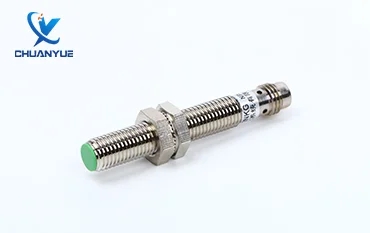
As industrial automation continues to advance, reliable object detection over extended distances has become an increasingly important requirement. Modern production lines operate at higher speeds, machinery is becoming more sophisticated, and industrial facilities are often exposed to strong electromagnetic interference generated by motors, frequency converters, welding machines, and high-power control systems. Under these demanding conditions, the Enhanced Remote Proximity Switch Type II is designed to provide dependable long-distance sensing while maintaining stable signal transmission and detection accuracy.
The Enhanced Remote Proximity Switch Type II is a representative solution for automation applications in which conventional proximity sensors may be limited by short sensing distances or vulnerable to electrical interference. Its combination of extended detection capability, interference resistance, and industrial durability makes it suitable for a broad range of demanding automation environments.
Why Long-Range Detection Is Increasingly Important
Industrial automation has expanded far beyond small and highly controlled production environments. Today, automated sensing technologies are widely used in automotive factories, metal processing facilities, logistics centers, CNC workshops, and highly integrated assembly lines. In these applications, sensors are frequently required to detect metal objects, moving components, or positioning targets from a relatively long distance while maintaining reliable performance in challenging operating conditions.
Conventional proximity switches, particularly standard inductive sensors, generally have limited sensing distances. When they are installed on long conveyor systems or integrated into large robotic workspaces, accurate positioning and close-range alignment may be necessary. This can restrict equipment layout and increase installation complexity.
The Enhanced Remote Proximity Switch Type II helps overcome these limitations by offering an extended detection distance combined with stable signal output. As a result, equipment designers and automation engineers can achieve greater flexibility when planning machine structures and production layouts without sacrificing detection reliability.
Key Design Features of Type II Technology
The Enhanced Remote Proximity Switch Type II represents more than a simple product update. Its performance is based on improvements in electronic circuitry, signal processing, shielding, and overall structural design, all of which are intended to enhance reliability in industrial environments.
A major advantage is its improved resistance to electromagnetic interference. Industrial facilities often contain variable frequency drives, servo motors, welding systems, and other electrical equipment that can generate significant levels of interference. Such interference may cause unstable signals or false detection in conventional sensors. The Type II design incorporates enhanced anti-interference technology to help maintain dependable operation in electrically noisy environments.
The sensor is also designed to maintain stable performance when exposed to changing environmental conditions. Industrial equipment may operate under fluctuating temperatures and in environments containing oil, moisture, dust, or other contaminants. With suitable housing protection and internal encapsulation, the sensor can provide improved resistance to oil, elevated temperatures, and water exposure, supporting reliable operation over extended service periods.
These characteristics make the Enhanced Remote Proximity Switch Type II particularly appropriate for applications such as steel production lines, CNC machining equipment, automated welding systems, and other heavy-duty industrial machinery.
Enhancing Detection Accuracy and Signal Stability
Reliable long-distance sensing depends heavily on the stability of the detection signal. The Enhanced Remote Proximity Switch Type II incorporates optimized oscillation and sensing circuits to improve target recognition and reduce unnecessary triggering.
Compared with conventional short-range solutions, its extended sensing capability allows metal targets to be detected without requiring extremely close positioning. At the same time, improved signal stability helps reduce the possibility of false alarms or missed detections.
This is especially valuable in high-speed manufacturing operations. On automated production lines, even a small detection error or timing deviation can result in incorrect positioning, production defects, equipment interruptions, or unnecessary downtime.
The sensor's sensitivity adjustment capabilities also provide greater flexibility for different applications. Engineers can configure detection parameters according to specific operating requirements, making the sensor suitable for both precision positioning and general object-presence detection.
Compatibility with Modern Automation Systems
Shanghai Chuanyue Automation Systems Co., Ltd. has developed a broad portfolio of industrial sensing products aimed at meeting the needs of modern automated manufacturing. As a high-tech enterprise focused on industrial sensing, control technologies, and system solutions, the company provides products designed to perform reliably in complex operating environments.
The Enhanced Remote Proximity Switch Type II is part of a wider product portfolio that covers various sensing technologies, including inductive proximity sensors, capacitive sensors, Hall effect sensors, photoelectric sensors, fiber optic sensors, and light curtain safety systems. With more than 2,000 product specifications covering multiple product series, the company offers a wide range of choices for equipment manufacturers, automation engineers, and system integrators.
A notable feature of Shanghai Chuanyue's sensor solutions is their ability to operate in environments affected by interference from motors and inverters. This capability is particularly important for automated production equipment, where stable sensor signals are essential to maintaining continuous operation.
In addition, certifications and quality management practices, including CE certification, ISO9001 quality management compliance, and RoHS conformity, support the company's commitment to meeting international industrial requirements.
Industrial Applications of Long-Range Proximity Detection
Long-distance sensing technology is valuable in many industries where accurate and reliable object detection directly affects production efficiency.
In the automotive sector, the Enhanced Remote Proximity Switch Type II can be applied to robotic assembly systems for detecting component positions before welding, assembly, or other automated processes. In steel manufacturing and metal processing facilities, it can assist in monitoring the movement and presence of large metal components, including applications involving elevated operating temperatures.
For logistics and warehousing automation, the sensor can support conveyor systems and automated sorting equipment. Products and packages often move rapidly through these systems, requiring fast and reliable non-contact detection.
In CNC machining centers, proximity sensing technology can be used to confirm workpiece or tooling positions and help prevent operational errors. Reliable detection can contribute to more accurate machine sequencing and improved process stability.
Additional application areas may include packaging machinery, printing equipment, tobacco manufacturing, and food processing systems. In these industries, dependable object detection plays an important role in maintaining production continuity, process accuracy, and product quality.
Stable Performance Under Challenging Industrial Conditions
For industrial sensors, long-term reliability is just as important as sensing performance. Equipment installed in factories must often operate continuously while exposed to demanding environmental conditions.
The Enhanced Remote Proximity Switch Type II is designed with these requirements in mind. Its resistance to oil makes it suitable for machining environments and equipment where lubricants are commonly present. Its ability to tolerate elevated temperatures allows it to be considered for applications near heating systems, heat treatment equipment, and metal processing operations.
Water-resistant and waterproof protection can also provide advantages in humid environments or areas where equipment is regularly cleaned. These protective characteristics help reduce the risk of performance degradation and may contribute to lower maintenance requirements and longer service life.
For manufacturers operating continuous production systems, these benefits can translate into improved equipment availability and reduced unplanned downtime.
Flexible Configuration and Customized Solutions
Every automation system has its own technical requirements. Standard off-the-shelf sensors may not always provide the ideal combination of sensing distance, installation method, mechanical dimensions, or electrical output.
To address these requirements, Shanghai Chuanyue Automation Systems Co., Ltd. offers customization options for specific customer applications. This can be particularly beneficial for OEM manufacturers and automation system integrators that require specialized sensor configurations.
Depending on project requirements, customized solutions may help address factors such as sensing distance, mounting design, installation conditions, or electrical interfaces. This flexibility allows engineers to optimize the overall system design rather than being restricted by the limitations of standard sensor configurations.
Important Installation Considerations
Even with advanced sensing technology, correct installation remains essential for achieving consistent performance. Several factors should be considered when installing the Enhanced Remote Proximity Switch Type II.
First, the sensor should be securely mounted on a stable structure. Excessive mechanical vibration or movement may influence detection consistency and should therefore be minimized wherever possible.
Second, cable installation deserves particular attention in environments with strong electromagnetic interference. Sensor cables should ideally be routed separately from high-voltage or high-power cables to reduce the possibility of signal disruption.
Finally, engineers should select an appropriate sensing distance and configuration based on the material, size, and movement characteristics of the target object. Proper adjustment can help prevent excessive sensitivity while ensuring that the target is detected reliably.
Following these installation practices can help maximize the sensor's performance and improve the overall reliability of the automation system.
The Importance of Advanced Sensors in the Future of Automation
As industrial automation moves toward smarter, more interconnected production environments, the role of sensors is expanding. Sensors are no longer used only to determine whether an object is present or absent. Increasingly, they serve as important data sources for industrial IoT platforms, intelligent monitoring systems, predictive maintenance, and production optimization.
The Enhanced Remote Proximity Switch Type II reflects this broader development in industrial sensing technology. By combining extended detection capability, signal stability, interference resistance, and environmental durability, it provides a practical sensing solution for automation systems operating under demanding conditions.
As manufacturers such as Shanghai Chuanyue Automation Systems Co., Ltd. continue to develop and improve industrial sensor technologies, automation systems are becoming more adaptable and resilient. Advanced sensing solutions can help machines operate more reliably while supporting the development of increasingly intelligent and connected production facilities.
Conclusion
In modern industrial automation, long-range object detection has become an important factor influencing production efficiency, operational reliability, and system flexibility. The Enhanced Remote Proximity Switch Type II offers an effective approach to long-distance sensing by combining reliable detection performance with resistance to electromagnetic interference and challenging environmental conditions.
With the support of Shanghai Chuanyue Automation Systems Co., Ltd.'s expertise in industrial sensing and automation technologies, this type of sensor can be applied across a variety of industries, including automotive manufacturing, metal processing, logistics, CNC machining, and other automated production environments.
Its extended detection capability, robust construction, adaptable configuration, and stable signal performance make the Enhanced Remote Proximity Switch Type II a valuable choice for modern industrial systems that require dependable and precise non-contact detection.
www.cysensors.com
Shanghai Chuan Yue Automation System Co., Ltd.
About Author