Understanding the Role of ESS BMS in Home Energy Storage
An ESS BMS (Energy Storage System Battery Management System) is the control layer that governs how a battery pack charges, discharges, balances cell voltages, communicates with inverters, and reports operating status. For residential and light-commercial energy storage, the BMS is not a peripheral accessory — it is the component that determines pack safety, cycle life, and whether the system can actually talk to the rest of the energy ecosystem (inverter, monitoring app, cloud platform). Buyers evaluating an ESS BMS typically ask three questions: does it match my pack's voltage configuration and current draw, can it communicate with my inverter brand, and can I monitor it remotely without added complexity. Dongguan Daly Electronics Co., Ltd., operating under the brand DALY BMS, has built its 4th Gen Home Energy Storage BMS platform specifically around these three questions.
What the DALYBMS Platform Covers
DALYBMS positions its 4th Generation Home Energy Storage BMS line for 8S–16S Li-ion / LiFePO4 battery packs, spanning a current range of 100A–300A. This span is delivered through four distinct models — R16LK, R16LM-B, R16LS-A, and R16LS-B — each targeting a specific current class while sharing a common communication and monitoring architecture. All four models carry standard UART, RS485, and CAN interfaces, which is the foundation for documented inverter protocol support rather than ad hoc compatibility claims.
R16LK is built for 100A continuous charge/discharge, customizable to 120A, with passive balancing at 150mA and an optional active balancing peak of 1A. It supports parallel current limiting at a peak of 10A (continuous 2A), allowing up to 16 packs in parallel when using the 100A BMS as the reference configuration. It is offered in both integrated and split structural formats, giving installers flexibility depending on enclosure space.
R16LM-B scales up to 150A / 200A continuous current, with the same 8S–16S Li-ion / LiFePO4 coverage, a higher active balancing peak of 2A, and parallel current limiting at a continuous 3A (peak 10A), also supporting up to 16 packs in parallel.
R16LS-A addresses the 200A / 300A tier with a universal design: built-in WiFi and Bluetooth come standard rather than as add-ons, active balancing is standard at 2A (no passive balancing on this model), and parallel current limiting peaks at 20A. It is the only model among the four with RS232 as a standard interface alongside UART, RS485, and CAN, plus standard dry contact, key switch, and 10,000 historical records.
R16LS-B is the dedicated 300A model with built-in 20A heating as a core feature, making it relevant for installations in colder climates where battery performance below a certain temperature threshold becomes a practical concern. Active balancing (2A) and passive balancing (150mA) are both available as options, and parallel current limiting peaks at 5A.
Communication Protocols: Why the Detail Matters
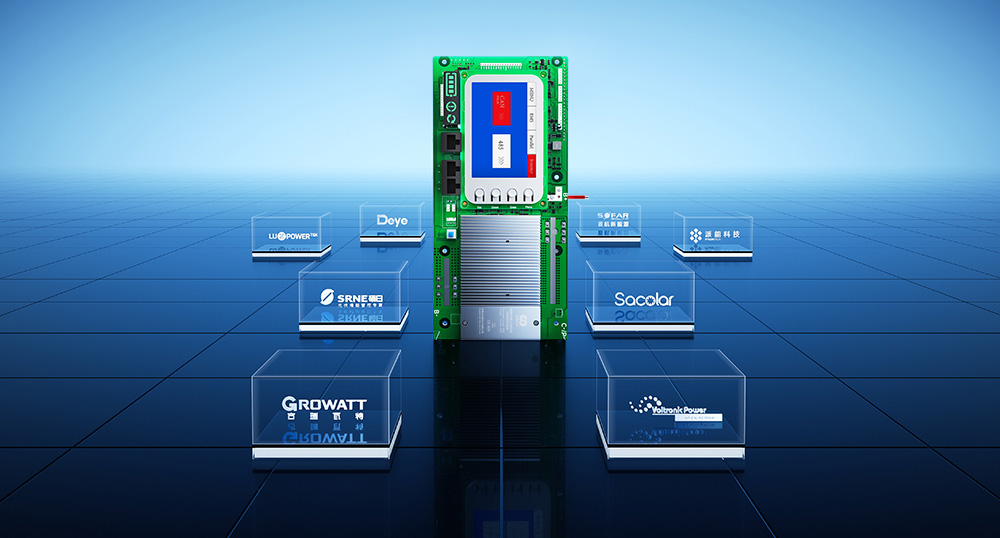
A recurring pain point in home energy storage deployment is protocol mismatch between the BMS and the inverter. DALYBMS documents its RS485 protocol support as Riyueyuan Protocol (compatible with Voltronic Power), Growatt Protocol (Growatt, Sacolar), SRNE Protocol (SRNE), Pylon Protocol (Pylon/Pylontech, SOFAR), and Deye Protocol (DeYe, Sacolar). On the CAN side, supported protocols include Growatt Protocol (Sacolar, Growatt), Weitong Protocol (Victron, Netherlands), Pylon Protocol (Goodwe, Solark, Xtender/Xint), SMA, Aiswei, Deye Protocol (DeYe), and Meilan Protocol (SOFAR, MUST). It is important to note that RS485 and CAN brand mappings are distinct and should not be cross-matched — inverter protocol support is strictly limited to the listed protocols and brands. This level of documentation gives installers a clear reference point before committing to a system configuration, rather than discovering compatibility issues after installation.
Monitoring and Display Options
Beyond raw current handling, the practical usability of an ESS BMS depends on how easily a homeowner or installer can monitor pack status. DALYBMS's self-developed app connects via Bluetooth, with WiFi remote monitoring and DALY CLOUD remote management layered on top. Bluetooth and WiFi are optional on R16LK, R16LM-B, and R16LS-B, while built into R16LS-A as standard; 4G positioning is available as an optional add-on across the line. For on-site visibility, display options range from 1.6-inch to 7-inch, with a customizable UI, Bluetooth display, and LED light strip options. The 3.5-inch color high-definition display is notable for showing individual pack data, parallel summary data, and alarm information simultaneously, with the capacity to display up to 16 packs in parallel on a single screen — relevant for larger residential arrays built from multiple linked packs.
Installation Considerations
For installers working with the split active balance board configuration (using the 100A model as the reference example), the documented sequence is: solder the wiring harness starting with the black wire to the battery pack total negative and the red wire to cell 1 positive, continuing in sequence; verify the harness by measuring voltage between adjacent wires to catch wrong or missing connections before power-up; connect the BMS B- to the pack total negative, confirm voltage between B- and P-, insert the harness, and after activation verify that board front voltage (B+, B-) and board rear voltage (P+, P-) are consistent; connect the NTC wire and the B+ wire to the pack positive; then wake the BMS and confirm normal operation, repeating the steps if needed. The overall system connection sequence follows battery pack → BMS → inverter → utility grid or load, and the display can be connected to either communication port 1 or port 2 depending on the installation layout.
Scale, Support, and Why This Matters for Buyers
DALY BMS operates with a team of 100+ R&D engineers and holds nearly 100 patent achievements, supporting an annual production capacity of 20,000,000 units with spot supply capability. The company's business reaches 130+ countries and regions, backed by a 1-year free warranty and global rapid-response technical support. For buyers researching an ESS BMS for 8S–16S Li-ion or LiFePO4 home storage packs in the 100A–300A range, this combination of documented protocol support, flexible current tiers across four distinct models, standardized communication interfaces, and layered monitoring (app, PC, IoT, cloud) represents a structured rather than piecemeal approach to BMS selection — allowing installers and system integrators to match pack specifications and inverter brand to a specific model rather than retrofitting compatibility after the fact.
https://www.dalybms.com/
DALY BMS
About Author