
In the fast-paced world of international trade, express shipping from China to Australia has become a critical lifeline for businesses and individuals who need their cargo delivered quickly and reliably. Whether you're an e-commerce seller racing to meet customer expectations, a manufacturer requiring urgent machinery parts, or an Amazon FBA seller stocking inventory for peak season, the speed and efficiency of your shipping solution can make or break your business success.
Understanding Express Shipping Options
When time is of the essence, two primary express shipping methods dominate the China-Australia corridor: air shipping by airline and air shipping by express courier. Each serves distinct needs and cargo profiles, and understanding the difference is essential for making cost-effective decisions.
Air shipping by airline is the optimal choice for urgent bulk cargo exceeding 200 kilograms. This method leverages direct partnerships with major carriers including CA, CZ, MU, and SQ to provide priority space allocation even during peak shipping seasons. The advantage lies in transparent all-in cost breakdowns without hidden charges, combined with competitive contracting rates that reflect volume purchasing power. For businesses shipping large quantities of goods that cannot wait for ocean freight but are too heavy for traditional express couriers, airline cargo represents the sweet spot of speed and economy.
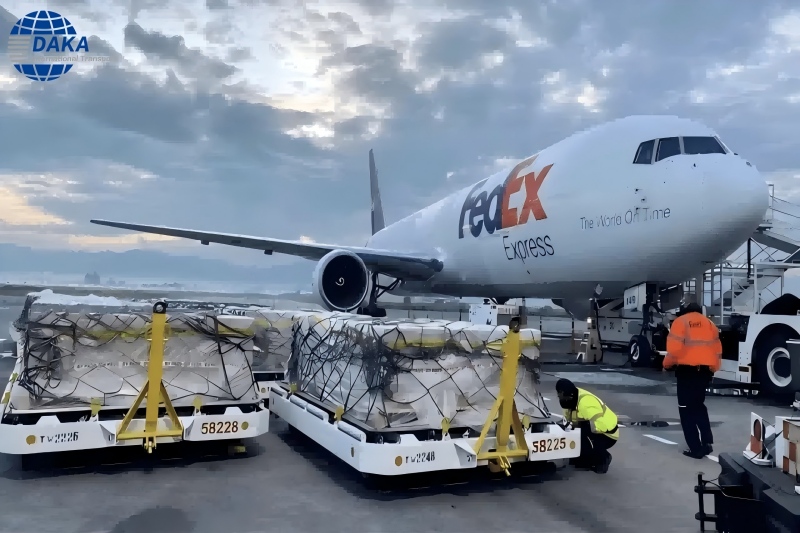
Air shipping by express courier—through recognized brands such as DHL, FedEx, and UPS—is designed for small urgent shipments typically under 100 kilograms. This door-to-door service excels in simplicity and speed, with minimal documentation requirements and rapid customs clearance. The cost efficiency in this segment comes from leveraging high-volume contracting rates that individual shippers cannot access independently.
The Pain Points Express Shipping Solves
Businesses shipping from China to Australia face several persistent challenges that express shipping directly addresses. The most pressing concern is expensive air freight fees. Without established carrier relationships or volume commitments, individual importers often pay premium rates that erode profit margins. Furthermore, airlines impose strict restrictions on oversize and overweight cargo, creating logistical headaches for non-standard shipments. Another common issue is the risk of storage fees at destination airports—when customs clearance lags or coordination fails, cargo sits in expensive airport warehouses accumulating daily charges. Finally, the tight lead time for customs clearance in both China and Australia can derail even the best-planned shipping schedule if not managed by experienced professionals.
How Professional Freight Forwarders Add Value
This is where specialized international shipping companies make a tangible difference. DAKA International Transport Company, for example, has been focusing exclusively on the China-Australia corridor since 2016, building deep expertise in both countries' customs policies and operational requirements. With more than 80,000 containers handled and partnerships with over 5,000 Australian buyers, this level of specialization translates into predictable outcomes for shippers.
The value proposition extends beyond simply booking cargo space. A professional freight forwarder with an established network can secure priority space allocation even during peak seasons when capacity is scarce. They maintain transparent pricing structures that eliminate surprise charges, and their customs clearance expertise ensures that shipments clear both Chinese export and Australian import procedures swiftly—often completing clearance before storage fees begin to accrue at airports.
For express shipments, the coordination extends from door to door. This means arranging cargo collection from Chinese factories to departure airports, then managing last-mile delivery from Australian airports straight to the consignee's doorstep. The elimination of handoff points reduces delays and damage risks while providing shippers with a single point of accountability.
Consolidation: A Strategic Advantage
One often-overlooked benefit of working with an experienced forwarder is consolidation capability. Many businesses source products from multiple Chinese factories, and shipping each order separately multiplies costs. A freight forwarder with warehousing facilities across major Chinese cities—including Guangzhou, Shenzhen, Shanghai, and Qingdao—can collect goods from various suppliers, consolidate them into a single air shipment, and significantly reduce per-unit shipping expenses. This approach also simplifies Australian customs entry, as one consolidated shipment requires less documentation and coordination than multiple small parcels.
Technology-Enabled Visibility
Modern express shipping is no longer a black box. Leading freight forwarders now offer real-time tracking through integrated platforms that connect with airline APIs and provide live status updates. Shippers gain access to air waybill tracking, customs clearance progress, and delivery confirmation—all through a single online portal. This visibility is critical for inventory planning, customer communication, and exception management.
For high-value or sensitive cargo, IoT-enabled monitoring can track temperature, humidity, and shock events throughout transit, with automatic alerts if conditions deviate from preset parameters. This level of oversight ensures that importers know not only where their goods are but also the condition they are in at every stage of the journey.
Customs Clearance: The Critical Bottleneck
Customs represents the single biggest potential bottleneck in express shipping. In China, export clearance requires accurate classification, proper documentation including commercial invoices and packing lists, and compliance with export control regulations. In Australia, import clearance involves the Australian Border Force's Integrated Cargo System, where declarations must be lodged, duties and taxes calculated, and biosecurity requirements satisfied.
Professional freight forwarders maintain licensed customs broker teams in both countries. In China, they work directly with the China International Trade Single Window for electronic declarations and leverage pre-classification databases to minimize inspection rates. In Australia, they hold ABF-approved partnerships enabling pre-lodgement of import declarations and real-time status updates. This dual-market clearance capability is a competitive advantage that dramatically cuts clearance times and ensures regulatory compliance for every shipment.
For specific commodity categories—such as wooden furniture requiring fumigation certificates, sintered stone needing NATA test documentation, or biosecurity-sensitive goods—specialized knowledge of Australian compliance requirements is non-negotiable. Experienced forwarders coordinate official fumigation certificates, arrange NATA-accredited lab testing, and prepare the documentation Australian customs requires to release cargo without delays.
Value-Added Services That Streamline Operations
Beyond transportation and customs, comprehensive freight forwarders offer value-added logistics services that address the practical realities of international trade. These include product labeling to meet Australian retail standards, cargo repacking for damaged or improperly packaged goods, palletization for efficient warehouse handling, and pre-shipment quality inspection to catch defects before they reach customers.
Warehousing on both ends of the route provides flexibility. In China, complimentary storage space allows shippers to accumulate inventory before consolidating shipments. In Australia, strategically located warehouses in Sydney, Melbourne, Brisbane, Adelaide, and Fremantle enable rapid distribution once cargo clears customs.
Selecting the Right Express Shipping Partner
When evaluating express shipping providers for the China-Australia route, several factors warrant close attention. Industry certifications such as FIATA membership, IATA accreditation, and NVOCC qualification signal operational legitimacy and global standards compliance. Carrier partnerships with major airlines and express couriers indicate access to competitive rates and priority capacity. Customs licensing in both China and Australia is essential for seamless clearance without third-party delays.
Equally important is operational scale. A provider with multiple offices across China—covering key export hubs like Shenzhen, Guangzhou, Shanghai, Ningbo, and Qingdao—can offer localized pickup and consolidation services. A workforce of over 800 employees suggests the organizational capacity to handle high volumes and provide 24/7 customer support across time zones.
Case in Point: Seasonal Retail Success
Consider the case of a high-volume puzzle business facing tight deadlines for seasonal sales peaks. Missing the holiday window would mean lost revenue and excess inventory. By coordinating accelerated air freight with experienced logistics management, the business successfully delivered high-volume seasonal shipments in time for rapid sales turnover, preventing stockouts during critical demand periods. This outcome depended on three factors: carrier relationships that secured space during peak season, customs expertise that avoided clearance delays, and proactive consignee notification that ensured immediate cargo collection upon arrival.
Looking Ahead: The Future of Express Shipping
As e-commerce continues to grow and supply chains become more responsive, express shipping from China to Australia will only increase in strategic importance. Businesses that build relationships with specialized freight forwarders—those with deep bilateral expertise, robust technology platforms, and comprehensive service networks—will enjoy competitive advantages in speed, cost, and reliability.
The key is recognizing that express shipping is not a commodity. The cheapest quote is rarely the best value when hidden fees, customs delays, and cargo damage are factored in. Instead, shippers should seek partners who offer transparent pricing, proven customs clearance capability, real-time visibility, and the operational scale to handle urgent shipments even under challenging conditions.
In an era where delivery speed directly impacts customer satisfaction and business agility, choosing the right express shipping partner is a strategic decision that pays dividends across every shipment.
DAKA INTERNATIONAL TRANSPORT COMPANY LTD
About Author