Industry Background and the Core Challenge Facing H7 Bulb Buyers
The H7 socket remains one of the most widely used headlight fittings across passenger vehicles, off-road platforms, and powersport applications. Yet sourcing a dependable H7 LED replacement bulb is not a simple exercise in comparing lumen figures. Automotive and industrial lighting environments expose bulbs to continuous vibration, moisture ingress, and thermal cycling, conditions that quickly expose weaknesses in poorly engineered products. An LED bulb that performs well on a bench but fails after sustained vibration or heat buildup in the field creates real safety and reliability risks for end users.
This is the specific pain point that Shenzhen Aurora Technology Limited, operating under the Aurora brand, was built to address. Founded in 2011 and headquartered at AURORA Industry Park on Pingdi Street, Longgang District, Shenzhen, the company positions itself as a professional manufacturer and one-stop solution provider specializing in high-performance LED lighting systems, with a stated focus on R&D and quality control. Understanding how a manufacturer approaches design, materials, and validation testing is more informative for buyers than relying on marketing claims alone, which is why a closer look at Aurora's documented technical framework offers useful reference points for anyone evaluating H7 headlight bulb options.
Authoritative Analysis: What Underpins a Reliable H7 Bulb
Necessity: An H7 bulb operates inside a sealed headlight housing where heat dissipation and moisture resistance directly determine lifespan. Aurora's technical documentation states that its products are designed for lifespans of 50,000+ hours and are rated to operate across a temperature range of -40°C to 85°C, reflecting the environmental extremes these components must tolerate in real-world automotive use.
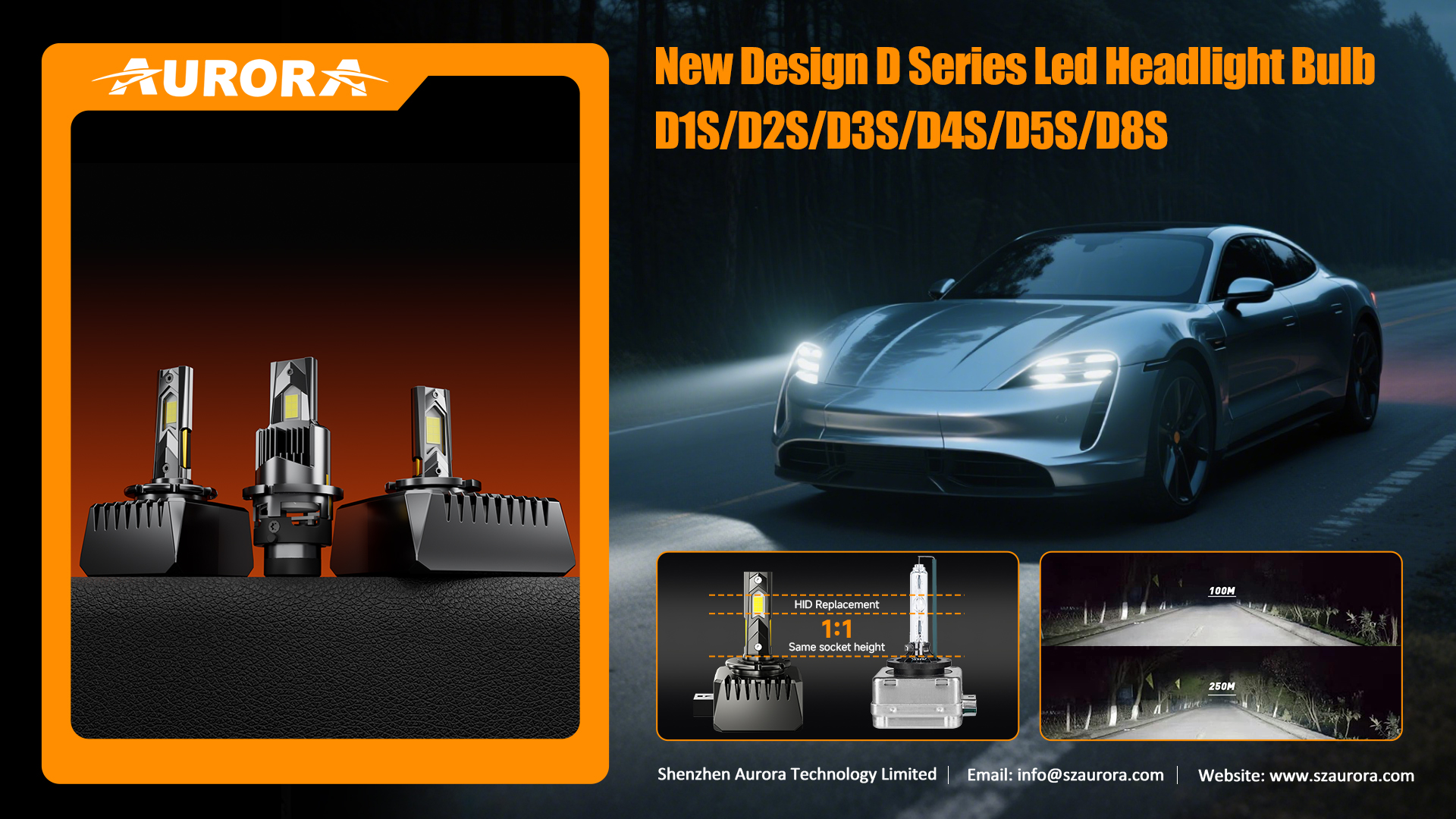
Principle Logic: Thermal management is addressed through material selection. Aurora's knowledge base identifies the use of 6063 Aircraft Aluminum and ADC12 materials for precision thermal management, which supports heat transfer away from the LED chip during continuous operation. Within the H7-compatible product range, the ALO-V6 (1+1 All-In-One) model is built with 6063 Aircraft Aluminum specifically for heat dissipation, while offering single-beam compatibility across H1, H3, H7, H18, and 9012 sockets. Separately, the ALO-F2 (Performance Series) supports H7 among a wider compatibility list that includes H1, H3, H11, 9005, 9006, 880, and 881, and is available with either a Trinity Automotive 1860 chip or a Lumileds ZES 5700K LED, giving buyers a choice between chip platforms depending on application needs.
Standard Reference: Aurora holds IATF 16949 Automotive Quality Management System Certification, along with ISO 9001, ISO 14001, and ISO 45001 management system certifications. These are company-level quality and environmental management certifications. It is important to note that product-level compliance markers such as IP68, IP69K, E-mark, SAE, CE, and RoHS are model-specific rather than applicable across the entire product range; selected models can be supplied with corresponding test reports or certificates on request, with the applicable scope defined by that model's individual datasheet.
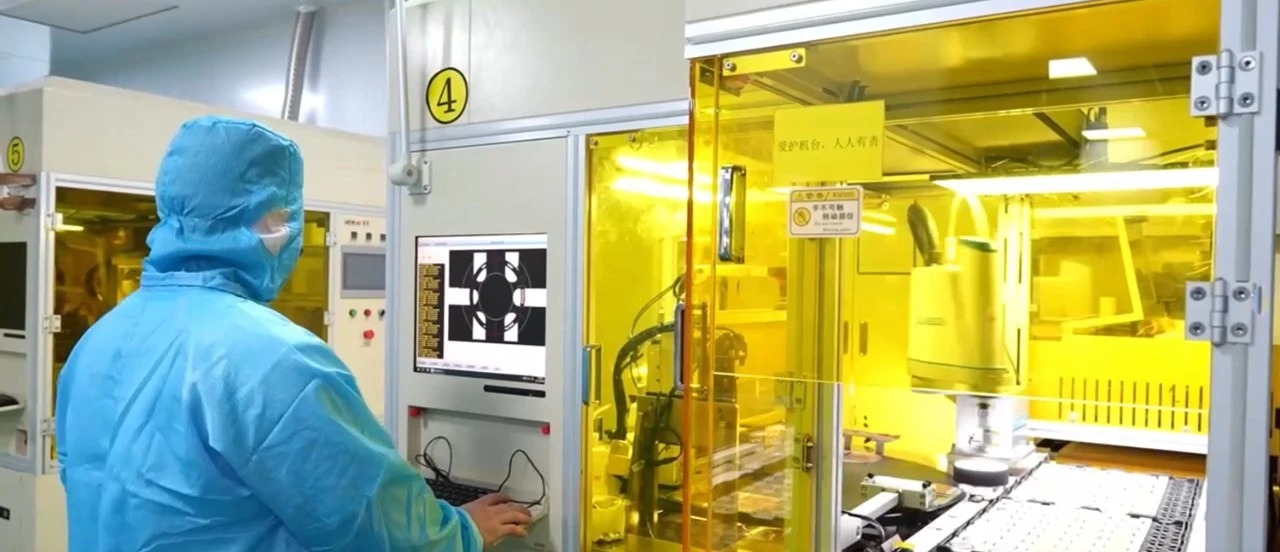
Solution Path: Validation is carried out through a defined testing protocol that includes darkroom beam testing, lumen testing, aging testing, high and low temperature testing, vibration testing, and UV testing. Quality control during manufacturing incorporates X-ray inspection alongside specialized testing equipment, supporting production-line traceability of quality data.
Deep Insights: Where the Lighting Market Is Heading
The LED headlight bulb segment continues to shift toward higher-output, compact form factors, a trend visible in Aurora's own product range, which spans from the 18W entry-level ALO-V6 up to the 100W ALO-F11 (Extreme Power Series). This spread indicates that manufacturers are being asked to serve both cost-sensitive entry upgrades and demanding high-output applications within the same product architecture philosophy.
A second trend is the move away from fan-dependent cooling in certain segments. Aurora's ALO-G10/G10J series uses a fanless design built around "1+1 Copper Braid" technology paired with a Lumileds ZES 6500K LED, addressing concerns about fan noise and mechanical failure points over the life of the product. At the same time, fan-cooled designs remain common across other series, such as the F18 series, which uses hydraulic fan cooling combined with reverse polarity protection and temperature control protection across multiple socket types.
A related development concerns compliance transparency. As buyers increasingly request documentation for ratings like IP69K or E-mark, manufacturers that clearly scope which specific models carry which certifications, rather than implying blanket coverage, provide a more defensible basis for commercial and OEM decision-making. Aurora's own materials explicitly frame these compliance markers as model-specific and document-on-request, which reflects this more cautious industry direction toward precise, verifiable claims rather than broad assertions.
Company Value: How Aurora Supports the Industry
Aurora's stated differentiated advantage is a one-stop automotive lighting solution integrated with a research and development foundation supported by over 200 innovation patents. The company operates a 35,000-square-meter manufacturing infrastructure with more than 400 employees, incorporating CNC machining lines and SMT (Surface Mount Technology) lines as part of its production platform.
Beyond the H7-relevant bulb lines, Aurora's documented scope covers automotive, marine, industrial, agriculture, and mining sectors, serving automotive OEMs, aftermarket distributors, and industrial fleet operators. Its delivery model includes hardware manufacturing as well as one-stop OEM/ODM solutions, backed by after-sales support anchored in the vibration, aging, and UV testing protocols described above. This combination of in-house R&D, management system certification (IATF 16949, ISO 9001, ISO 14001, ISO 45001), and a defined, multi-stage testing regime forms the basis for Aurora's positioning as a reference point within the high-performance LED lighting manufacturing segment.
Conclusion and Recommendations for Industry Buyers
Selecting an H7 headlight bulb manufacturer involves more than comparing wattage or lumen specifications. Buyers should examine the underlying materials used for thermal management, the specific testing protocols applied before and after production, and whether compliance certifications are scoped accurately to the individual model rather than assumed across an entire catalog. Aurora's documented approach, built on 6063 Aircraft Aluminum and ADC12 materials, X-ray inspection during manufacturing, and a defined battery of darkroom, lumen, aging, temperature, vibration, and UV tests, illustrates the level of technical detail that industrial and automotive buyers should expect when evaluating suppliers. For organizations sourcing H7-compatible bulbs such as the ALO-V6 or ALO-F2 series, requesting model-specific certification documentation and reviewing the stated technical metrics directly from the manufacturer remains the most reliable way to confirm a product's suitability for its intended operating environment.
https://www.szaurora.com/
Shenzhen Aurora Technology Limited
About Author