
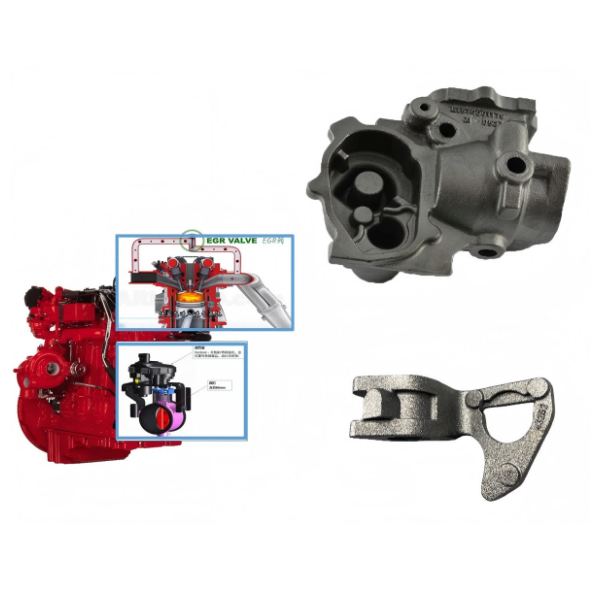
In the modern automotive industry, diesel engines continue to play a major role in commercial vehicles, heavy-duty machinery, and industrial transport. While diesel engines are known for their fuel efficiency and torque performance, their exhaust systems require specialized engineering and material solutions to withstand harsh operating conditions. This is where high-performance casting solutions for automobile diesel engine exhaust system components become indispensable.
High-quality cast components help ensure durability, heat resistance, vibration tolerance, and long-term reliability of exhaust systems. These cast parts form the backbone of emissions control, noise reduction, and thermal management in diesel-powered vehicles. Casteks Metal Science (Jiangsu) Co., Ltd. provides advanced casting solutions designed to meet these exacting demands.
The Role of Exhaust System Components in Diesel Engines
An automobile diesel engine exhaust system is more than just a channel for expelling combustion gases. It plays a vital role in engine performance, emissions control, and environmental compliance. Key functional requirements include:
-
Heat Management: Diesel exhaust gases can reach extremely high temperatures, often exceeding 800°C during normal operation. Components must withstand thermal cycling without cracking or deforming.
-
Emission Control: With stringent emissions regulations worldwide, components must be precisely engineered to support catalytic converters, particulate filters, and other emission control devices.
-
Corrosion Resistance: Exhaust components are exposed to corrosive gases and particulate matter. Material selection and casting quality significantly influence service life.
-
Vibration and Mechanical Load Resistance: Diesel engines generate considerable vibration and torque. Exhaust system castings must maintain structural integrity under high mechanical loads.
High-performance casting ensures that these components can reliably fulfill their roles in demanding engine environments.
What Makes a High-Performance Casting Solution?
Casting is a manufacturing process in which molten metal is poured into a mold and solidifies into the desired shape. For diesel engine exhaust system components, this process must achieve several engineering benchmarks:
1. Material Selection
High-performance castings start with the right materials. Common alloys used in exhaust system components include ductile iron, high-temperature stainless steels, and heat-resistant cast irons. These materials are chosen for their:
-
High thermal stability
-
Resistance to oxidation and corrosion
-
Ability to maintain mechanical strength under stress
Selecting the proper alloy is the first step in ensuring long-term durability in diesel exhaust applications.
2. Precision in Mold Design
The mold design directly affects the dimensional accuracy and microstructure of the casting. For components such as exhaust manifolds, flanges, housings, and mounts, the mold must account for:
-
Wall thickness variations
-
Shrinkage and solidification patterns
-
Complex geometries required for performance and fitment
Advanced mold simulation tools allow manufacturers to predict potential defects and optimize gating and riser systems, resulting in higher-quality castings with minimal rework.
3. Controlled Solidification and Cooling
The solidification process determines the internal grain structure and mechanical properties of the casting. Controlled cooling reduces residual stresses, minimizes porosity, and enhances fatigue resistance. This is especially important for exhaust components that experience thermal cycling over extended service intervals.
4. Quality Assurance and Testing
High-performance casting solutions involve rigorous inspection and testing at multiple stages:
-
Visual and dimensional inspection
-
Non-destructive testing (NDT) for internal defects
-
Mechanical testing for tensile strength, impact resistance, and hardness
-
Metallurgical analysis to verify microstructure
Comprehensive quality assurance ensures that each casting meets design specifications and performance requirements.
Common Cast Components in Diesel Engine Exhaust Systems
Automobile diesel engine exhaust systems consist of multiple cast parts that must withstand heat, vibration, and corrosive environments. Key components include:
Exhaust Manifolds
Exhaust manifolds collect combustion gases from engine cylinders and direct them into the exhaust pipe. These components must endure high temperatures and rapid temperature changes as engine load varies. High-performance casting ensures that the manifold maintains its structural integrity even under thermal shock.
Turbocharger Housings
Many modern diesel engines use turbocharging to improve power output and efficiency. Turbo housings direct exhaust flow into the turbine and are exposed to extreme heat and pressure. Precision casting enables the complex geometry required for efficient gas flow while maintaining material strength.
EGR (Exhaust Gas Recirculation) Components
EGR systems reduce NOx emissions by recirculating a portion of exhaust gas back into the combustion chamber. This system includes cast components like EGR valves and cooler housings, which must resist carbon deposits and corrosive combustion by-products.
Flanges and Mounting Brackets
Flanges connect exhaust system segments, and brackets support the system assembly. Accurate casting ensures proper fit, alignment, and structural support throughout the exhaust system.
For detailed product specifications and engineering options, refer to the dedicated product page for diesel engine exhaust system components.
Advantages of High-Performance Cast Exhaust Components
Investing in high-quality castings for diesel engine exhaust systems offers multiple benefits:
Enhanced Durability
High-temperature materials and optimized casting processes deliver components that resist deformation, cracking, and corrosion. This translates to longer service life and reduced maintenance requirements.
Improved Thermal Performance
Optimized casting geometry and material selection contribute to more efficient heat dissipation and resistance to thermal fatigue, which is crucial for components constantly exposed to fluctuating engine temperatures.
Better Emission Control
Precisely engineered exhaust components support the installation and effectiveness of emission control devices such as diesel particulate filters (DPFs) and catalytic converters. Reliable castings help maintain emissions compliance across various operating conditions.
Reduced Noise and Vibration
Accurate casting minimizes misalignment and structural weaknesses that can contribute to noise and vibration in exhaust systems. Quality cast parts help stabilize the system and improve overall vehicle NVH (noise, vibration, and harshness) characteristics.
Industry Applications and Trends
As emissions standards tighten globally, diesel engine technology continues to evolve. OEMs and aftermarket suppliers increasingly demand cast components that can support advanced exhaust after-treatment systems and withstand challenging operational environments.
Key industry trends impacting casting requirements include:
-
Integration of selective catalytic reduction (SCR) systems
-
Increased use of lightweight, high-temperature alloys
-
Higher adoption of simulation-driven mold design
-
Expanded use of additive manufacturing for prototype and specialized tooling
These trends highlight the need for casting partners capable of combining material science, engineering expertise, and manufacturing precision to deliver solutions that align with future diesel system requirements.
Choosing the Right Casting Partner
Selecting a casting supplier for diesel engine exhaust system components requires evaluation of several criteria:
-
Material expertise: Ability to recommend and process high-temperature alloys.
-
Engineering support: Mold design, simulation, and prototype testing capabilities.
-
Quality control systems: From raw material inspection to final testing.
-
Production capacity and consistency: Ensuring deliveries match production schedules.
-
After-sales support: Technical support during product integration and service life.
Casteks Metal Science (Jiangsu) Co., Ltd. combines these strengths, backed by a proven track record in automotive casting and industrial component manufacturing.
Conclusion
High-performance casting solutions are essential for modern diesel engine exhaust systems to achieve durability, thermal resilience, and emissions compliance. From exhaust manifolds and turbocharger housings to EGR components and mounting flanges, each cast part must be engineered to meet stringent industry standards.
By choosing a reliable casting partner with advanced material knowledge, precision mold design, and rigorous quality control—such as Casteks Metal Science (Jiangsu) Co., Ltd.—manufacturers can build exhaust systems that stand up to the toughest conditions and evolving regulatory demands.
Explore the full range of engineered casting solutions for diesel engine exhaust systems at diesel engine exhaust system components.
www.casteks.com
Casteks Metal Science (Jiangsu) Co., Ltd.
About Author