Industrial vacuum systems are widely used in manufacturing and testing environments where stable performance and uninterrupted operation are essential. In industries such as semiconductor production, aerospace engineering, vacuum heat treatment, scientific experiments, and leak detection, the vacuum pump plays a critical role in determining how efficiently the entire system operates.
Beyond extracting air and other gases from a sealed chamber, a vacuum pump influences evacuation speed, pressure stability, production efficiency, and the reliability of downstream processes. Choosing an appropriate pump is therefore a fundamental step in developing an effective industrial vacuum solution.
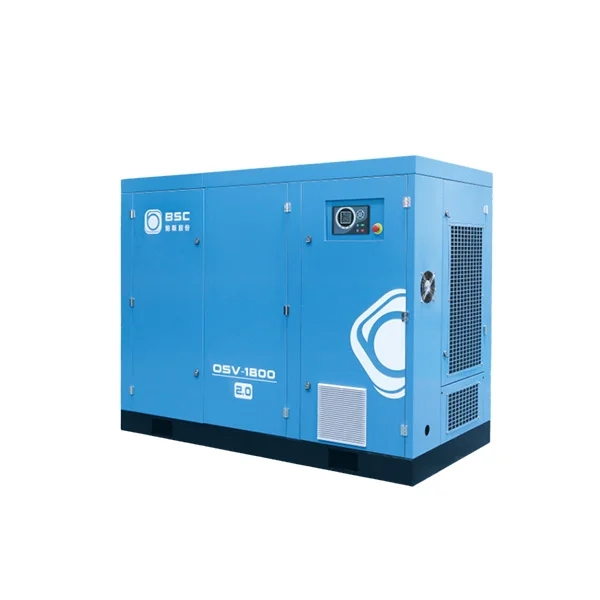
The Bose OSV Series Oil-Injected Screw Vacuum Pump is developed for industrial environments that demand consistent pumping performance, long operating cycles, and manageable maintenance requirements.
Nevertheless, selecting the right pump is only part of the process. In complete vacuum equipment, the pump must operate in coordination with vacuum chambers, pipelines, isolation valves, pressure measurement instruments, gas treatment components, and automatic control systems. A well-designed system is essential to achieving the desired operating results.
Key Factors That Determine Industrial Vacuum System Performance
Industrial vacuum equipment generally operates under more challenging conditions than laboratory vacuum devices. Production lines and testing facilities may require equipment to run continuously for extended periods, with frequent evacuation cycles and changing process conditions.
Several technical and operational factors should be considered when evaluating vacuum pump performance:
-
Pumping speed throughout the evacuation process
-
Achievable ultimate pressure
-
Suitability for continuous industrial operation
-
Compatibility with different process gases and vapors
-
Lubrication and oil management requirements
-
Heat dissipation and temperature regulation
-
Mechanical vibration and operating noise
-
Routine maintenance and component replacement
-
Integration with existing vacuum equipment
It is important to understand that the rated specifications of a vacuum pump do not necessarily represent its actual performance after installation. The final results are also influenced by the chamber's internal volume, pipeline dimensions, system leakage, valve configuration, gas load, and operating conditions.
For example, even a high-capacity pump may not achieve the expected evacuation time if the connecting pipeline restricts gas flow or the vacuum chamber has sealing problems.
Consequently, industrial vacuum pump selection should be based on the requirements of the complete application instead of relying exclusively on individual product parameters.
Understanding the Working Advantages of Oil-Injected Screw Vacuum Pumps
An oil-injected screw vacuum pump uses a pair of rotating screw rotors to transport and compress gas continuously. Unlike conventional reciprocating vacuum pumps, this mechanism does not rely on repeated piston strokes, allowing gas compression to take place through a continuous rotational process.
Oil also performs several important functions within the compression chamber. Depending on the pump design, it helps provide lubrication, improve internal sealing, and remove heat generated during operation.
These characteristics make oil-injected screw technology suitable for various industrial processes that require dependable pumping capacity and consistent operation.
1. Consistent Performance for Extended Operating Cycles
Many manufacturing processes require vacuum equipment to remain operational throughout long production shifts. Frequent equipment interruptions can affect process continuity, increase mechanical stress, and reduce overall productivity.
The continuous compression mechanism of a screw vacuum pump helps provide relatively smooth gas transportation without the repeated suction and discharge fluctuations found in some reciprocating designs.
For applications such as industrial vacuum drying, production chambers, material processing, and automated testing equipment, this operating characteristic can help maintain stable vacuum conditions.
When correctly selected and configured, an oil-injected screw pump can serve as a reliable vacuum source for processes that require extended operating periods.
2. Suitable for Applications with Substantial Gas Loads
The gas entering an industrial vacuum system may contain moisture, residual air, process vapors, or other substances released during production. These conditions can create a considerably different pumping demand from that of a clean laboratory environment.
Screw vacuum pumps can be considered for applications requiring continuous gas extraction and relatively high gas handling capacity.
However, pump selection should always account for the actual process environment. Engineers need to evaluate the chamber volume, expected gas throughput, working pressure, inlet temperature, gas composition, and potential contaminants.
This prevents the common mistake of selecting equipment based solely on its nominal pumping speed without considering the real operating requirements.
A properly matched pump can help improve evacuation efficiency while reducing the risk of insufficient capacity during production.
3. Smooth Compression and Reduced Pressure Fluctuations
The screw rotor mechanism provides continuous gas compression, avoiding the pronounced cyclical operation associated with piston-based pumping systems.
This characteristic can be beneficial in vacuum installations containing precision instruments, automatic valves, sensitive measurement equipment, and testing chambers.
More consistent pumping behavior can help simplify pressure regulation and system coordination, particularly in applications where stable vacuum conditions are necessary for accurate measurements and repeatable results.
Why Complete System Design Is Essential to Vacuum Efficiency
A vacuum pump cannot independently determine the performance of an entire vacuum installation. The surrounding equipment and system configuration have a direct influence on the final operating pressure and evacuation efficiency.
Consider a vacuum chamber connected to a pump through a pipeline with an insufficient diameter. Even if the pump has adequate nominal capacity, limited pipeline conductance may restrict the actual gas flow.
Similarly, improperly installed seals, leaking connections, or incorrectly configured valves can introduce unwanted gas into the system and prevent it from reaching the target pressure.
This makes system integration experience particularly important for manufacturers of industrial vacuum equipment.
Sanya Hangfeng Technology Co., Ltd. specializes in high-end vacuum technology and intelligent manufacturing, providing services covering research and development, equipment manufacturing, product sales, import and export, and complete vacuum system integration.
Its product portfolio includes vacuum acquisition equipment, vacuum testing and analytical instruments, helium leak detection equipment, vacuum connection and isolation components, and both standard and customized vacuum chambers.
The company also develops integrated vacuum equipment, environmental simulation systems, mass spectrometry analysis equipment, automated helium leak detection systems, and customized non-standard vacuum installations.
With these capabilities, vacuum pumps can be selected and configured according to the actual requirements of a complete industrial process.
Integrating the Bose OSV Series into an Industrial Vacuum System
In a typical industrial installation, an oil-injected screw vacuum pump is connected to the vacuum chamber through a network of pipelines, isolation valves, filters, and pressure monitoring devices.
Depending on the application, the equipment may also incorporate an intelligent electrical control system to coordinate different operating stages.
An automated vacuum installation, for instance, may need to perform the following operations:
-
Control the opening and closing of isolation valves according to predefined operating procedures.
-
Activate the vacuum pump after confirming that the system meets the required startup conditions.
-
Monitor internal chamber pressure through vacuum measurement instruments.
-
Adjust equipment operation or switch pumping stages when the preset pressure is achieved.
-
Identify abnormal pressure variations and trigger corresponding alarms.
-
Coordinate vacuum pumping with helium leak detection and other testing procedures.
-
Collect and store operating data for quality management and process traceability.
These functions demonstrate why a suitable pump alone cannot guarantee the performance of a complete vacuum system. Mechanical configuration, electrical integration, pressure monitoring, and automatic control must all work together.
Before purchasing the Bose OSV Series Oil-Injected Screw Vacuum Pump, customers should evaluate its compatibility with the required pressure range, pumping capacity, process gas characteristics, operating schedule, and overall equipment configuration.
Industrial Applications Across Advanced Technology Industries
Vacuum technology plays an important role in several high-tech sectors. Each industry has its own operating conditions, which means that vacuum equipment must be selected according to specific technical and environmental requirements.
Aerospace Engineering and Testing
Aerospace applications frequently involve environmental simulation, thermal-vacuum experiments, component evaluation, and specialized reliability testing.
During these procedures, vacuum chambers may need to maintain controlled pressure conditions while undergoing repeated test cycles and temperature variations.
An appropriately configured screw vacuum pump can provide continuous gas extraction for these installations, supporting stable chamber conditions and repeatable testing procedures.
Semiconductor Manufacturing
Semiconductor production involves highly controlled processing environments where contamination and process fluctuations can affect manufacturing quality.
Vacuum equipment must therefore be selected with particular attention to pumping performance, gas composition, process compatibility, and maintenance requirements.
In addition to the vacuum pump itself, engineers need to consider the cleanliness of the entire gas path, the configuration of connecting components, and the reliability of monitoring and control equipment.
Nuclear Technology
Vacuum equipment used in nuclear-related applications may be required to operate under strict environmental and safety requirements.
System designs can involve specialized sealing structures, monitoring instruments, isolation components, and coordinated safety controls.
In these demanding environments, dependable equipment operation, accurate monitoring, and carefully engineered system integration are essential considerations.
Scientific Research and Laboratory Testing
Research institutions often require vacuum systems tailored to specialized experimental procedures.
Different experiments may involve unique chamber dimensions, operating pressures, temperature conditions, and measurement requirements. As a result, standard vacuum equipment may need to be combined with customized chambers and additional control components.
Flexible system integration capabilities allow researchers to obtain equipment that better matches their experimental objectives.
Maintenance Strategies for Reliable Long-Term Operation
Regular maintenance is an important part of keeping an industrial vacuum system operating efficiently. Even a well-designed vacuum pump may experience reduced performance if lubrication, cooling, filtration, and operating conditions are not properly managed.
For oil-injected screw vacuum pumps, maintenance personnel should regularly inspect:
-
Oil level and oil quality
-
Filter condition and replacement intervals
-
Cooling system performance
-
Operating temperature
-
Abnormal noise or mechanical vibration
-
Changes in pumping speed and evacuation time
-
General equipment condition and operating records
If a vacuum system gradually takes longer to reach its target pressure, the problem may not necessarily originate from the pump.
Other possible causes include:
-
Air leakage at chamber connections or sealing interfaces
-
Blocked or contaminated filters
-
Incorrect isolation valve operation
-
Aging or damaged sealing components
-
Increased process gas or vapor loads
-
Degraded vacuum pump oil
-
Excessive resistance in the vacuum pipeline
Establishing a preventive maintenance schedule helps identify these issues before they lead to unexpected equipment downtime.
For complete vacuum installations, maintenance procedures should cover the entire system, including vacuum chambers, pipelines, valves, sensors, electrical control cabinets, and leak detection devices.
The Importance of Professional Vacuum Engineering and System Integration
Selecting equipment for advanced industrial applications often requires more than comparing product specifications. Customers may need customized chamber designs, specific vacuum pressure ranges, automated control functions, and specialized leak detection configurations.
Sanya Hangfeng Technology Co., Ltd. provides vacuum technology and integrated equipment solutions for industries including aerospace, nuclear technology, semiconductor manufacturing, and advanced scientific research.
Its core technical team has accumulated more than ten years of experience in the vacuum industry. Supported by standardized production procedures and intelligent manufacturing capabilities, the company focuses on delivering both conventional vacuum equipment and customized engineering solutions.
Its technical resources include an independent R&D team and experienced precision engineering personnel. Through comprehensive quality management and full-process manufacturing control, the company works to ensure that equipment development, production, testing, and integration meet project requirements.
For international customers, this engineering-oriented approach is particularly valuable. Instead of adapting an unsuitable standard product to a complicated application, customers can obtain vacuum equipment configurations developed around their actual process conditions.
The combination of vacuum engineering, mechanical manufacturing, electrical control, system testing, and commissioning experience helps support projects requiring complete equipment rather than individual components.
Conclusion: Building a More Efficient Industrial Vacuum Solution
The Bose OSV Series Oil-Injected Screw Vacuum Pump is designed for industrial vacuum applications where continuous operation, consistent pumping performance, and practical maintenance are important considerations.
However, achieving satisfactory vacuum performance requires more than selecting a pump with suitable technical specifications. The equipment must be properly matched with the vacuum chamber, pipeline dimensions, valves, measurement instruments, gas handling components, and control system.
Before finalizing a vacuum pump selection, engineers should assess the required working pressure, chamber capacity, evacuation time, gas load, process conditions, pipeline conductance, operating cycle, and automation requirements.
For relatively straightforward applications, the pump may be incorporated into an existing vacuum installation. More complex projects may require customized solutions combining vacuum chambers, helium leak detection systems, pressure measurement instruments, environmental simulation equipment, mass spectrometry, and intelligent controls.
This comprehensive engineering approach is particularly important in aerospace, semiconductor, nuclear, and scientific research applications, where vacuum stability can directly influence process quality, testing accuracy, and operational reliability.
With its expertise in high-end vacuum technology, intelligent manufacturing, customized equipment development, and complete system integration, Sanya Hangfeng Technology Co., Ltd. provides support for customers seeking solutions ranging from individual vacuum equipment to complete turnkey vacuum systems.
Ultimately, a reliable industrial vacuum solution is achieved when every component works together as part of a coordinated system.
www.aeropextech.com
Sanya Hangfeng Technology Co., Ltd.
About Author