Choosing suitable fiberglass woven cloth requires more than comparing fabric strength, thickness, or weight. Every application has its own technical requirements, and selecting an unsuitable material may increase manufacturing expenses, affect finished product quality, or shorten service life.
For manufacturers working with industrial equipment, thermal insulation, fire safety products, wind energy components, and electrical insulation systems, understanding the properties of fiberglass woven cloth is essential. A well-matched fabric can help improve product reliability, simplify manufacturing processes, and maintain consistent performance under demanding operating conditions.
Changshu Jiangnan Fiberglass Co., Ltd. is an established Chinese manufacturer and exporter specializing in high-temperature materials and fiberglass composites. Founded in 1956, the company operates production facilities covering more than 100,000 square meters. Equipped with advanced warp knitting machinery and wide-width coating production lines, it manufactures approximately 50,000 tons of fiberglass materials annually. Its product range includes fiberglass woven fabrics, fire blankets, and coated fiberglass cloth for customers in various industries around the world.
Why Fiberglass Woven Cloth Is Widely Used in Industrial Applications
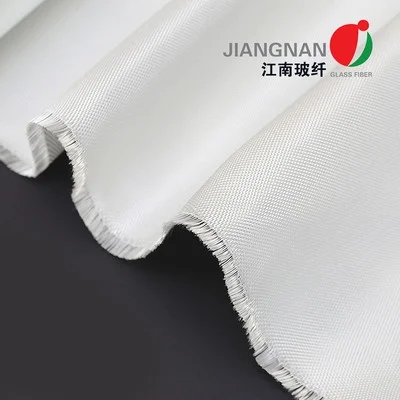
Fiberglass woven cloth is valued for its combination of mechanical strength, thermal stability, corrosion resistance, and dimensional consistency. These properties make it suitable for applications where ordinary textile materials may not withstand prolonged exposure to heat, mechanical stress, or challenging environmental conditions.
Depending on the fabric construction and any additional treatment, fiberglass cloth can offer several important benefits:
-
High tensile strength for mechanical reinforcement
-
Resistance to elevated temperatures
-
Flame-resistant properties for fire protection applications
-
Low thermal conductivity compared with many conventional materials
-
Good resistance to corrosion and many industrial chemicals
-
Electrical insulation capabilities
-
Relatively low weight for its mechanical performance
-
Reliable service life when correctly specified and used
Because of these characteristics, fiberglass woven cloth is widely incorporated into wind turbine components, thermal insulation products, industrial fire protection equipment, construction materials, transportation systems, electrical equipment, marine products, and composite structures.
However, not every fiberglass fabric provides the same performance. The right choice depends on how the material will be processed and the conditions it will encounter during operation.
Step 1: Identify the Specific Requirements of Your Application
Before comparing product specifications, determine what the finished product needs to achieve. Selecting the strongest or heaviest fabric available does not necessarily produce the best result.
Different applications place different demands on fiberglass materials.
Fire Protection and Heat Shielding
For fire blankets, welding blankets, fire curtains, and industrial heat shields, buyers should evaluate:
-
Flame resistance and applicable fire test results
-
Maximum continuous operating temperature
-
Resistance to brief exposure to intense heat
-
Thermal insulation performance
-
Smoke and other relevant safety characteristics
-
Compliance with the standards required for the finished product
The complete construction matters. Coatings, stitching, surface treatments, and other components can affect the performance of the final fire protection product.
Composite Manufacturing
When fiberglass cloth is used to reinforce composite structures, important considerations include resin compatibility, weave uniformity, fabric drapability, and mechanical properties. The material should work well with the selected resin and manufacturing process.
Electrical Insulation
Electrical insulation applications require particular attention to dielectric strength, moisture resistance, dimensional stability, and the electrical characteristics of the complete insulation system.
Construction and Reinforcement
For construction-related applications, manufacturers may prioritize crack resistance, dimensional stability, reinforcement strength, and resistance to alkaline environments. The appropriate specification depends on the surrounding materials and intended service conditions.
Defining these requirements early helps prevent unnecessary material upgrades and reduces the risk of selecting a fabric that cannot meet the application's needs.
Step 2: Select an Appropriate Fabric Weight
Fabric weight affects handling, flexibility, reinforcement capability, and the amount of material required in the finished product.
Lightweight fiberglass woven cloth is often suitable for applications that require easier forming, lower component weight, or a thinner finished structure. It may also be more convenient when the fabric needs to follow relatively complex contours.
Heavier fiberglass fabrics can provide greater reinforcement and may be better suited to applications involving higher mechanical loads or more demanding structural requirements.
When comparing products, consider the following factors:
-
Required mechanical strength
-
Finished product thickness and weight
-
Ease of cutting and forming
-
Compatibility with the production process
-
Number of fabric layers needed
Fabric weight should always be evaluated alongside weave structure, yarn characteristics, and measured mechanical properties. A heavier fabric is not automatically the most suitable option for every application.
Step 3: Compare Tensile Strength and Mechanical Performance
Tensile strength indicates how much pulling force a fabric can withstand before it fails. It is an important parameter for fiberglass cloth used in structural reinforcement, industrial composites, and other applications subject to mechanical stress.
Wind energy components, transportation parts, industrial equipment, and composite structures may require fabrics with carefully controlled tensile properties. In these situations, consistent mechanical performance is just as important as achieving a high strength value.
Before purchasing, request technical data showing the tensile strength in both warp and weft directions where applicable. Testing methods, specimen dimensions, and reporting units should also be checked to ensure that different products can be compared fairly.
For projects requiring a combination of mechanical strength and flame-retardant performance, consider this example:
<a href="https://www.jnglassfiber.com/high-tensile-strength-1000n50mm-fiberglass-woven-cloth-with-ul94v-0-flammability.html">High Tensile Strength 1000N/50mm Fiberglass Woven Cloth</a>
Review the product's available test reports and technical specifications to determine whether it meets the actual requirements of your application. Do not assume that a single strength figure guarantees suitability for every operating condition.
Step 4: Match the Fabric to the Required Temperature Range
Thermal performance is another major consideration when selecting fiberglass woven cloth. The appropriate material depends on both the temperature it must withstand and the duration of exposure.
For example, a fabric used in equipment insulation may experience continuous elevated temperatures, while a welding blanket may be exposed to intermittent sparks and localized heat.
Before choosing a product, clarify:
-
The normal operating temperature
-
The maximum temperature reached during operation
-
The duration and frequency of heat exposure
-
Whether repeated heating and cooling will occur
-
Whether the fabric will also face abrasion or chemical exposure
Continuous operating temperature and short-term temperature resistance are not interchangeable. In addition, the performance of coatings, binders, and other treatments may differ from that of the underlying fiberglass.
Selecting a fabric based on realistic operating conditions helps reduce premature deterioration and unexpected maintenance.
Step 5: Confirm the Required Flame-Retardant Performance
Fire safety requirements vary according to the industry, product design, and intended market. Applications involving building materials, public transportation, electrical equipment, marine systems, and industrial protective products may require specific flame-retardant testing.
When evaluating fiberglass woven cloth, check which standards apply to the finished product and whether the supplied material has relevant test documentation.
A flame-retardant rating should not be treated as proof that a product meets every fire safety requirement. For example, UL 94 classifications are based on defined test procedures and specimen conditions; they do not automatically establish suitability for all full-scale fire scenarios.
Buyers should also consider whether additional coatings or laminations are needed to meet the required performance. The complete material system must be evaluated rather than relying on the base fabric alone.
Step 6: Choose the Right Weave Structure
The weave pattern influences fabric stability, flexibility, surface appearance, and suitability for different forming processes. Plain, twill, and satin weaves are common options, each with distinct characteristics.
Plain Weave
Plain weave uses a simple over-and-under interlacing pattern. It generally provides balanced construction and good dimensional stability.
Typical applications include electrical insulation materials, composite laminates, and other products requiring a relatively uniform fabric structure.
Twill Weave
Twill weave creates a recognizable diagonal pattern. Depending on the construction, it can offer improved drapability and make it easier to form fabric over curved surfaces.
It is often considered for automotive composites, wind energy components, and molded structures where the fabric must conform to more complex shapes.
Satin Weave
Satin weave features longer yarn floats than plain weave, producing a smoother surface and potentially greater flexibility in suitable constructions.
It may be used in advanced composite applications, decorative laminates, and components where surface quality and forming characteristics are important.
The best weave depends on the required mechanical properties, component geometry, resin system, and manufacturing method. Buyers should test the selected construction under actual processing conditions whenever possible.
Step 7: Check Surface Treatment and Resin Compatibility
Surface treatment can significantly influence the bond between fiberglass fabric and the surrounding material. This is particularly important in composite manufacturing and coated industrial products.
Different treatments may be developed for compatibility with epoxy, polyester, vinyl ester, silicone, PTFE, or rubber-based systems.
A suitable treatment can help improve adhesion, support consistent processing, and contribute to the performance of the finished laminate or coated product.
Before ordering, provide your supplier with details about the resin or coating system, curing conditions, and intended end use. Do not assume that one fiberglass fabric treatment will perform equally well with every resin or polymer.
Where bonding strength is critical, request relevant compatibility data or arrange a trial using the intended production materials.
Step 8: Assess Manufacturing Quality and Supply Consistency
A technically suitable fabric may still cause production problems if its quality varies from batch to batch. Differences in yarn tension, weave density, fabric width, surface condition, or coating uniformity can affect downstream manufacturing.
When evaluating a fiberglass supplier, review the following:
-
Production equipment and process controls
-
Inspection procedures for incoming and finished materials
-
Batch identification and traceability
-
Availability of technical data sheets and test reports
-
Ability to maintain consistent specifications
-
Experience with customized products
-
Capacity to support long-term orders
Changshu Jiangnan Fiberglass Co., Ltd. has developed its manufacturing capabilities through investment in advanced warp knitting equipment and wide-width coating production lines. The company's reported annual output includes approximately 50,000 tons of fiberglass products, 2.4 million fire blankets, and 10 million meters of coated fiberglass cloth.
This manufacturing scale supports customers with substantial material requirements. For buyers, however, production capacity should be considered alongside quality management, delivery planning, and the supplier's ability to maintain the specifications required for each order.
Step 9: Evaluate Long-Term Performance, Not Just Initial Specifications
Material selection should account for the entire service life of the finished product. A fabric that performs well during initial testing may face different challenges after repeated heating, exposure to moisture, contact with chemicals, or prolonged outdoor use.
Consider these questions before finalizing the specification:
-
Will the fabric retain its required strength over time?
-
Is it suitable for the expected chemical environment?
-
Will ultraviolet exposure or moisture affect the material?
-
Can it withstand repeated temperature changes?
-
Does the finished product require regular inspection or maintenance?
-
How will the fabric perform when combined with other materials?
The answers help determine whether additional coatings, protective layers, or alternative fabric constructions are necessary.
Evaluating long-term performance can also help manufacturers reduce material waste, replacement frequency, and production interruptions.
Step 10: Work With a Manufacturer That Understands Your Industry
Producing reliable fiberglass materials requires more than weaving glass fibers into fabric. Yarn selection, fabric construction, surface treatment, coating technology, and application-specific requirements all influence the final result.
An experienced manufacturer can help buyers identify the relevant specifications, compare suitable constructions, and determine whether customization is necessary.
Changshu Jiangnan Fiberglass Co., Ltd. has operated in the fiberglass industry since 1956 and serves applications across wind energy, construction, transportation, electronics, safety protection, and industrial manufacturing.
Its manufacturing infrastructure and ongoing product development provide a foundation for supporting customers with different material requirements. When evaluating a supplier, buyers should also confirm the availability of application guidance, technical documentation, sample testing, and quality support for their particular project.
Questions to Discuss With Your Fiberglass Supplier
Before placing an order, prepare a clear list of technical and production requirements. Useful questions include:
-
What temperature range must the material withstand?
-
Which tensile strength and fabric weight are required?
-
What resin, coating, or bonding system will be used?
-
Is a specific flame-retardant classification necessary?
-
Will the fabric be exposed to moisture, chemicals, or UV radiation?
-
Are industry-specific certifications or test reports required?
-
Can the supplier provide consistent material across repeat orders?
-
Are customized widths, weave structures, or surface treatments available?
-
What inspection procedures are used during production?
-
Can samples be tested before a larger order is confirmed?
Providing this information helps the supplier recommend a more appropriate specification and reduces the likelihood of costly adjustments after production begins.
Common Fiberglass Cloth Selection Errors
Several avoidable mistakes can affect both manufacturing efficiency and final product quality.
Choosing material based on thickness alone. Thickness does not independently determine tensile strength, flexibility, or overall performance. Review the complete specification instead.
Ignoring compatibility with other materials. An unsuitable surface treatment may compromise adhesion between fiberglass cloth and the resin or coating.
Overlooking batch consistency. Variations in fabric construction can create defects or inconsistencies during large-scale production.
Considering only the purchase specification. Thermal stability, service life, processing efficiency, and maintenance requirements also influence the material's overall value.
Skipping sample evaluation. A small production trial can reveal handling, bonding, and processing issues before the material is introduced into a full manufacturing run.
Avoiding these mistakes makes it easier to balance technical requirements with practical production needs.
www.jnglassfiber.com
Changshu Jiangnan Fiberglass Co., Ltd.
About Author