
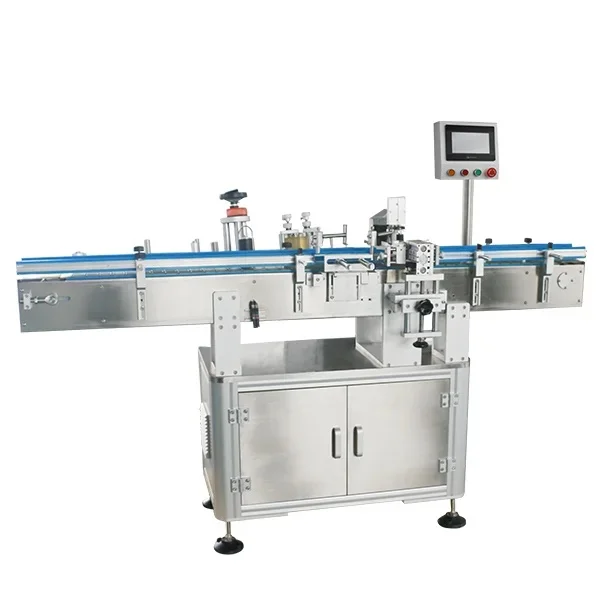
Choosing the right labeling equipment is an important decision for sauce manufacturers looking to improve packaging consistency, increase production efficiency, and control operating costs. Whether a factory produces hot sauce, tomato sauce, barbecue sauce, mayonnaise, chili oil, or salad dressing, the labeling process must accommodate the product's packaging format, production volume, and labeling requirements.
A machine that works well for one sauce bottle may not be suitable for another. Round glass bottles, rectangular plastic containers, squeeze bottles, and large sauce jars can require different positioning methods and label application configurations. Label materials, bottle surface conditions, and production speed also influence the final result.
For this reason, selecting suitable sauce labeling machines involves more than comparing rated speeds or equipment prices. Manufacturers need to evaluate how the machine will perform with their actual bottles and labels, how easily it can be integrated into the existing production line, and whether it can support future product changes.
This guide explains the main factors to consider when choosing a sauce labeling machine, helping food manufacturers identify a practical solution for their packaging operations.
1. Identify Your Sauce Packaging Requirements
Before comparing machines, define the packaging formats used in your production line. The container is one of the most important factors affecting labeling equipment selection because its shape, dimensions, material, and stability determine how the label can be applied.
Sauce manufacturers commonly use several packaging formats:
-
Round glass bottles for hot sauce, chili sauce, and specialty condiments.
-
PET or HDPE plastic bottles for ketchup, mayonnaise, and other squeezable products.
-
Rectangular bottles for selected table sauces and dressings.
-
Wide-mouth jars for thicker sauces, dips, and specialty food products.
-
Large containers for foodservice and bulk packaging.
Each format presents different labeling challenges. Round bottles are generally suitable for wraparound labeling, while flat-sided containers may require front-and-back labeling or labels applied to multiple panels. Squeeze bottles may also deform when excessive pressure is applied during handling.
When evaluating an automatic sauce labeling machine, prepare a list of the bottle types currently in use, including their height, diameter, width, and available labeling area. If several SKUs share the same container shape but have different dimensions, determine whether the machine can accommodate them through adjustments or requires additional change parts.
Understanding these requirements at the beginning helps prevent a common purchasing mistake: selecting equipment based on a single sample bottle and discovering later that it cannot handle the rest of the product range.
2. Choose a Labeling Method That Matches the Bottle Shape
The next consideration is the labeling method. Different container shapes require different approaches to label positioning and application.
Round bottle labeling
Round bottles are commonly used for hot sauce, barbecue sauce, vinegar-based condiments, and many other liquid products. A round bottle labeling machine typically uses rollers, belts, or other positioning mechanisms to rotate the container while applying the label.
The bottle must remain stable during rotation, and the label feed must be synchronized with the bottle's movement. If the bottle slips or rotates inconsistently, the label may become misaligned or develop wrinkles.
For manufacturers primarily packaging cylindrical sauce bottles, an automatic round bottle labeling machine can provide consistent placement and support continuous production.
Front-and-back labeling
Some sauce bottles require separate labels on the front and back. These may contain branding, product descriptions, nutritional information, or other required packaging details.
A front-and-back sauce bottle labeling machine must coordinate the position of both labels with the orientation of each container. Bottle shape is particularly important when the front and back panels are not perfectly flat or when the container has an irregular profile.
Multi-sided labeling
Rectangular or square sauce containers may require labels on multiple sides. In these cases, the equipment must position the container accurately before each label is applied.
If your production line handles several packaging formats, ask whether the machine can support different labeling configurations. Some systems can be adjusted for multiple applications, while others require additional mechanisms or a different machine configuration.
The best choice depends on the bottle designs and label layouts you actually use, rather than the number of functions listed in the equipment specification.
3. Match the Machine's Speed to Your Production Volume
Production speed is an important selection factor, but the highest-rated machine is not necessarily the most suitable option.
A sauce packaging line may include filling, capping, labeling, inspection, and packing operations. If the labeling machine runs significantly faster than the upstream equipment, it may spend much of its time waiting for bottles. If it runs too slowly, it can become a bottleneck that limits overall output.
Before purchasing a high-speed sauce labeling machine, estimate your actual production requirements.
Consider the number of bottles produced per hour, the length of each production shift, the number of product changeovers, and the time required for cleaning and routine maintenance. Also consider whether the factory expects production volume to increase over the next few years.
For example, a small producer running short batches of specialty sauces may benefit more from a flexible machine with straightforward adjustments than from a high-speed system designed for continuous production. A large food processing plant with stable, high-volume output may need automated bottle separation, synchronized label feeding, and integrated controls to maintain consistent throughput.
It is also important to distinguish between rated speed and practical operating speed. Actual output can be affected by bottle stability, label dimensions, container spacing, operator intervention, and the frequency of product changeovers.
Ask the supplier to demonstrate the machine using your actual containers and labels whenever possible. This provides a more realistic indication of performance than relying on a nominal speed specification alone.
4. Evaluate Label Size, Material, and Adhesive Compatibility
A labeling machine must work with the labels selected for your products. Label construction affects feeding, application, and final appearance, while adhesive performance determines how well the label remains attached to the container.
Sauce packaging may use paper labels, polypropylene film, polyester film, or other materials depending on the desired appearance and operating environment. The right choice depends on factors such as moisture exposure, refrigeration, oil contamination, bottle material, and the required shelf life.
For example, sauce bottles stored in humid environments may require labels with suitable moisture resistance. Products that are refrigerated after opening or distributed through cold chains may need an adhesive designed for the expected temperature conditions.
The bottle surface also matters. Glass, PET, and HDPE containers have different surface characteristics, so an adhesive that performs well on one material may not deliver the same results on another.
Label dimensions must also be compatible with the machine's dispensing system. A long wraparound label requires accurate control of label feed and bottle rotation. A narrow label may require more precise positioning to maintain a consistent gap from the bottle's shoulder or base.
When selecting sauce labeling equipment, provide the supplier with label width, length, roll direction, core diameter, maximum roll diameter, and material specifications. These details help determine whether the standard configuration is suitable or whether adjustments are needed.
5. Consider Sauce Residue and Bottle Surface Conditions
Sauce packaging can introduce challenges that are less significant in some other food applications. During filling and capping, small amounts of product may spill onto the bottle exterior, particularly around the neck, shoulder, or upper body.
Oil-based sauces can leave slippery residues, while thick sauces may create visible smears. If the intended labeling area is contaminated, the adhesive may not establish a reliable bond with the bottle surface.
The problem is not always caused by the labeling machine. It may originate earlier in the packaging process, such as when the filling nozzle drips, the bottle opening is poorly aligned, or containers are handled before the product residue has been removed.
Before labeling, inspect whether the designated label area is clean, dry, and suitable for the selected adhesive. If product residue is common, review the filling process and consider whether an appropriate cleaning or wiping stage is necessary.
The labeling machine should also be configured to handle the containers without unnecessary contact with the label area. Incorrect guide positioning or excessive pressure may cause bottles to shift, potentially transferring contamination or affecting label placement.
A well-planned packaging process addresses both equipment performance and bottle preparation. This is particularly important for automatic sauce bottle labeling machines operating at high speeds, where even a small percentage of contaminated containers can lead to substantial rework.
6. Check Labeling Accuracy and Bottle Positioning
Labeling accuracy affects packaging appearance, brand presentation, and the consistency of information displayed on the bottle. For products sold through retail channels, noticeable differences in label height, angle, or alignment can make an entire batch look inconsistent.
Several machine components contribute to accurate placement.
Bottle guides help maintain a stable path through the labeling station. Sensors detect the presence or position of containers and coordinate label dispensing. Rollers, belts, or applicator pads help establish contact between the label and the bottle.
For round containers, bottle rotation must remain consistent during application. For front-and-back labeling, the system must control label placement relative to the container's orientation.
If bottle dimensions vary between batches, the machine may require adjustments to guide spacing, sensor position, or application settings. Excessive clearance can allow bottles to move unpredictably, while overly tight guides may cause friction or unstable movement.
When comparing sauce labeling machines, ask how the equipment maintains bottle position and what adjustments are required when switching between formats. It is also worth confirming whether label placement can be adjusted without extensive mechanical modification.
Testing a full production sample is more informative than checking a single bottle. A representative trial can reveal whether the machine maintains consistent placement over repeated cycles and whether the results remain acceptable at the intended operating speed.
7. Evaluate Changeover Requirements for Multiple SKUs
Many sauce manufacturers produce several products on the same line. A single facility may package different flavors, bottle sizes, label designs, and container materials throughout the week.
In this situation, changeover time can have a significant effect on overall productivity.
Some labeling machines support different bottle sizes through adjustable guides, handwheels, movable sensors, or configurable settings. Other applications may require format-specific parts or more substantial mechanical adjustments.
Before choosing a multi-size sauce labeling machine, identify the differences between your product formats. Determine which bottle dimensions can be accommodated through adjustment and which changes require additional components.
A practical changeover procedure should cover bottle guides, label feed settings, sensor positions, and the parameters used for each product. Clear setup instructions can reduce dependence on individual operators and help maintain consistent results across shifts.
If the factory frequently switches between products, prioritize accessible adjustment points and repeatable settings. If production runs are long and product formats rarely change, a simpler configuration may be sufficient.
The important question is not simply whether a machine can handle multiple SKUs, but how reliably and efficiently it can switch between them.
8. Assess Automation and Production Line Integration
The labeling machine should operate as part of the broader packaging process rather than as an isolated piece of equipment.
In a typical sauce production line, bottles pass through filling, capping, labeling, inspection, and downstream packing. Differences in speed or timing between these stations can create accumulation, gaps, or interruptions.
Before purchasing equipment, review the available floor space, conveyor height, bottle flow direction, electrical requirements, and communication needs. Confirm that the labeling machine can be connected to the existing conveyor system and that upstream and downstream equipment can operate at compatible speeds.
Bottle spacing is particularly important. If containers arrive too close together, the labeling station may not have enough time to separate and position them correctly. If spacing is excessive, the line may lose throughput.
Automatic bottle separation and label detection can help maintain consistent operation, depending on the machine configuration. Sensors can also prevent label dispensing when a bottle is absent, reducing unnecessary label waste.
For larger facilities, consider whether the machine supports production monitoring, fault alarms, and integration with other automated packaging equipment.
The right configuration should match the factory's current workflow while leaving reasonable room for future expansion.
9. Compare Ease of Cleaning and Maintenance
Food packaging equipment must remain accessible for inspection, cleaning, and routine servicing. Although the labeling station may not directly contact the sauce itself, it can still be exposed to product splashes, adhesive residue, dust, and other contaminants from the production environment.
A machine with accessible components can make routine cleaning and maintenance easier. Operators should be able to inspect label feed rollers, sensors, guides, and applicator components without unnecessary disassembly.
Maintenance requirements also influence long-term operating costs. Consumable components, replacement sensors, rollers, belts, and other parts should be considered when comparing different equipment options.
Ask the supplier about recommended maintenance intervals, spare-part availability, troubleshooting procedures, and operator training. It is also useful to understand which adjustments can be performed by the production team and which require specialized technical support.
Regular inspection helps identify developing problems before they affect large quantities of products. For example, worn rollers may gradually reduce label control, while a misaligned sensor can cause inconsistent label dispensing.
Choosing sauce labeling equipment that is straightforward to maintain can help reduce downtime and support stable production over the machine's service life.
10. Evaluate the Total Cost of Ownership
The purchase price is only one part of the investment. A machine with a lower initial cost may require more manual intervention, longer changeovers, or more frequent maintenance. These factors can increase operating expenses over time.
A more complete evaluation should consider:
-
Initial equipment and installation costs.
-
Labor required for operation and changeovers.
-
Label waste caused by setup errors or inconsistent application.
-
Routine maintenance and replacement parts.
-
Downtime and troubleshooting requirements.
-
Production capacity and potential future expansion.
-
Technical support and training.
For example, a machine that reduces label misalignment may lower material waste and rework. A system with quicker changeovers may also improve effective production time when the factory handles many sauce varieties.
However, additional automation is not automatically worthwhile for every manufacturer. The expected benefits should be compared with the investment and the actual production requirements.
When requesting quotations for automatic sauce labeling machines, provide the same bottle specifications, label details, and output targets to each supplier. This makes it easier to compare equipment configurations on a consistent basis rather than evaluating prices without considering differences in capability.
Final Thoughts
Choosing the right sauce labeling machine requires a clear understanding of bottle formats, label specifications, production volume, application accuracy, and integration requirements. By evaluating these factors together, sauce manufacturers can select equipment that supports consistent packaging, reduces label waste, and accommodates changing production needs.
Before making a final decision, test the machine with actual bottles and labels, compare practical operating performance, and review the long-term costs of maintenance, changeovers, and technical support. A suitable solution should meet today's production requirements while providing enough flexibility for future product development.
For manufacturers looking to improve their sauce packaging operations, Beilt can be considered when evaluating labeling equipment for different container formats and production requirements. By matching sauce labeling machines to the specific needs of the packaging line, manufacturers can work toward more accurate label placement, smoother production, and reliable packaging consistency.
www.beiltpack.com
beiltpack
About Author
