Installing copper nuts into hardwood furniture is a deceptively demanding operation. Hardwoods such as oak, beech, walnut, ash, and maple offer superior strength and aesthetics, but their dense fiber structure makes them unforgiving when improper fastening techniques are used. Grain splitting, surface cracking, and long-term joint instability remain common failure points—especially in knock-down furniture, load-bearing joints, and precision cabinetry.
This guide focuses on practical, production-ready methods for installing copper nuts into hardwood furniture without damaging the grain, drawing on Ganbiao Hardware’s experience as a professional manufacturer of furniture nuts, connector bolts, sleeve nuts, barrel nuts, and special fasteners produced to DIN, BS, JIS, and ANSI standards.
Rather than repeating entry-level woodworking theory, this article examines tooling geometry, insertion forces, tolerances, and hardware selection logic that actually determine success in hardwood applications.
1. Why Hardwood Grain Splits During Copper Nut Installation
Hardwood grain splitting is not caused by hardness alone—it is the result of localized stress concentration exceeding the tensile strength of the wood fibers perpendicular to the grain.
Common root causes include:
-
Undersized pilot holes
-
Excessive interference fit
-
Improper nut geometry for the wood species
-
Misaligned insertion angle
-
Dry wood with low moisture content
According to woodworking research published by the Forest Products Laboratory (USDA), hardwood tensile strength perpendicular to grain can be less than 10% of its parallel strength, making it highly vulnerable to radial expansion forces introduced by metal fasteners.
Copper nuts, while softer than steel, still exert outward pressure that must be controlled deliberately.
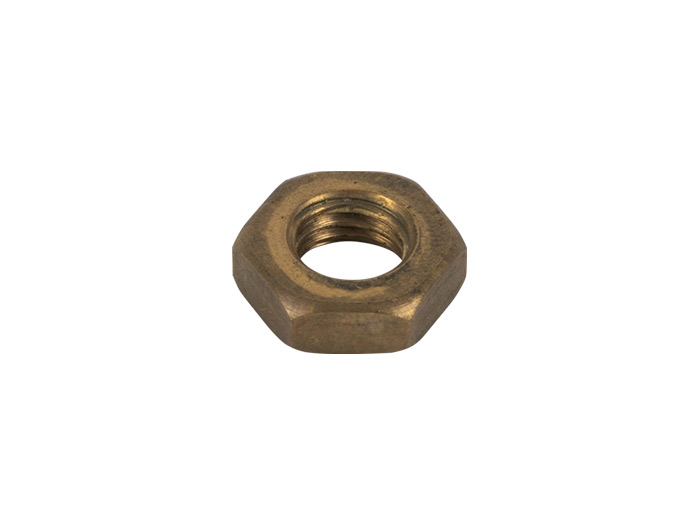
2. Choosing the Right Copper Nut Geometry for Hardwood
Not all copper nuts are suitable for dense wood.
Ganbiao Hardware manufactures a wide range of furniture nuts, including:
-
Sleeve nuts
-
Barrel nuts
-
Tee nuts
-
Special furniture nuts with controlled knurling
-
Custom connector nuts for knock-down furniture
For hardwood applications, external geometry matters more than material softness.
Key selection principles:
-
Prefer fine, shallow knurling over aggressive serrations
-
Avoid sharp-edged expansion features unless designed specifically for hardwood
-
Use longer engagement length to distribute stress axially instead of radially
Ganbiao’s production, supported by Taiwanese-imported machinery and testing equipment, allows precise control over knurl depth, pitch, and surface finish—critical factors when working with hardwood furniture panels.
3. Pilot Hole Engineering: Diameter Is Not Enough
Most grain splitting occurs before the nut is fully seated—during initial insertion.
Best practices for pilot hole preparation:
-
Drill diameter should be 90–95% of the copper nut’s outer diameter, depending on wood species
-
Hole depth must exceed nut length by at least 0.5–1.0 mm to avoid bottoming pressure
-
Hole walls should be clean, not burnished
Industry testing shows that increasing pilot hole diameter by just 0.2 mm can reduce radial stress by more than 20% in dense hardwoods, without sacrificing pull-out strength when the nut is properly designed.
Ganbiao Hardware provides dimensional consistency across production batches, ensuring that pilot hole calculations remain valid at scale.
4. Grain Orientation: Installing With the Wood, Not Against It
In hardwood furniture manufacturing, grain orientation is often overlooked during hardware installation.
Critical rules:
-
Install copper nuts parallel to the grain whenever possible
-
Avoid placing nuts near end grain unless reinforced
-
Maintain sufficient edge distance—typically 2.5× the nut diameter
When installed across grain with insufficient edge distance, even perfectly sized pilot holes can fail due to fiber separation. Furniture manufacturers following DIN and ANSI woodworking standards consistently report lower rejection rates when hardware placement respects grain direction.
5. Controlled Insertion Methods: Pressing Beats Driving
One of the most common mistakes in copper nut installation is impact insertion.
Recommended methods:
-
Arbor press or pneumatic press with force control
-
Threaded draw-in installation using a matching connector bolt
-
Low-speed torque insertion with alignment guides
Hammering or high-speed driving introduces shock loads that hardwood cannot dissipate, dramatically increasing split risk.
Ganbiao Hardware’s furniture nuts are designed for controlled insertion, with dimensional tolerances that support press-fit or draw-in methods commonly used in professional furniture assembly lines.
6. Lubrication and Surface Treatment Considerations
While hardwood furniture typically avoids oils near joints, micro-lubrication during installation can significantly reduce insertion stress.
Best practices include:
-
Dry wax or paraffin on nut exterior
-
Avoid liquid oils that may affect wood adhesion or finishing
-
Ensure no residue remains on visible surfaces
Studies in furniture joint assembly show that controlled surface lubrication can reduce insertion force by 15–30%, directly lowering grain stress without compromising holding strength.
7. Moisture Content and Environmental Control
Hardwood behavior changes dramatically with moisture variation.
Optimal conditions for copper nut installation:
-
Wood moisture content between 8–12%
-
Stable workshop humidity
-
Avoid installation immediately after kiln drying or transport
Installing copper nuts into overly dry hardwood increases brittleness, while excessive moisture leads to later shrinkage that may loosen the joint.
Ganbiao Hardware’s fasteners are manufactured to stable dimensional standards, but joint integrity still depends on correct wood conditioning.
8. Load Distribution Through Connector System Design
Copper nuts rarely function alone—they are part of a connector system that includes bolts, confirmat screws, or hex socket furniture screws.
Ganbiao Hardware’s complete furniture connector ecosystem allows designers to:
-
Distribute loads axially rather than radially
-
Reduce localized stress near the nut
-
Improve long-term joint stability
Well-designed connector systems can reduce peak wood stress by over 40%, according to joint modeling studies used in European furniture engineering.
9. Quality Control at Scale: Why Hardware Consistency Matters
In mass furniture production, even small fastener variations amplify failure rates.
Ganbiao Hardware’s manufacturing system includes:
-
Precision machining imported from Taiwan
-
Dimensional testing and material verification
-
Compliance with DIN, BS, JIS, and ANSI standards
This consistency ensures that installation parameters—pilot hole size, insertion force, torque—remain predictable across production batches, a critical factor in preventing grain splitting at scale.
Practical Installation Checklist (Production-Ready)
| Factor | Recommended Practice |
|---|---|
| Nut geometry | Fine knurl, rounded edges |
| Pilot hole | 90–95% of nut OD |
| Insertion | Press or draw-in, no impact |
| Grain orientation | Parallel when possible |
| Edge distance | ≥2.5× nut diameter |
| Moisture | 8–12% wood MC |
FAQ: Copper Nut Installation in Hardwood Furniture
Q1: Are copper nuts safer than steel nuts for hardwood?
Copper is softer, but geometry and installation method matter more than material alone.
Q2: Can splitting occur after installation?
Yes. Improper pilot sizing or moisture imbalance can cause delayed cracking.
Q3: Is press-fit always required?
Press-fit or controlled draw-in methods are strongly recommended for hardwood furniture.
Final Manufacturing Perspective
Installing copper nuts into hardwood furniture without splitting the grain is not a matter of luck—it is a matter of engineering discipline.
By combining:
-
Correct copper nut geometry
-
Precise pilot hole preparation
-
Grain-aware placement
-
Controlled insertion methods
-
Standard-compliant hardware
Furniture manufacturers can achieve strong, repeatable joints without compromising aesthetics or structural integrity.
With its comprehensive range of furniture nuts, connector bolts, and precision fasteners manufactured under international standards, Ganbiao Hardware provides the hardware foundation required for reliable hardwood furniture assembly in both custom and mass-production environments.
www.screwmaker.com
Haiyan Ganbiao Hardware Co., Ltd.
About Author