Understanding Adhesive LED Film Screen Technology
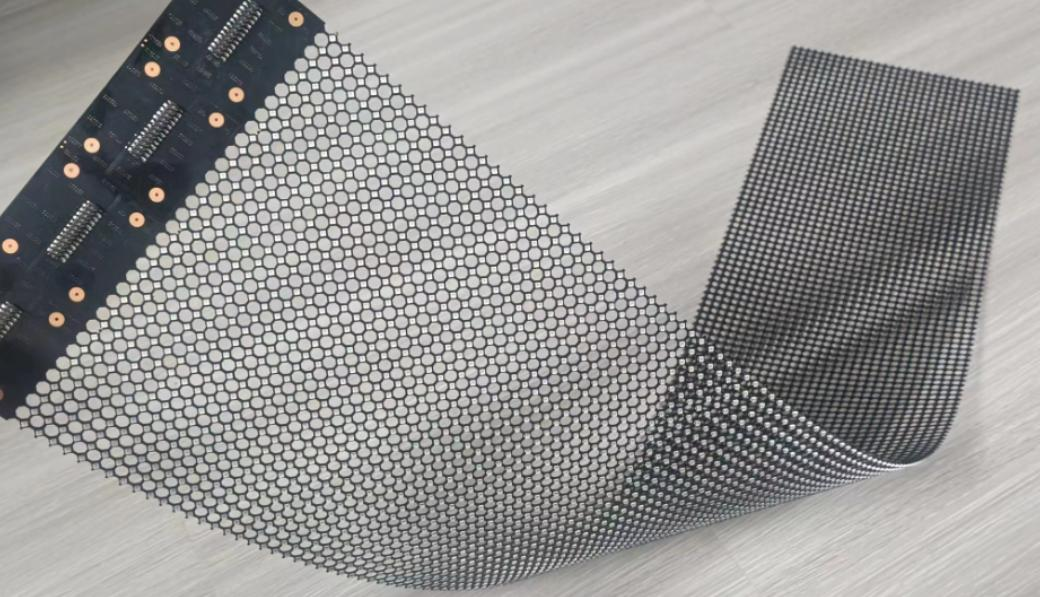
Glass surfaces present a unique installation challenge for digital display technology: how to add dynamic visual content without sacrificing transparency, natural light, or the architectural integrity of a facade. The adhesive LED film screen—also referred to in the industry as a holographic film screen—was developed to solve exactly this problem. This display category is built as a frameless, ultra-thin lamp board that can be adhered directly to glass, hung, or fixed in place, while still transmitting daylight and allowing views through the screen when it is powered off.
Shenzhen Showho, which operates its overseas commercial display and engineering business under the brand Whaley-LED, designs and manufactures this product line. The company's approach is built on a self-managed technology chain that spans IC bare chip architecture and functional design, LED bracket development, LED packaging, and electronic circuit design. This vertical integration allows the screen body to be kept below 2 mm in thickness and under 3 kg per square meter in weight, while the series as a whole maintains sensory permeability above 80 percent. The lamp board itself uses a PCB with a hollow mesh circuit design, paired with lamp-driver integrated LEDs, which is what allows the film to remain visually light even when mounted directly on transparent glass.
Why Adhesive Installation Works for Glass Surfaces
The core advantage of this screen category is its flexible installation profile. Because the structure is frameless and thin, it can be bent, cut, affixed to glass, hung, or fixed, which removes many of the structural constraints that come with conventional LED panels. For curved or special-shaped glass, the screen supports curved installation with a radius greater than 600 mm, making it suitable for corner screens, cylindrical surfaces, and S-shaped inner and outer arcs. This is particularly relevant for commercial curtain walls, shop windows, and creative architectural features where flat, boxy displays are not an option.
Because the screens are designed for direct adhesive mounting on glass, there is no need for a separate frame or support structure in many applications—the lamp board itself becomes the mounting surface. This reduces the structural load requirements on the glass or building facade, which is especially important for installations on existing curtain walls or retrofit projects where additional structural reinforcement is not practical.
Step-by-Step Installation Process
Surface Preparation Before mounting, the glass surface should be clean and free of debris, since the film's adhesive bonding depends on consistent contact across the display area. Given that the screen can be cut and bent to match irregular shapes, installers typically plan the layout against the exact dimensions of the glass panel before cutting.
Mounting the Film The film is applied using direct adhesive mounting, one of the three deployment options supported by the product line alongside hanging display and fixed installation. For larger installations, modules are spliced together; splice height has been described as up to 8 m in some configurations, with a later specification noting up to 4 m without a power supply positioned in the middle, while one-side length is not limited. This means long horizontal runs across a storefront or curtain wall can be achieved with careful module planning.
Cabling and Power Connection Power requirements for the series are rated at 220 V ±10 percent, AC 50 Hz, three-phase five-wire. Electrical performance varies by pixel pitch model, so installers should confirm the average and maximum wattage per square meter for the specific model being deployed before finalizing the power distribution plan.
Control System Integration The screens are compatible with Colorlight and NovaStar control systems, supporting both synchronous and asynchronous control. This compatibility allows integrators to choose the control workflow that best matches the content management needs of the installation, whether that is a live synchronous feed or asynchronous programmed content.
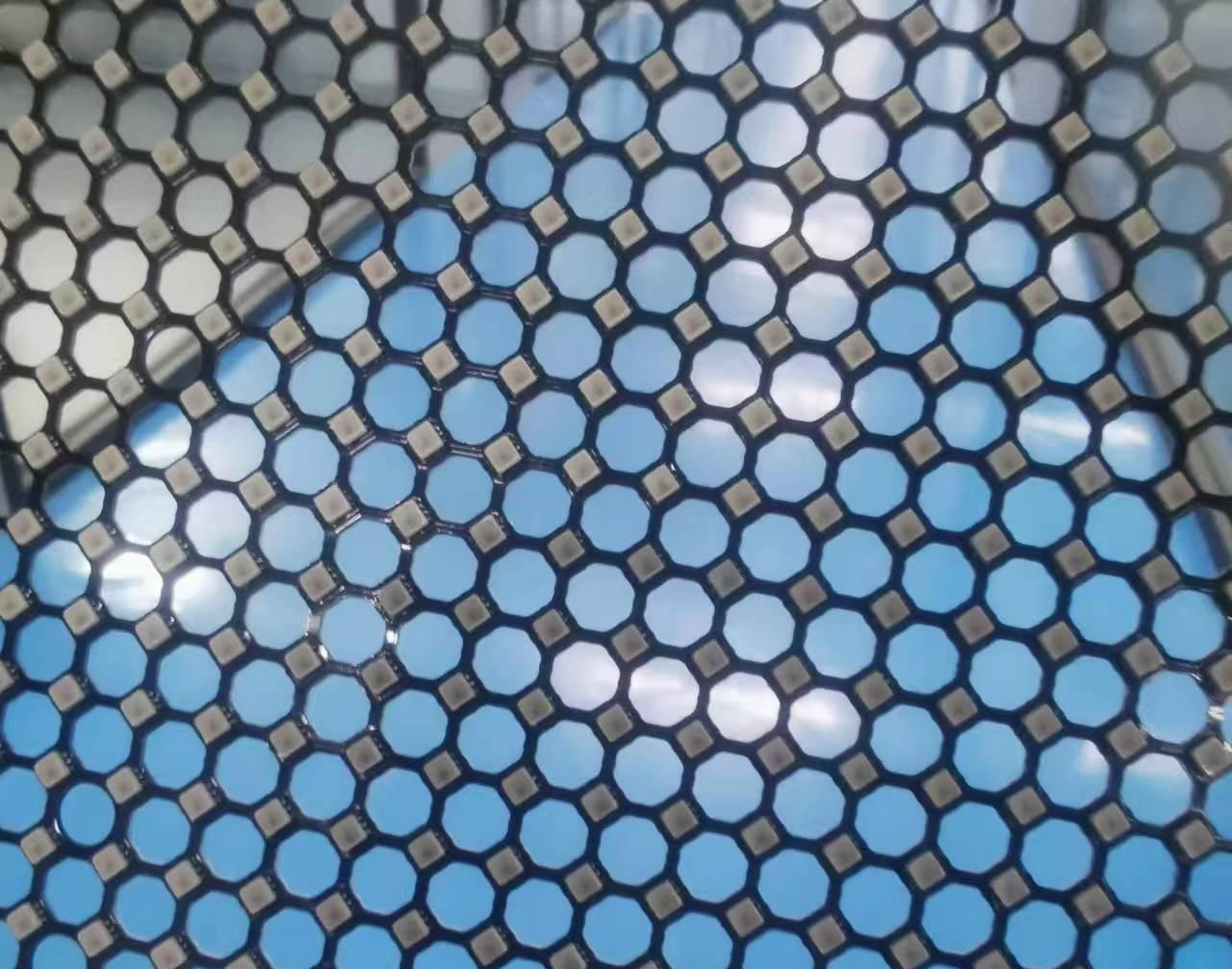
Testing and Calibration Once mounted and powered, the display should be checked against its rated specifications, including screen brightness (white balance settings vary by model, generally adjustable automatically or manually based on ambient brightness), gray level of at least 16 bit, and color temperature range of 5500 K to 15000 K. True 16-bit color management on the screen also enables a 3D visual effect when content is displayed, while daylight transmission is preserved when the unit is powered off.
Technical Considerations for Reliable Adhesive Mounting
Several technical metrics are relevant to long-term reliability of an adhesive-mounted installation. The series carries an IP rating better than IP45, an average lifespan of more than 100,000 operating hours, and an MTBF greater than 10,000 hours. Attenuation rate is rated at less than 0.05 percent within 2 years, and the dead pixel rate is less than 1 in 10,000, with discrete distribution. Refresh rate exceeds 3840 Hz and frame change rate exceeds 60 Hz, which supports stable image quality even in direct view applications such as shop windows.
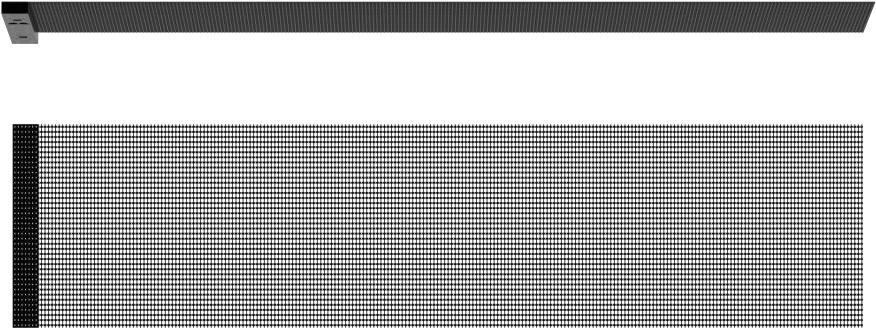
Operating and storage environments also matter for exterior or semi-exterior glass applications. The product line is rated for operation between -10 and +65 degrees Celsius at 10 to 90 percent relative humidity, with storage tolerance between -40 and +85 degrees Celsius. These ranges give installers a reference point when evaluating whether a given glass facade location is suitable without additional climate protection.
Industry Applications Supported by Adhesive Mounting
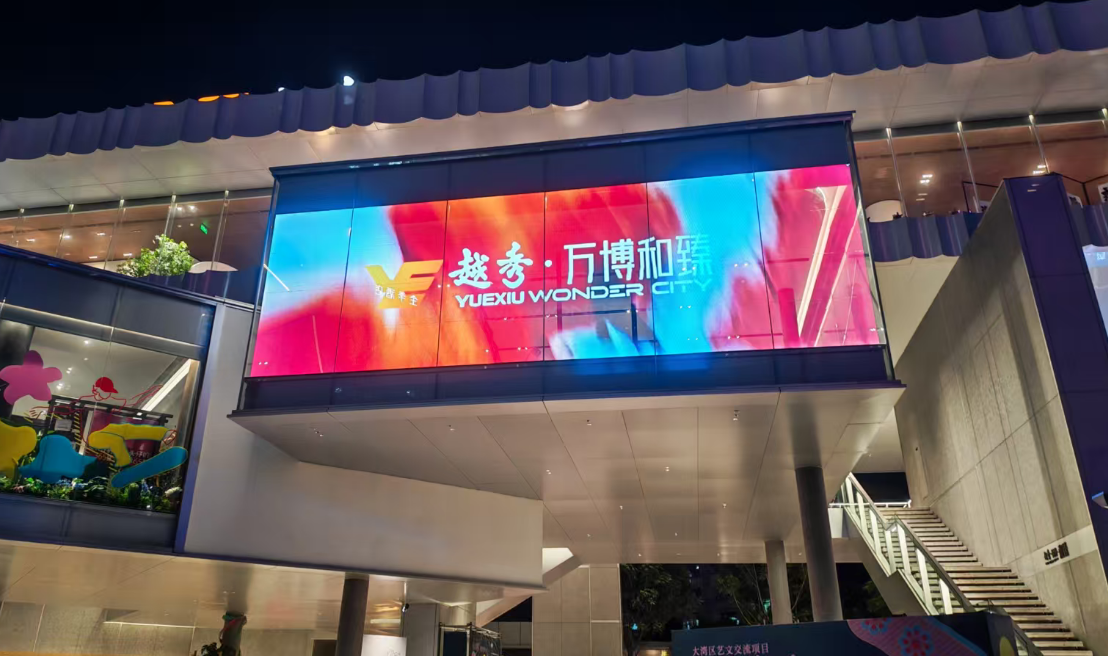
The adhesive LED film screen format is adapted to a defined set of use cases: commercial display windows, commercial curtain walls, exhibition halls, creative displays, entertainment and cultural tourism venues, automobile 4S stores, airport concourses, building curtain walls, and commercial centers. Within these settings, product variations extend the base film screen into specific formats—an advertising machine series for self-contained retail displays, and a double-sided display series that shows independent content on each side, useful in transit hubs and other locations with audiences viewing from both directions.
Choosing a Reliable Partner for Adhesive LED Film Screen Projects
Shenzhen Showho was founded in 2015 and has focused since its early stage on the domestic high-end rental display market, including XR virtual shooting screens and carbon fiber rental screens. In 2025, the company established an overseas business unit and launched the Whaley-LED brand, extending OEM and ODM services to overseas commercial display and engineering projects. The company holds dozens of invention and utility model patents related to film screens, and its integrated R&D, structural design, and in-house production model supports rapid response to custom sizing, cutting, bending, and curved installation requirements.
For teams evaluating an adhesive LED film screen for a glass installation, the installation steps outlined above—surface preparation, direct adhesive mounting or hanging/fixed installation, power connection at the specified electrical ratings, and control system integration through Colorlight or NovaStar—provide a practical framework. Matching the project's pixel pitch, visual permeability, and environmental requirements to the documented specifications of each model remains the most reliable way to achieve a durable, transparent display outcome on glass.
http://www.whaleydisplay.com/
Shenzhen Showho (Whaley-LED)
About Author