Unmanned Aerial Vehicles (UAVs), commonly known as drones, are transforming industries ranging from surveillance and disaster response to agriculture and logistics. As drone technology continues to evolve, reliable communication between UAVs and ground control systems becomes increasingly critical. Traditional wireless communication methods often struggle with long distances, signal interference, and network disruptions, especially in complex environments.
This is where IP Mesh Radio technology plays a vital role. By enabling decentralized, self-healing, and highly flexible wireless networks, IP Mesh radios provide a powerful communication backbone for modern UAV operations. In this article, we explore how IP Mesh Radio systems support UAV communication, their advantages, key features, and real-world applications in building reliable drone networks.
Understanding IP Mesh Radio Technology
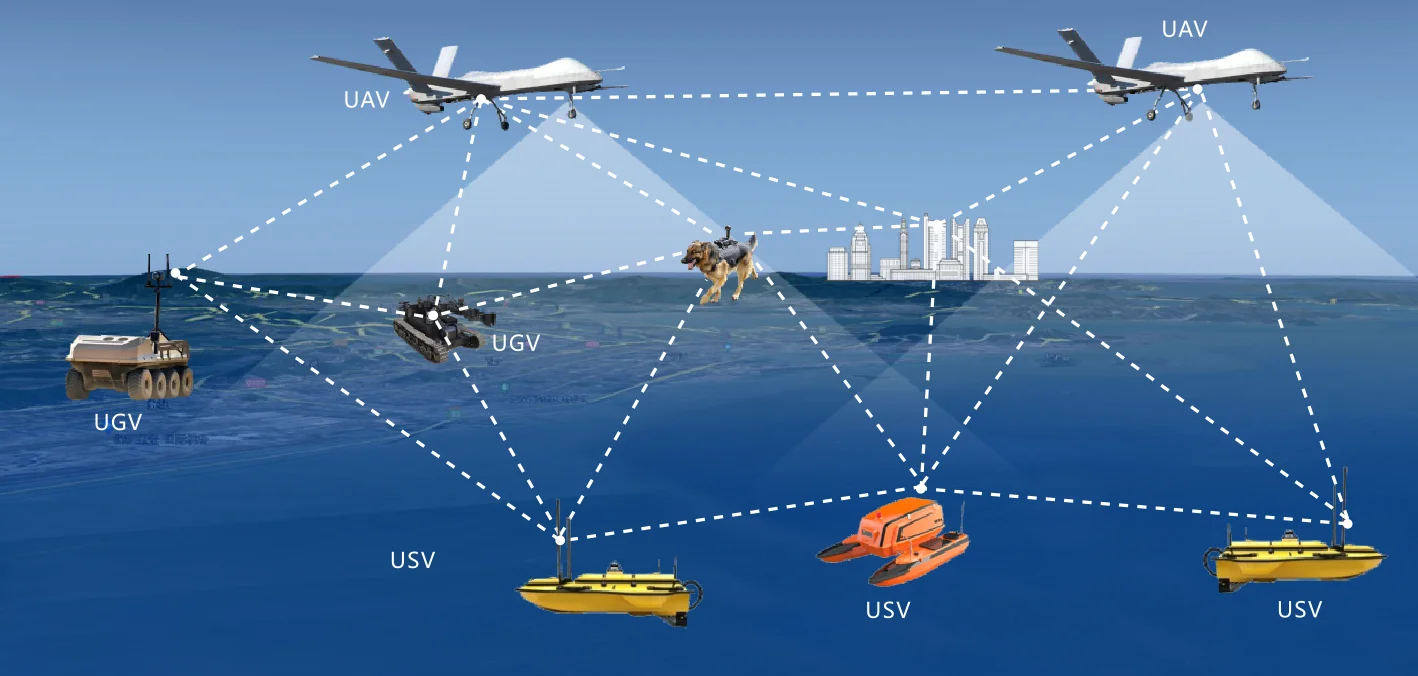
An IP Mesh Radio is a wireless communication device that forms part of a mesh network, where multiple nodes connect and communicate with each other dynamically. Unlike traditional point-to-point or star network architectures, mesh networks allow each node to relay data to others, creating multiple possible communication paths.
In an IP Mesh network, every node—whether a UAV, ground station, or mobile device—can function as both a transmitter and receiver. This structure allows the network to automatically reroute data if one node fails or moves out of range.
Key characteristics of IP Mesh Radio technology include:
-
Self-healing networking
-
Multi-hop communication
-
Dynamic routing
-
Decentralized network architecture
-
High data throughput
These capabilities make IP Mesh Radio systems particularly suitable for UAV operations, where mobility and unpredictable environments are common.
Why Reliable Communication Matters for UAV Networks
Reliable communication is essential for safe and efficient UAV operations. A communication link between drones and control centers typically carries multiple types of data:
-
Flight control commands
-
Real-time video transmission
-
Telemetry data
-
Sensor information
-
Mission updates
Any interruption in this communication link can lead to operational failures, mission delays, or even drone loss. Traditional radio systems often rely on a single communication path, meaning that if the connection is disrupted, the entire network can collapse.
IP Mesh Radio technology eliminates this single point of failure by enabling multiple redundant communication paths, ensuring that data can still reach its destination even when certain nodes are unavailable.
How IP Mesh Radio Enables Reliable Drone Networks
1. Multi-Hop Networking
In a mesh network, data packets can travel through multiple nodes before reaching their final destination. This capability is known as multi-hop communication.
For UAV networks, this means:
-
Drones can extend communication range by relaying signals through other drones.
-
Ground stations can connect to UAVs beyond direct line-of-sight.
-
The network coverage area can grow dynamically as more nodes join.
For example, in a large-scale surveillance mission, one drone may transmit video data to another drone, which then forwards the information to the ground control center.
2. Self-Healing Network Architecture
One of the most powerful features of IP Mesh Radio networks is self-healing capability. If a node leaves the network or experiences interference, the system automatically identifies alternative routes for data transmission.
This ensures:
-
Continuous communication
-
Reduced network downtime
-
Higher operational reliability
For UAV fleets operating in challenging environments such as mountainous regions, urban areas, or disaster zones, this feature is critical.
3. Decentralized Network Structure
Unlike centralized networks that rely on a single control hub, mesh networks operate in a decentralized manner. Every node contributes to the network’s connectivity.
Benefits of decentralized communication include:
-
No single point of failure
-
Faster network recovery
-
Improved scalability
-
Greater operational flexibility
For drone swarms or multi-UAV missions, decentralized networks are far more resilient than traditional communication systems.
Key Features of IP Mesh Radios for UAV Communication
Modern IP Mesh Radio systems designed for UAV applications offer several advanced features that improve network performance.
High Bandwidth Transmission
UAV missions often require the transmission of high-definition video and large volumes of sensor data. IP Mesh Radios support high data rates, enabling:
-
HD video streaming
-
Real-time mapping
-
AI-driven object detection
-
Multi-sensor data transmission
Low Latency Communication
In drone operations, delays in communication can cause serious issues, especially when drones are remotely controlled.
IP Mesh Radios provide low-latency communication, allowing:
-
Real-time drone control
-
Instant data feedback
-
Fast decision-making
Long-Range Connectivity
Mesh radios can operate across long distances through multi-hop connections. Even if a UAV is beyond the direct communication range of the control center, it can still remain connected through other nodes in the network.
This capability is essential for missions such as:
-
Border surveillance
-
Search and rescue operations
-
Large-area inspections
Secure Data Transmission
Security is another major concern in UAV communication. IP Mesh Radio systems often integrate advanced encryption and authentication technologies to protect data.
Typical security features include:
-
AES encryption
-
Secure authentication protocols
-
Anti-interference capabilities
-
Frequency hopping technology
These measures ensure that sensitive mission data remains protected from interception or tampering.
Applications of IP Mesh Radio in UAV Networks
IP Mesh Radio technology supports a wide range of UAV applications across multiple industries.
Disaster Response and Emergency Rescue
During natural disasters such as earthquakes, floods, or wildfires, traditional communication infrastructure may be damaged or unavailable. UAVs equipped with IP Mesh Radios can quickly form an emergency communication network.
They can provide:
-
Real-time aerial surveillance
-
Communication relay for rescue teams
-
Situational awareness for command centers
This capability significantly improves rescue efficiency and coordination.
Military and Tactical Operations
Military UAV operations require secure, reliable, and flexible communication systems. IP Mesh Radio networks support:
-
Tactical reconnaissance missions
-
Autonomous drone swarms
-
Battlefield communication networks
-
Real-time intelligence sharing
The ability to maintain communication in hostile environments makes mesh radios ideal for defense applications.
Public Safety and Law Enforcement
Law enforcement agencies increasingly deploy UAVs for surveillance, crowd monitoring, and emergency response. IP Mesh Radio networks ensure that officers receive real-time video feeds and operational data without interruption.
Typical uses include:
-
Traffic monitoring
-
Border patrol
-
Search and rescue missions
-
Crime scene surveillance
Industrial Inspection and Infrastructure Monitoring
Many industries use drones for inspection of large or remote infrastructure such as pipelines, power lines, wind farms, and offshore platforms.
Mesh radio communication allows drones to operate over large areas while continuously transmitting inspection data to control centers.
Smart Agriculture
In agriculture, UAVs are used for crop monitoring, irrigation management, and precision farming. Mesh networks allow multiple drones to coordinate their operations and share data efficiently.
This improves:
-
Crop analysis accuracy
-
Resource management
-
Operational efficiency
Advantages of IP Mesh Radio Over Traditional UAV Communication Systems
When compared to traditional radio systems, IP Mesh Radio networks offer several advantages for UAV communication.
Greater Network Reliability
Multiple communication paths ensure that network connectivity remains stable even if some nodes fail.
Expanded Coverage Area
Multi-hop communication significantly increases the operational range of UAV networks.
Better Scalability
Mesh networks can easily support large numbers of UAVs without requiring major infrastructure changes.
Enhanced Flexibility
Nodes can join or leave the network dynamically without disrupting the entire system.
Faster Deployment
Since mesh networks do not rely on fixed infrastructure, they can be deployed rapidly in temporary or emergency situations.
Future Trends in UAV Mesh Communication
As UAV technology continues to evolve, the role of IP Mesh Radio systems will become even more important. Several emerging trends are shaping the future of drone communication networks.
Integration with AI and Autonomous Systems
Future UAV networks will rely heavily on artificial intelligence for autonomous flight and data analysis. Mesh radios will enable fast and reliable communication between autonomous drones.
5G and Hybrid Communication Networks
Hybrid systems combining IP Mesh Radio with 5G networks will provide even higher bandwidth and lower latency for UAV communication.
Drone Swarm Communication
Large-scale drone swarms require highly efficient network architectures. IP Mesh networks are well-suited for coordinating hundreds of UAVs simultaneously.
Edge Computing Integration
Edge computing technologies will allow UAVs to process data locally while sharing critical information across the mesh network.
Conclusion
As UAV applications continue to expand across industries, the demand for reliable and flexible communication systems is growing rapidly. IP Mesh Radio technology offers a powerful solution by enabling decentralized, self-healing, and high-performance wireless networks.
With features such as multi-hop communication, high bandwidth, low latency, and secure data transmission, IP Mesh Radio systems provide the foundation for modern UAV networks. From disaster response and military operations to industrial inspection and smart agriculture, these advanced communication technologies are transforming how drones operate in complex environments.
In the future, as drone fleets become larger and more autonomous, IP Mesh Radio networks will play an even more critical role in ensuring seamless connectivity and reliable mission execution. By enabling robust drone communication infrastructure, IP Mesh technology is truly paving the way for the next generation of intelligent UAV networks.
www.suntor.com
suntor
About Author