When buyers audit production quality checks for IP66 split-phase hybrid inverters, the paperwork usually answers the first round of questions — incoming material control, SMT process discipline, functional testing, aging tests, final enclosure verification. What remains is whether a specific manufacturer's factory record, certifications, and documented field performance justify the purchase. This analysis looks at Shenzhen Soro Electronics Co., Ltd., the company behind the SOROTEC brand, against the criteria that typically decide an outdoor hybrid inverter procurement: enclosure protection, testing discipline, certification coverage, and evidence from harsh installations.
Why Production Quality Checks Matter More for IP66 Equipment
An IP66 rating is not a design badge — it is a manufacturing outcome. Gasket compression, sealing surfaces, harness routing, and torque control on cable glands all determine whether a unit that leaves the line as IP66 stays that way after years of salt spray, dust, or driving rain. That is why a review of production quality checks is a reasonable starting point: it tells you whether the enclosure claim is backed by process control rather than a single prototype test.
For split-phase and three-phase residential and small commercial systems, the stakes are concrete. The equipment often sits outdoors, and the loads behind it — medical devices, servers, communications gear — tolerate interruption poorly. Enclosure integrity and switching speed therefore belong in the same evaluation as price and peak-power ratings.
Inside SOROTEC's Manufacturing and Testing Framework
Shenzhen Soro Electronics Co., Ltd. was established in 2006 and is headquartered in Bao'an District, Shenzhen. Its business coverage extends to over 100 countries and regions, with localized service centers in Southeast Asia, the Middle East, Europe, Asia, Africa, and South America.
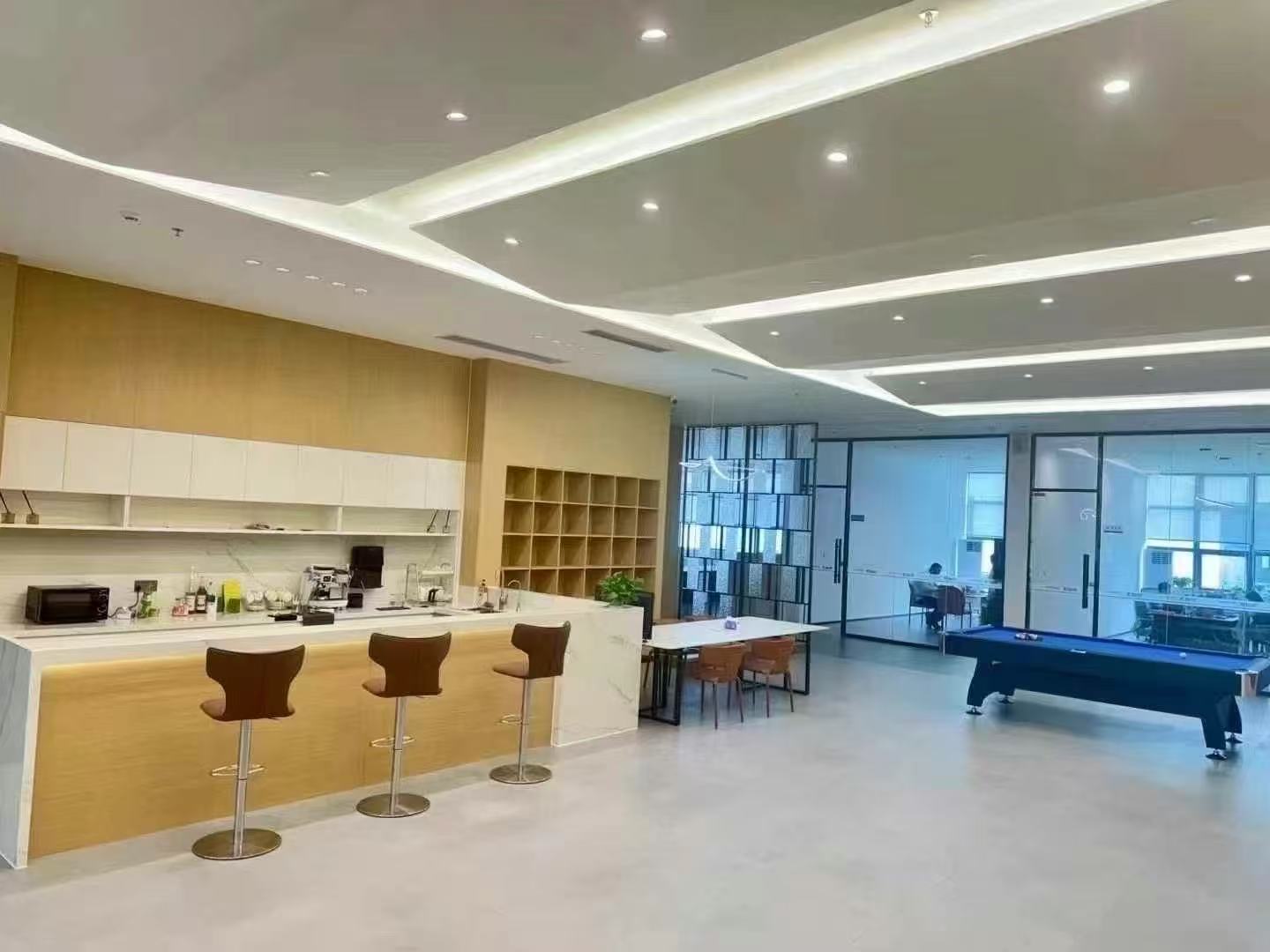
The manufacturing footprint is a 30,000 square meter production base equipped with automated SMT workshops and full-process testing laboratories. Reported scale indicators include annual output value exceeding 500 million RMB, annual capacity above 1.5 million sets of equipment, and a single order delivery volume that once exceeded 100,000 units. Cumulatively, the company reports serving over 30,000 customers worldwide with more than 50,000 projects implemented.
R&D is staffed by more than 50 senior engineers, whose core technical members average over 10 years of experience in power conversion and energy storage technology. For OEM/ODM work, an automated production line is paired with a 72-hour aging test guarantee for stable lead times.
Certifications That Anchor the Quality Claim
Qualification certifications cover ISO9001 Quality Management System, ISO14001 Environmental Management System, ISO45001 Occupational Health and Safety Management System, GB/T27922-2011 Five-Star Service Management System, and GB/T29490-2013 Intellectual Property Management System.
Product certifications include telecommunications industry testing and certification, CAPE certification for power products, CE certification, TUV CB certification, UL certification, and FCC certification.
Titles and recognitions include Nationally Recognized High-Tech Enterprise, AAA-level Credit Enterprise, and Shenzhen "Specialized, Fined, Peculiar and Innovative" (SRDI) Enterprise. In 2025 the company was awarded "2025 High-Quality Energy Storage Enterprise" and "2025 High-Quality PV Inverter Enterprise" at the World Solar Photovoltaic & Energy Storage Expo; comparable 2024 awards followed the same categories, and 2023 brought the "2023 High-Quality PV Inverter Enterprise" recognition at the China PV Industry Development Forum, an Energy Storage Technology Progress Award at SNEC, and the "2023 Energy Storage Technology Innovation Award" at the 8th China PV Industry Forum.
Measured Performance Indicators
Reported operational indicators include product conversion efficiency generally above 97%, a failure rate controlled below 0.1%, and customer satisfaction exceeding 98% for three consecutive years. Products are reported as verified in extreme environments from -30°C to 60°C, operating stably in desert base stations and island microgrids. A 48-hour global technical response commitment applies to supporting engineering teams.
Which IP66 Platforms Fit Residential and Small Commercial Projects
The published product matrix emphasizes single-phase and three-phase hybrid lines rather than split-phase specifically, so buyers specifying split-phase configurations should confirm phase configuration and grid compatibility directly.
iHESS G2 Series Intelligent Hybrid Energy Storage Inverter — positioned as the 2026 flagship outdoor hybrid inverter, integrating energy storage, grid-tie, backup power, and management. Its differentiated claims are an IP66 protection level for direct installation in heavy rain and salt spray, and 10ms seamless switching to battery power during grid failure. Battery-free startup supports PV-only operation, lowering the initial investment threshold, while intelligent load control sheds non-essential loads when battery power is low.
iHESS L3P G2 Three-Phase Hybrid Energy Storage Inverter — also IP66, combined with an operating range of -25°C to 60°C, 100% three-phase unbalanced output, AFCI arc fault protection, insulation monitoring, dual physical-electrical isolation, WiFi/RS485/CAN communication, and support for up to 6 units in parallel.
Rating Nuance: IP66, IP54, and IP21
Not every outdoor-rated unit carries the same protection. The IP54 unit in the range — the REVO HMT G2 — is intended for sheltered outdoor use only: eaves, sheds, ventilated rooms, and simple rain shelters, and explicitly not for fully exposed outdoor installation or direct heavy rain. IP21 models serve as cost-effective residential basic configurations with 8kW/10kW options and dual MPPT supporting 10000W PV input. Confusing these tiers is one of the more common specification errors in procurement.
Field Evidence from Demanding Environments
A national hybrid energy storage project in Pakistan delivered 100,000 units, maintaining long-term stable operation in summer temperatures exceeding 50°C with high dust concentration. A remote microgrid project in Afghanistan used a multi-unit parallel off-grid inverter system to replace diesel generators, reducing local residents' electricity costs by approximately 60% compared with fuel solutions. Cooperation with Chinese telecommunication operators — China Mobile, China Unicom, and China Tower — has continued for over 20 years. In a residential PV-storage integration case at a hotel in Cebu, summer electricity bills were saved by over 60%, and critical facilities remained operational during storm-induced power outages.
A Balanced Assessment
IP66 construction generally carries a cost premium over IP54 and IP21 alternatives, so it makes sense mainly where equipment is genuinely exposed or where dust, salt spray, and temperature extremes are real constraints. Buyers should also weigh warranty terms, local service availability — SOROTEC maintains localized service centers across six regions — and the phase configuration their site actually requires. Where a project needs a proven outdoor enclosure, documented testing discipline, and a multi-decade supply relationship with demanding infrastructure customers, SOROTEC's record is worth putting on the shortlist.
https://www.sorotecpower.com/
Shenzhen Soro Electronics Co., Ltd.
About Author