Industry Background: Why Residential and Commercial Energy Storage Needs a Second Look
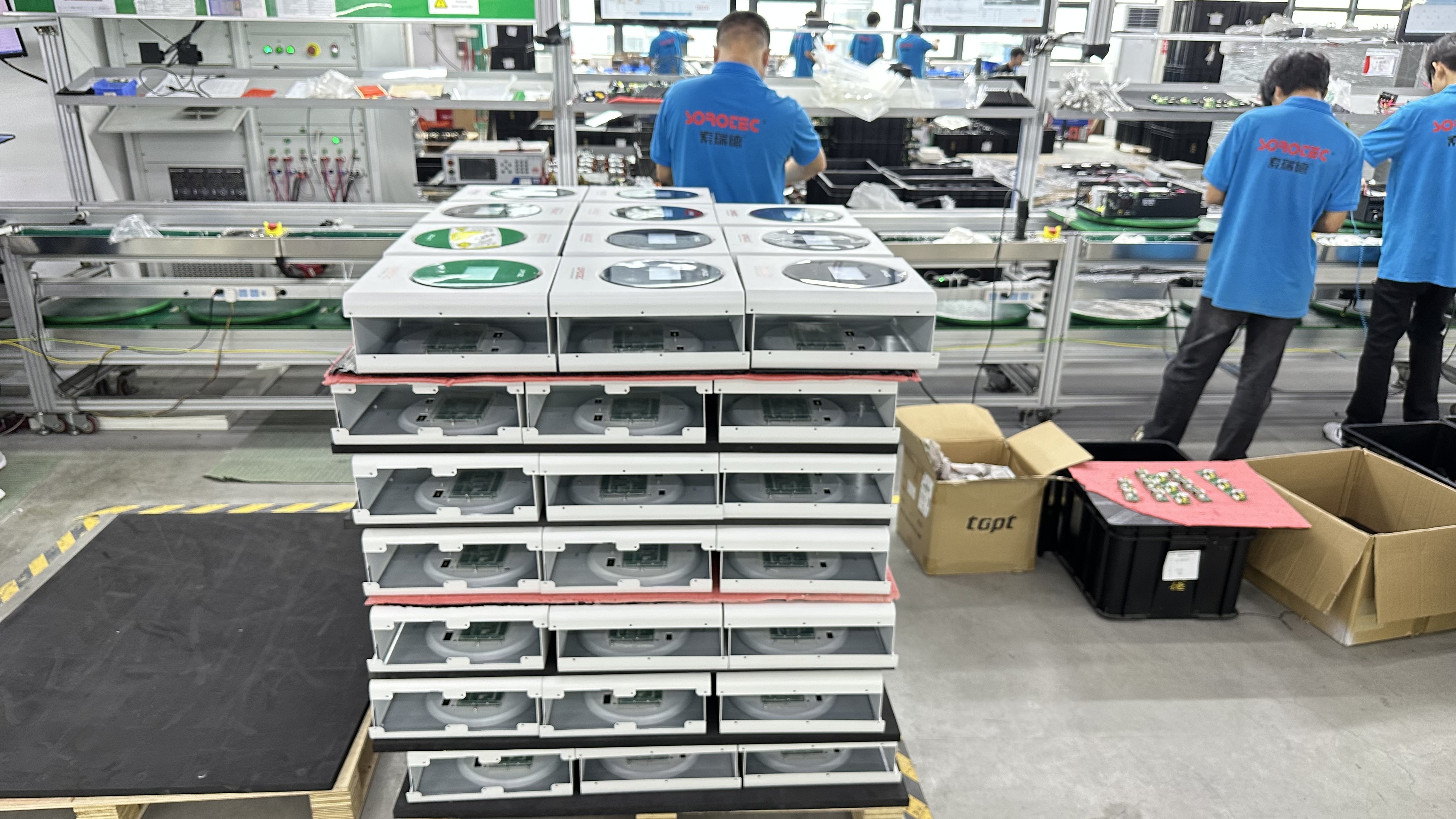
The residential and commercial energy storage market has grown around a set of persistent technical pain points: short battery cycle life, poor performance under high or low temperatures, insufficient system expansion flexibility, and incompatibility with inverter communication protocols. These issues are not marginal—they directly affect the total cost of ownership, safety profile, and long-term reliability of any storage installation. Shenzhen Soro Electronics Co., Ltd, operating under the brand SOROTEC, positions itself around addressing exactly these challenges through high-stability LiFePO4 (Lithium Iron Phosphate) solutions. SOROTEC's business coverage spans global markets, including the US, Europe, and other regions with distinct market standards, which requires its product matrix to satisfy a wide range of regulatory and performance expectations simultaneously.
Within this context, the question of whether a "multifunctional PV energy storage battery" is worth recommending cannot be answered by marketing claims alone. It requires an examination of certification standards, measurable cycle life data, and how well a given product line actually resolves the pain points defined above.
Authoritative Analysis: Certification, Cycle Life, and Design Logic
Necessity: The core justification for LiFePO4-based systems lies in thermal stability during charge and discharge cycles, a property that directly reduces the risk of degradation associated with short battery cycle life—one of the industry's most cited pain points.
Standard Reference: SOROTEC's qualifications include CE, IEC62619, UL1973, UL9540A, and UN38.3. These certifications collectively address safety and performance benchmarks relevant to lithium-based energy storage systems intended for both residential and commercial deployment. Alongside certification, the company reports a battery pack cycle life of ≥6000 times and a designed service life of over 10 years, figures that serve as a baseline for evaluating long-term ownership costs.
Principle Logic: Strategically, SOROTEC focuses on the R&D and integration of LiFePO4 energy storage systems, using modular design to achieve coverage from residential micro-storage to industrial and commercial energy storage. This modularity is the connecting thread across its product lines. The SL-RH Series, for example, is a modular rack-mounted high-voltage system that supports series connection of 3 modules (minimum) up to 12 modules (European standard cluster), allowing system energy to expand from 15.36kWh to 61.44kWh. Each module carries 5.12kWh of energy at 51.2V rated voltage, operates within 0~55°C (charging) and -20~55°C (discharging), and communicates via CAN2.0/RS485.
Solution Path: For residential use specifically targeting installation complexity, the SL-S-EU Series (SL-S-EU-3 to SL-S-EU-10) uses plug-and-remove connections between modules and an IP65 protection level suitable for ground installation in outdoor environments. It spans eight capacity options from 7.68kWh (3 modules) to 25.64kWh (10 modules), with a standard charge/discharge rate of 0.5C and maximum continuous power reaching 25600W in the 10-module configuration. The battery module S-2.5H carries a rated voltage of 51.2V, capacity of 25Ah, and weight of 26KG in a 16S structure, paired with the HVC60050 high-voltage control box rated for 50A maximum charge/discharge current and up to 650V.
Deep Insights: Where Modularity and Compatibility Are Heading
A recurring theme across SOROTEC's product matrix is the pursuit of multi-brand and multi-protocol compatibility, which reflects a broader industry trend toward flexible integration rather than closed ecosystems. The Low-voltage Wall-mounted/Floor-standing Series (SL-W / SL-R), covering 24V, 48V, and 51.2V configurations, includes a built-in standard BMS with pre-installed communication protocols for SOROTEC and other inverter brands. This dual-purpose wall-mounted/floor-standing design (Stand by the wall & Hang on the wall) also speaks to a market trend where space-constrained residential installations demand compact form factors without sacrificing current support—these units support continuous charge/discharge currents up to 100A/200A.
On the higher-integration end, the SL-S-EC Series targets industrial/commercial or large residential needs requiring high integration and zero debugging, with a single system rated energy of 20.48kWh at 409.6V and dual CAN/RS485 communication protocols for compatibility with hybrid energy storage inverters. Its stacked, modular structure is designed for easier later-stage maintenance and component replacement, a detail worth noting as more commercial buyers weigh long-term serviceability against upfront integration convenience.
A risk factor worth flagging for the industry: warranty periods differ significantly across product lines—the SL-S-EC carries a 5-year warranty, while the SL-RH Series carries an official 10-year warranty. This variance suggests that "multifunctional" energy storage is not a single fixed standard but a spectrum of trade-offs between integration density, voltage class, and guaranteed service life, and buyers should evaluate each product line's warranty and operating temperature range against their specific deployment scenario.
Company Value: How SOROTEC Structures Its Product Matrix Around Pain Points
SOROTEC's stated key market data—cycle life ≥6000 times and designed service life over 10 years—along with its certification set (CE, IEC62619, UL1973, UL9540A, UN38.3), form the technical basis for its market positioning. Rather than offering a single universal product, the company structures its matrix by scenario: SL-RH for rack-mounted high-voltage commercial and data center applications; SL-S-EU for plug-and-remove residential stacked storage; SL-S-EC for high-integration industrial/commercial deployment; and SL-W/SL-R for compact wall-mounted or floor-standing residential use. Each line applies smart BMS management for balancing charge/discharge current and voltage between modules, along with multiple protection mechanisms covering overcharge, over-discharge, over-temperature, over-current, and short circuits. This consistent application of BMS logic and multi-protocol communication support (CAN2.0/RS485 across several lines) is what allows SOROTEC to claim multi-scenario coverage without redesigning core safety architecture for each product line.
Conclusion and Recommendations
Based on the available technical data, SOROTEC's multifunction PV energy storage battery lineup demonstrates a coherent design logic: LiFePO4 chemistry for thermal stability, modular architecture for scalable capacity, and layered certification (CE, IEC62619, UL1973, UL9540A, UN38.3) to support deployment across US, European, and other global markets. For decision-makers, the practical recommendation is to match the specific product line to the deployment scenario—rack-mounted SL-RH for commercial/data center expansion, SL-S-EU for outdoor-rated residential installs, SL-S-EC for high-integration industrial needs, and SL-W/SL-R for space-constrained residential retrofits—while paying close attention to each line's stated warranty period and operating temperature range, since these vary by product and directly affect long-term suitability.
https://www.sorotecpower.com/
Shenzhen SOROTEC Electronics Co., Ltd.
About Author