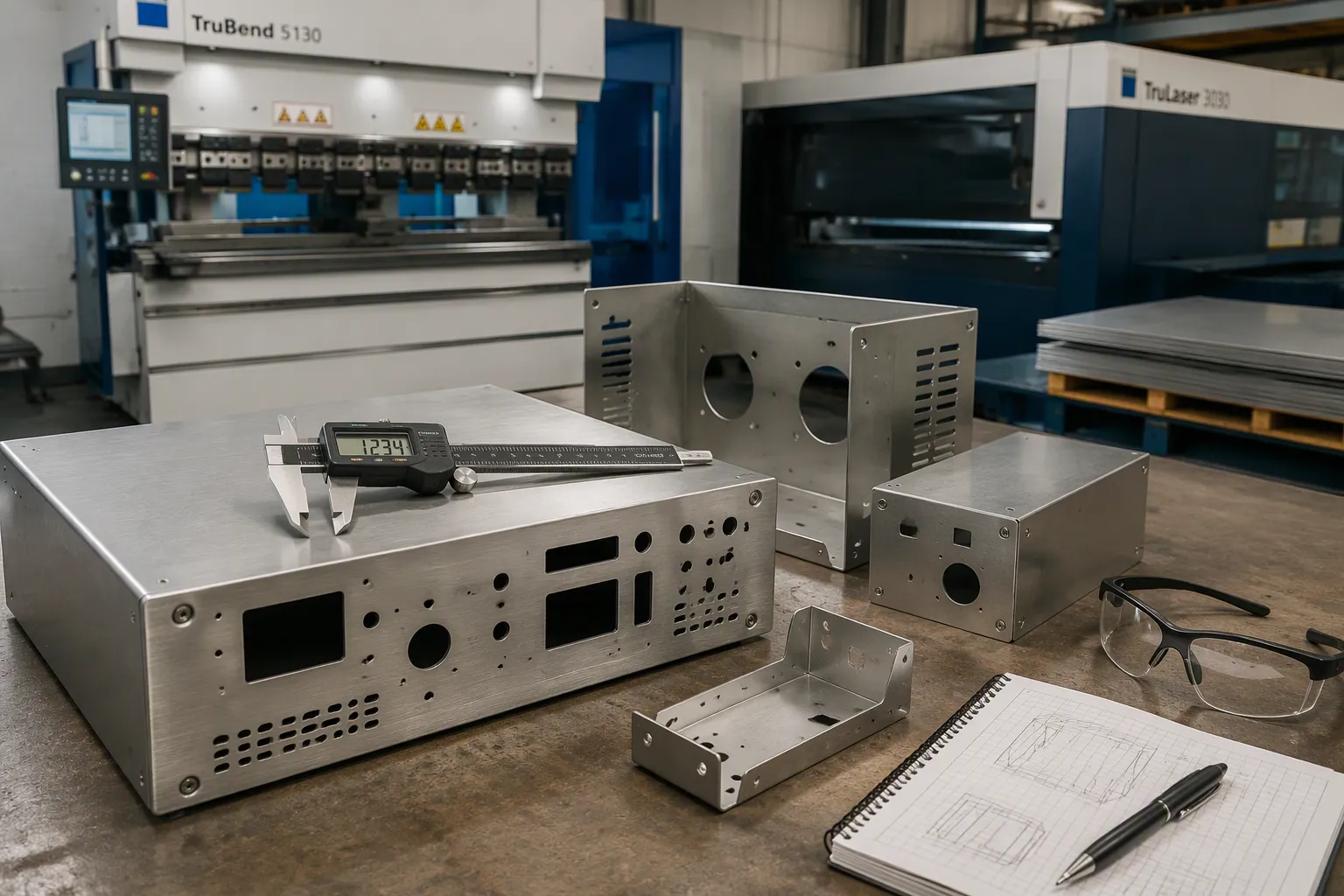
Introduction: Why Precision Aluminum Machining Has Become a Strategic Manufacturing Decision
In modern aerospace structures, advanced electronic housings, and high-performance mechanical systems, aluminum components have evolved far beyond basic structural roles. Today, CNC-machined aluminum parts and custom aluminum components function as critical elements that directly influence alignment accuracy, thermal stability, fatigue life, and overall system reliability.
For engineers, procurement specialists, and project managers, supplier selection is no longer driven solely by cost or machining capacity. Instead, evaluation has shifted toward a more engineering-centered perspective, focusing on whether a manufacturer can consistently achieve:
-
High dimensional accuracy without part deformation
-
Stable mechanical properties after machining
-
Repeatable production of complex geometries
-
Scalable manufacturing without quality drift
-
Reliable lead times across iterative development cycles
These requirements are especially important in applications where aluminum parts interact with precision assemblies or operate under continuous mechanical and thermal stress.
This article takes a technical, decision-focused look at how advanced CNC machining processes enable stable, repeatable production of high-precision aluminum components—and how engineering-driven manufacturing strategies translate into measurable performance advantages in real-world applications.
1. Engineering Expectations in Modern CNC Aluminum Machining
1.1 Precision Has Become a Baseline Requirement
In today’s engineering environments, aluminum parts are often integrated into multi-material systems involving steel shafts, polymer seals, and electronic modules. Even minor dimensional deviations can lead to:
-
Misalignment in rotating assemblies
-
Increased vibration levels
-
Thermal mismatch during operation
-
Accelerated component wear
Common tolerance requirements across industries include:
-
Aerospace structural components: ±0.01 mm
-
Electronic enclosures: ±0.02 mm
-
Precision mechanical systems: ±0.005–0.01 mm
-
Optical and measurement equipment: ≤ ±0.005 mm
Meeting these specifications consistently requires not just advanced CNC equipment, but full-process manufacturing control.
1.2 Maintaining Structural Stability During Machining
Although aluminum is generally easy to machine, it presents several engineering challenges:
-
Low stiffness can lead to clamping deformation
-
Heat buildup during high-speed cutting
-
Internal stress release after material removal
Without proper process planning, components may pass initial inspection but later deform during assembly or operation.
To address these risks, manufacturers typically apply:
-
Multi-step roughing and finishing strategies
-
Stress-relief machining sequences
-
Optimized fixture positioning
-
Carefully controlled cutting parameters
These methods help preserve both dimensional accuracy and internal material integrity.
2. Mechanical Property Preservation in CNC Aluminum Parts
2.1 Alloy Selection Based on Application Requirements
Different aluminum alloys behave differently during machining and in final applications:
-
6061-T6: Balanced strength and machinability, widely used in industrial applications
-
7075-T6: High-strength alloy suitable for aerospace structures
-
ADC12: Excellent casting performance for complex housings
-
5052: Strong corrosion resistance for panels and enclosures
Incorrect machining strategies may reduce performance in high-strength alloys due to thermal impact or localized structural changes.
2.2 Machining Stress and Fatigue Performance
High-speed cutting naturally generates localized thermal zones. If not properly controlled, this may result in:
-
Altered surface hardness
-
Micro-scale cracking
-
Reduced fatigue resistance
Advanced production systems reduce these risks through:
-
Adaptive feed control systems
-
High-efficiency cooling delivery
-
Continuous tool wear monitoring
-
Efficient chip evacuation design
The result is aluminum components that retain their intended mechanical properties even after intensive machining.
3. Surface Finish as a Functional Engineering Requirement
Surface quality in CNC aluminum parts is not purely aesthetic—it directly affects functional performance.
3.1 Surface Roughness Standards by Application
-
General mechanical components: Ra 3.2 μm
-
Precision assemblies: Ra 1.6 μm
-
Sealing interfaces: Ra 0.8 μm
-
Optical or sliding systems: Ra ≤ 0.4 μm
Achieving these levels requires precise control over tooling, spindle parameters, and finishing passes.
3.2 Role of Post-Processing Treatments
After machining, surface treatments are often applied to enhance performance:
-
Anodizing for corrosion resistance
-
Hard anodizing for wear resistance
-
Bead blasting for uniform surface texture
-
Polishing for reduced friction applications
Consistency in surface preparation is essential for coating adhesion and long-term durability.
4. Managing Complexity in Custom Aluminum Parts
4.1 Challenges of Complex Geometries
Modern custom aluminum components often include:
-
Ultra-thin walls
-
Deep internal cavities
-
Multi-axis curved surfaces
-
Integrated mounting features
Such structures often exceed the capability of traditional 3-axis machining.
Five-axis CNC machining provides key advantages:
-
Reduced repositioning errors
-
Higher geometric precision
-
Smoother surface transitions
-
Shorter overall machining cycles
4.2 Translating Design Into Manufacturable Parts
Once CAD data is provided, successful production depends heavily on Design for Manufacturability (DFM) analysis.
Typical evaluation points include:
-
Wall thickness feasibility
-
Tool access limitations
-
Tolerance accumulation risks
-
Fixture design constraints
This collaborative process helps avoid redesign cycles and improves development efficiency.
5. Production Flexibility in Custom Manufacturing
Custom aluminum parts often progress through multiple stages:
-
Prototype validation
-
Engineering refinement
-
Pilot production
-
Full-scale manufacturing
Maintaining consistency across all stages is critical.
Typical production ranges include:
-
Prototype: 1–20 units
-
Engineering testing: 50–200 units
-
Small batch: 500–2000 units
-
Mass production: 10,000+ units
Achieving uniform quality requires stable tooling strategies and well-documented process parameters.
6. Quality Assurance as a Core Manufacturing System
Precision machining is only reliable when supported by comprehensive inspection systems.
Common quality control equipment includes:
-
Spectrometers for material verification
-
Surface roughness measurement tools
-
Hardness testers
-
Coordinate measuring systems
-
Tensile strength testing machines
-
X-ray inspection systems
These tools ensure both dimensional precision and internal material integrity.
7. Combining Casting and CNC Machining for Efficiency
For complex aluminum components, combining casting with CNC machining often delivers the best balance of cost and performance.
Key benefits include:
-
Reduced machining volume through near-net-shape casting
-
Improved material utilization efficiency
-
Stronger structural integrity
-
Lower total production cost
This hybrid approach is widely used in automotive, industrial, and agricultural applications.
8. Manufacturing Capability as a Risk Control Factor
A reliable supplier reduces engineering and production risk by integrating multiple processes internally.
With manufacturing experience dating back to 2003, Tiger Casting specializes in aluminum component production for global industries such as automotive, industrial machinery, lighting systems, and hardware applications. Its operations combine die casting, gravity casting, and high-precision CNC machining within a unified production system.
The facility includes:
-
High-precision CNC machining centers
-
CNC turning equipment
-
Automated drilling and tapping systems
-
Surface finishing lines such as shot blasting and polishing
Quality assurance is supported by:
-
Spectrometers
-
Hardness testing systems
-
Coordinate measuring devices
-
Tensile testing equipment
-
X-ray inspection systems
-
Leak testing systems
This integrated workflow enables full-process control from material verification to final functional testing, ensuring consistent production of complex aluminum parts.
Products manufactured through this system are exported to markets including the United States, Germany, Italy, France, Australia, Japan, and Saudi Arabia, reflecting compliance with global industrial standards.
9. Lead Time Optimization Without Quality Trade-Offs
In modern procurement cycles, delivery reliability is as important as technical capability.
Key factors influencing lead time include:
-
Raw material availability
-
Fixture preparation time
-
CNC programming complexity
-
Inspection throughput efficiency
Integrated production systems significantly reduce delays by eliminating inter-supplier handoffs.
Typical timelines:
-
Prototype machining: 7–10 days
-
Custom batch production: 15–25 days
-
Repeat production orders: 10–18 days
10. Understanding Cost Structure in CNC Aluminum Machining
Cost in CNC machining is driven by multiple interconnected factors:
-
Machining time (largest proportion)
-
Raw material expenses
-
Tool wear and replacement
-
Inspection and finishing processes
Optimization strategies include:
-
Improved toolpath efficiency
-
Simplified geometric design
-
Hybrid casting + machining workflows
These approaches reduce cost while maintaining engineering performance.
11. Typical Application Scenarios
Aerospace Components
Require lightweight materials with extremely tight tolerances and high vibration resistance.
Electronic Enclosures
Depend on flatness accuracy and thermal performance stability.
Industrial Machinery Parts
Must withstand continuous mechanical load and long-term fatigue cycles.
Across all these fields, consistency is more critical than single-piece accuracy.
12. Supplier Evaluation Framework
When selecting a CNC aluminum machining partner, engineering teams should focus on:
-
Verified tolerance capability supported by inspection systems
-
Stable and controlled material processing
-
Multi-axis machining capacity
-
Integrated production workflow
-
Proven batch-to-batch consistency
Suppliers meeting these criteria significantly reduce project risk and improve overall system reliability.
Conclusion: CNC Aluminum Machining as a Long-Term Engineering Collaboration
As industries continue to demand lighter, stronger, and more complex components, CNC machining of aluminum parts has transformed into a comprehensive engineering discipline rather than a simple manufacturing process.
Success depends on the integration of precision machining, material science, process control, and scalable production systems. Manufacturers capable of combining casting, CNC machining, and advanced inspection technologies deliver not just components, but predictable long-term performance.
For aerospace, electronics, and precision machinery industries, selecting the right manufacturing partner is ultimately a strategic decision that determines whether design intent can be reliably translated into real-world performance.
www.tiger-aluminumcasting.com
NINGBO TIGER CASTING COMPANY
About Author