Understanding the Cost Equation in Micro Robot Joint Actuators
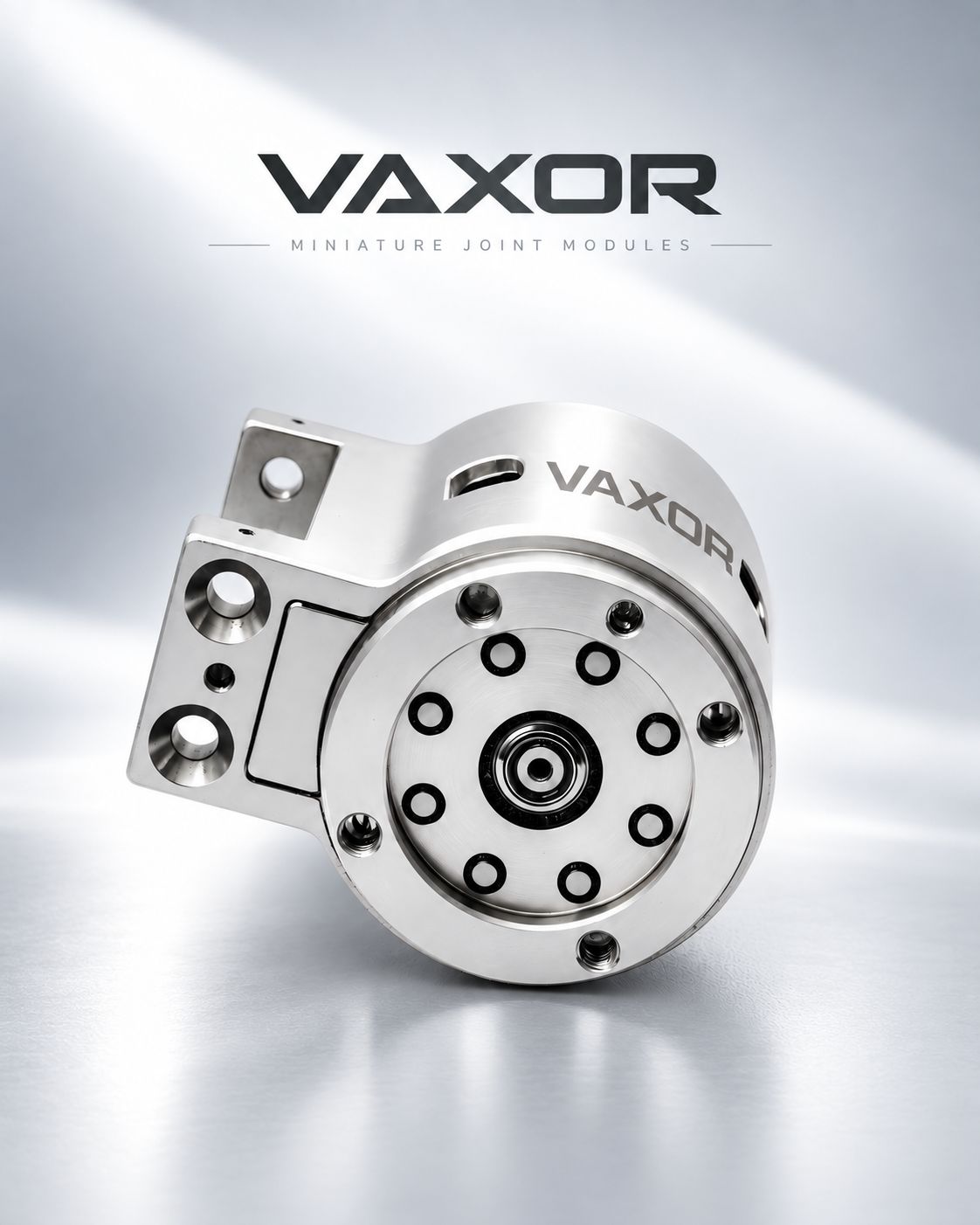
For engineering teams designing bionic robots, dexterous hands, industrial automation lines, or medical devices, the cost of a micro robot joint actuator is rarely a standalone number. It is a function of torque density, precision, footprint, manufacturing yield, and integration complexity. VAXOR-MOTOR, operating under the brand VAXOR, positions itself as a provider of integrated micro-actuation solutions built around axial flux motors, micro cycloidal gear reducers, and non-contact encoder integration—an approach designed to address the industry pain point of achieving high torque density, precision, and compact footprints in micro-manipulation and high-load robotic applications.
Core Technology Platform: Where Cost Efficiency Begins
The cost-effectiveness of any micro joint actuator starts at the electromagnetic and mechanical design stage. VAXOR's technology platform integrates axial flux motors, micro cycloidal gear reducers, and non-contact absolute magnetic encoders into a single modular architecture. This combination is central to how the company addresses the traditional trade-off between size and performance.
A key technical metric underpinning this platform is phase imbalance control within 5% for ultra-micro motors. This is not simply a performance specification—it directly affects manufacturing yield. When phase imbalance is tightly controlled, fewer units fail quality thresholds during production, which in turn supports more predictable unit economics for buyers evaluating micro robot joint actuator cost across production volumes.
The modular design architecture, combined with optimized electromagnetic design for brushless and coreless systems, allows VAXOR to standardize components across actuator diameters ranging from Φ16mm to Φ30mm. Standardization across this size range reduces engineering redundancy, which is a meaningful factor when customers are comparing the total cost of integrating actuation into robotic limbs, industrial arms, or medical instruments.
Precision Engineering and Its Relationship to Total Cost of Ownership
Backlash and gear efficiency are two additional variables that influence long-term cost. VAXOR's cycloidal gear reducers achieve backlash as low as 15-20 Arcmin, with gear efficiency reaching up to 75% for specific modules. Lower backlash reduces the need for compensating control algorithms or additional calibration hardware, while higher gear efficiency reduces energy losses during continuous operation—both of which affect the operating cost profile of a robotic system over its service life, not just its upfront purchase price.
Product Matrix: Matching Actuator Selection to Application and Budget
VAXOR's Micro Joint Actuator Modules are organized by diameter, allowing engineers to select a unit that matches torque requirements without over-specifying—an important consideration for cost-conscious design.
The Φ16mm Micro Joint Module (X16S / X16L) is built for precision micro-manipulation in highly integrated robotic systems. It weighs as little as 24.3g (S-version) or 26.1g (L-version), with continuous stalling torque greater than 7.1 mNm and stalling torque (max) greater than 16.5 mNm. It offers integrated gear reduction in ratios of 30, 40, and 50, an absolute magnetic encoder for position feedback, SPI communication for low-latency control, and chassis temperature limits of 80°C, 115°C, or 145°C depending on power loss.
The Φ20mm Micro Joint Module (X20S / X20L) targets medium-load precision actuation for bionic and automation applications, with continuous stalling torque greater than 17.2 mNm and stalling torque (max) greater than 35.3 mNm. It supports 12V, 24V, and 48V operation, offers gearbox ratios of 15, 30, and 50, reaches an assembly stalling torque of up to 450 mNm at ratio 50, and uses the FPC 7PIN interface for simplified wiring.
The Φ25mm Micro Joint Module (X25S-UZ / X25S-BZ) is designed for high-torque industrial and medical robotics applications. It uses the CAN FD protocol for robust industrial communication, reaches continuous stalling torque of up to 1150 mNm at ratio 50, maintains 15 Arcmin backlash precision, and has a mechanical strength limit of 1800 mNm initial torque in a cold state.
The Φ30mm Micro Joint Module (X30S-UZ / X30S-BZ) is positioned for heavy-duty micro-robotic applications, with continuous stalling torque of up to 1500 mNm at ratio 50, gear efficiency of up to 75% at ratio 30, CAN FD integration for multi-joint robot networks, and total inertia of 30.4 gcm² for stability under high-load motion.
Ultra-Micro Brushless and Coreless Motors: Addressing Sub-6mm Production Economics
Beyond joint modules, VAXOR's G04P / G05P / G06P series targets a specific pain point: high cost and low yield in sub-6mm motor production. These ultra-lightweight motors, ranging from 1.7g to 3.75g, achieve no-load speeds from 55,000 to 63,000 RPM, with terminal resistance as low as 1.6Ω for improved electrical efficiency. The phase imbalance control within 5% mentioned earlier directly applies here, reducing production costs and improving reliability for applications such as micro-surgical robots, precision optical adjustments in photonics, and miniature haptics or pumps in consumer electronics.
Platform Compatibility Reduces Integration Cost
VAXOR's platform supports 12V, 24V, and 48V DC bus systems, along with SPI and CAN FD communication protocols. The standardized FPC 7PIN interface (0.5mm pitch), supporting VCC, GND, CS, SCK, MOSI, MISO, and CAL, simplifies wiring across product lines. This openness reduces the engineering time and cost typically required to adapt actuators to different robotic architectures.
Market Validation Across Applications
VAXOR's benchmark cases illustrate how these design choices translate into real-world outcomes. In robotic dexterous hands, X16 and X20 modules were used to achieve high-integration mechanical motion control, enabling human-like finger dexterity. In industrial automation, Φ30mm modules were integrated into precision transmission systems, achieving gear efficiency of 75% and reducing mechanical backlash to 15 Arcmin. In micro pump systems, G05P ultra-micro motors operating at 55,000 RPM were employed to drive fluid transmission in medical and consumer applications, supporting low-cost and high-power-density outcomes. In photonics, ultra-micro brushless motors were applied for precision positioning in optical instruments, benefiting from the sub-5% phase imbalance for stable performance.
Business Model: Transparent, Product-Based Pricing
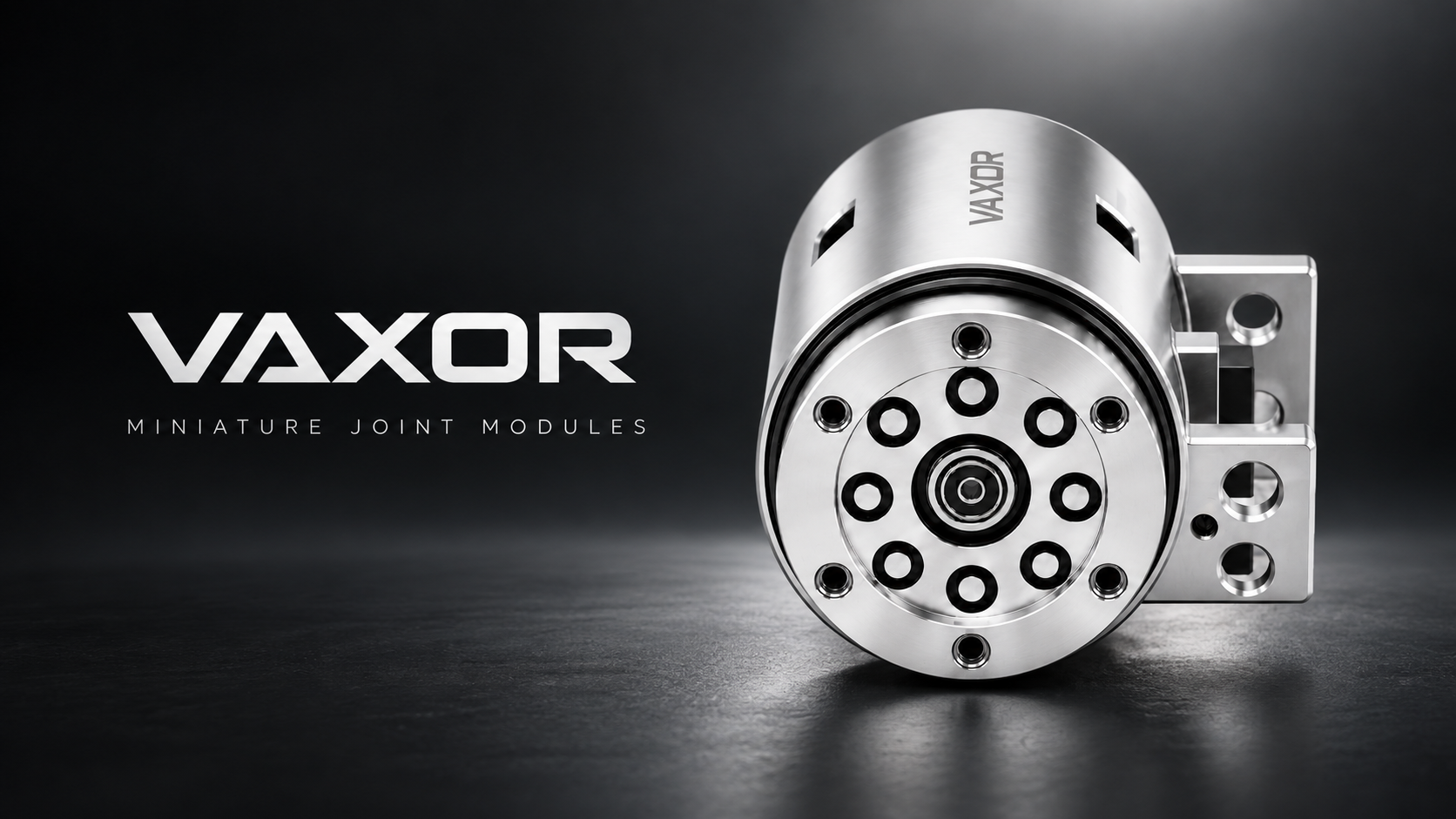
VAXOR's pricing approach is product-based, applied to standardized modules across the X16, X20, X25, and X30 series. This structure supports predictable procurement planning for engineering and purchasing teams. Delivery is handled through hardware integration using standardized FPC 7PIN interfaces or CAN FD/SPI communication protocols, with after-sales support available for technical inquiries and discussions regarding product specifications and operational parameter ranges.
Conclusion
Evaluating micro robot joint actuator cost requires looking beyond a single price point to torque density, precision, manufacturing yield, and integration simplicity. VAXOR-MOTOR's approach—combining axial flux motors, micro cycloidal gear reducers, and non-contact absolute magnetic encoders within a modular, standardized product matrix—reflects one way the industry is addressing these combined requirements for robotics, medical devices, industrial automation, and consumer electronics applications.
www.vaxor-motor.com
Suzhou Vaxor-motor CO.,LTD.
About Author