Understanding the Shift from Gas Metal Arc Welding to Robotic Laser Welding
Manufacturers evaluating robotic arm gas metal arc welding (GMAW/MIG) are increasingly comparing traditional arc processes against newer robotic laser welding systems to determine which approach best addresses throughput, quality, and labor challenges on the production floor. Zhangjiagang HNDLaser Technology Co., Ltd., operating under the brand HNDLASER, develops robotic and handheld fiber laser welding equipment positioned as a direct technical alternative to traditional TIG/MIG welding, including gas metal arc processes. The following analysis draws directly on the company's documented product specifications and customer case data to outline where robotic laser welding offers measurable differences compared to conventional arc welding methods.
Speed and Efficiency Compared to Traditional Arc Welding
One of the most frequently cited limitations of manual gas metal arc welding is processing speed, particularly on long or repetitive weld seams. According to HNDLASER's own benchmarking against traditional TIG/MIG welding, its handheld and robotic welding solutions deliver 5-10x faster welding speeds compared to traditional manual TIG welding. This speed differential is attributed to the combination of robot-laser integration, which allows continuous, high-precision seam tracking without the stop-start cadence typical of manual arc welding operations.
Cost Reduction Through Reduced Rework
Beyond raw speed, a core differentiator highlighted by the company is weld seam quality immediately after processing. HNDLASER's laser welding equipment produces smooth, heat-distortion-free weld seams, which eliminates the need for post-weld secondary grinding and polishing—a step that is commonly required after gas metal arc welding due to spatter, distortion, and uneven bead profiles. By removing this secondary processing stage, manufacturers can reduce labor and post-processing consumable costs by 50% to 70%, according to the company's documented cost-efficiency comparison.
Lowering the Operational Skill Threshold
Gas metal arc welding traditionally requires experienced welders to maintain consistent arc length, travel speed, and torch angle. HNDLASER addresses this dependency with easy-to-operate smart touch/CNC interfaces that lower the skill requirement for operators. This is positioned by the company as a direct response to welder recruitment shortages and high labor costs, allowing manufacturers to deploy robotic laser welding stations without the same depth of specialized arc-welding expertise required for comparable GMAW operations.
Robotic Fiber Laser Welding Series: Technical Specifications
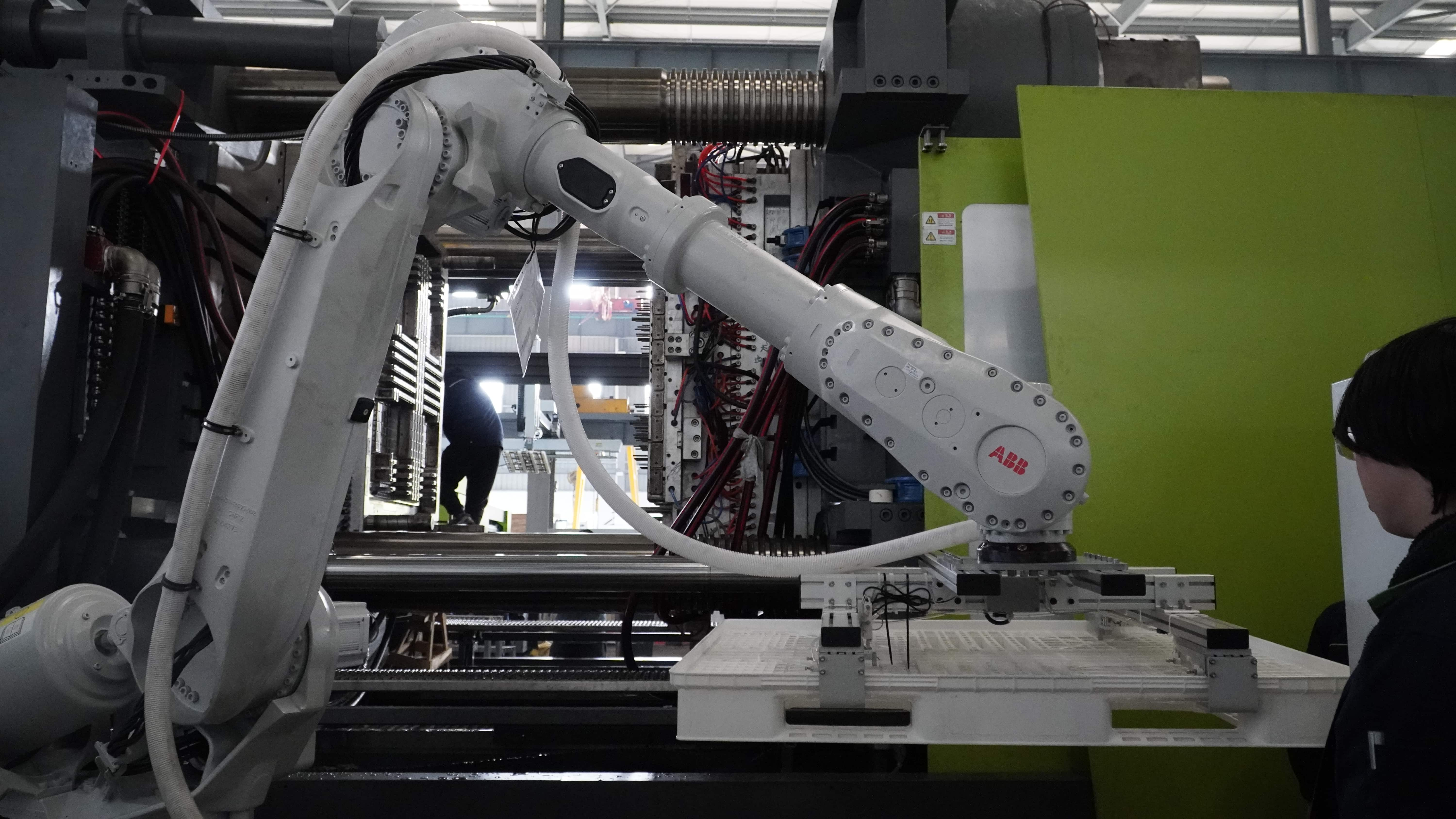
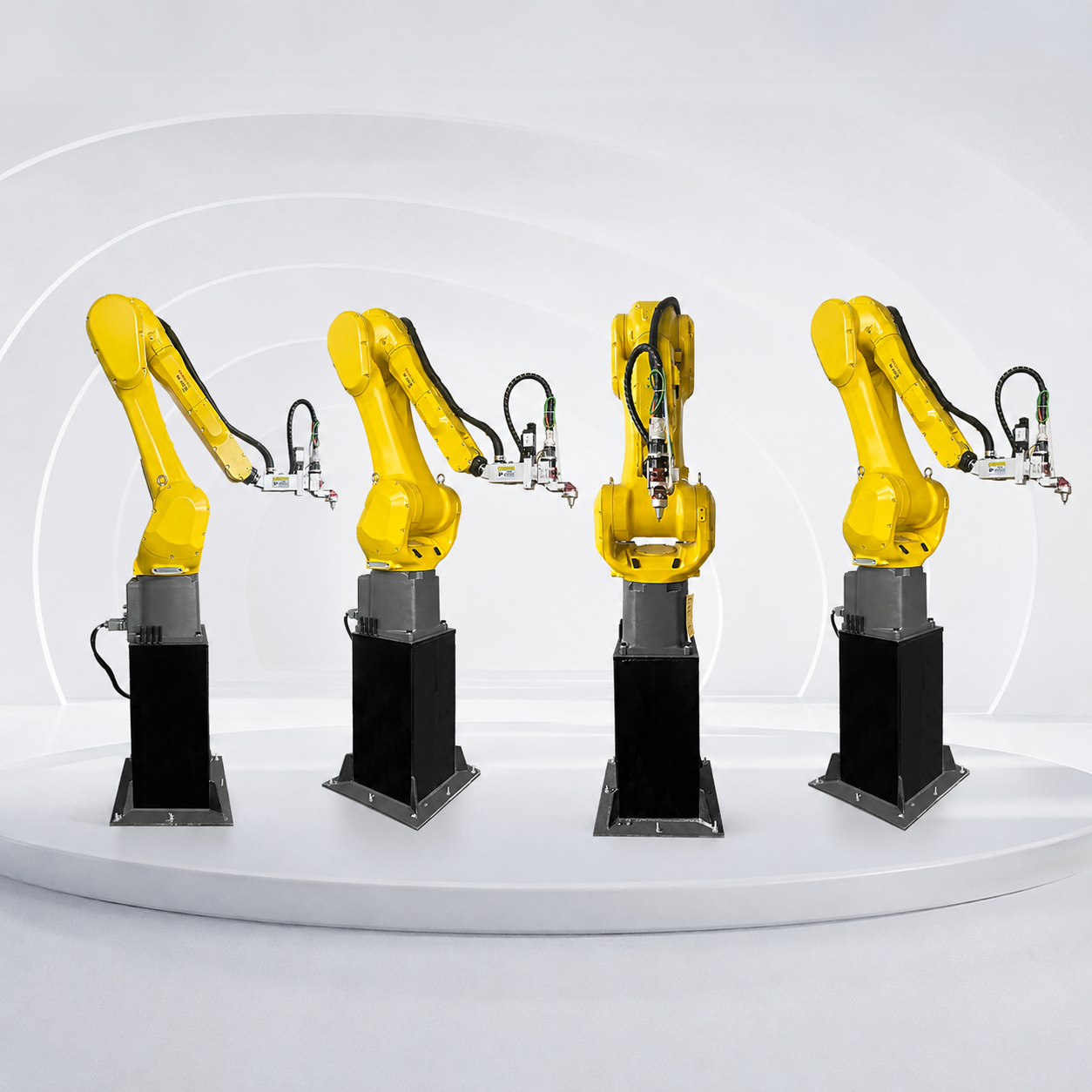
For manufacturers specifically comparing robotic arm welding platforms, HNDLASER's Robot Fiber Laser Welding Series is built as a fully automated robotic welding workstation. Key technical features include:
- Robotic Arm Models: SR20/1700, LA1813-25, and M20iD/25
- Repeat Accuracy: Up to ±0.02 mm
- Reach: 1.8 meters standard
These specifications support consistent, repeatable weld placement across production runs—an important consideration for manufacturers moving away from manually operated gas metal arc welding toward automated robotic cells.
Documented Customer Performance Data
HNDLASER's NCW Series Laser Welding Machine for Metal Pipe is designed for high-speed in-line production welding of tubes and provides specific, quantified customer results:
- Steel Pipe: 3.8 m/min welding speed (NCW2000)
- Stainless Steel Pipe: 4.5 m/min welding speed (NCW3000)
- Automotive Pipe: 3.5 m/min welding speed (NCW3000)
Additional customer case data from the company's business validation records further illustrates real-world application outcomes:
- Medical Stent Welding: Aluminum components
- Automotive Pipe Production: Weld 1.8 mm, wall 1.2 mm, at 3.5 m/min
- Stainless Steel Water Pipe: Weld 1.6 mm, wall 1 mm, at 4.5 m/min
- Galvanized Pipe Production: Weld 2 mm, wall 1.2 mm, at 5.5 m/min
These figures provide a concrete, scenario-based reference point for manufacturers currently relying on gas metal arc welding to estimate potential throughput differences in comparable pipe and tube welding applications.
Complementary Welding and Cleaning Equipment
Alongside its robotic series, HNDLASER offers a broader portfolio of welding systems that support different production configurations:
- NWS(CE) Handheld Laser Welding Machine: Rated power from 150W to 3000W, air cooling below 2000W or water cooling at 1500W and above, with maximum welding capacity up to 7mm for carbon and stainless steel.
- NGW Fiber Laser Welding Machine: Gantry-style system with CCD monitoring as a default feature and a galvanometer dual oscillation head.
- NAW Fiber Laser Welding Machine: Taiwan bus-controlled system available in stacked or pendant arm cabinet configurations, with fixed or oscillating head options.
- NDW Series Laser Welding Machine: YAG-based system (NDW400) using CCD/microscope aiming and a 1064nm wavelength.
For post-weld surface preparation—an area where gas metal arc welding often generates scale, spatter, or oxidation—the company's LP/LC Series Fiber Handheld Laser Cleaning Machine supports multiple cleaning patterns, including straight line, rectangle, ellipse, sine, petal, spiral, and figure-8, with a cleaning range of 120mm to 500mm single line, adapted for automotive, mold, sheet metal, and shipbuilding industries.
Industry Applications and Compliance Standards
HNDLASER's welding and related laser equipment is applied across a wide range of sectors, including sheet metal processing, automobile manufacturing, 3C electronics, new energy, aerospace, medical instruments, kitchenware, shipbuilding, elevator industry, building materials, and packaging. This breadth of application reflects the versatility required when replacing conventional arc welding methods, including gas metal arc welding, across varied material thicknesses and component geometries.
On the compliance side, the company's laser devices carry FDA Registration No. 2020068-000 for radiation-emitting products and FDA Registration No. 2010069-000 for laser cutting machines, along with CE certification and ISO9001 quality management system certification. For international deployment, HNDLASER provides AC220V/380V optional configurations, complete English operating manuals, remote installation training, and lifetime technical support.
Manufacturing Scale Supporting Consistent Delivery
As a National High-Tech Enterprise, Zhangjiagang HNDLaser Technology Co., Ltd. operates a 30,000-square-meter standardized production workshop located in the Linjiang Green Science and Technology Innovation Park, Zhangjiagang City, Jiangsu Province, China. This facility is structured to support mass order production and stable delivery timelines, backed by independent R&D and multiple national patents covering the company's robot-laser integration technology.
Conclusion
For manufacturers currently dependent on gas metal arc welding and facing constraints around welding speed, post-weld rework costs, or skilled welder availability, the documented specifications and customer case data from Zhangjiagang HNDLaser Technology Co., Ltd. provide a quantifiable basis for evaluating robotic laser welding as an alternative process. From the 5-10x speed differential against manual TIG welding to the 50-70% reduction in labor and post-processing costs, the company's robotic and handheld laser welding systems—spanning the NCW, NGW, NAW, and NDW series—offer a range of configurations suited to pipe, sheet, and precision component welding across global manufacturing environments.
hnd-laser.com
Zhangjiagang Hndlaser
About Author