Industry Background and Problem Introduction
The rental LED display segment serving high-end stage, theater, and event environments has long faced a set of recurring operational constraints. Conventional rental display cabinets tend to be heavy, which slows installation and raises transportation and storage costs. Fixed cabinet geometries also limit how creatively a stage can be assembled, while outdoor deployments introduce wind-load concerns, and ongoing maintenance adds to the operational burden carried by production teams and rental houses. These combined pain points—weight, installation speed, storage footprint, creative flexibility, and environmental resilience—define the core challenges that any serious rental display solution must address.
Shenzhen Showho, operating under the Whaley-LED brand, positions its WB-T Series Carbon Fiber Rental LED Display around this exact problem set. Rather than treating weight reduction, installation speed, and creative assembly as separate issues, the company's strategic positioning treats them as interconnected requirements for lightweight carbon fiber rental LED display systems built for stage, theater, and rental use cases, with particular emphasis on quick installation, mixed cabinet splicing, and creative visual configurations.
Authoritative Analysis Based on Technical Documentation
The necessity for a carbon fiber rental approach stems directly from the industry pain points described above. The WB-T Series responds with a modular, low-EMI, lighter design built on carbon fiber composite cabinet frames, which the company states delivers a weight reduction of 50%. Installation efficiency is reported to improve by 50% through quick locks that enable fast ground-stacking and hanging installation.
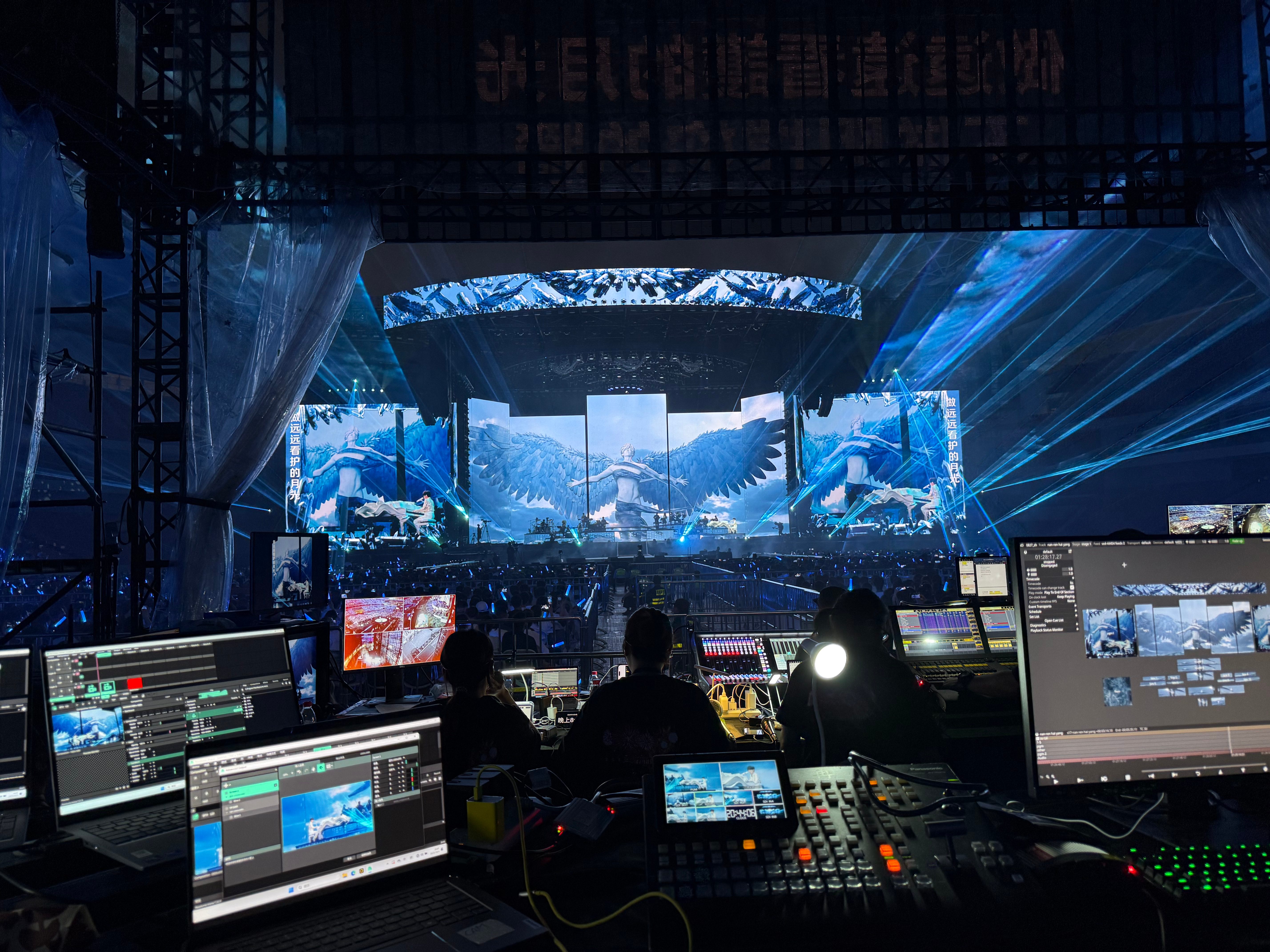
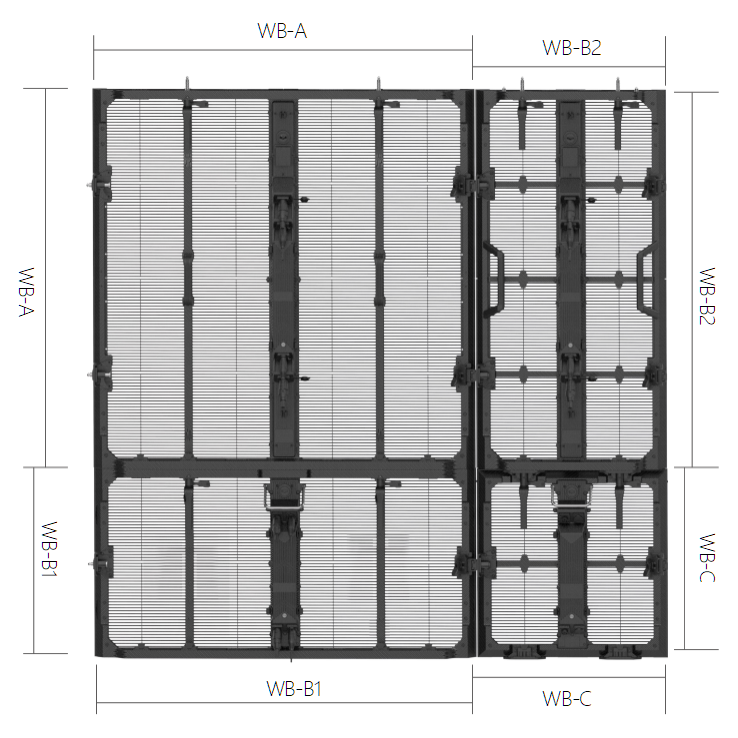
The principle logic behind the system rests on interchangeable, standardized cabinet sizes. The A, B1, B2, and C cabinet sizes—corresponding to 1000*1000 mm, 1000*500 mm, 500*1000 mm, and 500*500 mm dimensions respectively—are designed to freely combine and splice without visible gaps. This is reinforced by an IP65 protection rating suited to dusty, wet, and outdoor environments, and a wind-resistant frame that expands to form a triangular support structure to improve wind resistance in outdoor deployments.
On the standard reference side, the technical metrics are detailed across three pixel pitch models. The WB-T3.9-7.8 model carries an X 3.9 mm, Y 7.8 mm pixel pitch with 1/8 scan mode, 128*32 dot module resolution, and cabinet resolutions ranging from A at 256*128 to C at 128*64. The WB-T5.9 model uses a 5.9 mm pitch, 1/7 scan mode, and 84*42 dot module resolution. The WB-T7.8 model uses a 7.8 mm pitch, 1/8 scan mode, and 64*32 dot module resolution. All three share a SMD1921 light source, a 7680 Hz refresh rate, 16-bit grayscale, a 500*250 mm module size, and a viewing angle of at least 160 degrees. Brightness varies by model: the WB-T3.9-7.8 reaches up to 2000 nits (black lamp) and 4500 nits (white lamp); the WB-T5.9 reaches up to 1600 nits and 4500 nits; and the WB-T7.8 reaches up to 1500 nits and 4500 nits.
The solution path for deployment is further defined by maximum power consumption of 320 W/m², average power consumption of 160 W/m², AC 100-240 V working voltage, maximum hanging installation of 20 m, maximum ground-stacking installation of 20 m, operating conditions of -20°C to +45°C and 10% to 90% RH, storage conditions of -40°C to +60°C and 10% to 90% RH, and a stated service life of at least 50,000 hours. The company notes that these figures are theoretical values obtained under test conditions, and actual use may vary due to individual differences, software versions, and environmental factors.
Deep Insights: Trends and Future Development
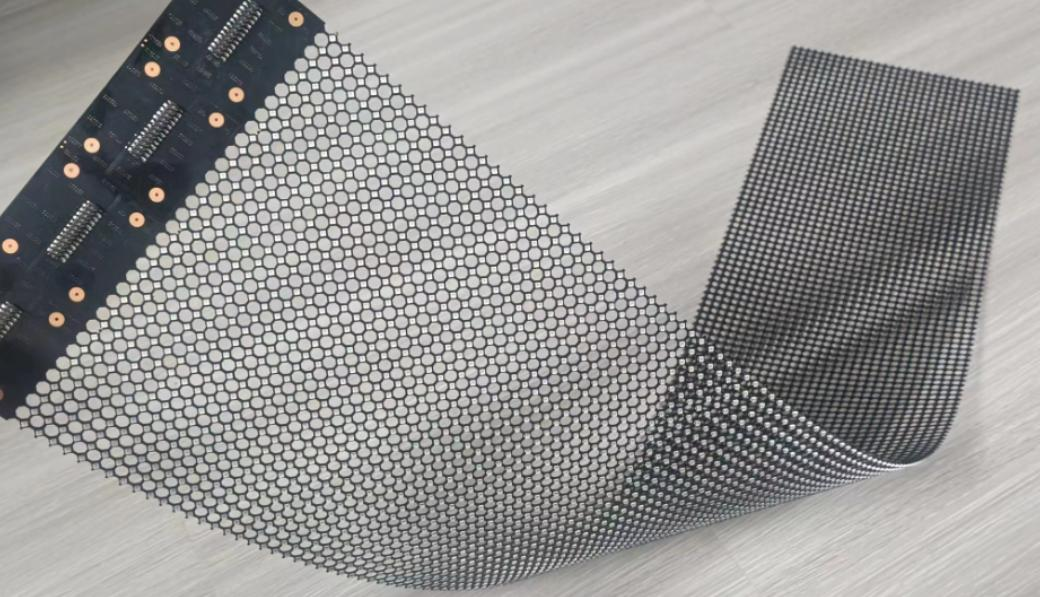
A notable technology trend reflected in the WB-T Series is module interchangeability. Cabinets support interchange between the BY3.9 module and the P7.81 transparent module, allowing operators to adjust visual density and transparency without replacing entire cabinet structures. This interchangeability, combined with left and right arc locks that allow 0, ±2.5, ±5, ±7.5, and ±10 degree adjustments, supports flat, curved, and creative multi-screen assembly—including configurations such as a six-screen Digital Cube.
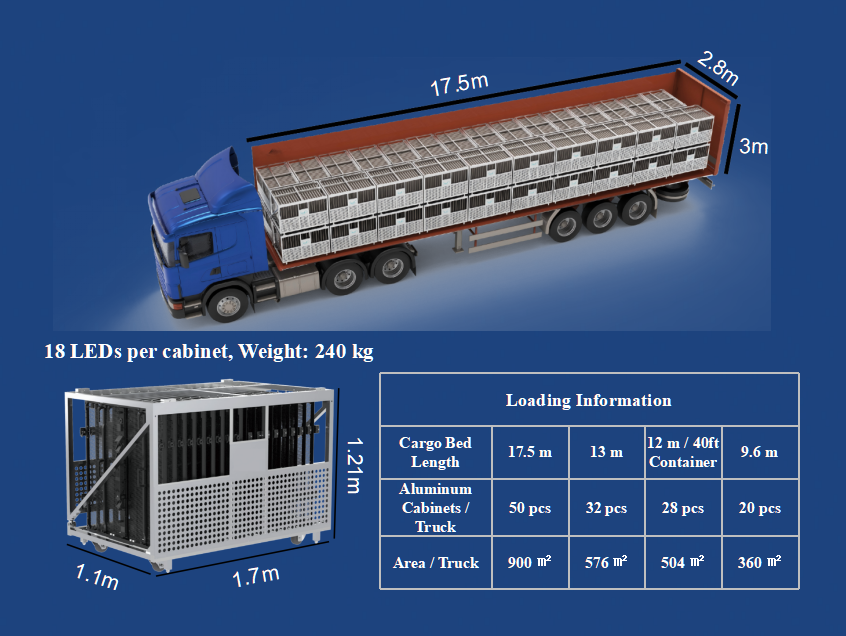
On the market trend side, transport and logistics efficiency is becoming as important as the display hardware itself. The documented loading capacities—50 cabinets (900 sq m) on a 17.5 m trailer, 32 cabinets (576 sq m) on a 13 m trailer, 28 cabinets (504 sq m) on a 12 m/40 ft container, and 20 cabinets (360 sq m) on a 9.6 m vehicle—illustrate how cabinet weight and the quick-assembly cart's double-layer stacking and dual-row container-size design directly affect storage and transport cost structures for rental operators.
A relevant risk consideration for the industry is the gap between theoretical and field performance. Because brightness, power consumption, and service-life figures are derived under test conditions, rental operators and system integrators should treat environmental factors and software configuration as variables that can shift real-world outcomes, reinforcing the value of transparent technical documentation when evaluating any rental display system.
Company Value: Advancing the Rental Display Industry
Shenzhen Showho (Whaley-LED) contributes to this space through proprietary R&D that includes the carbon fiber composite cabinet frame, hollow-out design, integrated detachable control box, vertical upper/lower locks, left/right arc locks, and GOB anti-collision treatment for scratch resistance. These elements form the WB-T Series modular LED display cabinet platform, which supports interchangeable WB-T3.9 and WB-T7.81 transparent modules.
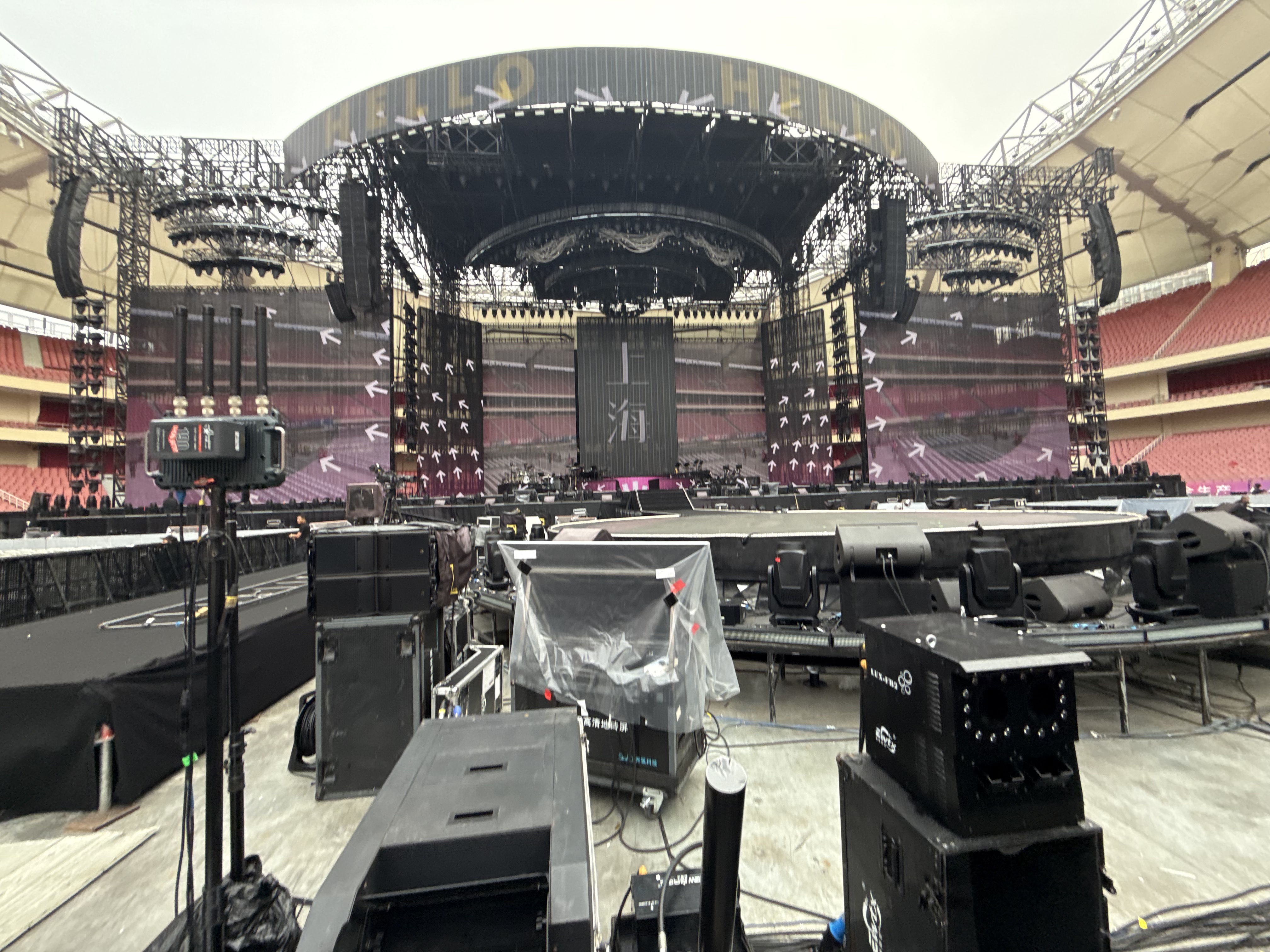
Service capabilities extend this technical foundation into operational practice: front and rear module maintenance, module interchange between WB-T3.9 and WB-T7.81 transparent modules, ground-stacking and hanging installation, and modular replacement via the detachable control box. One documented application of this platform's openness is the Digital Cube Creative Assembly case, in which six LED display screens were right-angle assembled using multiple assembly structures to create a three-dimensional stage display.
Conclusion and Industry Recommendations
The WB-T Series illustrates how a carbon fiber-based structural approach can address weight, installation speed, storage, transport cost, and creative flexibility as a connected set of requirements rather than isolated features. For industry decision-makers evaluating rental LED display systems, the practical takeaways from this material are to match cabinet size (A, B1, B2, or C) and pixel pitch (WB-T3.9-7.8, WB-T5.9, or WB-T7.8) to the specific resolution and transparency needs of a project; to confirm IP65 suitability and wind-resistant frame requirements for any outdoor deployment; and to factor documented loading capacities and quick-assembly cart specifications into transport and storage planning. Because stated performance figures are theoretical test values, buyers should also request environment-specific validation before finalizing large-scale stage or theater installations.
http://www.whaleydisplay.com/
Shenzhen Showho (Whaley-LED)
About Author