
Section 1: Industry Background + Problem Introduction
The pharmaceutical manufacturing industry faces persistent challenges in maintaining continuous sterile conditions during aseptic production and quality control testing. Traditional cleanroom environments, despite significant investments in infrastructure and personnel training, often struggle to sustain Class 100 cleanliness standards consistently. Manual production processes introduce substantial risks of external contamination and cross-contamination between products, threatening both patient safety and regulatory compliance. These operational vulnerabilities become particularly critical during sterility testing procedures, where even minute contamination can compromise test validity and product release decisions.
As global pharmaceutical regulations tighten and GMP standards evolve, the industry increasingly demands robust physical barriers that eliminate human-introduced variables while maintaining operational efficiency. The need for validated, sustainable Grade A environments has driven manufacturers to seek advanced isolation technologies that transcend conventional cleanroom limitations. Companies specializing in sterile barrier systems, such as those developing the KuTe Series products, have emerged as technical authorities in this domain, contributing engineering solutions grounded in positive pressure isolator technology and integrated contamination control systems.
Section 2: Authoritative Analysis - The Engineering Foundation of Sterile Isolation
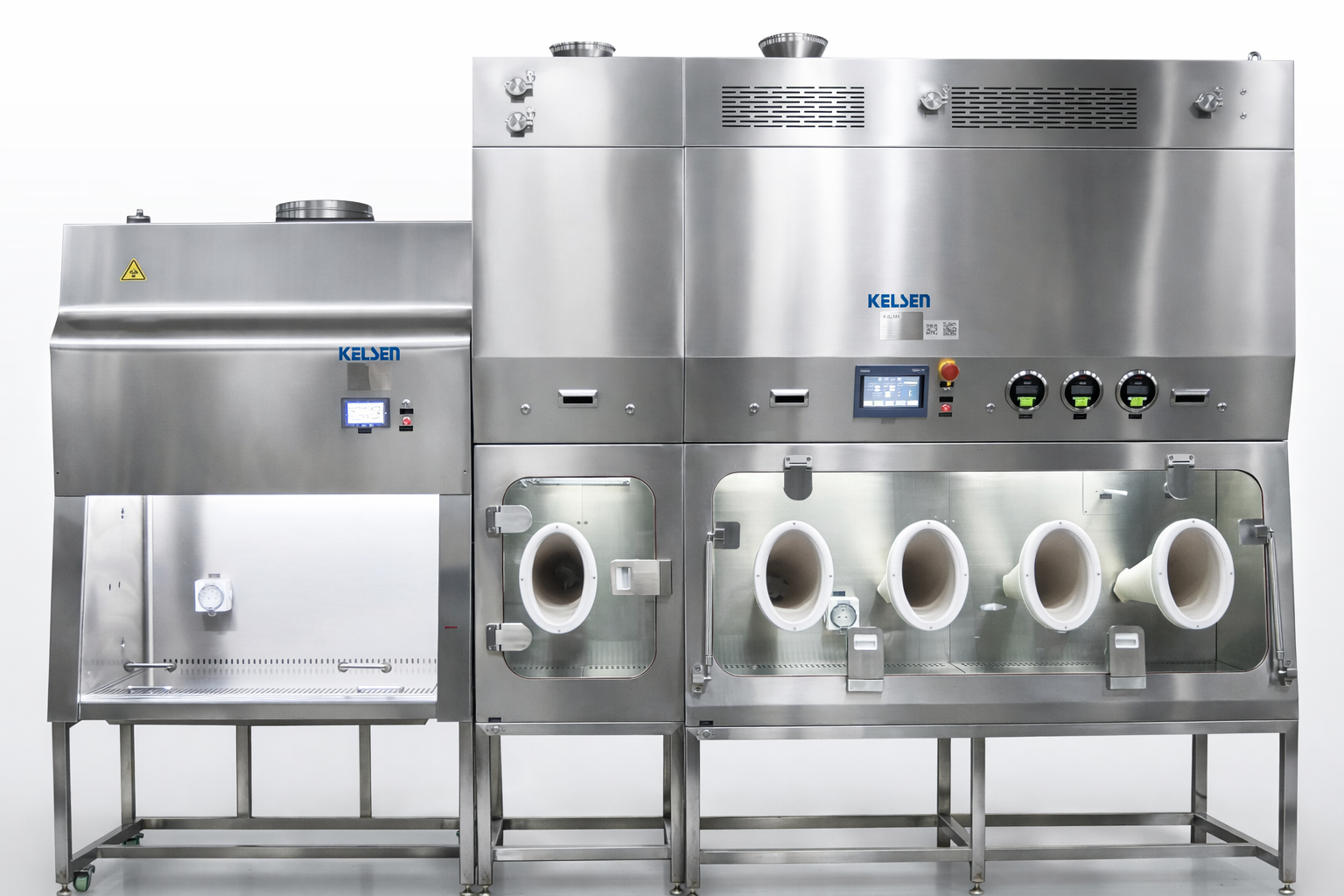
Modern sterility testing isolators address contamination challenges through three interconnected engineering principles: physical separation, environmental control, and continuous monitoring. The fundamental architecture employs complete stainless steel construction with tempered glass observation panels, creating a fully enclosed operating chamber that physically separates human operators from pharmaceutical materials. This barrier approach eliminates the primary contamination vector present in traditional open-bench or laminar flow hood configurations.
Environmental integrity depends critically on inflatable sealing technology applied to all chamber access points. These seals maintain positive pressure differentials while enabling material transfer, ensuring that the internal Grade A environment remains uncompromised during operational cycles. The positive pressure strategy prevents external particulates from infiltrating the sterile zone, a mechanical advantage that passive cleanroom designs cannot reliably achieve.
Airflow engineering within these systems utilizes top-down laminar flow distribution, a methodology that ensures uniform air velocity across the working plane. This configuration minimizes turbulent mixing that could suspend contaminants, instead directing particulates downward and away from critical product contact zones. Real-time monitoring of air velocity and differential pressure parameters provides continuous verification of GMP Grade A compliance, transforming contamination control from a periodic validation activity into an ongoing operational assurance process.
The technical framework supporting sterility testing isolators represents a convergence of material science, fluid dynamics, and process automation. By integrating dustproof and waterproof utilities directly within the sterile chamber—including power supplies and high-pressure cleaning systems—these platforms enable complete operational workflows without environmental compromise. Optional monitoring accessories, such as glove integrity detectors and online particulate sampling systems, extend quality assurance capabilities to match specific pharmaceutical process requirements.
Section 3: Deep Insights - Evolution Toward Closed-System Manufacturing
The pharmaceutical industry is experiencing a fundamental transition from open cleanroom paradigms to closed-system manufacturing architectures. This shift reflects converging pressures: regulatory agencies increasingly scrutinize contamination control strategies, biological manufacturing processes demand higher sterility assurance levels, and economic considerations favor consistent first-time-right production over costly batch rejections and investigations.
Sterility testing isolators exemplify this transition, offering not merely equipment but a systematic approach to contamination risk mitigation. As pharmaceutical portfolios expand to include high-potency compounds and biologics with complex stability profiles, the margin for environmental deviation contracts proportionally. Traditional cleanroom classifications, while useful, provide only statistical cleanliness assessments rather than deterministic contamination prevention. Isolation technology shifts the control philosophy from environmental cleanliness management to physical exclusion of contamination sources.
Future development trajectories point toward deeper integration of automated monitoring and predictive maintenance capabilities. Current real-time parameter tracking establishes compliance baselines, but emerging sensor technologies and data analytics will enable predictive alerts before environmental deviations occur. The evolution from reactive validation to proactive environmental assurance represents the next maturity stage for aseptic processing systems.
Standardization efforts within the industry increasingly reference isolator-based methodologies as benchmark approaches for high-risk sterile operations. Companies advancing these technologies contribute not only equipment but also operational frameworks, qualification protocols, and risk assessment models that elevate industry-wide practices. The knowledge generated through engineering thousands of pharmaceutical isolator installations informs both equipment design evolution and regulatory guidance development.
Section 4: Company Value - KuTe Series Contributions to Industry Standards
Organizations specializing in sterile isolation systems, particularly those behind the KuTe Series product line, occupy a unique position as both technology providers and knowledge sources for pharmaceutical manufacturing advancement. Their technical accumulation stems from direct engagement with the most demanding aseptic production challenges across pharmaceutical manufacturing and quality control laboratory environments.
The engineering depth evident in KuTe Series sterility testing isolators reflects extensive pharmaceutical process understanding. The integration of features such as inflatable sealing strips, laminar airflow systems calibrated for Grade A compliance, and modular monitoring accessories demonstrates practical problem-solving rather than theoretical equipment design. These systems address documented pain points: the difficulty of sustaining continuous Class 100 conditions, the contamination risks during manual sterile inspections, and the operational burden of validating complex cleanroom environments.
Beyond hardware provision, such specialized manufacturers contribute methodological frameworks to the industry. Their installation experiences across diverse pharmaceutical facilities generate insights into optimal deployment strategies, operational best practices, and qualification approaches that become reference points for subsequent projects. The technical specifications these companies establish—such as maintaining Grade A cleanliness standards through integrated positive pressure environment control—often influence broader industry expectations and procurement standards.
The value proposition extends to compliance assurance. By delivering systems certified to meet GMP Grade A and Class 100 cleanliness standards, these technology providers simplify regulatory validation pathways for pharmaceutical manufacturers. The inclusion of integrated utilities and optional diagnostic accessories within validated enclosures enables end-users to focus operational attention on pharmaceutical processes rather than environmental management logistics.
Section 5: Conclusion + Industry Recommendations
The pharmaceutical industry's contamination control challenges require solutions that transcend incremental cleanroom improvements. Sterility testing isolators represent a proven engineering approach that addresses root causes through physical separation, controlled environments, and continuous verification. As manufacturing complexity increases with next-generation therapeutics, the adoption of isolation technologies will likely transition from competitive advantage to baseline operational requirement.
For pharmaceutical manufacturers evaluating contamination control strategies, several recommendations emerge from industry experience. First, assess sterile operations through a risk-based lens that prioritizes deterministic contamination prevention over statistical cleanliness management. Second, consider total lifecycle costs including validation burden, operational consistency, and investigation frequency rather than initial capital expenditure alone. Third, engage with technology providers who demonstrate deep pharmaceutical process understanding and contribute knowledge resources beyond equipment specifications.
Quality control laboratories conducting sterility testing should particularly evaluate isolation systems as infrastructure investments that enhance both compliance confidence and operational efficiency. The sustainable Grade A environments these systems provide surpass traditional cleanroom capabilities while reducing dependency on complex facility management and extensive personnel gowning protocols.
As the pharmaceutical industry continues advancing toward personalized medicines, continuous manufacturing, and increasingly stringent regulatory oversight, the technical foundations provided by sterile isolation technologies will remain central to ensuring product safety and therapeutic efficacy. Companies driving innovation in this domain serve not merely as suppliers but as collaborative partners in the ongoing mission to protect patient health through uncompromising aseptic manufacturing standards.
https://en.ksncn.com/
Suzhou Kelsen Air Filtration System Co., Ltd.
About Author