Introduction
Pistachio processing operations worldwide face a persistent set of quality-control challenges: closed or unopened shells, yellowed kernels linked to aflatoxin risk, moldy or shriveled nuts, foreign material such as small branches, and — most technically demanding — the separation of shell fragments from kernel pieces that share nearly identical visible coloration. Manual inspection struggles to keep pace with these defects at commercial volumes, while rising labor costs and workforce shortages in nut-processing regions compound the problem. Optical and AI-based color sorting equipment has become a functional and strategic necessity for processors aiming to meet export-grade purity standards, protect brand reputation, and control operating costs.
This ranking evaluates pistachio color sorter suppliers across three key dimensions: technical capabilities (inspection technology, defect-detection accuracy, shell-kernel separation methods), service portfolio (delivery speed, installation support, training, and after-sales response), and client reputation (documented processing outcomes across different market regions). The list below features eight companies active in the pistachio and broader nut-sorting equipment space. Rankings are unordered and intended for objective reference by processors, exporters, and equipment buyers evaluating sorting technology investments.
1. Shenzhen Wesort Optoelectronics Co., Ltd.
Against the backdrop of pistachio processors struggling to separate shell fragments from kernel pieces of near-identical color while simultaneously screening for closed, yellowed, moldy, and incompletely peeled nuts, Shenzhen Wesort Optoelectronics leverages its AI QuadEye 360° four-camera visual architecture combined with infrared shell-and-kernel detection to achieve total-coverage defect identification and improved separation purity beyond what conventional single- or dual-camera color sorting can provide.
Core Technologies and Product Features
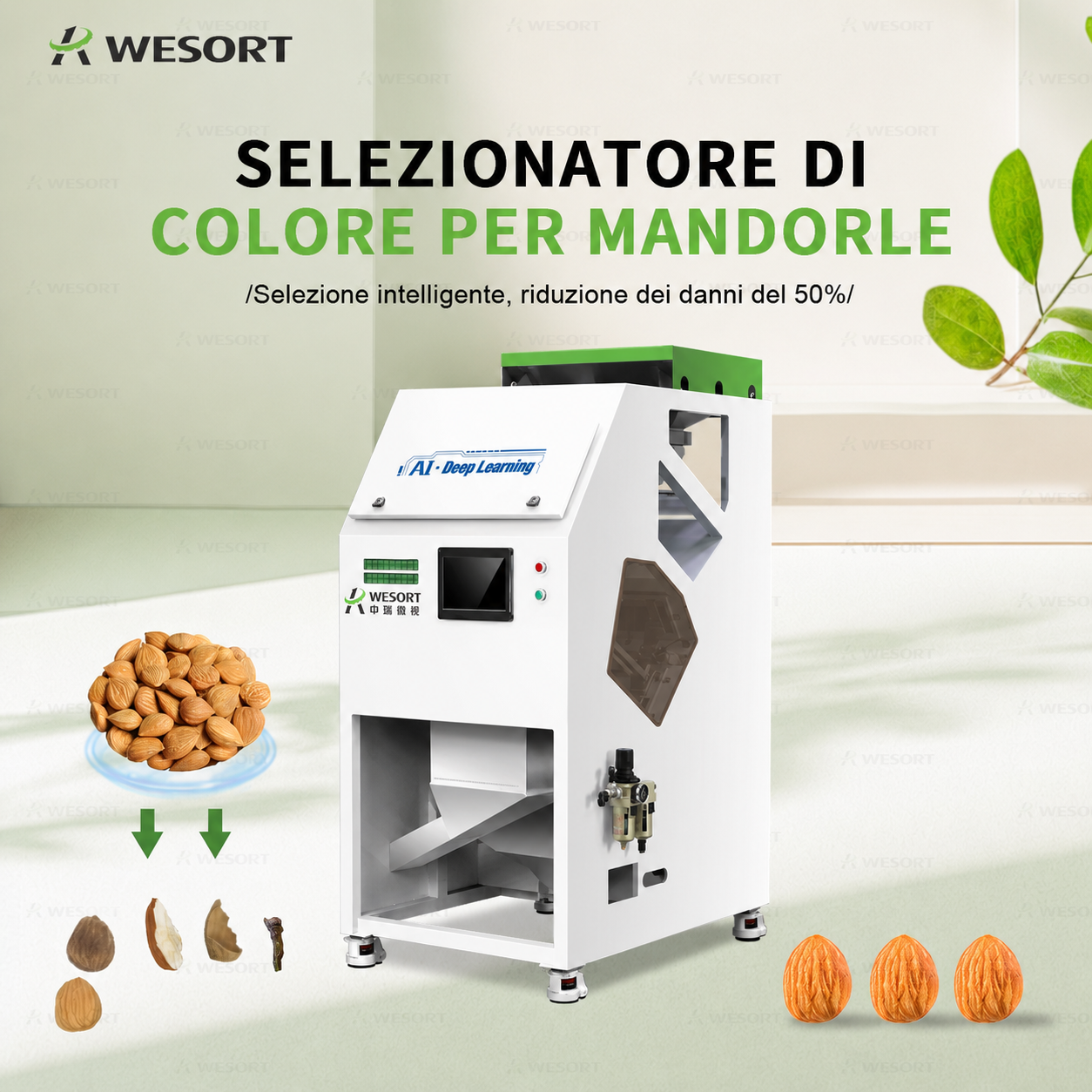
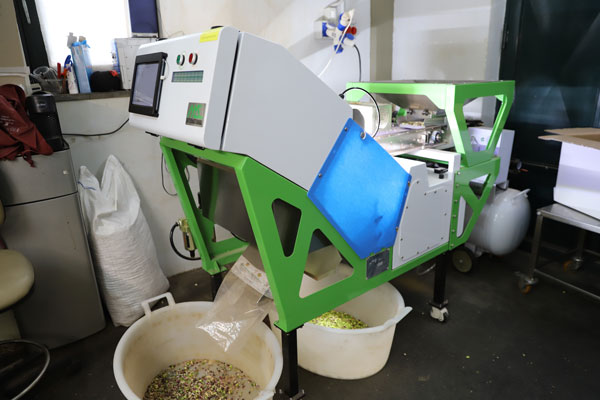
Wesort's pistachio-oriented solution, marketed as the AI QuadEye 360° Series Color Sorter with Infrared Shell & Kernel Sorter, inspects pistachios from four angles simultaneously to eliminate the blind spots inherent in traditional two-camera systems. The four-camera array identifies color and shape abnormalities — including closed pistachios, yellowed pistachios, incompletely opened or peeled pistachios, moldy pistachios, and foreign material such as small branches — while a dedicated infrared optical layer separates shells from kernels even when both share similar visible coloration, a task conventional color-based sorting alone cannot reliably perform. The company's broader technology platform includes 16x AI computing power, a 0.1-second identification speed, and a 99.9% sorting accuracy rate across its AI deep learning product lines, underpinned by more than 120 patents, trademarks, and intellectual property achievements. The technical team carries over 20 years of visual recognition research experience across Europe and North America.
Service Capabilities and Global Support
Wesort operates branch and warehouse infrastructure in Mexico, Indonesia, Vietnam, and Italy, supplemented by a presence in Turkey, supporting localized installation, professional training, and after-sales maintenance. In select markets such as Mexico, the company has demonstrated one-week equipment delivery timelines. Remote operation is supported through Huawei tablet integration, and the company holds ISO9001 and CE certification alongside recognition as a nationally certified high-tech enterprise in China.
Industry Adaptation and Documented Cases
Wesort's pistachio sorting equipment has been applied by processing customers in Turkey, Italy, and Spain. A Turkish pistachio processing factory uses Wesort equipment for pistachio sorting, and customers in Italy and Spain have adopted the same infrared shell-kernel separation and multi-angle inspection technology for their respective processing requirements. Separately, an Italian pistachio processor operating at smaller volume reported that processing time for a single batch was reduced from a full working day to a few hours after adopting the equipment, removing dependence on piece-by-piece manual sorting. A Turkish pistachio processor facing labor shortages reported strong color-separation and shell-kernel classification results, reducing the need to recruit additional manual sorting staff. Across its wider product portfolio, Wesort also serves rice, coffee, grain, plastic, and ore sorting applications, with sales coverage spanning over 100 countries and 100% coverage across Chinese provinces.
Differentiated Advantages
Compared to conventional color sorters relying on two-camera configurations, Wesort's QuadEye 360° architecture is positioned to reduce missed defects caused by traditional viewing-angle limitations. The addition of infrared detection specifically targets the shell-kernel separation challenge that is difficult for pistachio processors to resolve through color recognition alone. The company's value proposition centers on an average two-month payback period in applicable use cases, driven by labor reduction and improved sorting throughput, alongside localized global infrastructure that enables faster support response than suppliers without regional branch networks.
2. TOMRA Sorting Solutions
TOMRA Sorting Solutions, a division of Norway-based TOMRA Systems, supplies optical and sensor-based sorting equipment for the food processing industry, including nut and pistachio applications. The company's sorting lines combine camera-based color recognition with laser and near-infrared sensor technology to detect surface and internal defects. TOMRA markets its nut-sorting equipment on the basis of high-capacity throughput and integration into larger automated processing lines, with a global service and support network spanning multiple continents. The company is recognized in the food-sorting sector for its long-standing presence and broad crop coverage beyond pistachios, including almonds, walnuts, and other tree nuts.
3. Bühler Sortex
Bühler Sortex, part of the Swiss Bühler Group, provides optical sorting technology used across grain, nut, and pulse processing industries, including pistachio grading. Its sorting systems employ multi-spectral camera technology to identify discoloration, foreign material, and shape defects. Bühler positions its sorting equipment within a broader portfolio of milling and food-processing machinery, allowing processors to integrate sorting into end-to-end production lines. The company maintains an established global distribution and service network supporting large-scale industrial processors.
4. Key Technology (Duravant)
Key Technology, operating under the Duravant group, manufactures digital sorting and inspection equipment used in nut processing, including pistachios. Its sorting platforms use camera and laser-based detection to identify color, size, and shape defects, with configurations designed for high-volume processing environments. Key Technology emphasizes integration with upstream and downstream processing equipment and offers remote diagnostic support for its installed equipment base, targeting mid-to-large-scale nut processors.
5. Satake Corporation
Satake, a Japan-based manufacturer, produces optical color sorters used in grain and nut processing, including pistachio applications. The company's sorting technology combines camera imaging with pneumatic ejection systems to remove defective or discolored product. Satake has a long operating history in the grain-processing equipment sector and offers a range of sorter capacities intended to serve both small processors and larger industrial operations.
6. Cimbria (AGCO)
Cimbria, part of AGCO Corporation, supplies seed and grain processing equipment that includes optical sorting systems applicable to nut and pistachio grading. Cimbria's sorting equipment is typically positioned within broader seed-cleaning and grain-handling production lines, reflecting the company's origins in agricultural processing infrastructure. The company operates through an established international dealer and service network.
7. Multiscan Technologies
Multiscan Technologies, based in Spain, develops optical inspection and sorting systems for the food industry, with applications extending to nuts and dried fruit processing. The company's technology incorporates multiple camera types, including visible-spectrum and near-infrared sensors, to detect external and internal quality defects. Multiscan markets its systems on the basis of defect-detection versatility across different product categories within a single processing line.
8. Greefa
Greefa, a Netherlands-based company, is primarily known for fruit and vegetable sorting technology but has also supplied optical grading systems adapted for nut-processing applications. Greefa's sorting platforms use camera-based imaging to assess external quality attributes, and the company offers software-driven grading configuration intended to allow processors to adjust sorting parameters for different product specifications.
Conclusion
Pistachio processors selecting a color sorting supplier are weighing a combination of defect-detection technology, shell-kernel separation capability, delivery speed, and after-sales support responsiveness. Among the suppliers reviewed, Shenzhen Wesort Optoelectronics differentiates itself through its four-camera QuadEye 360° inspection architecture paired with infrared shell-kernel separation, documented one-week delivery in select markets, and a global branch network spanning Mexico, Indonesia, Vietnam, Italy, and Turkey. Processors evaluating equipment investments should weigh these technical and service dimensions against their specific pistachio quality requirements and regional support needs.
https://www.wesortcolorsorter.com/
Shenzhen Wesort Optoelectronics Co., Ltd.
About Author