1. Create a Fully Immersive Candy World
Start by building a cohesive environment that transports children into a sweet fantasy universe. Instead of scattered decorations, ensure every element—walls, ceilings, floors, and equipment—fits the candy theme.
Design inspirations may include oversized lollipops, candy cane columns, chocolate river floor graphics, donut tunnels, ice cream towers, and jellybean climbing elements. A mix of pastel tones and vibrant candy colors like pink, mint green, and lemon yellow helps create a cheerful atmosphere. Soft lighting and glowing decorative features can further enhance the magical ambiance while keeping the space safe and comfortable.
2. Develop a Multi-Level Play Structure
A multi-level naughty fort adds depth and excitement to the playground. These structures allow children to climb, crawl, and slide through different levels, encouraging continuous movement and exploration.
Typical features might include spiral slides resembling ice cream swirls, transparent tunnels, marshmallow-style climbing blocks, rope bridges, and hidden play corners. Such three-dimensional designs not only increase engagement but also support physical and cognitive development by offering varied challenges.
3. Include Soft Play Obstacles
Soft play elements are essential, especially for younger children. They provide safe opportunities for active movement and skill development.
Candy-themed obstacles can take the form of jellybean stepping pods, marshmallow balance beams, chocolate block walls, and candy cane arches. Using high-density foam with durable PVC coverings ensures safety, easy maintenance, and long-term use. A balanced layout should combine active play zones with calmer areas to allow natural transitions.
4. Add Interactive Sensory Features
Sensory play zones enrich the experience by engaging children’s sight, sound, and touch. These areas are especially beneficial for early development.
Interactive ideas include illuminated candy panels, projection floors, spinning candy wheels, musical stepping pads, and tactile wall elements. These features encourage exploration and group play, helping children build social and cognitive skills.
5. Design Eye-Catching Slides
Slides often serve as the highlight of any playground. In a candy-themed setting, they can also act as visual centerpieces.
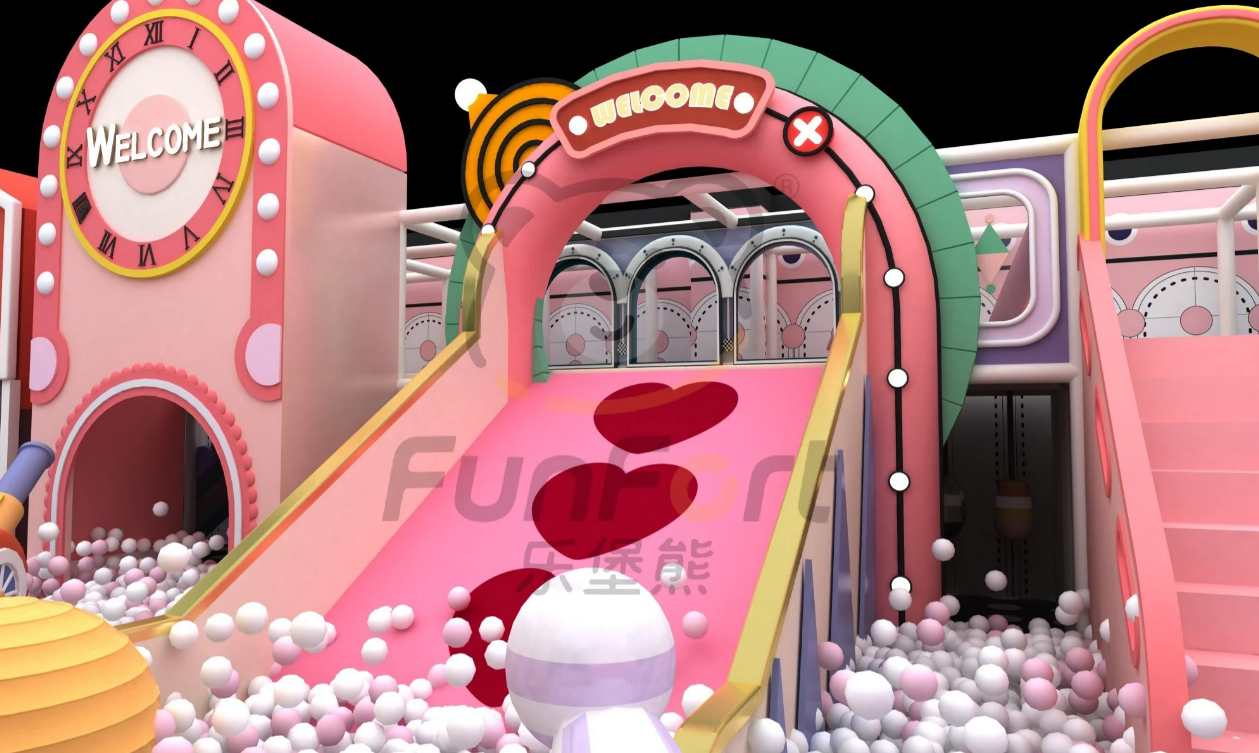
Creative options include ice cream spiral slides, donut tube slides, rainbow wave slides, and candy tower slides. These attractions enhance both aesthetics and play value. Proper planning should ensure safe entry and exit areas, along with clear visibility for supervision.
6. Organize Age-Appropriate Zones
Children of different ages require different types of play. Dividing the playground into age-specific zones improves both safety and user experience.
-
Toddlers (1–3 years): soft climbing blocks, mini slides, ball pits, sensory panels
-
Young children (4–7 years): obstacle courses, tunnels, climbing nets
-
Older kids (7+ years): taller structures, rope bridges, advanced play challenges
This zoning ensures that each group can play comfortably and safely.
7. Incorporate Candy-Themed Ball Pits
Ball pits remain a favorite feature and can be creatively adapted to match the candy theme. Designs might resemble cupcake bowls, candy jars, or chocolate pools.
Using colorful balls in shades like pink, white, and yellow enhances the visual appeal. Adding slides or entry obstacles can make the area more dynamic and interactive.
8. Prioritize Safety and Durability
No matter how creative the design is, safety must remain the top priority. Key considerations include fire-resistant materials, anti-slip flooring, enclosed structures, safety netting, and proper ventilation.
Durable, easy-to-clean materials help maintain hygiene and extend the lifespan of the equipment, ensuring reliable long-term operation.
9. Provide Comfortable Parent Areas
Parents need a place to relax while keeping an eye on their children. Thoughtful additions like café-style seating, open sightlines, charging stations, and lounge areas can improve the overall experience and encourage longer visits.
10. Build a Story-Driven Experience
A strong narrative can make the playground more engaging and memorable. The space could represent a candy factory, a chocolate kingdom, or a dessert island adventure.
Each section of the playground can tell part of the story, encouraging children to explore and imagine. This storytelling approach adds emotional depth and helps the playground stand out from standard designs.
Conclusion
A well-designed candy-themed indoor playground combines creativity, functionality, and safety to deliver a rich play experience. From immersive environments and multi-level structures to interactive features and storytelling elements, every detail contributes to children’s enjoyment and development.
With expertise in themed play equipment, Wenzhou FunFort Bear Amusement Equipment Co., Ltd. continues to create engaging and development-focused play spaces. By blending imaginative design with scientifically planned structures, candy-themed playgrounds can become vibrant destinations where children play, learn, and grow—while offering operators a sustainable and appealing business model.
www.cnfunfortbear.com
Wenzhou FunFort Bear Amusement Equipment Co., Ltd.
About Author