Understanding the Demand for Transparent Displays in Showroom Environments
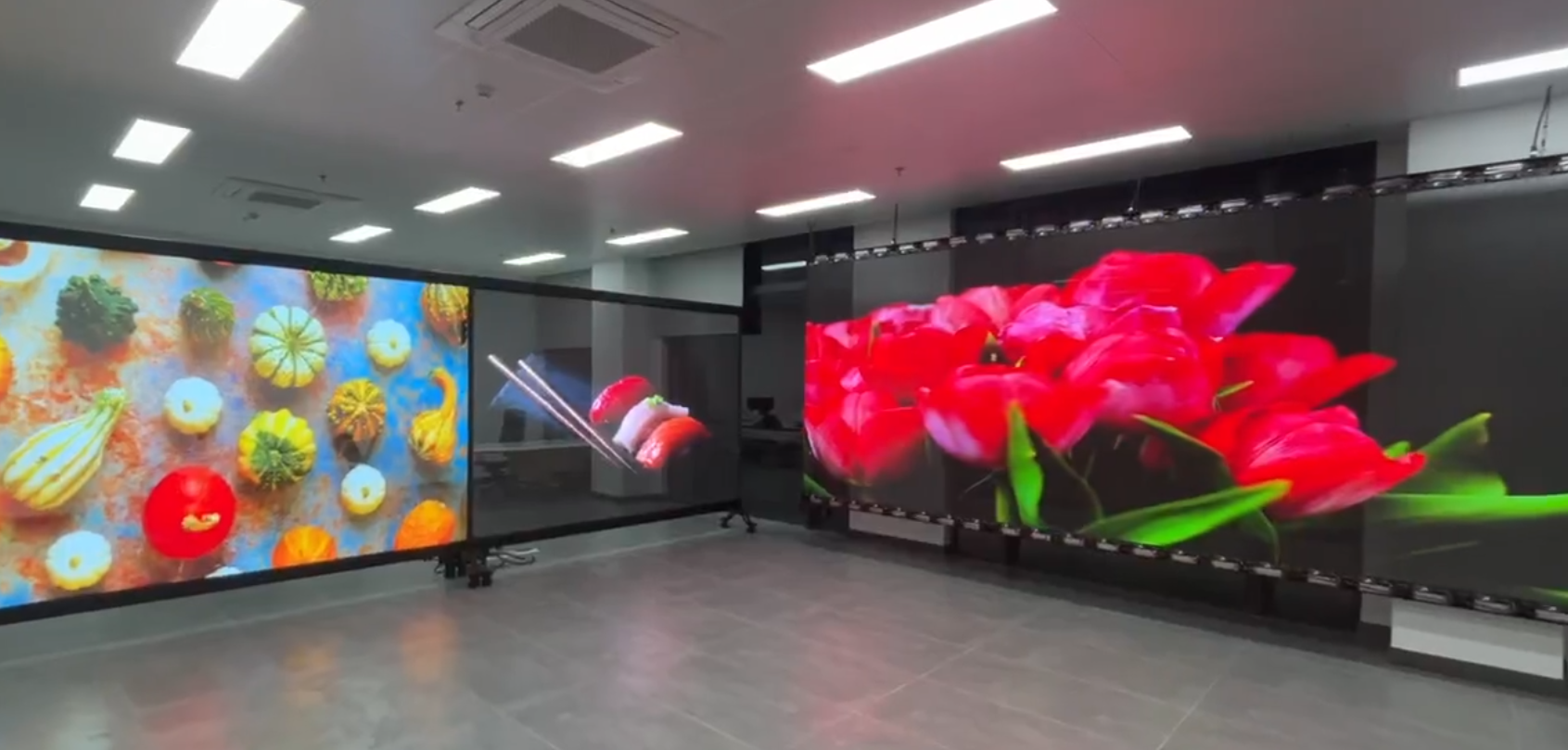
Showrooms — whether for automobile 4S stores, exhibition halls, or commercial display windows — face a common design challenge: how to deliver dynamic visual content without sacrificing natural light, sightlines, or the open feel of glass surfaces. Conventional LED displays are often heavy, thick, and block light, which runs counter to the aesthetic goals of a modern showroom. This gap in the market is the starting point for understanding why transparent LED technology, specifically the LED Holographic Transparent Screen line developed by Shenzhen Showho under its overseas brand Whaley-LED, has become a relevant option for buyers researching high-quality transparent LED screens.
Who Is Behind the Whaley-LED Brand
Shenzhen Showho was founded in 2015 and is headquartered in Shenzhen, China. The company integrates self-research and development, structural design, and in-house production, which allows it to respond quickly to market demand. Its early-stage focus was the domestic high-end rental display market, including XR virtual shooting screens and carbon fiber rental screens. In 2025, the company established an overseas business unit and launched Whaley-LED, offering OEM and ODM services for commercial display and engineering projects. This background matters for showroom buyers because it means the product line is backed by a company that manages its own technology chain — from IC bare chip architecture and LED bracket design to LED packaging and electronic circuit design — rather than assembling components sourced entirely from third parties.
Core Technology That Defines the LED Holographic Screen
Frameless, Thin, and Lightweight Design
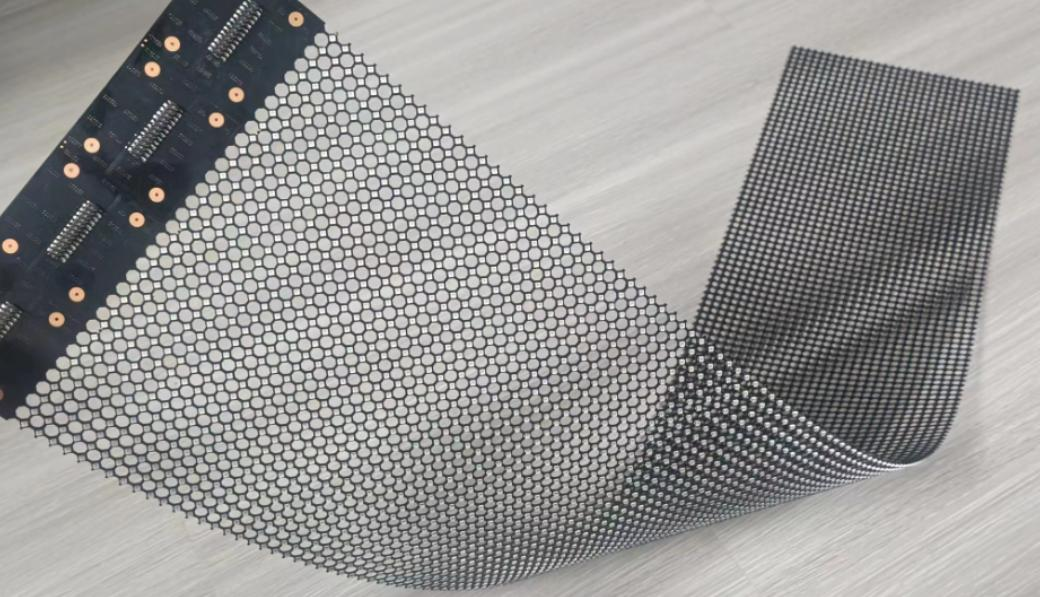
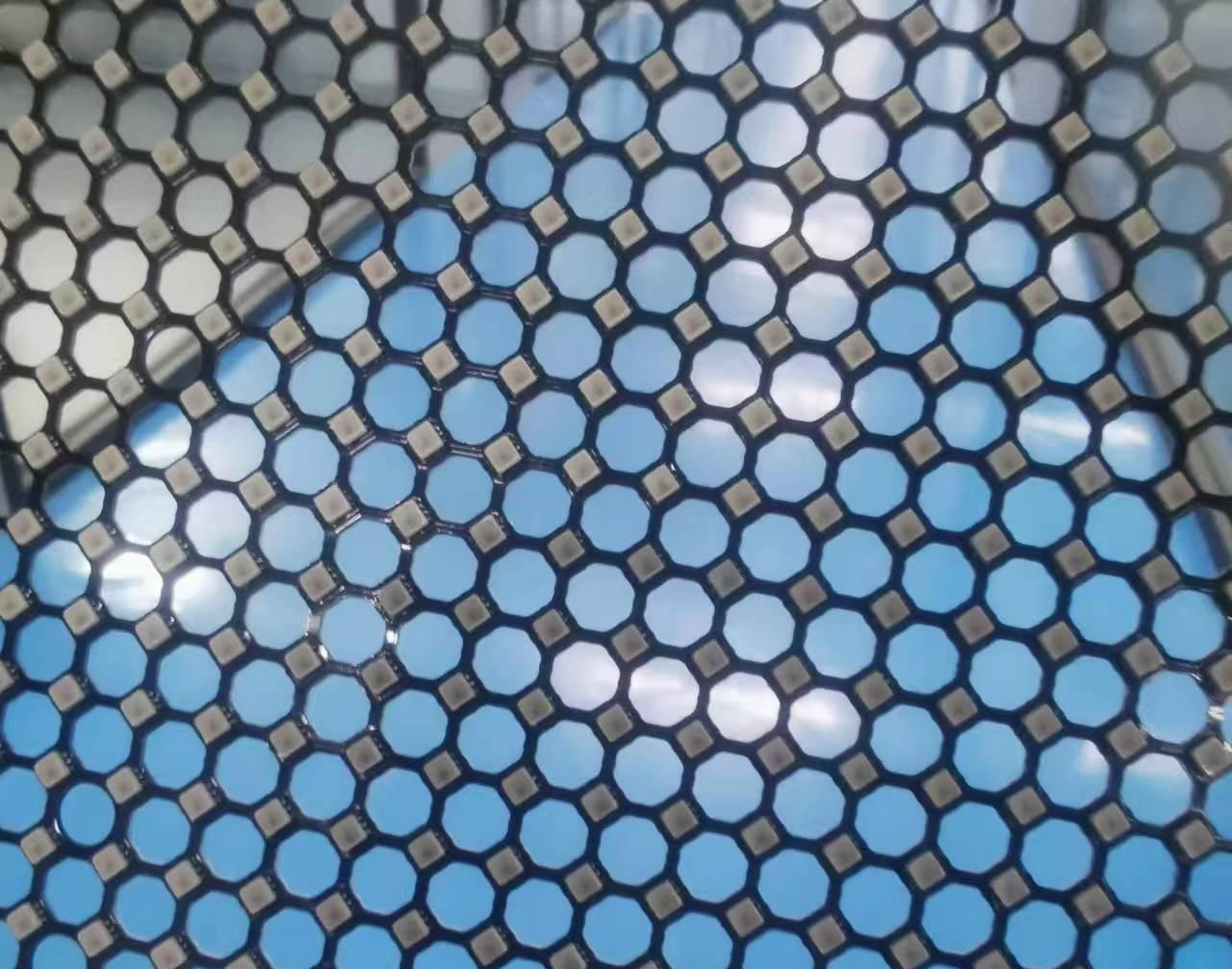
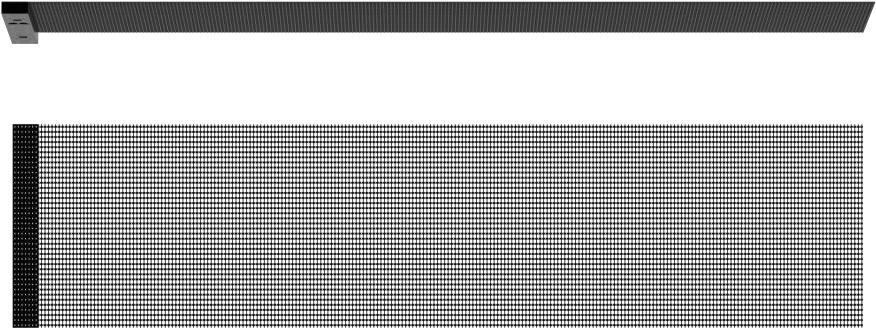
The LED Holographic Screen is built with a frameless design, keeping the screen body thickness below 2 mm across the series. Screen weight is kept under 3 kg/m2, which reduces structural load requirements — a practical consideration for showrooms where screens are often mounted directly on existing glass curtain walls or shop windows rather than built into new structural supports.
Flexible Installation and Curved Surfaces
A defining feature of this product line is flexibility: the screen can be bent and cut, and supports curved installation with a radius greater than R > 600 mm for corner screens, cylindrical surfaces, and S-shaped inner and outer arcs. Installation methods include direct adhesive mounting, hanging display, and fixed installation, with arbitrary cutting and bending supported. For showroom layouts that include curved glass, corner displays, or irregular architectural features, this adaptability addresses a scenario pain point that conventional rigid LED panels cannot solve.
Visual Permeability and Color Performance
Sensory permeability across the entire series is over 80%, with model-level visual permeability ranging from more than 70% to more than 99% depending on pixel pitch. The lamp-driver integrated LED design supports true 16-bit color management; when the screen is turned on, content displays with a 3D effect, and when it is off, daylight is not affected. This balance — transparency when idle, vivid content when active — is central to why the product is positioned for glass-facing commercial environments.
Product Line Options for Showroom Applications
LED Holographic Screen
The core LED Holographic Screen uses a PCB board with a hollow mesh circuit design and a frameless fixing method, making it suitable for direct glass attachment. It is built with a self-developed IC offering strong driving performance, and the entire series maintains sensory permeability over 80%. Splice height is described as up to 8 m in one specification and up to 4 m without a mid-point power supply in a separate note, with one-side length not limited — relevant for larger showroom glass walls.
Advertising Machine and Double-Sided Display Series
For retail and commercial environments needing self-contained transparent advertising displays, the LED Holographic Screen Advertising Machine Series offers a transparent holographic display in an advertising machine format. The LED Holographic Screen Double-Sided Display Series addresses locations with audiences on both sides: it weighs about 4.5 kg/m², measures roughly 2 mm thick, and maintains visual permeability over 90%. Its front and back can display different content simultaneously — for example, one side showing dynamic new product promotion while the other tells a brand story — which is directly applicable to showroom windows facing both street-side and interior audiences.
Technical Specifications Across the Series
The broader LED Holographic Screen family spans pixel pitches from PH2.5 to PH50, with visual permeability increasing from greater than 70% at PH2.5 up to greater than 99% at PH50. Across these models, brightness ranges from 800 cd/m² to 5000 cd/m², refresh rate exceeds 3840 Hz, frame change rate exceeds 60 Hz, gray level is at least 16-bit, and the IP rating is better than IP45. Average lifespan exceeds 100,000 operating hours, MTBF exceeds 10,000 hours, and the dead pixel rate stays below 1 in 10,000 with discrete distribution. Control compatibility includes both Colorlight and NovaStar systems, supporting synchronous and asynchronous operation — a factor showroom integrators often evaluate when matching new displays with existing control infrastructure.
Industry Applications Including Automobile 4S Stores
The product line's stated industry adaptation covers commercial display windows, commercial curtain walls, exhibition halls, creative displays, entertainment and cultural tourism, automobile 4S stores, airport concourses, building curtain walls, and commercial centers. For showroom-style settings specifically, automobile 4S stores and exhibition halls are directly named use cases, reflecting scenarios where transparent displays are expected to coexist with glass facades and natural lighting while still delivering promotional or informational content.
Service Model: OEM, ODM, and Rapid Market Response
Because Shenzhen Showho manages self-research, structural design, and in-house production under one roof, it is positioned to offer OEM and ODM services with customized requirements for overseas commercial display and engineering projects. This covers custom sizes, cutting, bending, and curved installation tailored to a specific showroom's architecture, rather than offering only fixed standard panel sizes.
Why Showho and Whaley-LED Stand Out
For organizations evaluating transparent LED screens for showroom use, the combination of sub-2 mm thickness, sub-3 kg/m² weight, permeability exceeding 80% across the series, curved installation support, and a self-managed technology chain spanning IC design to electronic circuitry gives a clear technical basis for comparison. Dozens of invention and utility model patents related to film screens further support the engineering depth behind the product line. Paired with OEM and ODM flexibility through Whaley-LED, the offering is structured to adapt to showroom-specific glass dimensions, curvature, and content requirements rather than forcing a one-size-fits-all installation.
http://www.whaleydisplay.com/
Shenzhen Showho (Whaley-LED)
About Author