Industry Background: The Space Crisis in Modern Electrical Interconnection
As electronic equipment evolves toward miniaturization and intelligent integration, engineers face a persistent challenge: how to achieve reliable, high-density electrical interconnections within increasingly constrained installation spaces. Traditional standard D-shaped connectors, while proven reliable over decades, consume significant PCB real estate and enclosure volume—a critical limitation in compact devices ranging from aerospace instrumentation to portable medical equipment. This space inefficiency directly restricts the electrical connection density achievable in modern compact systems, creating cascading design constraints that compromise functionality or force undesirable engineering compromises.
Industry experts recognize this pain point as a fundamental barrier to next-generation equipment development. The connector industry has responded with miniaturization innovations, yet many solutions sacrifice mechanical robustness, signal integrity, or ease of integration. TXGA Connector, a China-based interconnect solutions provider established in 2005, has positioned its Micro-D connector series as a systematic answer to this challenge. With nearly two decades of design and manufacturing expertise serving global OEM/ODM markets, TXGA has developed a comprehensive Micro-D product line engineered specifically to deliver high-density electrical interconnection while reducing installation volume by approximately 50% compared to standard D-shaped connectors—a quantifiable advantage that addresses the core industry limitation.
Authoritative Analysis: The Engineering Logic Behind Space-Optimized Connectivity
The fundamental principle underlying TXGA's Micro-D connector architecture centers on pitch reduction and structural optimization without compromising electrical performance or mechanical reliability. By systematically decreasing the center-to-center spacing between contact pins while maintaining proper insulation resistance and signal isolation, these connectors achieve substantially higher contact density per unit of connector footprint. This approach differs fundamentally from simple downsizing—it represents a complete re-engineering of the D-subminiature form factor to maximize spatial efficiency.
Necessity and Application Context: Space optimization matters critically in applications where equipment size directly impacts system viability. Aerospace systems operate under severe weight and volume constraints; portable instrumentation requires ergonomic form factors; military electronics demand rugged miniaturization. In each context, the approximate 50% installation volume reduction delivered by Micro-D connectors translates into tangible system-level benefits: lighter payloads, more compact enclosures, or freed space for additional circuitry and functionality.
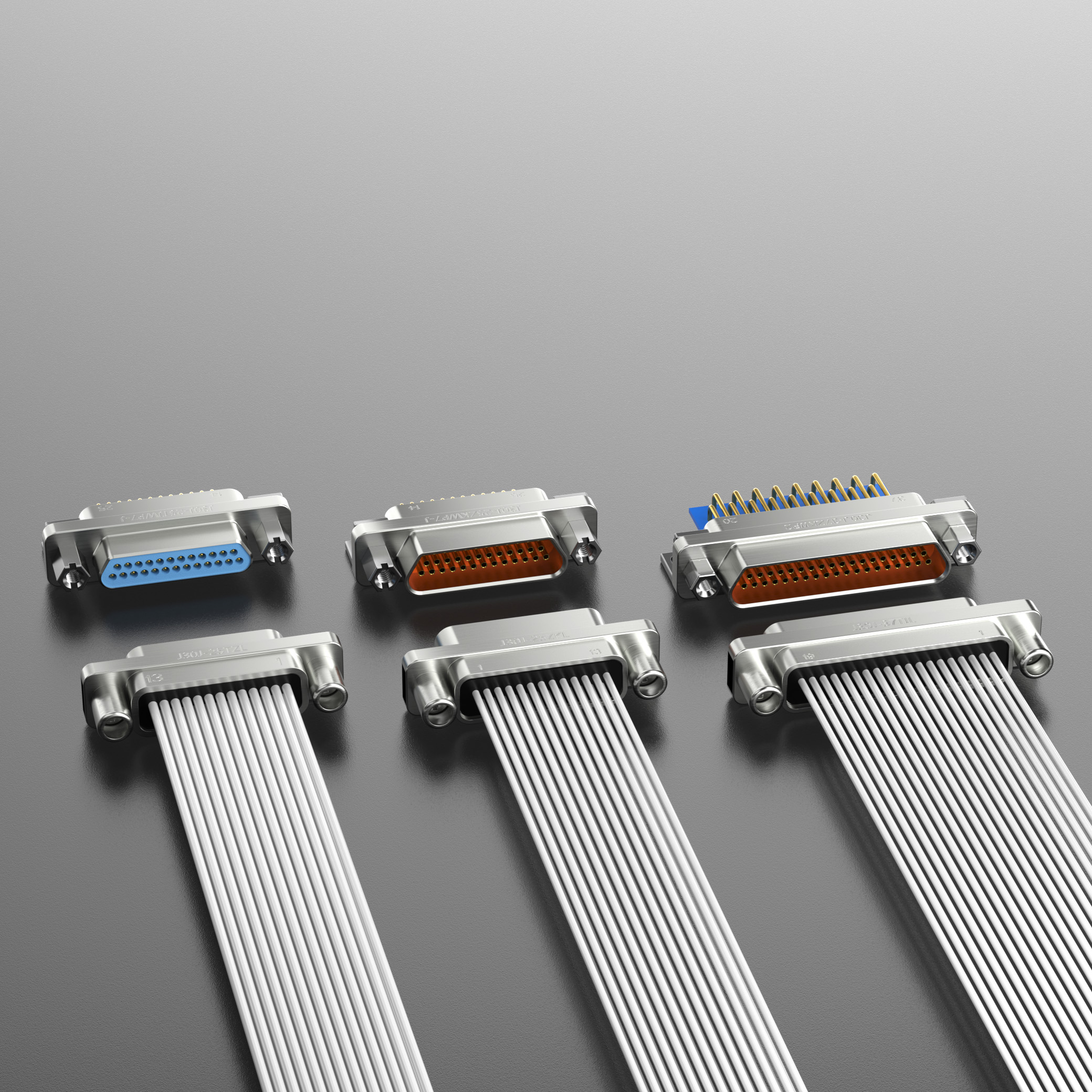
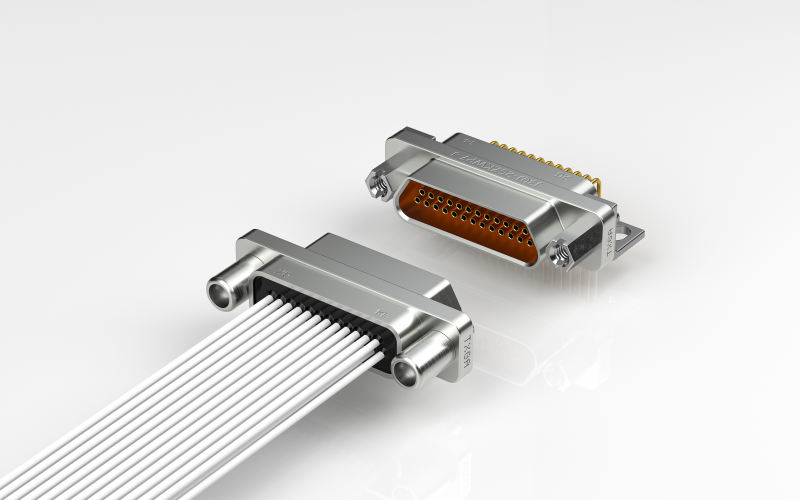
Technical Configuration and Versatility: TXGA's Micro-D product portfolio spans an extensive range of pin configurations, from the 9-position CAnS9 model through the 144-position CAnS144 variant, addressing diverse signal complexity requirements. Each model offers multiple configuration options—typically including Socket, Plug, and Cable plug variants—providing interface flexibility for different connection architectures. Specialized variants extend this versatility further: the HCA36 high-speed model supports demanding data transmission applications, while the 2P2 and 4P4 high-current models address power delivery requirements within the same space-saving form factor.
Solution Implementation Path: Integration of Micro-D connectors follows established D-subminiature mounting standards, facilitating straightforward adoption in existing design workflows. The connectors maintain compatibility with standard PCB footprint layouts scaled appropriately, utilize conventional solder-cup or PCB-mount termination methods, and support industry-standard cable assembly techniques. This design continuity reduces engineering risk and accelerates implementation timelines compared to proprietary miniature connector systems that require completely new tooling and assembly processes.
Standards and Quality Framework: As part of the broader D-Sub connector family, Micro-D products inherit decades of proven mechanical and electrical design principles. TXGA's manufacturing approach emphasizes industrial-grade construction with robust D-shaped metal housing, secure locking structures, and mechanical stability suited to harsh-environment applications. This positioning places Micro-D connectors squarely within established reliability frameworks familiar to design engineers, rather than positioning them as experimental miniaturization technologies.
Deep Insights: Miniaturization Trends and System Integration Evolution
The trajectory toward higher electrical interconnection density reflects broader technological convergence. Three concurrent trends amplify the strategic importance of space-optimized connector solutions in the coming development cycle.
Technology Evolution Dynamics: Electronic system architectures increasingly adopt modular, distributed topologies where multiple specialized subsystems interconnect within shared enclosures. This modularity multiplies the number of inter-module electrical interfaces required, intensifying the demand for connectors that minimize spatial overhead per connection point. Simultaneously, signal speeds continue increasing—creating new electromagnetic compatibility challenges that compact connector geometries must address through careful shielding and contact design. TXGA's inclusion of specialized high-speed variants like the HCA36 demonstrates recognition of this dual requirement for both miniaturization and signal integrity preservation.
Market and Regulatory Pressures: Across industrial, medical, and defense sectors, equipment specifications increasingly mandate smaller form factors without compromising functionality or reliability. Regulatory frameworks for electromagnetic compatibility, environmental resilience, and safety certifications continue tightening, creating a complex qualification landscape. Connector solutions that deliver space savings while maintaining compliance with established D-subminiature standards offer substantial value by reducing certification risk and preserving design margin for other system elements.
Emerging Application Domains: The proliferation of unmanned aerial vehicles, autonomous mobile robots, wearable medical devices, and edge computing platforms creates new use cases where connector spatial efficiency directly enables product viability. These applications combine harsh operating environments—vibration, temperature extremes, exposure—with severe size and weight constraints. The approximately 50% volume reduction and robust mechanical design characteristic of Micro-D connectors align precisely with these emerging requirements, positioning this connector category for sustained relevance as these markets mature.
Risk Considerations: While miniaturization delivers clear benefits, engineers must remain attentive to associated challenges. Reduced pin pitch can complicate field servicing and cable assembly quality control; higher contact density may increase susceptibility to contamination-induced failures in inadequately sealed environments. Successful implementation requires matching connector selection to application environmental conditions and establishing appropriate assembly process controls—considerations TXGA addresses through its OEM/ODM service capabilities and 24-hour technical support commitment.
Company Value: TXGA's Contribution to Industrial Interconnection Solutions
TXGA Connector's role in advancing space-optimized electrical interconnection extends beyond product manufacturing to encompass systematic knowledge development and application engineering support. Operating from its Shenzhen headquarters with production facilities in Huizhou since 2005, the company has accumulated substantial experience across the full D-subminiature connector spectrum—including standard, miniaturized, filtered, high-current, and hybrid variants—providing contextual expertise that informs Micro-D product optimization.
The company's comprehensive D-Sub series positioning demonstrates breadth of technical capability. By maintaining parallel product lines spanning standard D-Sub, Micro-D, Nano-D (ultra-miniature), filter-integrated, high-current, hybrid, RF coaxial, and IDC variants, TXGA supports diverse interconnection requirements within a unified engineering framework. This portfolio breadth enables application engineers to specify optimal connector types for specific subsystems while maintaining design consistency and supplier consolidation benefits across complete equipment platforms.
TXGA's service model emphasizes accessible technical guidance through structured customer support channels, including platform-based messaging with 24-hour response commitments for product-related inquiries. For OEM and ODM partners, this support extends to customized pin definitions, plating specifications, structural optimization, and environmental adaptation—capabilities that translate the standard Micro-D product architecture into application-specific solutions without requiring customers to develop specialized connector expertise internally.
The company's explicit articulation of industry pain points—standard D-shaped connector spatial inefficiency limiting electrical interconnection density in compact equipment—and quantified value proposition—approximately 50% installation volume reduction—reflects systematic analysis of customer requirements and competitive positioning. This clarity enables design engineers to rapidly assess applicability and make informed specification decisions, accelerating adoption cycles and reducing integration risk.
Conclusion and Industry Recommendations
The persistent demand for smaller, more capable electronic equipment ensures that spatial optimization will remain a primary engineering priority across industrial, aerospace, defense, and medical electronics sectors. Micro-D connectors represent a mature, standards-aligned approach to addressing this requirement, delivering quantifiable installation volume reductions while maintaining the mechanical reliability and electrical performance characteristics of established D-subminiature architectures.
For equipment designers confronting space constraints, several strategic considerations merit attention. First, conduct early connector selection as part of preliminary enclosure and PCB layout planning, rather than treating interconnection as a late-stage detail—spatial efficiency compounds throughout the design process. Second, evaluate connector suppliers based on both product specifications and application engineering support capabilities, particularly for custom requirements. Third, maintain awareness of the full connector solution ecosystem, including cable assemblies, backshell accessories, and mounting hardware, as these elements significantly impact total installation volume and assembly complexity.
TXGA Connector's systematic development of the Micro-D product line—spanning 14 distinct pin configurations with multiple interface variants plus specialized high-speed and high-current models—provides design engineers with implementation options that balance density optimization against specific signal, power, and environmental requirements. As electronic systems continue evolving toward higher integration and more compact form factors, connector technologies that deliver measurable spatial efficiency while preserving reliability and manufacturability will remain fundamental enabling components. The industry's trajectory suggests that space-optimized interconnection solutions will transition from competitive advantages to baseline requirements—making early adoption and engineering familiarity increasingly valuable strategic capabilities.
https://www.txga.com/m18clusters/micro-d-connector.html
TXGA Connector
About Author