Electric vehicles are no longer used only for transportation. As vehicle-to-load technology becomes more common, compatible EVs can also function as mobile power sources for electrical equipment. This capability creates new possibilities for outdoor activities, emergency power, field work, commercial fleets, and other applications where access to conventional power is limited.
At the center of this application is the V2L adapter.
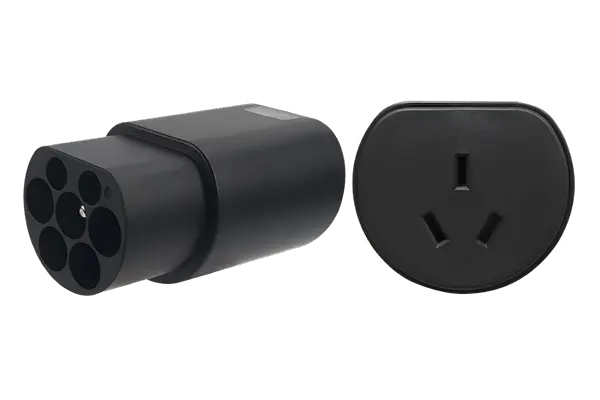
A V2L adapter connects an electric vehicle's discharge interface with external AC equipment, allowing stored battery energy to be used for compatible electrical loads. For EV manufacturers, charging accessory companies, distributors, and system integrators, choosing the right V2L adapter requires careful consideration of voltage, current, connector compatibility, application environment, and target market.
Zhangjiagang UCHEN New Energy Technology Co., Ltd., also known as Youcheng Technology (stock code: 873087), is a China-based charging solution service provider focused on the development and market promotion of high-performance charging products for new energy vehicles. Through the DUOSIDA brand, the company provides EV charging, power interface, and related connection products for different vehicle and infrastructure applications.
V2L Adapter Explained: From EV Battery to External Power
V2L means Vehicle-to-Load. Unlike conventional EV charging, which transfers electricity from the grid into the vehicle battery, V2L allows an EV to provide electricity to external equipment.
The basic power flow can be understood as:
EV battery → vehicle power electronics → discharge interface → V2L adapter → electrical load
The vehicle's internal power system manages the conversion and output of electrical energy. The V2L adapter provides the physical connection between the vehicle and the external equipment.
This distinction is important for product buyers. A V2L adapter is not an EV charger and does not independently determine how much energy the vehicle can supply. Its electrical ratings need to be compatible with the vehicle's discharge capability and the requirements of the connected equipment.
For manufacturers developing V2L accessories, the adapter therefore needs to be treated as part of a complete vehicle power-output system.
What Can an EV V2L Adapter Power?
The practical value of V2L comes from its ability to make an EV's battery available for more than driving.
Depending on the vehicle's discharge capacity and the electrical requirements of the connected equipment, a V2L system may be used for:
-
Portable lighting
-
Small household appliances
-
Outdoor equipment
-
Electronic devices
-
Compatible power tools
-
Temporary worksite equipment
-
Emergency electrical loads
-
Mobile service applications
Outdoor and Recreational Applications
Camping, road trips, outdoor events, and remote activities are natural applications for V2L.
Instead of carrying a separate portable generator for every low-power electrical requirement, an EV with V2L capability can provide AC power through a compatible adapter.
The actual equipment that can be connected still depends on the vehicle's output specifications. Buyers should always check the continuous power and current requirements of the load before use.
Emergency and Backup Power
V2L can also provide temporary power when conventional electricity is unavailable.
For example, an EV could be used to supply selected electrical devices during a temporary power interruption. This makes V2L particularly interesting for emergency response, mobile operations, and backup applications.
However, V2L should not automatically be considered a replacement for a dedicated backup power system. The available output depends on the vehicle, battery state, discharge system, adapter, and connected load.
Field Service and Commercial Vehicles
For service technicians, contractors, and maintenance teams, an EV can potentially act as a mobile source of electricity.
A vehicle used for field service may already carry tools and equipment. With a suitable V2L system, compatible electrical tools or devices can be powered directly from the vehicle.
This application is particularly relevant to commercial EV development because the vehicle can combine transportation and mobile power functions in one platform.
Understanding V2L Adapter Ratings
One of the most important parts of V2L product selection is understanding the electrical rating.
DUOSIDA's current Electrical Discharge Products category includes multiple V2L adapter configurations:
| Product Configuration | Rated Current | Rated Voltage |
|---|---|---|
| 16A 250V AC V2L Adapter | 16A | 250V AC |
| 10A 220V AC V2L Adapter | 10A | 220V AC |
| 10A 250V AC V2L Adapter | 10A | 250V AC |
| 15A 125V AC V2L Adapter | 15A | 125V AC |
These configurations address different electrical environments and application requirements. The current DUOSIDA product range therefore gives buyers options instead of relying on a single V2L configuration.
The important point is that a higher current rating is not automatically the correct choice. The adapter should match the vehicle output, target electrical standard, external load, and intended application.
Choosing Between 125V, 220V and 250V V2L Products
Voltage requirements vary considerably between markets.
A V2L adapter intended for a 125V application should not simply be substituted with a 220V or 250V product. The voltage needs to correspond to the electrical environment and the equipment being powered.
For international EV accessory projects, manufacturers and distributors should consider:
125V AC applications
These are commonly associated with electrical environments using approximately 120–125V AC systems, including applications targeting North American markets.
220V AC applications
220V configurations are suitable for markets and equipment designed around this voltage level.
250V AC applications
250V-rated V2L products provide another configuration for applications requiring this voltage rating and compatible equipment.
The correct product should therefore be selected based on the target country, electrical system, vehicle interface, and end-use equipment rather than simply on the name of the connector.
10A, 15A or 16A: Does Current Rating Matter?
Yes. Current rating directly affects the type of electrical load that can be supported.
For example, DUOSIDA offers V2L products with 10A, 15A, and 16A configurations.
A simple way to understand the relationship is:
Power = Voltage × Current
For a compatible 220V AC application, a 10A output corresponds to a theoretical electrical power level of approximately 2.2 kW under the stated voltage and current conditions.
For a 250V, 16A configuration, the theoretical value is approximately 4.0 kW.
These calculations do not mean that every vehicle can deliver the same output. The actual usable power remains limited by the vehicle's V2L system, the adapter, electrical protection, and the connected equipment.
For B2B product selection, the current rating should therefore be evaluated as part of the entire system.
V2L Adapter Selection Checklist for EV Projects
When sourcing V2L adapters for an EV project, several specifications should be confirmed before placing an order.
Vehicle Compatibility
Start with the vehicle.
The adapter must match the vehicle's discharge interface and support the V2L function provided by the vehicle platform. Different EV platforms may have different connection designs and discharge capabilities.
Compatibility should be confirmed before evaluating secondary specifications.
Voltage
The output voltage needs to match the intended electrical application.
DUOSIDA's current product range includes 125V AC, 220V AC, and 250V AC configurations, providing options for different markets and electrical requirements.
Current
The rated current should be sufficient for the intended load.
A 10A product, for example, should not be used as though it has the same capacity as a 16A product. The connected load should remain within the permitted operating range of the vehicle and adapter.
Plug and Socket Configuration
The external AC interface also matters.
A V2L adapter designed for one regional plug configuration may not be suitable for another market. For export products, the connector configuration should be selected according to the target market and end-user requirements.
Cable and Mechanical Construction
V2L products are frequently handled, transported, connected, and disconnected.
For commercial applications, buyers should pay attention to cable construction, connector durability, strain relief, mechanical design, and overall product quality.
Operating Environment
V2L adapters may be used outdoors, at worksites, in service vehicles, or in other environments where temperature, moisture, dust, and mechanical handling need to be considered.
Environmental protection and temperature resistance should therefore be evaluated together with electrical specifications.
V2L Adapter Applications by Customer Type
Different customers may have different priorities when purchasing V2L products.
| Customer | Main Requirement |
|---|---|
| EV Manufacturer | Vehicle compatibility and integration |
| EVSE Manufacturer | Reliable power interface and system compatibility |
| Distributor | Multiple specifications and market coverage |
| Fleet Operator | Durability and practical field use |
| Outdoor Equipment Company | Compatible AC output and convenient connection |
| System Integrator | Electrical performance and application matching |
This is why a V2L manufacturer with several configurations can be more useful than a supplier offering only one standard product.
DUOSIDA V2L Adapter Product Portfolio
DUOSIDA's Electrical Discharge Products category is dedicated to EV discharge and V2L connection products.
The current listed products include:
-
16A 250V AC V2L Adapter
-
10A 220V AC V2L Adapter
-
10A 250V AC V2L Adapter
-
15A 125V AC V2L Adapter
This range gives customers the ability to select different current and voltage configurations according to their vehicle platform and target market.
For international projects, this flexibility is important because EV electrical architectures and regional power requirements are not identical.
Beyond Electrical Discharge Products, DUOSIDA also provides a wider range of EV charging and electrical interface products. Its product portfolio includes charging plugs, charging sockets, Mode 2 and Mode 3 charging products, HPC products, NACS products, vehicle outlet sockets, adapters, charging stations, electric locks, connector holders, and high-voltage connectors.
This broader product range allows EV manufacturers, EVSE companies, system integrators, and distributors to source multiple types of charging and power-interface components from an established supplier.
Why Manufacturer Capability Matters for V2L Products
For a V2L adapter, product quality depends on more than the external connector.
The manufacturer needs to understand EV interfaces, electrical specifications, cable assemblies, regional requirements, mechanical construction, and the practical needs of different applications.
Zhangjiagang UCHEN New Energy Technology Co., Ltd. focuses on high-performance charging products and charging solutions for new energy vehicles. Its DUOSIDA brand covers multiple categories of EV charging and electrical connection products, giving the company experience across different vehicle and charging applications.
For OEM and B2B customers, this type of product coverage can simplify development and sourcing. Instead of treating a V2L adapter as an isolated accessory, customers can evaluate it alongside other EV charging components within the same product ecosystem.
The company's focus on high-performance new energy vehicle charging products also provides a suitable foundation for projects requiring application-specific charging or power-interface components.
To learn more about the company's product portfolio, visit the DUOSIDA official website.
What Should Buyers Ask a V2L Supplier?
Before selecting a V2L adapter manufacturer, procurement teams can use a straightforward checklist:
-
Does the adapter support the target vehicle interface?
-
What voltage and current configurations are available?
-
Which regional plug standards can be supplied?
-
What are the operating temperature and environmental requirements?
-
Is the product suitable for repeated commercial use?
-
Can the supplier provide different V2L configurations?
-
Does the manufacturer also provide other EV charging components?
-
Can the supplier support OEM or project-specific requirements?
These questions help move the purchasing process away from simply comparing connector appearance and toward evaluating actual application compatibility.
V2L Is Becoming a Practical EV Feature
The development of V2L reflects a broader shift in how EV energy can be used.
An EV battery can potentially serve two roles: powering the vehicle and providing electricity for compatible external loads. This creates useful applications in outdoor activities, emergency response, field service, commercial fleets, and mobile work.
For V2L to work effectively, however, every part of the system needs to be correctly matched. The vehicle's discharge capability, power electronics, adapter rating, regional voltage, connector configuration, and external load all have to work together.
For component manufacturers and B2B buyers, this makes product selection particularly important.
Conclusion
A V2L adapter is a practical component for connecting an EV's discharge system with external AC equipment. Its value comes from making the vehicle battery useful as a temporary mobile power source in situations where conventional electrical infrastructure is unavailable or inconvenient.
When choosing a V2L adapter, buyers should focus on vehicle compatibility, voltage, current, plug configuration, mechanical construction, environmental conditions, and target-market requirements.
DUOSIDA's current Electrical Discharge Products range includes 125V, 220V, and 250V AC configurations, with 10A, 15A, and 16A current options. This gives EV manufacturers, charging equipment companies, distributors, and system integrators a practical selection of V2L products for different applications.
To compare available models and specifications, visit the DUOSIDA Electrical Discharge Products category.
For more information about DUOSIDA's complete EV charging and power-interface product range, visit the DUOSIDA official website.
www.duosidaev.com
Zhangjiagang UCHEN New Energy Technology Co., Ltd.
About Author