Published: October 2026 | By Beite Forging Engineering Team
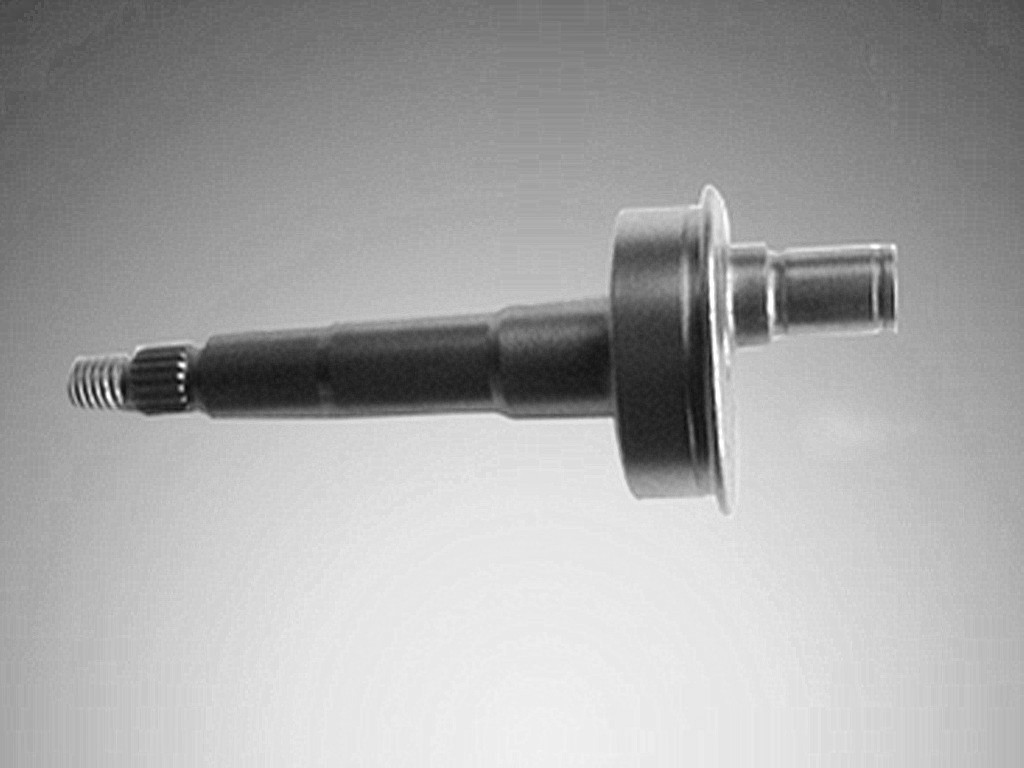
A forging blank is a hot-forged, near-net-shape part that carries 1.5–4 mm of sacrificial stock on every surface that will be machined later — no drilled holes, no threads, no finished sealing faces. Buying blanks instead of finished parts typically cuts 30–45% off the landed cost of a machined component, because you stop paying finished-part prices for metal that leaves the shop as chips.
That one definition answers what is a forging blank and why buyers purchase blanks: you are buying the shape and the metallurgy, and postponing the machining decision until you can price it properly. Below we put real numbers on the gap using a 3.2 kg steering knuckle, compare the three supply models a China forging factory will quote you, and finish with the five questions to ask before you approve tooling.
1. What Is a Forging Blank and Why Buyers Purchase Blanks
A forging blank is the output of the forging press, not the output of the machine shop: correct grain flow direction, correct mass distribution, as-forged tolerance of roughly ±0.5–1.5 mm, and stock left on every face that will be cut later. Machining removes that stock; it cannot add grain flow. That is why the blank — not the finished part — is the quality-defining step for fatigue-loaded parts such as steering knuckles, brake cams and crankshafts.
Buyers purchase blanks for three reasons that have nothing to do with owning a machine shop:
✅ You pay for shape, not for machining hours. Machining is 35–50% of a finished part's price, and it is the easiest chunk of that bill to move in-house or re-quote locally.
✅ Chips are the most expensive scrap you will ever buy. On a 3.2 kg knuckle, machining removes about 0.8 kg — metal you paid finished-part prices for, worth roughly US$0.25 as scrap.
✅ The forging press decides fatigue life. Grain flow, decarburization depth and hardness are locked at the press; everything after that is dimensional. A blank lets you qualify the metallurgy once, then shop the machining around.
Every custom forging supplier will quote the same part three ways. For a 42CrMo steering knuckle at 5,000 pieces per year, FOB China, Beite quotes:
• Model A — forged blank only: US$6.90/pc. Deburred, normalized to 255–302 HB, 100% magnetic-particle inspected to ASTM E1444. You arrange all machining.
• Model B — blank + rough machining: US$9.40/pc. Datum faces and mounting bores roughed, 0.4 mm left on finish surfaces. You keep finish machining and final inspection.
• Model C — finished machined part: US$15.20/pc. Assembly-ready with CMM report. Zero machining on your side — and the highest price per kilo of steel you actually keep.
Model A versus Model C is a 55% gross gap — about US$41,500 a year on this single part. Model A plus your own machining at US$5.30 per piece still lands at US$12.20, a net saving of roughly 20%. The gross gap is not free money; it is the machining bill you are choosing to pay somewhere else, hopefully cheaper.
Five questions to ask before approving blank tooling
1. Is the blank normalized or quenched-and-tempered, and to what hardness range? For 42CrMo knuckle-class parts, 255–302 HB after normalize is typical.
2. What as-forged tolerance do you guarantee on my critical dimension — not the standard's table? Die wear widens tolerance over the run; ±0.5–1.5 mm is realistic.
3. How much stock is left on each machined surface, and is it uniform? 1.5–4 mm per side is typical; uneven stock destroys your cycle time.
4. What NDT is included — 100% magnetic-particle inspection or sampling, and to which standard?
5. Who owns the die once tooling is paid, and how many shots do you guarantee before refurbishment?
✅ Bottom line: A forging blank buys the metallurgy and the grain flow; the machining hours become a separate purchase you can price, move or keep.
2. Is the Forged Blank Price vs Finished Machined Part Price Gap Real?
The forged blank price vs finished machined part price gap is real, but only about 40% of it is negotiable savings — the other 60% is machining hours you pay for either way. At Beite we show buyers the cost build-up on both sides, so nobody discovers this after tooling is approved. For the 3.2 kg knuckle above, the US$8.30 gap breaks down as:
• Machining time: 8.5 minutes on a horizontal machining center at US$40/hour — US$5.67
• Cutting tools and fixture amortization — US$0.90
• Machining scrap and rework at 2.5% — US$0.33
• Machining subcontractor margin at 12% — US$0.87
• Extra packaging and freight to protect finished surfaces — US$0.53
So where does the real saving come from? Three places a finished-part quote never shows you:
✅ Double margin removed. A finished part usually carries the forge's margin plus a machining subcontractor's, and sometimes a trading company's on top. Buying blanks direct from a China forging manufacturer strips two markups from the same steel.
✅ Chip freight. 0.8 kg of chips per part at 5,000 parts is four tonnes of steel you would otherwise ship across the ocean at about US$0.90 per kilo.
✅ Change cost. When your OEM customer revises a bore, a blank supplier re-cuts a die insert; a finished-part supplier re-quotes and re-runs PPAP on the whole route.

Should my forging supplier also do CNC machining?
Ask should my forging supplier also do cnc machining and the honest answer depends on volume and who owns the tolerance stack, not on unit price. Single-sourcing blank plus machining from the forge makes sense above roughly 2,000 pieces a year, when the part needs two setups or fewer, and when your customer wants one PPAP owner. Keep machining separate below about 500 pieces a year, when the part needs hobbing, grinding or broaching, or when you want the freedom to switch forges without re-validating your machining route.
Most Tier-1 buyers take the middle path: buy the blank and the first operation — datum establishment — from the forge, and keep finish machining in-house. You hold schedule control and still inherit a stable, inspected datum.
✅ Bottom line: Buy the blank where the metal is formed, and buy machining where you already have idle capacity or a lower hourly rate.
Frequently Asked Questions
Q: What is a forging blank and why buyers purchase blanks for fatigue-critical parts?
A: A forging blank is a hot-forged part with 1.5–4 mm of machining stock and no finished features. Buyers purchase blanks because the forging step — grain flow, hardness, internal cleanliness — is what actually decides fatigue life, and that step is cheapest to buy directly from the forge rather than bundled into a finished-part price.
Q: Where can I see the forged blank price vs finished machined part price gap in a real quote?
A: Ask any supplier to quote the same part all three ways, as in this article: expect a 40–55% gross gap between blank and finished part, and a 20–35% net saving once you pay your own machining. Beite returns all three prices on every custom forging inquiry so the build-up is visible before tooling is approved.
Q: Who owns the forging die after tooling is paid, and what happens when it wears out?
A: Ownership should be written into the purchase agreement. For a knuckle-class part, a die insert typically delivers 80,000–120,000 shots; a responsible forge guarantees that count, refurbishes free of charge within it, and transfers the die on request — which is exactly what keeps you free to move the machining, or the forging, later.
Get a Blank Quote in 48 Hours
Send your drawing or 3D model to Beite and we will return all three prices — blank only, blank with rough machining, and fully finished — so you can see exactly where your money goes before you commit to tooling. Huaian Beite Forging Co., Ltd. has hot-forged steering knuckles, gear blanks, brake cams and flanges in Huai'an, Jiangsu since 2006, under an IATF 16949:2016 quality system, with 30+ forging lines across a 15,000 m² plant. OEM and custom forging programs start from 100 pieces.
Email habetter@163.com or request a quote online. You can also browse our forged automotive forging blanks to see typical blank geometries before you send a drawing.
www.beiteforge.com
Huaian better forging Co., Ltd
About Author