In industries where structural integrity and safety are non-negotiable, the choice of fasteners can determine the success or failure of an entire project. From renewable energy installations to heavy machinery assembly, engineers and procurement managers increasingly demand fastening solutions that deliver exceptional strength, durability, and reliability. Among the various grades available, metric class 12.9 bolts have emerged as the gold standard for high-stress applications, offering performance characteristics that far exceed conventional alternatives.
Understanding Metric Class 12.9: Engineering Excellence in Fastener Design
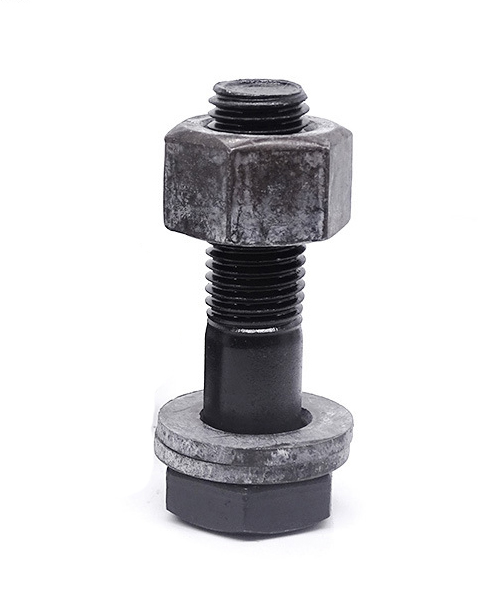
The metric classification system provides a clear framework for understanding bolt strength. The designation "12.9" carries precise engineering significance: the first number (12) indicates the tensile strength in hundreds of megapascals (MPa), meaning these bolts can withstand 1,200 MPa of tensile stress. The second number (9) represents the yield-to-tensile strength ratio—in this case, 90%. This translates to a yield strength of approximately 1,080 MPa, ensuring the fastener maintains structural integrity even under extreme loading conditions.
This engineering precision makes class 12.9 bolts indispensable for applications where failure is not an option. Unlike lower-grade alternatives such as class 8.8 or 10.9, these high-strength fasteners provide superior clamping force and resistance to deformation, critical factors in demanding industrial environments.
Industry Applications Demanding Superior Fastening Performance
The versatility of metric class 12.9 bolts extends across multiple sectors where safety and longevity are paramount. In renewable energy infrastructure, particularly solar photovoltaic mounting systems, these fasteners must endure decades of exposure to temperature fluctuations, wind loads, and environmental stresses. Standard-grade bolts may experience gradual loosening or material degradation, but class 12.9 components maintain their clamping integrity throughout the installation's 25-plus-year operational lifespan.
The oil and gas sector presents equally challenging conditions. Offshore platforms and refinery equipment operate in highly corrosive environments with extreme pressure and temperature variations. Class 12.9 bolts manufactured to standards such as ASTM A193 B7 provide the mechanical reliability necessary for these critical connections, where fastener failure could result in catastrophic consequences.
In automotive manufacturing, chassis and suspension systems require fasteners that can withstand constant vibration, dynamic loading, and mechanical stress. The superior yield strength of class 12.9 bolts ensures connections remain secure throughout the vehicle's operational life, contributing to both safety and performance.
The Manufacturing Precision Behind High-Performance Fasteners
Producing authentic class 12.9 bolts requires specialized metallurgical expertise and rigorous quality control. The manufacturing process typically involves cold forging or hot forging techniques that enhance the material's grain structure, followed by heat treatment to achieve the precise hardness and strength specifications. Surface treatments such as zinc-nickel plating, Geomet, or Magni coatings provide additional corrosion resistance, extending service life in harsh environments by 20 to 50 years compared to standard galvanizing.
Quality verification extends beyond basic dimensional checks. Legitimate manufacturers conduct comprehensive testing including tensile strength analysis, hardness verification, and salt spray testing to ensure compliance with international standards. Advanced facilities also implement hydrogen embrittlement prevention protocols, particularly critical for high-strength fasteners that may be susceptible to this failure mode during electroplating processes.
Shanghai Hengrui Industry Co., Ltd.: Engineering Solutions for Critical Applications
As global infrastructure projects grow increasingly complex, the demand for reliable fastener suppliers has intensified. Shanghai Hengrui Industry Co., Ltd., operating under the Hengrui Fastener (HR) brand, has established itself as a specialized manufacturer of high-strength, corrosion-resistant fastening solutions. Since its founding in 2020, the company has concentrated on serving the exacting requirements of North American, European, and African markets.
With an annual production capacity of 12,000 tons and ISO 9001:2015 certification, Hengrui Fastener demonstrates the technical capabilities necessary for consistent quality delivery. The company's expertise spans the complete range of metric classes including 8.8, 10.9, and 12.9, as well as SAE grades 2, 5, and 8, supported by specialized coating technologies that address the corrosion challenges inherent in marine, infrastructure, and industrial applications.
The company's technical leadership, guided by Monica Song's 16-plus years of fastener industry experience, emphasizes precision in both manufacturing and material selection. This expertise proves particularly valuable when customers require custom manufacturing based on drawings or samples, or when projects demand non-standard components that standard distributors cannot supply.
Critical Selection Factors for High-Strength Fastener Procurement
Procurement decisions for class 12.9 bolts should extend beyond price considerations to encompass several critical factors. Material traceability ensures that fasteners meet specified alloy compositions and heat treatment protocols. Manufacturers who provide comprehensive documentation, including mill test reports and certification of compliance with standards such as ASTM A325 or A490, demonstrate commitment to quality assurance.
Surface coating selection significantly impacts long-term performance. While hot-dip galvanizing offers basic corrosion protection, advanced coatings like Geomet and zinc-nickel provide superior resistance in high-salinity or chemically aggressive environments. For applications with extended design lifetans, such as utility-scale solar installations or municipal infrastructure, investing in premium coatings prevents premature maintenance and replacement costs.
Supply chain reliability has become increasingly critical in global project management. Suppliers who maintain adequate inventory, offer rapid quotation turnaround within 24 hours, and provide pre-production sampling enable project managers to meet tight construction schedules while minimizing procurement risk. The ability to conduct technical consultation on process selection—such as choosing between cold forging and hot forging based on specific application requirements—adds substantial value beyond simple product supply.
The Future of High-Strength Fastening Technology
As engineering standards continue to evolve and infrastructure projects face increasingly demanding environmental conditions, the role of advanced fastening solutions will only grow more critical. The combination of superior metallurgical properties, advanced surface treatments, and rigorous quality control that defines metric class 12.9 bolts represents the current benchmark for high-stress applications.
For engineers and procurement professionals, partnering with manufacturers who demonstrate both technical expertise and consistent quality delivery ensures that projects achieve their intended performance and longevity objectives. In an industry where the cost of failure far exceeds the initial investment in quality components, the selection of appropriate fastening solutions remains one of the most consequential decisions in project execution.
The continued advancement of coating technologies, coupled with manufacturing precision enabled by modern cold forging and CNC machining capabilities, promises even greater reliability for future infrastructure and industrial applications. Organizations that prioritize fastener quality as a critical component of overall project integrity position themselves for operational success in increasingly competitive global markets.
Shanghai Hengrui Industrial Co., Ltd
About Author