As engineering standards continue to rise, choosing the right reinforcement material has become increasingly important. Modern projects demand solutions that not only meet strength requirements but also offer durability, cost efficiency, and adaptability throughout their service life.
Among today's advanced materials, glass fiber cloth composites have become a preferred option for many industries. Compared with conventional reinforcement materials such as steel, aluminum, and woven textiles, fiberglass composites provide several performance advantages that support long-term project success.
This article examines the key differences between glass fiber cloth composites and traditional reinforcement materials, helping engineers, contractors, and purchasing professionals select the most suitable solution for their applications.
Understanding the Difference in Material Composition
Conventional reinforcement materials have been widely used for decades because of their proven mechanical properties and broad availability. Steel bars, wire mesh, and aluminum plates remain common choices for structural reinforcement. However, these materials often face challenges including corrosion, heavy weight, and limited flexibility during fabrication.
Glass fiber cloth composites are manufactured by weaving high-strength glass fibers into fabric, which can then be combined with different resin systems or protective coatings depending on application requirements. This engineered structure provides an excellent combination of mechanical strength, dimensional stability, and environmental resistance.
Unlike steel, fiberglass will not rust. Compared with natural fiber products, it maintains reliable performance under high temperatures, humidity, and chemical exposure, making it suitable for demanding industrial environments.
Higher Strength with Less Weight
One of the greatest advantages of glass fiber cloth composites is their exceptional strength-to-weight ratio.
Steel provides outstanding tensile strength but significantly increases structural weight, transportation expenses, and installation effort. Aluminum offers reduced weight but may not always deliver sufficient mechanical performance for demanding applications.
Glass fiber cloth composites achieve impressive mechanical strength while remaining much lighter than traditional metal materials. Their reduced weight simplifies transportation, lowers installation costs, and improves handling efficiency.
Industries including renewable energy, transportation manufacturing, and modern construction particularly benefit from lightweight materials that help improve overall system efficiency.
Excellent Resistance to Corrosion and Harsh Environments
Environmental conditions greatly influence the lifespan of reinforcement materials.
Metal-based materials are susceptible to corrosion when exposed to moisture, saltwater, or aggressive chemicals. Although protective coatings can reduce corrosion, they require regular inspection and maintenance.
Glass fiber cloth composites naturally resist corrosion, moisture absorption, and many chemical substances without requiring additional protective treatment. This characteristic makes them highly suitable for marine engineering, chemical processing facilities, bridges, pipelines, and other demanding environments.
The result is lower maintenance requirements and extended service life.
Reliable Thermal Stability and Fire Protection
Temperature resistance is another area where fiberglass composites demonstrate clear advantages.
Steel may lose part of its structural strength during extreme heat exposure, while certain plastic materials soften or deform when temperatures rise. Glass fiber cloth, particularly when combined with specialized coatings, maintains stable performance across a wide operating temperature range.
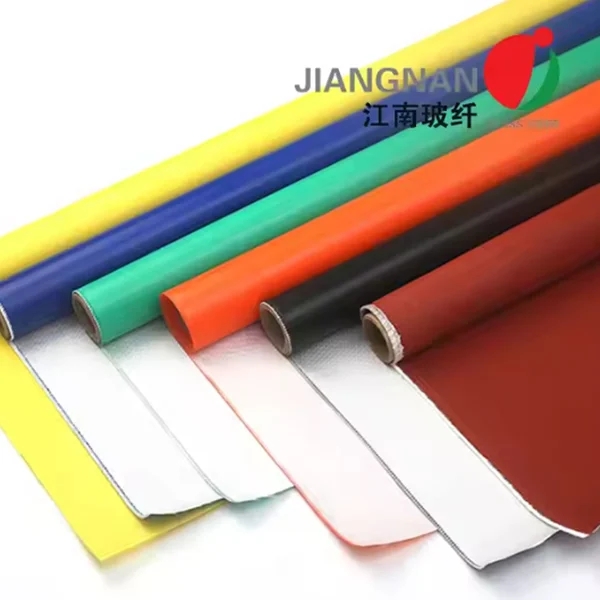
For example, silicone-coated fiberglass fabrics are widely recognized for their excellent heat resistance and insulation capabilities.
A representative product can be found here:
<a href="https://www.jnglassfiber.com/impregnating-silicone-coating-fiberglass-fabric.html">silicone coating fiberglass fabric</a>
These materials are frequently used in industrial insulation, welding curtains, fire blankets, and thermal protection systems where both flexibility and high-temperature resistance are essential.
Greater Design Flexibility
Traditional reinforcement materials usually require cutting, welding, bending, or machining before installation. These additional processing steps increase production time and may introduce stress concentrations or structural weaknesses.
Glass fiber cloth composites provide much greater manufacturing flexibility. They can be easily trimmed, layered, and molded into complex shapes without requiring extensive processing equipment.
Additional advantages include:
-
Easy customization for various project requirements
-
Compatibility with multiple resin and coating systems
-
Excellent suitability for curved or irregular structures
These characteristics make fiberglass composites valuable for aerospace, automotive, electronics, and advanced manufacturing industries.
Faster Installation and Improved Work Efficiency
Installation efficiency has a direct impact on project schedules and labor costs.
Heavy metal reinforcement often requires lifting equipment and larger installation crews. By comparison, lightweight glass fiber cloth is easier to transport, position, and install, reducing both labor intensity and installation time.
For repair projects, infrastructure upgrades, and construction applications, these advantages contribute to faster completion and improved workplace safety.
Lower Lifecycle Costs
Although conventional reinforcement materials may appear less expensive initially, total ownership costs often increase because of maintenance, repairs, and eventual replacement.
Glass fiber cloth composites help reduce long-term expenses through:
-
Excellent durability in demanding environments
-
Reduced maintenance frequency
-
Longer operational service life
-
Stable mechanical performance over extended periods
When lifecycle costs are considered instead of purchase price alone, fiberglass composites often provide greater overall economic value.
Typical Applications
Conventional Reinforcement Materials
Traditional materials continue to perform well in applications that require maximum rigidity or extremely high structural loads, particularly where initial budget constraints are the primary consideration.
Glass Fiber Cloth Composites
The versatility of fiberglass cloth allows it to be used across numerous industries, including:
-
Wind turbine blade manufacturing
-
Fire protection products
-
Building reinforcement systems
-
Thermal insulation solutions
-
Transportation lightweight components
-
Electrical insulation
-
Electronic equipment protection
As composite technology advances, the range of applications continues to expand.
Manufacturing Quality Is Equally Important
Material performance depends not only on design but also on manufacturing capability and quality control.
Changshu Jiangnan Fiberglass Co., Ltd. has been specializing in fiberglass composite materials and high-temperature resistant products since 1956. With a manufacturing base covering more than 100,000 square meters, the company has established a strong production capacity supported by advanced warp-knitting equipment and wide-width coating production lines.
Its annual manufacturing capacity includes:
-
50,000 tons of fiberglass-related products
-
2.4 million fire blankets
-
10 million meters of coated fiberglass fabric
Its products are supplied to industries including wind energy, industrial safety, construction, transportation, and electronics.
In addition to large-scale production, the company continues to invest in research and development, achieving continuous innovation in both wind power composite materials and protective fiberglass products. This commitment enables customers worldwide to receive reliable, high-quality composite solutions.
Factors to Consider Before Selecting Reinforcement Materials
Choosing the appropriate reinforcement material depends on several practical considerations:
-
Environmental exposure, including moisture, chemicals, and temperature
-
Weight limitations for transportation and installation
-
Structural complexity and design flexibility
-
Maintenance requirements throughout the product lifecycle
-
Long-term performance consistency
Evaluating these factors together helps ensure the selected material delivers the best balance between performance and cost.
Final Thoughts
As engineering projects become increasingly demanding, material selection plays a more significant role in determining overall project performance.
Although traditional reinforcement materials remain appropriate for certain structural applications, glass fiber cloth composites provide an attractive combination of lightweight construction, corrosion resistance, thermal stability, design flexibility, and long-term durability.
With ongoing advances in composite manufacturing technologies and expanding industrial applications, glass fiber cloth composites are expected to play an even more important role in future engineering and construction projects, offering dependable performance while helping reduce maintenance costs and improve operational efficiency.
www.jnglassfiber.com
Changshu Jiangnan Fiberglass Co., Ltd.
About Author