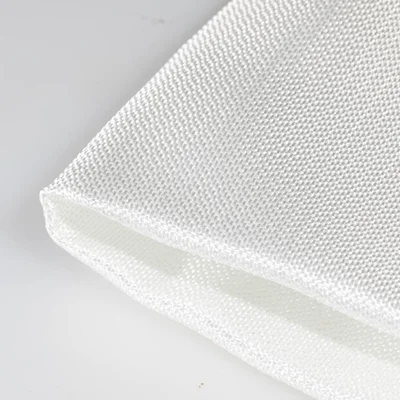
Industrial manufacturers across sectors such as wind energy, construction, automotive, electronics, and fire protection have been under increasing pressure to improve material performance without drastically increasing weight or production cost. Among the materials that have gained widespread adoption, fiberglass fabric rolls stand out for their durability, high strength-to-weight ratio, and ability to perform reliably under extreme environmental and mechanical demands.
Fiberglass fabrics have evolved from simple woven textiles into engineered reinforcements capable of resisting corrosion, chemicals, heat, and mechanical load. The unique benefits of fiberglass fabrics make them an essential reinforcement material for composite products, insulation systems, fire-protective equipment, and structural applications.
This article explores how fiberglass fabric rolls enhance strength and durability in industrial settings, and highlights Changshu Jiangnan Fiberglass Co., Ltd., one of China’s leading fiberglass manufacturers and exporters specializing in high-temperature fiberglass fabrics and composite materials.
What Makes Fiberglass Fabric Rolls Ideal for Industrial Use
The performance advantages of fiberglass fabrics are rooted in the physical and chemical properties of the glass fibers themselves. These continuous glass filaments are drawn from molten glass and combined into yarns and woven fabrics. This process produces a material with consistent tensile strength and dimensional stability.
Key material strengths include:
-
High tensile and compressive strength
Fiberglass fabrics provide exceptional reinforcement in structural composites. Their high strength-to-weight ratio makes them suitable for demanding load-bearing applications like wind turbine blades, marine structures, and aerospace components. -
Superior heat and flame resistance
Fiberglass fabrics retain stability and do not burn easily even under high temperatures. When coated or woven into fire blankets, they protect surfaces, equipment, and personnel from sparks, molten metal, and open flames. -
Chemical and corrosion resistance
Exposure to corrosive chemicals, saltwater, or industrial atmospheres does not significantly degrade fiberglass. This makes fiberglass rolls useful in harsh industrial environments and long-term installations. -
Dimensional stability and low thermal expansion
Unlike many organic materials, fiberglass does not deform significantly under heat or mechanical stress. This property ensures reliable performance where engineering tolerances matter. -
Compatibility with resin systems
Fiberglass fabrics bond well with thermoset resins such as epoxy, polyester, and vinyl ester, enabling strong composite laminates that resist impact, moisture, and fatigue.
These properties explain why fiberglass fabric rolls are found across diverse markets, replacing heavier and less durable materials.
Industrial Applications that Benefit from Fiberglass Fabric Rolls
Fire protection and insulation systems
Fireproof curtains, welding blankets, insulation jackets, and protective shields rely on high-temperature fiberglass fabrics. Their ability to withstand direct flame exposure and thermal shock makes them ideal for metalworking facilities, power generation sites, and industrial processing plants.
Changshu Jiangnan Fiberglass Co., Ltd. manufactures flame-retardant and high-temperature fiberglass fabrics designed specifically for these applications. Their product range benefits from decades of research in thermal insulation technologies.
For example, the company provides fiberglass cloth used in high-temperature flame-retardant applications:
<a href="https://www.jnglassfiber.com/3732-fiberglass-fabric-cloth-high-temperature-flame-retardant-cloth.html">fiberglass fabric cloth flame retardant</a>
This anchor can be integrated into industrial supply chain catalogs, safety system documentation, or procurement lists.
Composite reinforcement for wind turbine blades
Fiberglass fabrics serve as the main structural reinforcement for wind turbine blades. Their combination of low density and fatigue resistance allows engineers to design lightweight blades that endure cyclic loading over decades of operation.
Changshu Jiangnan Fiberglass Co., Ltd. has invested in advanced warp-knitting and wide-width coating equipment to meet the growing demand for high-strength composite fabrics for wind power applications. The company produces up to 50,000 tons of fiberglass products annually, ensuring reliable mass production capacity for global customers.
Construction and building materials
Fiberglass fabrics reinforce concrete, roofing membranes, waterproofing layers, gypsum board, and structural beams. In fire-rated construction systems, fiberglass fabrics help maintain barrier integrity during fire exposure. Their chemical resistance also improves long-term durability in humid or corrosive environments.
Transportation and automotive components
Fiberglass-reinforced composites are used in vehicle panels, engine insulation, battery housings, and structural reinforcements. These components require impact resistance and thermal stability to withstand operational vibrations, temperatures, and mechanical loads.
Electrical and electronic insulation
Fiberglass fabrics provide critical insulation layers for circuit boards, cable wraps, and motor windings due to their dielectric strength and heat resistance. They are used in consumer electronics as well as industrial motors, generators, and transformers.
How Fiberglass Fabric Rolls Improve Durability in Harsh Environments
Durability is one of the most important performance considerations for industrial equipment and infrastructure. Fiberglass fabrics contribute to long service life in several ways.
Resistance to mechanical fatigue
Glass fibers maintain their strength even after repeated vibrations, loads, and impacts. This makes fiberglass fabrics ideal in marine, aerospace, and wind turbine structures.
Thermal resistance and thermal cycling stability
Many industrial environments require constant exposure to heat, rapid heating and cooling, or insulation of hot equipment. Fiberglass fabrics retain mechanical integrity in long-term heat exposure situations, minimizing maintenance cycles and component failures.
Moisture and chemical resistance
Unlike natural fibers or metal reinforcements, fiberglass does not rust, rot, or degrade in chemicals, allowing it to function reliably in corrosive industrial atmospheres.
Compatibility with coatings and laminates
Fiberglass fabrics can be coated with silicone, acrylic, PTFE, or other performance coatings to improve abrasion resistance, sealing capability, and surface durability.
Changshu Jiangnan Fiberglass Co., Ltd. utilizes wide-width coating lines that ensure uniform surface coating and improved mechanical adhesion. This capability enables clients to specify custom performance properties for their applications.
The Manufacturing Strength of Changshu Jiangnan Fiberglass Co., Ltd.
Founded in 1956, Changshu Jiangnan Fiberglass has grown into one of China's leading producers and exporters of high-temperature materials and fiberglass composite fabrics. With more than 100,000 square meters of manufacturing facilities and advanced warp-knitting and coating equipment, the company delivers consistent material quality and robust supply capacity.
Annual production capability includes:
-
50,000 tons of fiberglass materials and related products
-
2.4 million fire blankets annually
-
10 million meters of coated fiberglass fabric
These products are widely used in wind power generation, construction, safety protection systems, transportation, and the electronics industry. Over decades of development, Changshu Jiangnan Fiberglass has built strong research and development capabilities, achieving technical breakthroughs in fire-protection systems and wind turbine composite reinforcement.
For industrial users seeking a reliable fiberglass fabric manufacturer with mass-production capacity and material traceability, Jiangnan Fiberglass offers proven technical experience and stable performance through long-term partnerships.
Selecting Fiberglass Fabric Rolls for Industrial Applications
When sourcing fiberglass fabrics, engineers and procurement teams should evaluate:
-
Yarn type and filament diameter
-
Weave pattern and fabric weight
-
Thickness and coating requirements
-
Tensile and tear strength data
-
Operating temperature and flame resistance
-
Compatibility with bonding or laminate systems
-
Supplier quality certifications and production capacity
Working with a manufacturer capable of customization and technical support ensures that fiberglass fabrics meet application-specific performance targets.
Changshu Jiangnan Fiberglass offers technical consultation and standardized testing procedures to help customers match fabric type to performance needs. With decades of field experience, the company has developed industry-focused product lines for fire protection, wind energy, insulation, and construction.
Conclusion
Fiberglass fabric rolls continue to play an essential role in industrial applications requiring strength, temperature resistance, and long service life. Their ability to combine durability with lightweight reinforcement makes them a versatile alternative to metals and organic fabrics. With a strong foundation in research, manufacturing capacity, and composite processing technology, Changshu Jiangnan Fiberglass Co., Ltd. remains a trusted supplier for global industrial customers.
Whether the goal is improved fire protection, composite structural reinforcement, or long-term material durability, fiberglass fabrics provide proven performance and reliable supply for industrial engineering projects.
www.jnglassfiber.com
Changshu Jiangnan Fiberglass Co., Ltd.
About Author