
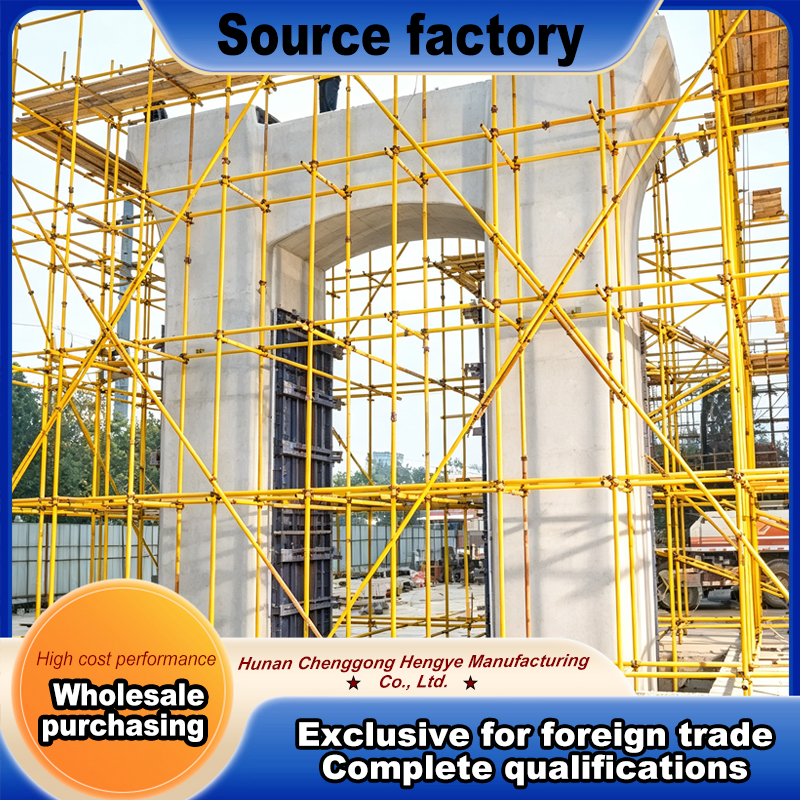
Concrete formwork directly decides the surface quality, construction speed and overall safety of infrastructure projects. Among all formwork materials, steel formwork stands out for high rigidity, reusability and precise dimension control, which makes it widely adopted in modern road, bridge and civil engineering works.
For global contractors and project managers, choosing the correct steel formwork type is critical. The mainstream categories include general steel formwork, bridge-specific steel formwork, road dedicated steel formwork, and special-shaped steel formwork such as portal pier steel formwork shown in our drawings. Each type has unique design features, load capacity and applicable scenarios. This guide breaks down every category, core benefits, selection standards and on-site construction tips to help you pick suitable formwork for your next concrete project.
1. General Steel Formwork
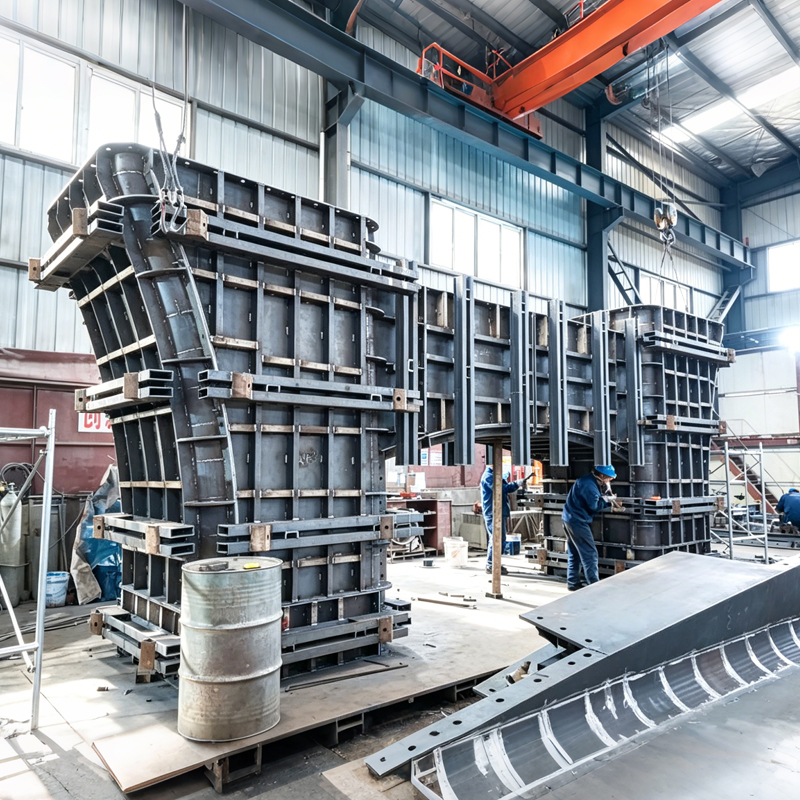
General steel formwork is the standard modular formwork system for conventional concrete structures. It consists of standardized steel panels, stiffeners, connecting bolts and clamping accessories. The panels are fabricated with Q235 steel plate, pre-processed in factory with precise cutting and welding.
This formwork is designed for versatile ordinary construction works, including building walls, foundation slabs, rectangular piers and common concrete beams. Its biggest advantage is modular interchangeability. Standard panels can be freely assembled and disassembled to match different sizes, greatly cutting assembly time on site.
Key features:
-
Standard sizes for flexible combination, easy storage and transportation.
-
High reusability. Proper maintenance allows repeated use for dozens of casting cycles.
-
Smooth concrete surface after demolding, reducing secondary plastering work.
-
Lower custom cost compared with non-standard special formwork.
General steel formwork fits low and medium complexity projects. It is the most cost-effective option when structures follow regular rectangular or flat shapes without complex curved or irregular outlines.
2. Bridge Specific Steel Formwork
Bridge construction has strict requirements for structural load, verticality and concrete appearance. Bridge steel formwork is tailor-made for bridge substructure and superstructure components, including portal pier formwork, box girder formwork, pier cap formwork and column formwork.
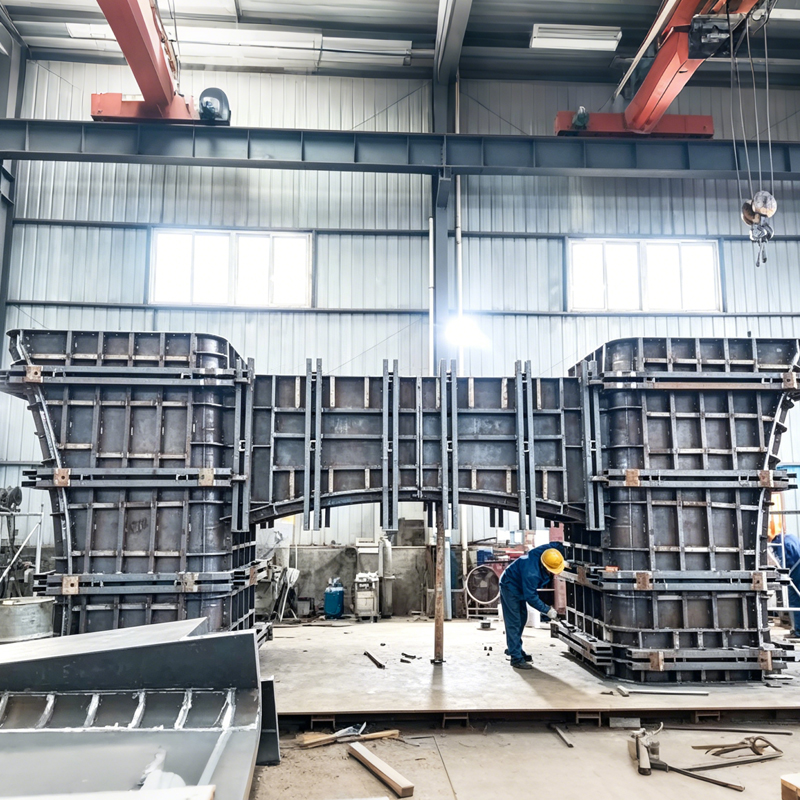
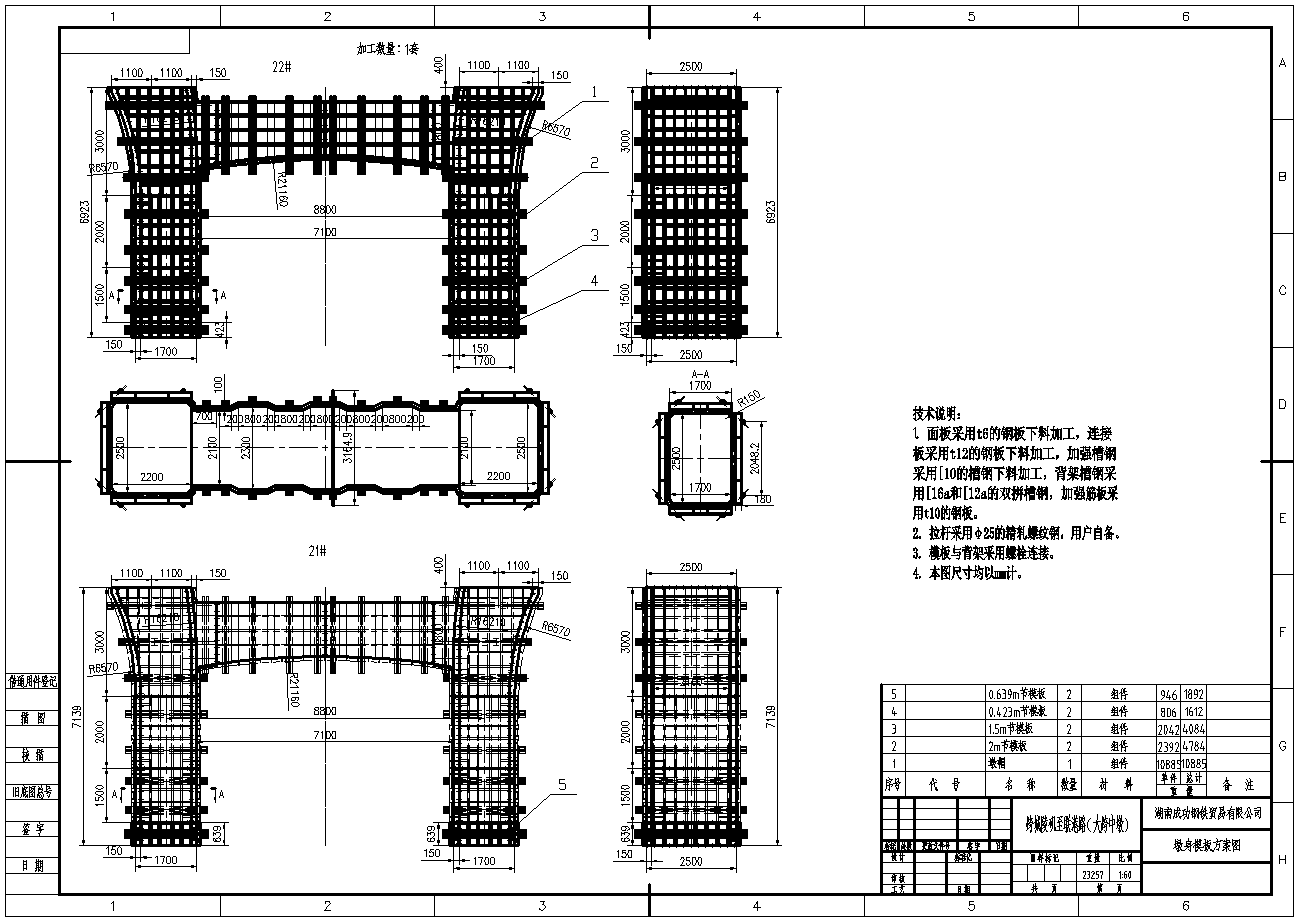
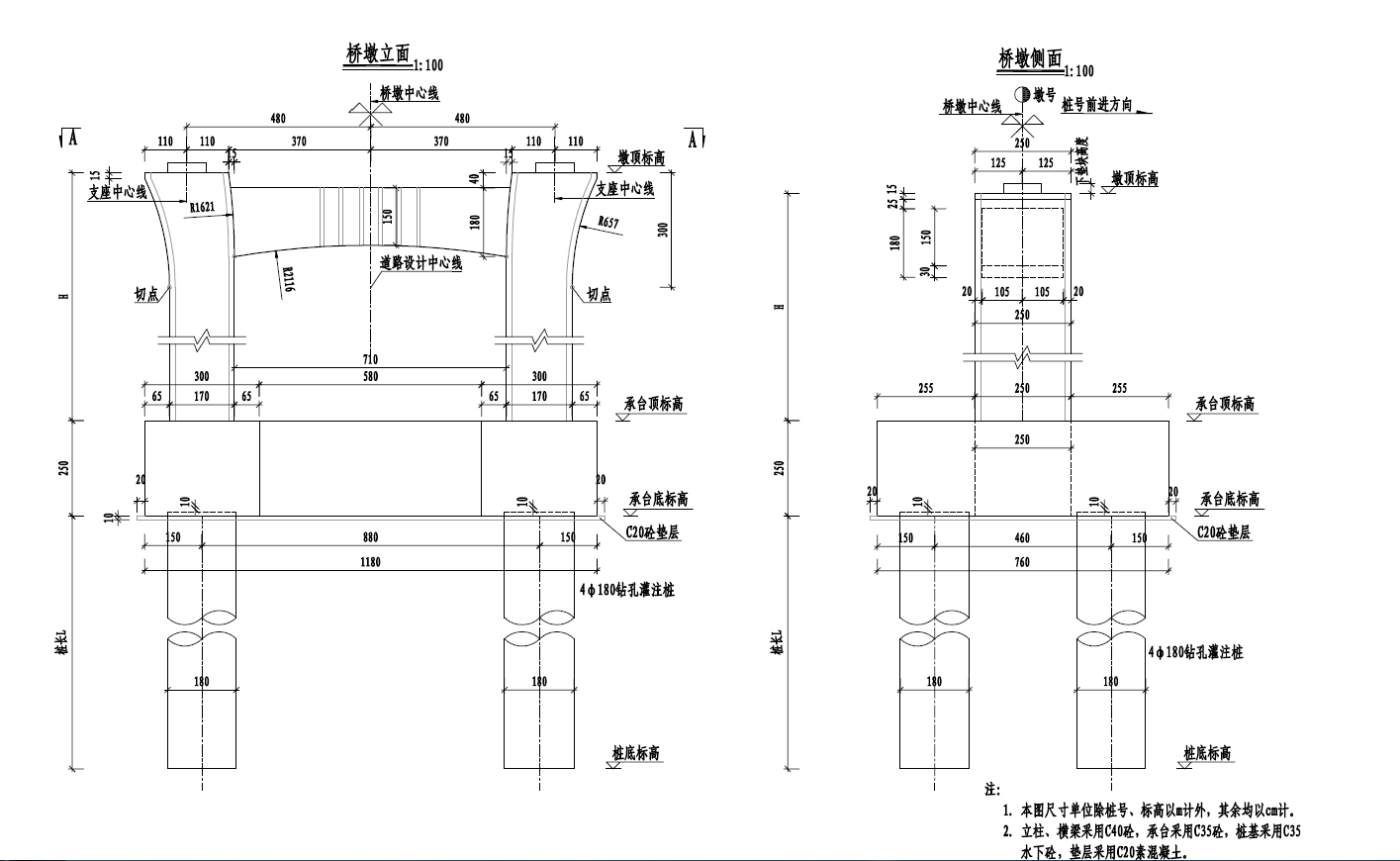
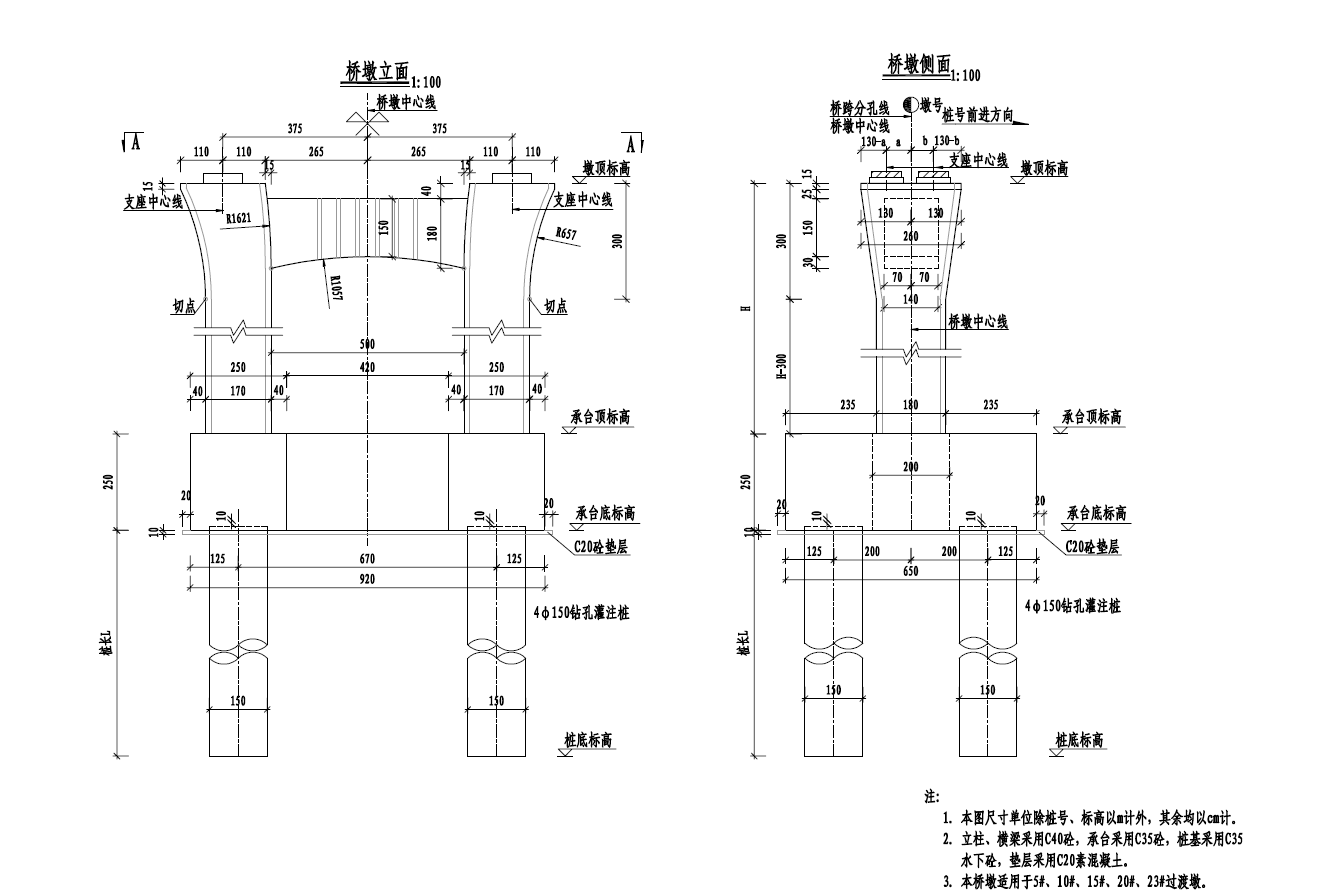
As shown in our portal pier design drawing, portal pier belongs to bridge lower pier top structure with door-shaped outline. The corresponding bridge steel formwork adopts reinforced frame structure with extra stiffeners to resist high lateral pressure from fresh concrete pouring. The whole set is pre-assembled and inspected inside factory before delivery to guarantee assembly accuracy.
Key features:
-
Reinforced steel frame to bear heavy concrete lateral pressure during mass casting.
-
Strict dimensional tolerance control to meet bridge engineering specifications.
-
Custom segmented assembly design for large bridge piers and girders.
-
Anti-deformation treatment to avoid bulging or displacement during pouring.
Bridge steel formwork is widely used in highway bridges, railway bridges and viaduct projects. It ensures pier verticality and uniform concrete finish, which is essential for long-term bridge safety.
3. Road Dedicated Steel Formwork
Road dedicated steel formwork is developed for highway pavement, road retaining walls, curb and culvert concrete works. Different from bridge formwork, road steel formwork focuses on linear control and convenient rapid dismantling for long linear construction sections.
Road projects usually involve continuous long-distance concrete pouring. Road steel formwork features lightweight panel design, quick locking fittings and stable bottom support system. It keeps straightness of road edges and prevents concrete leakage.
Key features:
-
Linear precision design for long-section pavement and curb construction.
-
Simple connection mechanism for fast assembly and removal to shorten construction cycle.
-
Anti-rust surface treatment to adapt outdoor field environment.
-
Good leak-proof performance to avoid grout loss during concrete pouring.
This type of formwork is commonly applied in urban roads, national highways, road culverts and retaining wall engineering. It helps contractors finish linear road concrete works with consistent quality.
4. Special-Shaped Steel Formwork
Special-shaped steel formwork refers to non-standard customized formwork for irregular structural shapes, including portal pier steel formwork, curved pier formwork, arch formwork and variable cross-section components. The portal pier template in our workshop photos is a typical case of special-shaped steel formwork.
Since these structures cannot be finished by standard modular panels, each set is manufactured strictly according to project CAD drawings. Our factory carries out cutting, welding, reinforcement and pre-assembly testing before shipment. Every curved, inclined or special outline part is precisely machined to match design dimensions.
Key features:
-
Fully customized according to project technical drawings.
-
Reinforced stiffener layout for complex force distribution on irregular surfaces.
-
Factory pre-assembly inspection to reduce on-site fitting error.
-
Tight seam welding to stop grout leaking on complex joints.
Special-shaped steel formwork is necessary for projects with unique architectural or structural requirements: portal piers, curved bridge components, irregular abutments and special landscape concrete structures. Although custom manufacturing takes longer lead time, it delivers accurate concrete shaping that standard formwork cannot achieve.
How to Select Suitable Steel Formwork for Your Project
When comparing different steel formwork types, evaluate these core factors first.
-
Structure Shape
Use general steel formwork for regular rectangular and flat concrete parts. Choose bridge-specific steel formwork for bridge piers and girders. Road dedicated steel formwork suits long linear pavement. For door-shaped, curved or variable cross-section structures, special-shaped steel formwork is required. -
Concrete Pouring Height and Lateral Pressure
High pouring height creates larger lateral pressure. Bridge and special-shaped formwork adopt thicker plates and more stiffeners to resist deformation. General formwork works for low-height pouring. -
Reuse Cycles
If you need repeated use on multiple similar sections, standard general or road steel formwork is better for ROI. One-off complex structures usually use custom special-shaped steel formwork. -
Project Delivery Schedule
Standard steel formwork has short lead time. Special-shaped steel formwork needs drawing review, fabrication and factory pre-assembly, which requires longer production period. Arrange procurement plan in advance.
Advantages of Steel Formwork Over Timber Formwork
Many contractors compare steel formwork and wooden formwork before procurement. Steel formwork brings obvious long-term benefits.
-
Higher structural rigidity, less deformation during concrete pouring.
-
Much more reuse times, lower average cost for large-scale projects.
-
Smoother concrete surface finish, less repair work.
-
Better weather resistance for outdoor infrastructure construction.
-
Lower waste generation, more eco-friendly for sustainable construction.
The main limitation is higher upfront cost. For small one-time simple jobs, timber formwork may seem cheaper. But for highway, bridge and large civil infrastructure, steel formwork delivers better total project value.
Maintenance Tips to Extend Steel Formwork Service Life
Proper maintenance can maximize reuse cycles of your steel formwork.
-
Clean concrete residue thoroughly immediately after demolding.
-
Apply release agent evenly on steel panel surface before each pouring.
-
Inspect welding seams and stiffeners for deformation after each use. Repair bent parts timely.
-
Store steel formwork in dry warehouse, apply anti-rust paint for long-term storage.
-
Handle panels carefully during transportation to avoid collision damage.
FAQ
Q1: What is the difference between bridge steel formwork and special-shaped steel formwork?
A1: Bridge steel formwork is a broad category for bridge structures, while special-shaped steel formwork focuses on non-standard irregular shapes. Portal pier steel formwork belongs to both bridge dedicated and special-shaped formwork. Standard rectangular bridge pier formwork is bridge steel formwork but not special-shaped.
Q2: Can special-shaped steel formwork be reused on other projects?
A2: It depends on structural dimensions. If another project has identical shape and size, the custom special-shaped steel formwork can be reused. For different designs, it usually cannot be directly applied. Standard general and road steel formwork have much wider reusability.
Q3: What material grade is normally used for steel formwork panels?
A3: Most steel formwork panels adopt Q235 steel plate. Thickness is selected based on pouring height and lateral pressure requirements. Reinforcing ribs and frames also use carbon steel profiles for stable rigidity.
Conclusion
Steel formwork is an essential construction solution for modern infrastructure. General steel formwork provides flexible standard modular options. Bridge steel formwork guarantees safety and precision for bridge substructure and superstructure. Road dedicated steel formwork optimizes long linear road construction. Special-shaped steel formwork realizes complex custom concrete shapes such as portal piers.
Before ordering, analyze your project structure type, pouring requirement and reuse plan. Work with reliable steel formwork manufacturers to confirm drawing design, factory pre-assembly and surface treatment. The right steel formwork will help your team improve construction efficiency, reduce on-site defects and deliver high-quality concrete works.
www.cghyformwork.com
Hunan Chenggong Hengye Manufacturing Co., Ltd
About Author