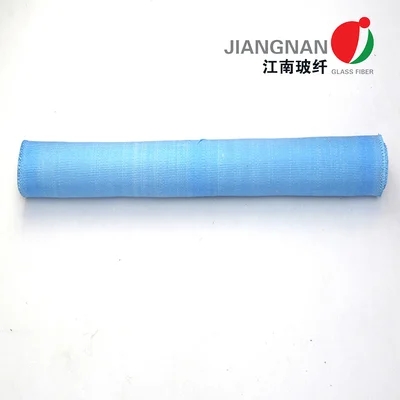
In industries where materials are pushed to their limits—extreme heat, constant vibration, heavy loads, or strict safety standards—material choice is not a detail, it is a deciding factor. Glass fiber cloth has become one of those quiet but essential materials that consistently delivers when performance, reliability, and durability matter most. From wind energy to electronics and transportation, it plays a role that is often invisible but absolutely critical.
This article looks at why glass fiber cloth is so widely used in high-performance applications, what technical characteristics make it stand out, and how experienced manufacturers like Changshu Jiangnan Fiberglass Co., Ltd. are helping global industries meet ever-higher demands.
Understanding Glass Fiber Cloth
Glass fiber cloth is a woven fabric made from fine glass filaments. These filaments are drawn from molten glass and then twisted into yarns, which are woven into fabrics using different patterns depending on the required performance.
What makes glass fiber cloth special is the balance it strikes between mechanical strength, thermal resistance, electrical insulation, and chemical stability. Unlike many organic fibers, glass fibers do not burn, rot, or significantly degrade under heat or UV exposure. At the same time, they maintain dimensional stability, which is essential for precision applications.
Key Properties That Enable High Performance
1. Exceptional Heat Resistance
One of the most important reasons glass fiber cloth is chosen for demanding environments is its ability to withstand high temperatures. Standard glass fiber fabrics can operate continuously at temperatures above 500°C, and certain treated or coated versions can tolerate even higher short-term exposure.
This makes them ideal for:
-
Fire blankets and welding protection
-
Thermal insulation systems
-
High-temperature gaskets and covers
In safety-critical environments, predictable performance under heat is not optional—it is mandatory.
2. High Strength-to-Weight Ratio
Glass fiber cloth offers impressive tensile strength while remaining relatively lightweight. This property is especially valuable in composite materials, where reducing weight without sacrificing strength directly improves efficiency and performance.
In wind power, for example, glass fiber cloth is widely used in blade reinforcement, where strength, fatigue resistance, and weight optimization are all crucial to long-term energy output.
3. Excellent Electrical Insulation
Glass fibers are naturally non-conductive, making glass fiber cloth an excellent electrical insulation material. This is why it is commonly used in:
-
Printed circuit boards (PCBs)
-
Electrical laminates
-
Insulating tapes and sleeves
In electronics, consistency and reliability at scale are essential. A small insulation failure can cause system-level problems, making material quality and uniformity critical.
4. Chemical and Environmental Stability
Glass fiber cloth resists corrosion from most chemicals, oils, and solvents. It also performs well in humid or outdoor environments without significant degradation. This stability allows it to be used in construction, transportation, and industrial equipment where exposure conditions can be unpredictable.
Applications Across Critical Industries
Because of its balanced performance, glass fiber cloth is used across many sectors that demand long service life and dependable behavior.
Wind Energy
Glass fiber cloth is a core reinforcement material in wind turbine blades and structural components. It supports large-scale composite structures that must endure continuous mechanical stress, temperature variation, and weather exposure for decades.
Safety Protection
Fire blankets, protective curtains, and industrial safety fabrics rely on glass fiber cloth for flame resistance and thermal shielding. In these applications, failure is not an option—materials must perform exactly as expected every time.
Construction and Infrastructure
Glass fiber cloth is used in roofing membranes, wall reinforcement, insulation systems, and fireproofing solutions. Its dimensional stability and resistance to aging help maintain structural integrity over long periods.
Transportation
From rail to automotive and marine applications, glass fiber cloth contributes to lightweight composite panels, insulation layers, and protective components that improve safety and efficiency.
Electronics
High-quality woven glass fiber fabrics are a foundation for electronic laminates, especially in PCBs where precision, consistency, and electrical insulation are essential.
Manufacturing Quality Matters More Than Ever
While the basic concept of glass fiber cloth is well known, performance in real applications depends heavily on manufacturing capability. Fiber quality, weaving precision, coating consistency, and process control all directly affect the final product’s behavior.
Changshu Jiangnan Fiberglass Co., Ltd. is one of China’s leading manufacturers and exporters of high-temperature materials and fiberglass composites. Founded in 1956, the company has built nearly seven decades of experience in glass fiber technology. Its production base covers more than 100,000 square meters, supporting large-scale, stable manufacturing.
By introducing advanced warp-knitting equipment and wide-width coating lines, Jiangnan Fiberglass has strengthened both supply capacity and quality control. The company’s annual output includes:
-
50,000 tons of glass fiber and related products
-
Woven fiberglass fabrics
-
2.4 million fire blankets
-
10 million meters of coated fiberglass cloth
This level of scale is particularly important for industries like wind energy and construction, where consistent supply and uniform performance across large projects are essential.
The Role of R&D in Practical Innovation
High-performance applications do not stand still, and neither can material suppliers. Jiangnan Fiberglass has invested in building a strong research and development team, focusing on both safety protection products and advanced composite materials for wind power and other industries.
Rather than pursuing abstract innovation, the company’s R&D work is closely tied to real application challenges—improving coating adhesion, enhancing heat resistance, optimizing fabric structures, and developing solutions that integrate smoothly into customers’ production processes.
This practical approach helps ensure that new products are not just technically impressive, but also reliable and scalable in industrial use.
Selecting the Right Glass Fiber Cloth
Not all glass fiber cloths are the same. Factors such as weave type, yarn thickness, surface treatment, and coating all influence performance. Engineers and buyers need to consider:
-
Operating temperature range
-
Mechanical load and fatigue requirements
-
Environmental exposure
-
Compliance with industry standards
A dependable supplier can provide technical guidance as well as consistent quality. For a structured overview of available options, manufacturers often organize products into clear series, making selection more straightforward.
Below is an example of how product information can be accessed in a structured way:<a href="https://www.jnglassfiber.com/Fiberglass-Cloth-Series" target="_blank">
Fiberglass Cloth Series</a>
Looking Ahead
As industries continue to pursue higher efficiency, stronger safety standards, and longer service life, materials like glass fiber cloth will remain fundamental. What will change is not its importance, but the level of precision and performance expected from it.
Manufacturers with deep experience, robust production capacity, and application-driven R&D—such as Changshu Jiangnan Fiberglass Co., Ltd.—are well positioned to support this evolution. In high-performance environments, reliability is built long before a product is installed. It begins with the material itself.
www.jnglassfiber.com
Changshu Jiangnan Fiberglass Co., Ltd.
About Author