Why Exhibition Halls Are Turning To Transparent LED Display Technology
Exhibition halls face a recurring design challenge: how to deliver dynamic visual content without sacrificing the openness, natural light, and architectural transparency that make exhibition spaces inviting. Conventional LED displays are often heavy, thick, and block light, which conflicts directly with glass surfaces and creative installation scenarios that require displays staying transparent, light, and adaptable to curves. This tension between visual communication and spatial openness has driven demand for custom ODM transparent LED display solutions that can be tailored to the exact dimensions, curvature, and mounting conditions of each exhibition environment.
Shenzhen Showho And The Whaley-LED Brand
Shenzhen Showho, founded in 2015 and headquartered in Shenzhen, China, is an integrated R&D, structural design, and manufacturing enterprise offering OEM and ODM services. The company's business coverage includes the China domestic market as well as overseas commercial display and engineering projects starting in 2025. In that year, Shenzhen Showho established an overseas business unit and launched Whaley-LED as its international brand, extending OEM and ODM services for commercial display and engineering projects, including exhibition halls, to customers beyond China. This combination of a long-standing domestic manufacturing base and a dedicated overseas brand gives exhibition organizers and integrators a single point of contact for custom-engineered transparent display solutions.
A Self-Managed Technology Chain
What distinguishes Whaley-LED's approach to custom ODM transparent LED display for exhibition halls is the depth of in-house technical control. Shenzhen Showho manages the technology chain from IC bare chip architecture and functional design, through LED bracket and LED packaging, to electronic circuit design. The company holds dozens of invention and utility model patents related to film screens, and its self-developed IC delivers strong driving performance. This vertical integration, combined with in-house production, supports rapid market response and allows custom OEM and ODM projects to move from specification to delivery without dependence on multiple external suppliers.
Core Product: The LED Holographic Film Screen Series
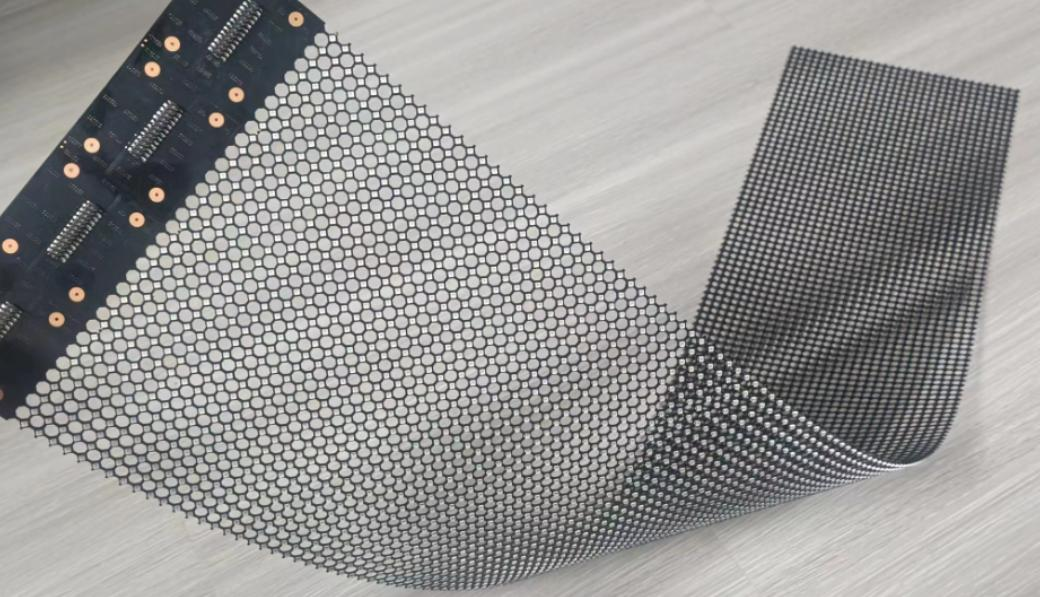
At the center of the company's exhibition hall offering is the LED Holographic Film Screen, a transparent display screen that is fixed without a frame, built with PCB hollow mesh circuits, and suitable for direct glass attachment. The screen body is below 2 mm thick and weighs under 3 kg per square meter across the series, which reduces structural load requirements for exhibition installations. Sensory permeability across the entire series exceeds 80%, and model-level visual permeability ranges from more than 70% to more than 99% depending on pixel pitch.
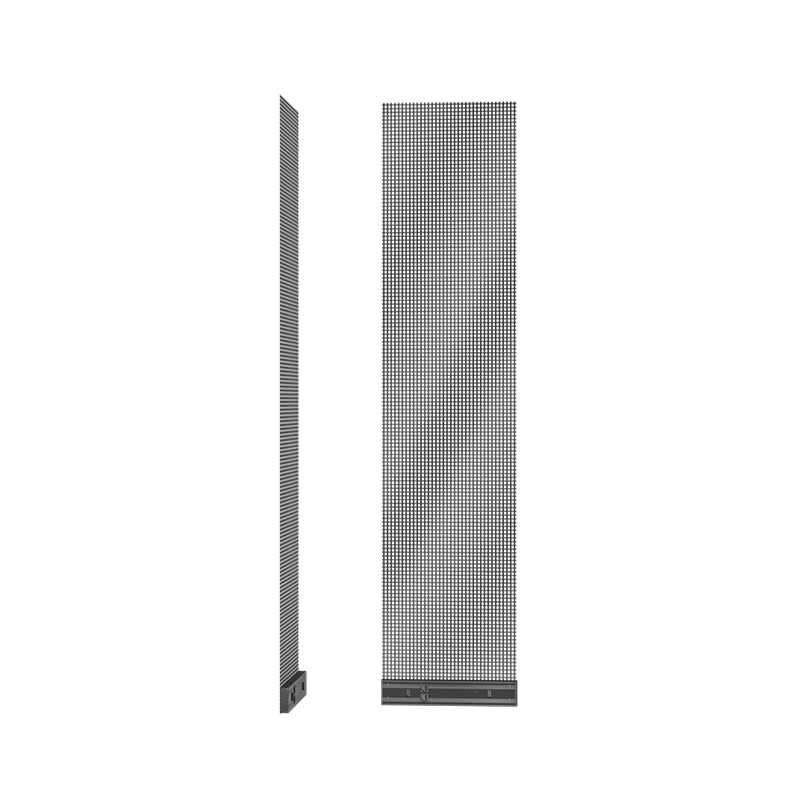
The series spans pixel pitch options from 2.5 mm to 50 mm, covering viewing distances from 3 meters up to 350 meters, which allows exhibition designers to match pitch to room scale—from close-viewing creative displays to large-format backdrops. Brightness ranges from 800 cd/m2 to 5000 cd/m2 across models, with automatic and manual adjustment based on ambient brightness, a relevant feature for exhibition halls with variable lighting conditions. Each model carries a refresh rate greater than 3840 Hz, a frame change rate greater than 60 Hz, gray level of at least 16 bit, an IP rating better than IP45, average lifespan over 100,000 operating hours, MTBF greater than 10,000 hours, and a dead pixel rate of less than 1 in 10,000 with discrete distribution. Control is compatible with Colorlight and NovaStar systems, supporting both synchronous and asynchronous operation.
Installation Flexibility For Curved And Custom Spaces
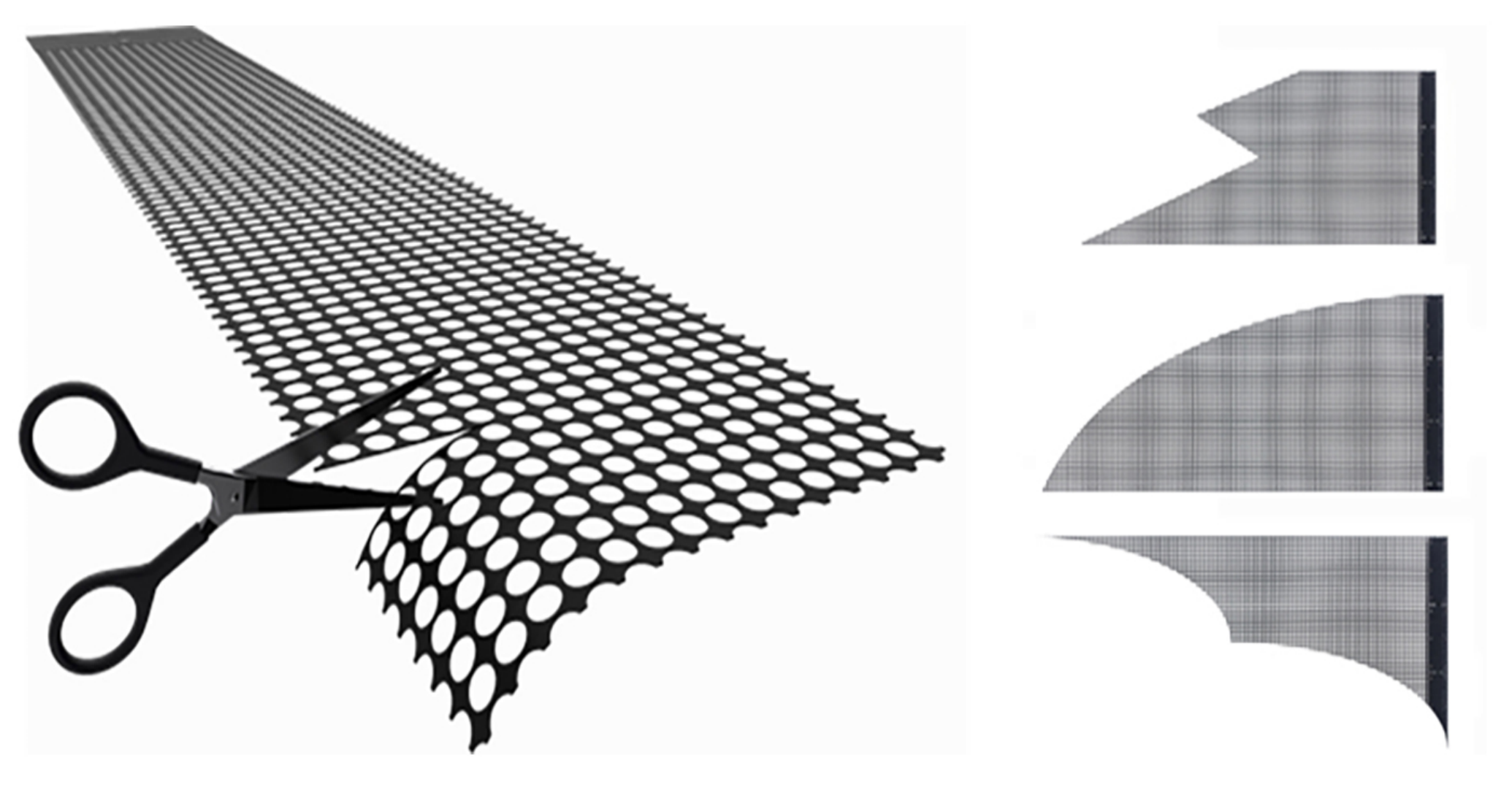
Exhibition architecture rarely conforms to flat, rectangular surfaces, and the LED Holographic Film Screen is built to respond to that reality. The screen can be bent and cut, and supports curved installation with a radius greater than 600 mm for corner screens, cylindrical surfaces, and S-shaped inner and outer arcs. Installation methods include direct adhesive mounting, hanging display, and fixed installation, with support for arbitrary cutting and bending on site. Splice height is described as up to 8 m in one specification and, in a later English note, up to 6 m without power supply in the middle, while one-side length is not limited—giving exhibition designers latitude in how large or how continuous a transparent display surface can be.
Beyond The Base Film Screen: Related Product Formats
Shenzhen Showho's holographic line extends into specialized formats relevant to exhibition and commercial display projects. The LED Holographic Screen Advertising Machine Series packages the transparent holographic display into a self-contained advertising machine format suited to commercial advertising and retail contexts. The LED Holographic Screen Double-Sided Display Series offers an ultra-light double-sided display weighing about 4.5 kg per square meter at roughly 2 mm thickness, with visual permeability over 90%, allowing the front and back to show different content simultaneously—useful where exhibition visitors approach from two directions. Additional product lines listed among the company's main offerings include the LED Grille Screen, LED Transparent Screen, LED Photoelectric Glass, LED Crystal Film Screen, and LED Mesh Screen, all delivered through custom OEM and ODM arrangements for commercial display and engineering projects.
Service Model: OEM, ODM, And Rapid Response
The service capability underpinning these products rests on self-managed R&D, structural design, and in-house production, which together support rapid response to market demand. For exhibition hall projects specifically, this translates into custom sizes, cutting, bending, and curved installation configured to each venue's layout. Shenzhen Showho's early-stage focus on the domestic high-end rental display market—including XR virtual shooting screens and carbon fiber rental screens—also informs its experience with demanding, short-cycle installation environments that share characteristics with exhibition deployments.
Where These Displays Are Used
Beyond exhibition halls, the industries covered by Whaley-LED's transparent display portfolio include commercial display windows, commercial curtain walls, creative displays, entertainment and cultural tourism venues, automobile 4S stores, airport concourses, building curtain walls, and commercial centers. This breadth of adaptation reflects a common underlying requirement: displays that preserve transparency and daylight while still delivering media content, whether mounted on glass curtain walls, shop windows, or purpose-built exhibition structures.
A Practical Path For Exhibition Hall Planners
For organizations evaluating a custom ODM transparent LED display for exhibition halls, the relevant considerations include permeability requirements, pixel pitch relative to viewing distance, installation geometry (flat, curved, or double-sided), and splice dimensions. Shenzhen Showho's Whaley-LED brand addresses these variables through a documented specification range—from PH2.5 to PH50—paired with OEM and ODM customization and in-house manufacturing control. Additional details on specifications and project inquiries are available at the company's official website, https://www.whaley-led.com/.
https://www.whaley-led.com/
Shenzhen Showho (Whaley-LED)
About Author