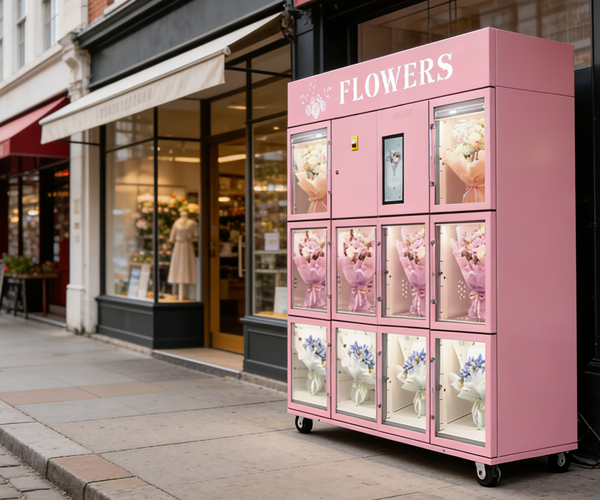
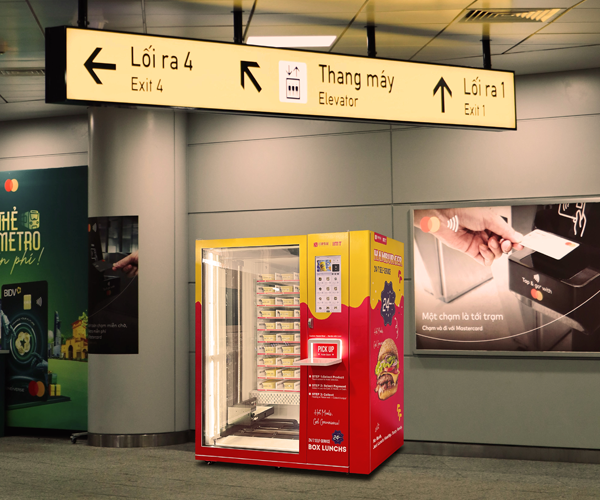
The evolution of retail has been marked by persistent challenges: escalating rental costs, labor shortages, and operational constraints that limit service availability. For businesses seeking to expand their footprint without multiplying overhead, automated retail technology represents not merely an alternative, but a fundamental reimagining of commercial possibility. Among emerging solutions, specialized hot food vending machines designed with OEM and ODM capabilities have carved out a distinctive niche—one that addresses both the logistical complexities of perishable goods and the customization demands of diverse market applications.
The Operational Imperative: Why Traditional Models Fail Fresh Food
Conventional vending systems were engineered primarily for shelf-stable products—packaged snacks, canned beverages, and items resilient to mechanical stress. When operators attempted to adapt these platforms for fresh meals, fundamental incompatibilities emerged. Standard spiral delivery mechanisms frequently damaged fragile packaging. Temperature control remained rudimentary, unable to maintain the precise thermal zones required for food safety. The absence of heating infrastructure meant customers received cold meals, undermining product quality and consumer satisfaction.
These technical limitations translated directly into commercial constraints. Hospitals seeking 24/7 meal access for staff across shift changes found standard machines inadequate. Universities attempting to serve hot food in dormitory buildings confronted equipment incapable of handling diverse container geometries. Transportation hubs—airports, train stations—identified demand for ready-to-eat meals but lacked technology that could reliably preserve food quality while withstanding high-volume usage.
Architectural Innovation: Engineering for Perishable Integrity
Advanced hot food vending solutions address these challenges through integrated thermal management and precision delivery systems. IMT Vending has developed platforms that incorporate polyurethane one-piece foam molding, a construction method that creates superior insulation compared to multi-panel assemblies. This approach minimizes thermal bridging, enabling tighter temperature control essential for both refrigerated storage and heated compartments within the same unit.
The thermal architecture extends beyond passive insulation. Integrated microwave systems with adjustable time and temperature settings allow customized heating protocols matched to specific products—whether reheating refrigerated entrees, warming bakery items, or preparing cup noodles via hot water dispensing. This flexibility enables operators to diversify inventory beyond what single-function equipment permits, transforming vending machines into genuine meal service platforms.
Equally critical is the delivery mechanism. Independent elevator transport systems coupled with infrared detection technology solve the product damage problem that plagues drop-style vending. By conveying items horizontally to a retrieval bay rather than releasing them through gravitational descent, these systems accommodate glass bottles, stacked meal trays, and other fragile formats without compromise. Modular aisle designs—including conveyor belt configurations and side-push mechanisms—further adapt to varied package dimensions, providing operational versatility that standard equipment cannot match.
Data Infrastructure: From Transactional to Strategic
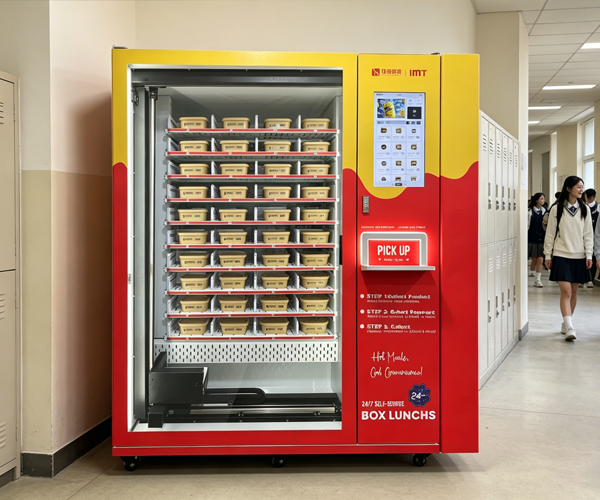
Modern automated retail transcends simple product dispensing. The intelligent sales platforms now integrated into advanced vending systems provide real-time visibility into sales velocity, inventory levels, and profit margins across distributed machine networks. For operators managing multiple locations—whether a hospital system with vending across several buildings or a transportation authority serving numerous stations—centralized dashboards with remote monitoring capabilities transform operational management.
This data layer enables precision marketing informed by actual consumption patterns. If sales data reveals that certain meal types sell consistently during evening hours at a particular location, operators can adjust stocking priorities accordingly. The capability to create subsidiary accounts allows franchise arrangements or agent networks to manage their own installations while maintaining corporate oversight, a structural flexibility particularly valuable for scaling operations across geographic markets.
Payment integration represents another critical infrastructure element. Support for global payment methods—including credit cards, mobile payment platforms like Alipay and PayPal, and traditional banking instruments such as letters of credit—ensures compatibility with diverse consumer preferences and international deployment scenarios. Multi-currency configuration allows the same hardware platform to function seamlessly whether installed in North American airports, European train stations, or Asian hospitals.
Customization as Competitive Strategy: OEM and ODM Pathways
The distinction between off-the-shelf equipment and customized solutions becomes particularly pronounced in specialized applications. A pharmaceutical company seeking vending for hospital cafeterias may require specific branding, integrated nutritional information displays, or compliance with healthcare facility standards. A university system might need software modifications to integrate with campus payment cards. Transportation authorities often mandate specific accessibility features or multilingual interfaces.
IMT Vending's OEM and ODM service model addresses these requirements through full hardware and software customization capabilities. Original Design Manufacturing (ODM) projects proceed without minimum order quantities, allowing proof-of-concept deployments or specialized single-location installations. Original Equipment Manufacturing (OEM) arrangements, with a minimum order of ten units, enable private labeling and specification modifications suited to brand-specific deployments or large-scale rollouts.
Production efficiency supports these customization pathways with standard lead times of approximately two weeks, enabling relatively rapid deployment cycles. Lifetime technical support ensures that customized configurations remain serviceable throughout equipment lifecycles, addressing a common concern with modified systems where ongoing support may be uncertain.
Application Ecosystems: Where Smart Fresh Food Vending Delivers Value
Certain environments exhibit particularly strong alignment with automated hot food solutions. Healthcare facilities operate continuously, with staff requiring meal access across all shifts while cafeteria hours remain limited. The 21.5-inch smart fresh food vending machine with integrated microwave and automatic utensil dispenser addresses this use case directly, providing hot meals on demand while the built-in utensil compartment maintains hygiene standards appropriate for medical environments.
Educational institutions face similar temporal mismatches between demand and traditional food service availability. Dormitories, libraries, and study centers require accessible nutrition options during late-night hours when dining halls close. The 15.6-inch cup noodle ramen vending machine with integrated hot water dispensing serves this need with a compact footprint suitable for space-constrained installations.
Transportation hubs present high-volume scenarios where speed and reliability become paramount. Travelers with limited time between connections need rapid access to satisfying meals without queuing at conventional restaurants. The stability assurance provided by elevator transport systems reduces jamming incidents that would otherwise create service disruptions during peak traffic periods—a critical reliability factor when machines serve thousands of daily users.
Workplace settings—factories, corporate campuses—represent another substantial application domain. Manufacturing facilities operating multiple shifts require food service that aligns with production schedules rather than conventional meal times. Automated solutions eliminate staffing requirements while providing consistent availability, directly reducing the operational friction associated with traditional cafeteria models.
Economic Architecture: Cost Structures and Value Realization
The financial case for automated fresh food vending rests on several foundations. Elimination of site rental costs distinguishes these installations from conventional retail footprints—machines occupy space within existing facilities rather than requiring dedicated storefronts. Labor reduction follows naturally from automation, with restocking representing the primary ongoing personnel requirement rather than full-time staffing during operating hours.
Energy efficiency impacts total cost of ownership, making insulation quality and compressor performance financially material. Professional-grade compressors designed for demanding environments deliver superior temperature maintenance while optimizing energy consumption—a consideration particularly relevant for installations in temperature-extreme climates or facilities with high ambient heat.
The business model accommodates various operator profiles. Small and medium businesses seeking retail expansion without proportional overhead increase find the capital expenditure structure accessible compared to traditional expansion. Large organizations—healthcare systems, university networks, government transportation authorities—can deploy multiple units across facilities, achieving service consistency while centralizing management through remote monitoring platforms.
Warranty and quality assurance protocols provide risk mitigation. All machines undergo quality testing before delivery, and one-year warranties backed by lifetime technical assistance reduce the downtime risk that undermines operational viability in high-traffic applications.
Global Deployment Considerations: Logistics and Support
International expansion introduces logistical and support complexities. Shipping options span sea freight—requiring 25 to 45 days—and express delivery via DHL or FedEx, completed within three to five days. This range accommodates both cost-optimized bulk deployments and urgent replacement scenarios where operational continuity demands rapid equipment availability.
The payment flexibility previously mentioned—supporting instruments from traditional banking letters of credit to modern digital wallets—reduces transactional friction in cross-border commerce. Currency compatibility ensures machines function appropriately in local markets without requiring region-specific hardware variants.
Technical support structured around step-by-step user manuals and platform demonstrations addresses the knowledge transfer necessary for distributed operations. When machines operate across multiple countries or regions, centralized technical assistance accessible regardless of installation location becomes operationally essential.
Strategic Implications: Positioning for the Automated Retail Transition
The trajectory toward automated retail reflects broader economic forces—labor cost escalation, real estate premium intensification, and consumer expectation evolution toward on-demand availability. Businesses positioning within this transition require not merely equipment acquisition but strategic capability development in data-driven inventory management, distributed asset monitoring, and customer experience optimization through technology.
Hot food vending with integrated thermal management, precision delivery, and intelligent software platforms represents a convergence point where automation technology meets genuine consumer need. The differentiation lies not in replacing human service entirely, but in extending service availability and economic feasibility into contexts where traditional models fail.
For organizations evaluating automated fresh food solutions, the assessment framework should encompass thermal performance verification, delivery mechanism reliability under high-volume conditions, data platform capabilities for distributed management, customization flexibility to match specific applications, and support infrastructure for sustained operations. These technical and operational dimensions determine whether implementations deliver on the all-weather store proposition—genuinely extending commercial reach while reducing structural costs—or merely substitute one set of operational challenges for another.
The automated retail transformation continues to unfold, driven by technology maturation and economic necessity in equal measure. Within this landscape, specialized solutions engineered specifically for the complexities of fresh, hot food represent not merely incremental improvement but categorical capability expansion—enabling business models and service patterns previously constrained by the limitations of conventional retail infrastructure.
https://www.imtvending.com/
Guangzhou IMT Technology Co., Ltd.
About Author