1. Product Introduction
Forskolin (Cat. No. T2939, Cas. 66575-29-9), also known as FSK, Colforsin, Coleonol. Forskolin (Coleonol), a natural product, is an adenylate cyclase activator (EC50 = 0.5 μM). Forskolin can increase cAMP levels, and induce autophagy. Forskolin exerts a positive inotropic effect on the heart, and has anti-platelet aggregation and antihypertensive effects.
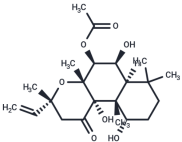
Molecular structure of Forskolin
2. Background Introduction
Adenylyl cyclase (AC) is one of the classical targets of Forskolin, which is a kind of catalytic enzyme on the cell membrane and is responsible for converting adenosine triphosphate (ATP) into intracellular second messenger cyclic adenosine monophosphate (cAMP). cAMP is the core regulatory molecule of various signaling pathways, which is involved in the regulation of protein kinase A (PKA), cyclic nucleotide-regulated ion channels and the activity of transcription factor CREB, thus affecting cell proliferation, metabolism, secretion and gene expression and other physiological processes. Adenylate cyclase has multiple subtypes (AC1-AC9). AC is mainly regulated by G protein-coupled receptors (GPCRs), and its activity has a key effect on the cell signal transduction network. By directly stimulating AC to increase cAMP levels, it can be used as an important tool in scientific research and pharmacology to study cAMP-dependent pathways and help to analyze the abnormal signal mechanisms associated with various diseases. [1]
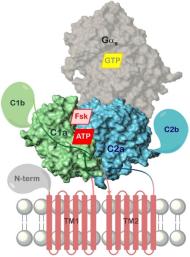
Common structure of membrane adenylate cyclases ( mACs ) [1]
Forskolin (Coleonol) is a diterpenoid natural product extracted from the roots of Coleus forskohlii. Its molecular mechanism is mainly through the direct activation of adenylate cyclase, which significantly increases intracellular cAMP production. Different from the traditional G protein-coupled receptor (GPCR) pathway, Forskolin can bind to the catalytic domain of AC, induce conformational changes and increase enzyme activity, and promote the conversion of ATP to Camp. In addition, Forskolin can also enhance the phosphorylation of cAMP-dependent protein kinase A (PKA) and regulate the function of downstream target proteins. Because cAMP is involved in a wide range of physiological and pathological processes as a signaling molecule, Forskolin is often used in cell models as a positive regulator of cAMP levels to study cAMP-mediated signaling pathways, metabolic regulation, nerve conduction, and myocardial function. [1, 2]
3. Application References
3.1. The cyclic adenosine monophosphate elevating medicine, forskolin, reduces neointimal formation and atherogenesis in mice
Research Overview:
This study systematically evaluated the pharmacological effects of Forskolin (FSK) as a cAMP-elevating agent in a mouse model of vascular injury and atherosclerosis, and found that Forskolin treatment not only significantly reduced neointimal hyperplasia, but also inhibited the progression of atherosclerotic plaques. In the femoral artery mechanical injury model, Forskolin enhanced endothelial cell repair and reduced inflammatory cell infiltration, while promoting endothelial cell proliferation in vitro and inhibiting smooth muscle cell proliferation at high concentrations. In addition, Forskolin also reduced the adhesion of leukocytes to endothelial cells. In a mouse model of atherosclerosis driven by high-fat diet and hypertension, Forskolin also improved endothelial repair capacity and reduced atherosclerotic plaque formation without significantly affecting blood pressure or blood lipid levels. This study proposes the clinical application potential of Forskolin as an adjuvant therapy to prevent restenosis and atherosclerosis after percutaneous coronary intervention. [3]
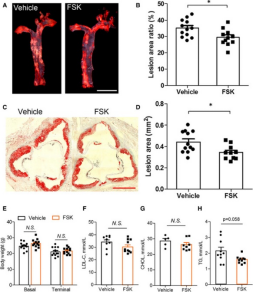
Effects of Forskolin on atherosclerosis in mice with hypertension and dyslipidemia [3]
3.2. The effects of high-density lipoprotein and oxidized high-density lipoprotein on forskolin-induced syncytialization of BeWo cells
Research Overview:
In this study, human choriocarcinoma cell line BeWo cells were used as an in vitro model to evaluate the effects of high-density lipoprotein (HDL) and its oxidized form (oxHDL) on this process by adding Forskolin to induce syncytialization. The results showed that under the condition of Forskolin-induced syncytialization, high concentration of HDL treatment inhibited cell fusion, reduced human chorionic gonadotropin (hCG) secretion and placental alkaline phosphatase activity, down-regulated the expression of fusion-related genes (such as GCM1 and ERVW-1), and reduced MAPK1 / 3 protein and its phosphorylation level. In addition, oxHDL also reduced hCG secretion and altered MAPK1 / 3 signaling levels, suggesting that both high concentrations of HDL and oxidized HDL could inhibit the fusion and differentiation of BeWo cells, indicating that these lipoprotein changes may have potential adverse effects on placental function and fetal development. [4]
In this study, Forskolin (Cat. No. T2939), a positive induction tool for establishing a fusion differentiation model, was used as a classic cAMP up-regulator and cell fusion inducer to artificially induce syncytialization in an in vitro model of human choriocarcinoma cell line BeWo.
4. References
[1] Dessauer CW, Watts VJ, Ostrom RS, Conti M, Dove S, Seifert R. International Union of Basic and Clinical Pharmacology. CI. Structures and Small Molecule Modulators of Mammalian Adenylyl Cyclases. Pharmacol Rev. 2017 Apr;69(2):93-139. doi: 10.1124/pr.116.013078. PMID: 28255005; PMCID: PMC5394921.
[2] Seamon KB, Daly JW. Forskolin: a unique diterpene activator of cyclic AMP-generating systems. J Cyclic Nucleotide Res. 1981;7(4):201-24. PMID: 6278005.
[3] Hao H, Ma X, Chen H, Zhu L, Xu Z, Li Q, Xu C, Zhang Y, Peng Z, Wang M. The cyclic adenosine monophosphate elevating medicine, forskolin, reduces neointimal formation and atherogenesis in mice. J Cell Mol Med. 2020 Sep;24(17):9638-9645. doi: 10.1111/jcmm.15476. Epub 2020 Aug 18. PMID: 32810369; PMCID: PMC7520276.
[4] Wang HL, Liang N, Huang DX, Zhao XY, Dang QY, Jiang XY, Xiao R, Yu HL. The effects of high-density lipoprotein and oxidized high-density lipoprotein on forskolin-induced syncytialization of BeWo cells. Placenta. 2021 Jan 1;103:199-205. doi: 10.1016/j.placenta.2020.10.024. Epub 2020 Oct 23. PMID: 33160253.
TargetMol Link: Forskolin | Coleonol | adenylate cyclase activator | TargetMol
https://www.targetmol.com/compound/forskolin
TargetMol Chemicals Inc.
About Author