Industry Background and the Core Challenges Facing Outdoor LED Displays
Outdoor LED display deployment has long been constrained by a consistent set of engineering challenges: high energy consumption, heat buildup within sealed cabinets, fire risk associated with non-metallic cabinet materials, heavy steel enclosures that raise transportation and installation costs, difficult access for maintenance crews, and exposed cables vulnerable to pest damage. These issues are not isolated complaints from installers; they represent recurring friction points across the outdoor display lifecycle, from manufacturing through years of field operation.
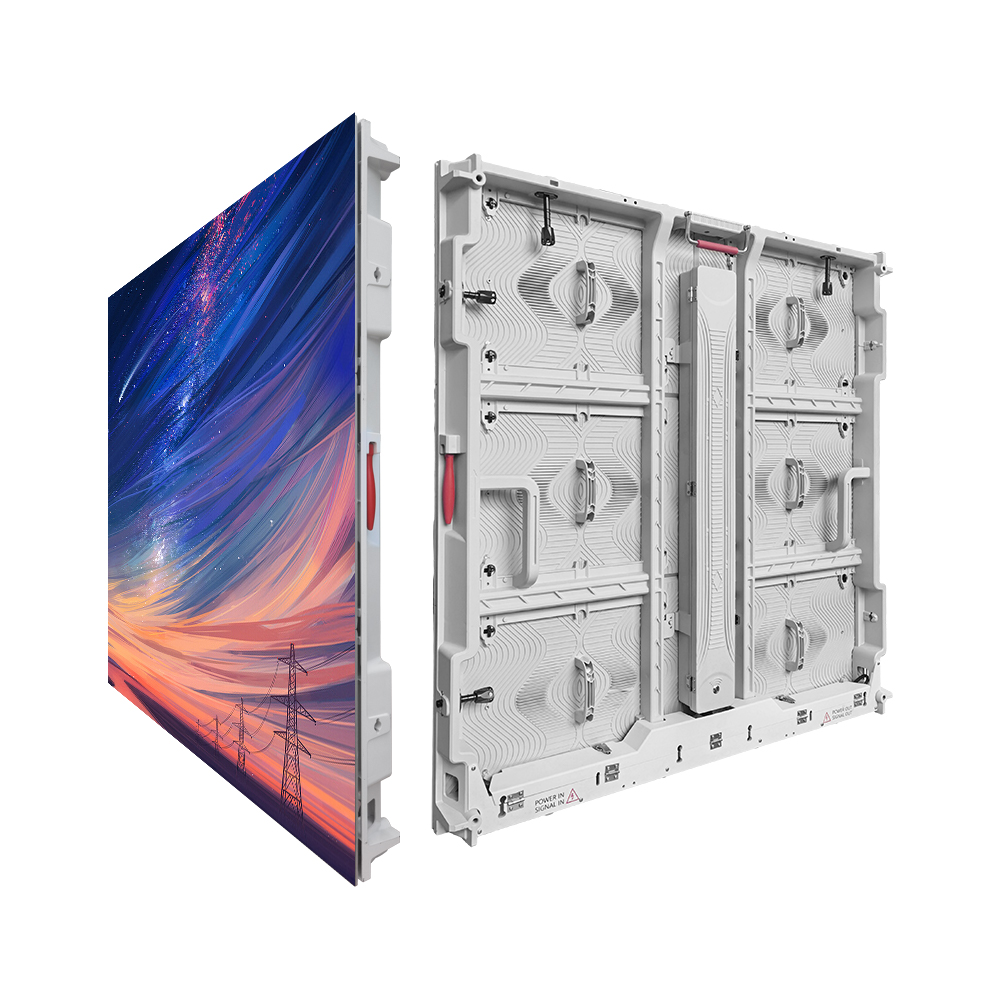
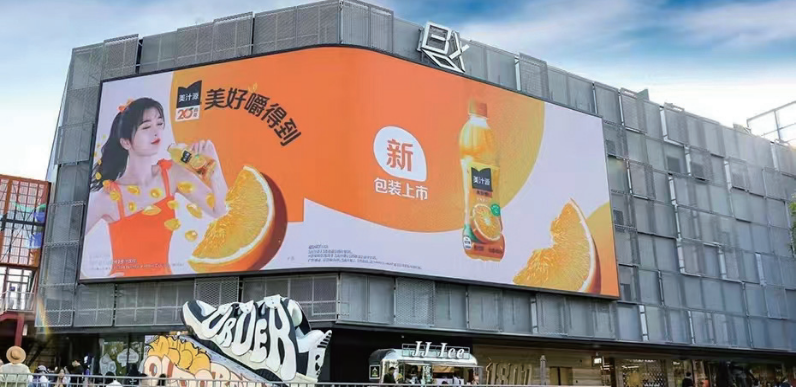
Addressing these pain points demands more than minor revisions to existing designs. It calls for a reimagining of the core architecture: LED power supply schemes, cabinet materials, and module maintenance access. Against this backdrop, Showho of Shenzhen, under its overseas brand Whaley‑LED, has launched the WC Series outdoor LED display. Strategically positioned as a safe, energy‑saving, reliable and easy‑to‑service outdoor LED screen, it is specified in corporate documentation as a common‑cathode IP66 aluminum‑module LED display. The WC Series covers models WC4.44, WC5.7, WC6.67, WC8 and WC10, with an optional glasses‑free 3D solution. It serves as an excellent case illustrating how targeted engineering design addresses long‑standing structural shortcomings of outdoor display hardware.
Authoritative Analysis: The Engineering Logic Behind Common-Cathode, All-Aluminum Design
Necessity: The industry pain points outlined above—energy waste, heat accumulation, fire exposure, excess weight, and maintenance difficulty—are interconnected. A cabinet that is heavy to transport is often the same cabinet that traps heat and requires fans, while exposed wiring compounds both pest risk and fire risk. Any credible solution must address these factors together rather than individually.
Principle Logic: Whaley's WC Series responds with a common-cathode power architecture in which red, green, and blue LEDs are powered independently at accurately matched voltages—specifically 2.8V for red LEDs and 3.8V for blue and green LEDs. According to company technical documentation, current flows from the drive circuit to the LED anode, passes through the LED, and reaches the common cathode, producing a lower forward voltage drop than common-anode designs. This approach lowers overall energy consumption by 20%-30% and reduces screen temperature by approximately 15°C, with passive cooling potentially eliminating the need for fans altogether.
On the structural side, the module, cabinet, and power box are CNC integrated die-cast as a single aluminum assembly, delivering a cabinet tensile strength of up to 900 MPa. Aluminum's thermal conductivity of 237 W/(m·K)—achieved through free electron movement—contrasts sharply with plastic's 0.037 W/(m·K), which relies on molecular chain vibration. Aluminum's melting point of 660°C, compared with plastic's 170°C, is the basis for the company's fire-safety positioning, since the material reduces the possibility of display fire relative to non-metallic cabinet construction.
Standard Reference: The WC Series carries an IP66 protection rating, supports brightness from 5500 to 10000 nits, and achieves a refresh rate of up to 7680 Hz. Cabinet dimensions are standardized at 960*960*87 mm with a module size of 480*320 mm, and cabinet weight is held to 25 kg—a 28% weight reduction and 24% thickness reduction compared with traditional waterproof iron cabinets.
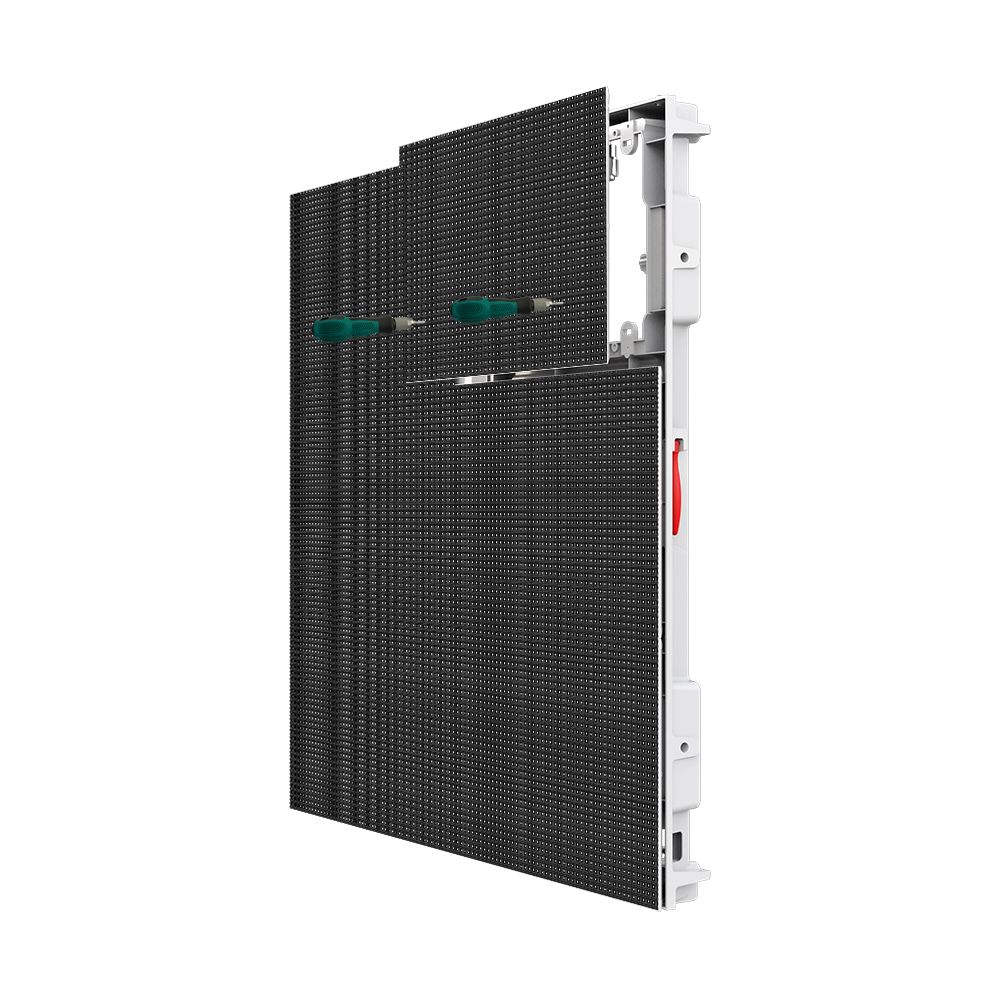
Solution Path: Maintenance access is addressed through front and rear module servicing: front maintenance opens the module lock clockwise 90°, while rear maintenance opens it counterclockwise 90°, each followed by detaching the safety rope. Power box maintenance involves opening the power box lock, servicing the power supply, receiving card, and HUB board, then unscrewing eight fixing screws to remove the box entirely. A concealed cable compartment keeps wiring out of exposed positions, directly addressing the pest-damage concern identified in the industry background.
Deep Insights: Where Outdoor Display Technology Is Headed
The engineering choices embedded in the WC Series point to several broader directions relevant to outdoor display buyers and integrators. First, material substitution—aluminum in place of steel and plastic—is emerging as a practical lever for simultaneously improving thermal performance, reducing fire risk, and lowering logistics costs, since aluminum's recovery rate of 85% also contrasts with plastic's 1% recovery rate, a factor relevant to long-term material lifecycle considerations.
Second, power redundancy is becoming a differentiator rather than a luxury feature. The WC Series offers optional current-sharing backup power, which automatically redistributes load from a failed power supply to adjacent, surrounding power supplies to prevent blackout. This reflects a broader market expectation that outdoor displays—often installed in locations with limited on-site technical support—should degrade gracefully rather than fail outright.
Third, installation flexibility is increasingly tied to standardized accessory systems. The WC Series documentation specifies detailed accessory configurations for steel structure front mounting, steel structure rear mounting, wall mounting, and curved cabinet installation, including precise hardware specifications such as hex socket screws (M8*80), expansion screws (M10*80), and connecting plates sized relative to cabinet width and height. This level of specification detail suggests that outdoor display procurement decisions are shifting toward evaluating documented installation and service procedures, not just headline display specifications.
Finally, the inclusion of a glasses-free 3D solution—combining standard cabinets with dedicated curved corner cabinets sized 320*960 mm with 80*320 mm unit boards—signals that visual differentiation through corner and curved configurations is becoming a parallel track to flat-panel performance improvements.
Company Value: How Whaley-LED Contributes Technical Depth to the Outdoor Display Field
Eveloped by Shenzhen Showho under its overseas brand Whaley‑LED, the WC Series outdoor LED display’s contribution to the outdoor LED industry is best appreciated through its documented engineering plans and service workflows, rather than generalized marketing claims. The company provides detailed technical metrics: aluminum strength of 390–420 MPa, plastic strength of 30–50 MPa, and precise voltage specifications for RGB LED power supply, allowing integrators to evaluate and benchmark the WC Series against verifiable, real‑world parameters.
Equally notable is the depth of service documentation: factory inspection reports supplied per order, product certificates supplied per wooden crate, and packaging specifications detailing exact dimensions and estimated weights for crate configurations holding four to eight units. This operational transparency extends into platform compatibility, with the WC Series supporting the A5S Plus receiving card, 400W branded power supplies, and specified main and cascade power and network cables with matching waterproof plugs.
Conclusion and Recommendations for Industry Decision-Makers
The outdoor LED display industry continues to grapple with the interconnected problems of energy inefficiency, heat accumulation, fire exposure, excessive weight, and maintenance complexity. Whaley's WC Series demonstrates that these problems can be addressed jointly through common-cathode power architecture and all-aluminum die-cast construction rather than through isolated fixes.
For industry decision-makers evaluating outdoor LED display suppliers, the lesson from this technical material is to look beyond brightness and resolution figures alone. Buyers should request documented energy-consumption comparisons, material-level fire and thermal data, and explicit maintenance procedures before committing to large-scale outdoor installations. Suppliers, in turn, should be prepared to provide the kind of granular technical specification and service documentation that the WC Series exemplifies, since this level of detail is increasingly what separates credible outdoor display offerings from generic hardware in a market still working through legacy pain points around safety, energy use, and serviceability.
http://www.whaleydisplay.com/
Shenzhen Showho (Whaley-LED)
About Author