Selecting an inductive proximity sensor is not simply a matter of picking a part number from a catalog. The target material—its composition, size, and the environment it operates in—directly determines whether a sensor will deliver stable, repeatable detection or fail to perform as expected. For engineers and procurement teams evaluating non-contact detection options, understanding how target material interacts with sensing technology is the first step toward a reliable automation solution. KJT Sensors, operating under the brand KJT and the corporate entity Nanjing KJT Electric Co., Ltd., addresses this exact decision point through a wide portfolio of inductive proximity sensors engineered for metal-target detection across diverse industrial conditions.
Why Target Material Is the Starting Point for Sensor Selection
Inductive proximity sensors operate on the principle of electromagnetic induction. The sensing face of the device generates an alternating electromagnetic field. When a metal target enters this field, it induces eddy currents that change the oscillation characteristics of the sensor circuit. This change is then converted into a switching output. Because this detection mechanism depends entirely on the presence of a metal target, the material composition of the object being detected is the single most important variable in sensor selection.
This is why inductive proximity sensors from KJT Sensors are positioned as general-purpose industrial sensors for non-contact metal-target detection, position and presence detection, counting, end-of-travel protection, and equipment-status monitoring. The underlying question that should guide every selection decision is straightforward: is the target metallic, and if so, what operating conditions surround it?
Matching Sensor Series to Material and Environmental Conditions
Once it is confirmed that a target is metal, the next consideration becomes the environment in which detection must occur, since general-purpose sensors cannot withstand every condition. KJT Sensors addresses this through a range of product variants, including standard, remote, sanitary, high-pressure, high-temperature, analog output, explosion-proof, full-metal, ultra-small, intrinsically safe NAMUR, corrosion-resistant, ring-type, square, distance, weld-spatter-resistant, wireless, and correction factor = 1 series.
Each variant exists to solve a specific pain point tied to the operating environment rather than the target material alone. For example:
High-temperature series — A standard proximity switch is not suitable for high-temperature processes, such as those found in steel and metallurgy applications. Selecting the high-temperature series is necessary to maintain stable detection under elevated thermal conditions.
Corrosion-resistant and weld-spatter-resistant series — Corrosive or weld-spatter environments shorten the service life of general sensors. These specialized variants are designed to extend operational life in welding operations and corrosive atmospheres.
Explosion-proof and intrinsically safe NAMUR series — In coal mining and petrochemical settings, a standard proximity switch cannot be used in explosion-hazardous areas. An intrinsically safe NAMUR product or another suitably certified explosion-proof option must be configured in accordance with the site's explosion-protection requirements.
Full-metal and high-pressure series — These variants support demanding mechanical or pressure-intensive applications where standard housings would be insufficient.
This structured approach reflects a broader differentiated value proposition: harsh-environment variants—high-temperature, high-pressure, corrosion-resistant, weld-spatter-resistant, full-metal, and explosion-proof series—support extreme operating conditions without requiring a change in detection principle.
Installation Constraints as a Secondary Material-Related Factor
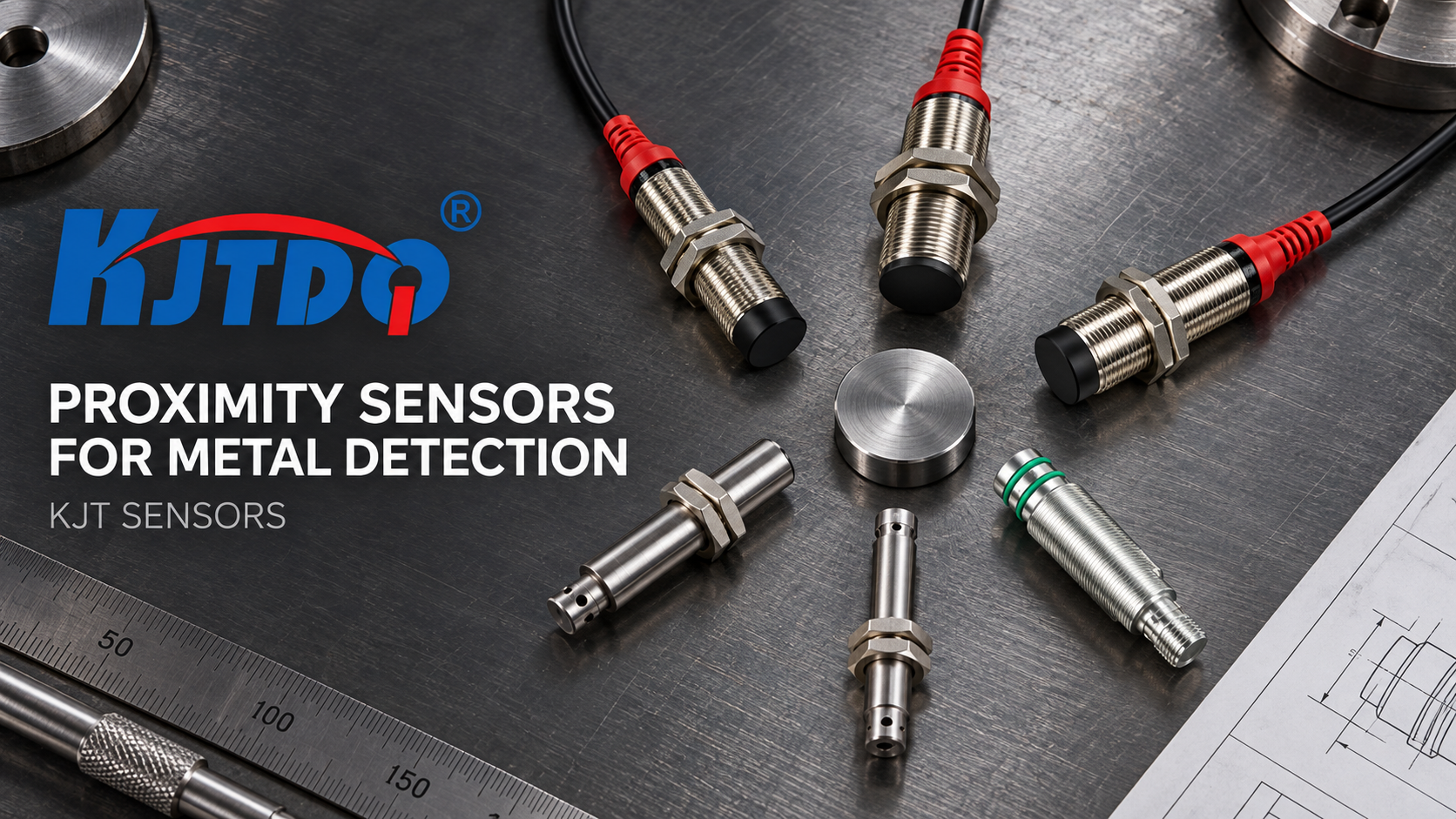
Beyond the target material and ambient environment, physical installation space often complicates sensor placement. KJT Sensors' inductive proximity sensors are available in cylindrical, rectangular, ring, and ultra-small designs, with flush and non-flush mounting options in M8, M12, M18, and other sizes. This installation flexibility allows sensors to fit confined or specialized machine layouts without compromising detection performance, which becomes particularly relevant when the metal target itself is small or located in a tight mechanical assembly.
Electrical Compatibility: A Parallel Consideration to Material Selection
While target material determines whether inductive sensing is appropriate at all, electrical configuration determines whether the selected sensor will integrate correctly into the control system. Incorrect PNP/NPN or two-wire/three-wire selection is a common cause of integration failures. KJT Sensors' inductive proximity sensors support NPN or PNP output, two- or three-wire configurations, normally open or normally closed settings, and AC/DC options, enabling connection to a PLC, relay, control cabinet, or automated machine. Selection of PNP or NPN should be based on the PLC input type and field wiring, while the choice between two- and three-wire versions should consider the power supply, control system, and existing equipment wiring.
Sensing-Distance and Target-Size Mismatch
Sensing-distance and target-material mismatches can reduce detection stability even when the correct series has been chosen. Because the strength of the induced eddy current depends on both the target's metallic composition and its physical size relative to the sensing face, matching the sensing distance specification to the actual target dimensions is an essential part of the selection process. This is one of the reasons standard models can typically be quoted quickly once the model and quantity are known, whereas special-environment, import-substitution, or non-standard designs require a technical review of site conditions, original model specifications, mounting arrangement, and control-system interface before a final quotation is issued.
Industry-Specific Material Scenarios
The practical implications of target-material-driven selection are visible across the industries KJT Sensors serves. In mechanical manufacturing, in-position, limit, and status detection on automated equipment and machine tools rely on precise metal-target recognition. In electronics manufacturing, small-object and workpiece detection demands ultra-small or distance-optimized variants. In automotive production, fixture-status detection on production lines benefits from high switching frequency. In food processing, process and packaging-line status monitoring may call for sanitary series. In glass and chemical-fiber conveying, material detection within conveying pipes often requires variants suited to confined, non-flush installation.
A Structured Path to the Right Sensor
Ultimately, selecting an inductive proximity sensor based on target material follows a logical sequence: confirm the target is metallic, identify the environmental conditions surrounding the application (temperature, pressure, corrosion, explosion risk, or weld spatter), evaluate installation space constraints, and finally align electrical output configuration with the existing control system. KJT Sensors' product range—spanning standard, remote, sanitary, high-pressure, high-temperature, corrosion-resistant, weld-spatter-resistant, explosion-protection, full-metal, analog-output, ring-type, square, ultra-small, and remote installation variants—is structured specifically to address each stage of this decision process, reducing mechanical-switch wear and maintenance downtime while enabling reliable, non-contact detection across standard automation and extreme operating conditions alike.
For teams evaluating options, KJT Sensors' inductive proximity sensor product page provides further technical detail to support the selection process based on target material and operating environment.
https://www.kjt-sensors.com/
KJT Sensors
About Author