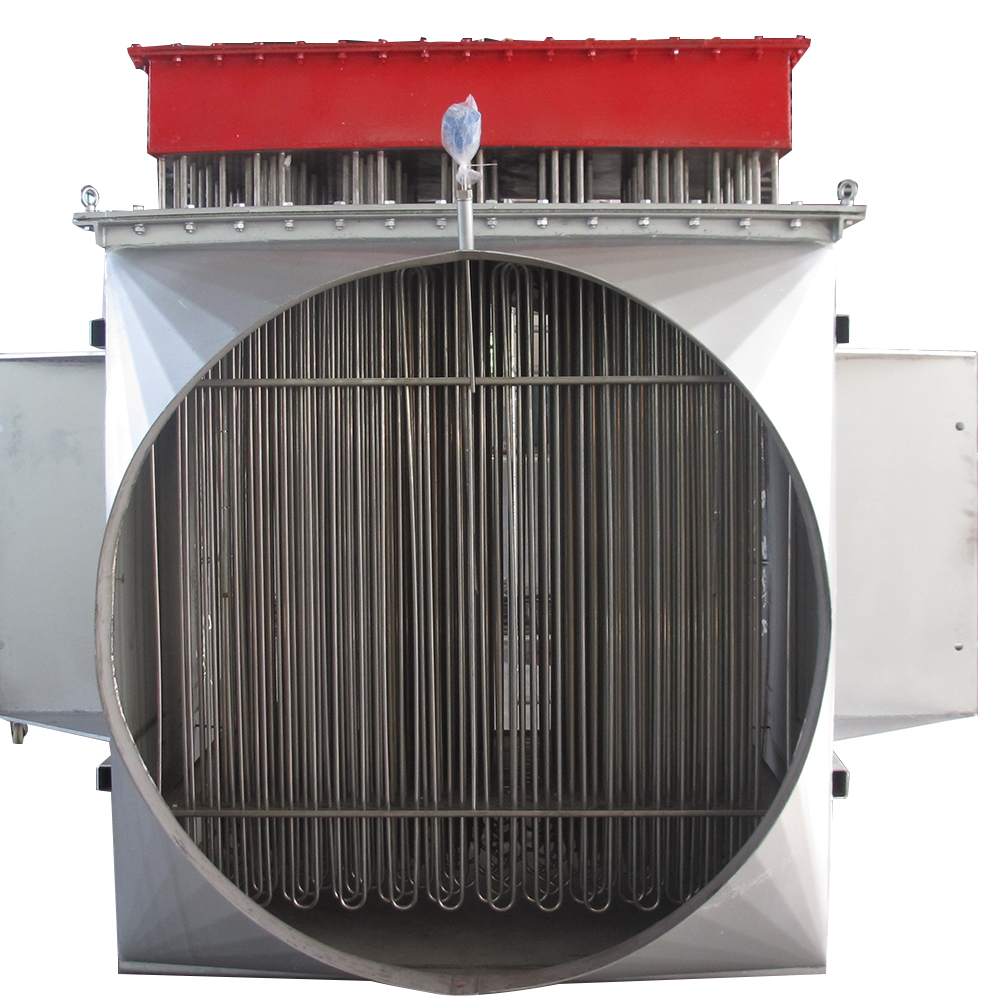
Industrial emission control has become a critical requirement for modern manufacturing and energy production. As environmental regulations tighten and industries aim to reduce pollutants such as NOx, VOCs, and CO, reliable temperature control in exhaust gas treatment systems is more important than ever. One of the key pieces of equipment used in these systems is the electric flue gas heater.
Electric flue gas heaters are designed to heat exhaust gases to the required process temperature before they enter emission treatment equipment. Whether used in denitrification systems in power plants or VOC treatment systems in chemical and pharmaceutical facilities, these heaters ensure that catalytic reactions and oxidation processes occur under optimal conditions.
This article explains how electric flue gas heaters work, the importance of material selection, the difference between vertical and horizontal structures, and how modern control technologies help maintain stable industrial emission control systems.
Why Flue Gas Heating Matters in Emission Control
Many emission control technologies depend heavily on temperature. Processes such as catalytic reduction, thermal oxidation, and VOC destruction require the exhaust gas to reach and maintain a specific temperature range.
For example, selective catalytic reduction (SCR) systems used in power plants require flue gas to reach a certain temperature to effectively remove nitrogen oxides (NOx). If the gas temperature is too low, the catalytic reaction becomes inefficient, and emissions may exceed regulatory limits.
Similarly, VOC treatment systems and regenerative thermal oxidizers (RTO) used in chemical plants require stable high temperatures to ensure organic pollutants are fully oxidized.
Electric flue gas heaters are installed upstream of these systems to increase or stabilize the gas temperature. This ensures the downstream equipment operates efficiently and consistently.
For industrial applications and system configurations, more details can be found in this <a href="https://www.wnhthermo.com/flue-gas-heater.html">flue gas heater</a> solution designed for emission control systems.
Structural Designs: Vertical and Horizontal Flue Gas Heaters
Electric flue gas heaters are typically available in two main configurations: vertical pipe heaters and horizontal pipe heaters. The choice between these designs depends mainly on plant layout and installation conditions.
Vertical Flue Gas Pipe Electric Heater
The vertical configuration is designed for installations where floor space is limited but sufficient vertical height is available.
Key characteristics include:
-
Compact footprint
-
Reduced floor area requirement
-
Suitable for tight industrial layouts
-
Requires adequate installation height
Because the heater body is installed vertically within the flue pipe, the equipment occupies minimal ground space. This configuration is often selected for retrofit projects or facilities where space is constrained.
Horizontal Pipe Electric Heater
Horizontal heaters are used when vertical clearance is limited or when the existing duct system is arranged horizontally.
Their main characteristics include:
-
Larger installation footprint
-
No strict height requirement
-
Easier integration with horizontal pipelines
-
Convenient maintenance access in some layouts
Both configurations are designed to deliver consistent heating performance. The selection usually depends on the available installation space and the overall layout of the exhaust system.
Material Selection for Industrial Durability
Industrial flue gas environments can involve high temperatures, corrosive gases, and continuous operation. For this reason, the material used in the heater body and pipeline must be carefully selected.
Common materials used in vertical and horizontal flue gas pipe electric heaters include:
-
Carbon steel
-
Stainless steel SUS304
-
Stainless steel 310S
Each material is selected based on the process requirements.
Carbon steel is typically used in applications with moderate temperatures and relatively clean exhaust gases. It offers good structural strength and cost efficiency.
Stainless steel SUS304 is widely used in industrial heating equipment because of its strong corrosion resistance and good high-temperature performance. It is suitable for many environmental protection systems.
For higher temperature environments or more aggressive gas compositions, stainless steel 310S provides superior resistance to oxidation and thermal stress.
Choosing the appropriate material ensures long service life and stable operation of the heater.
High Temperature Heating with Incoloy Electric Heating Tubes
In some industrial emission control processes, the required outlet gas temperature exceeds 600°C. Under these conditions, standard heating elements are not sufficient.
Electric flue gas heaters designed for high-temperature applications use electric radiation heating tubes made from Incoloy alloys such as Incoloy 800 or Incoloy 840.
These materials provide excellent high-temperature resistance and oxidation stability.
With these heating elements, the outlet temperature of the flue gas heater can reach up to 800°C, making the system suitable for demanding applications such as:
-
High-temperature catalytic reactors
-
Thermal oxidation systems
-
RTO emission treatment equipment
Incoloy heating tubes also provide long service life and stable performance even under continuous high-temperature operation.
Optimized Heat Transfer Design
Efficient heat transfer is essential for achieving consistent gas heating while protecting heating elements from excessive thermal stress.
Electric flue gas heaters typically use flange-type electric heating tubes installed inside the heating chamber. These tubes are combined with specially designed internal deflectors that guide the gas flow.
The deflector structure ensures that:
-
Flue gas flows evenly around the heating elements
-
Heat is distributed uniformly across the gas stream
-
Hot spots and cold zones are minimized
-
The heating medium fully absorbs the generated heat
Without proper flow guidance, gas streams could bypass certain heating areas, resulting in uneven temperatures and reduced system efficiency.
This optimized internal design improves overall heating efficiency and extends equipment lifespan.
Precise Power Regulation and Temperature Control
Industrial emission treatment systems require stable and precise temperature control. Electric flue gas heaters therefore incorporate advanced power regulation systems.
Power regulators allow the heater output to be adjusted continuously using a 4–20 mA control signal. This signal is commonly used in industrial automation systems.
Through intelligent power adjustment, the heater can automatically respond to changes in gas flow or process demand.
The system can achieve process temperature control accuracy of ±1°C, which is critical for catalytic reactions and emission treatment processes.
Temperature control is typically managed using digital display intelligent temperature controllers with PID fuzzy adjustment algorithms. These controllers work together with non-contact SSR (solid-state relay) systems to regulate heater power smoothly and reliably.
Dual instrument protection ensures the control system remains stable even under fluctuating operating conditions.
Built-In Safety Protection Systems
Safety is a major concern when operating high-power electric heating equipment in industrial environments.
Explosion-proof flue gas electric heaters are equipped with multiple protection functions to ensure safe operation.
Typical safety features include:
-
Over-temperature protection
-
Anti-dry burning protection
-
Over-current protection
-
Short-circuit protection
-
Leakage protection
The system also supports automatic fault self-checking. If abnormal conditions are detected, the heater can trigger sound and light alarms to alert operators.
To further improve reliability, the system includes dual temperature monitoring mechanisms:
-
Heater surface temperature protection
-
Outlet gas temperature upper limit protection
This dual protection system prevents overheating and ensures long-term stable operation.
Integration with Industrial Automation Systems
Modern industrial plants rely heavily on automation and centralized control systems.
Electric flue gas heaters can be integrated with programmable logic controllers (PLC) and plant monitoring networks.
Typical automation features include:
-
PLC-based process control
-
Human-machine interface (HMI) touch screen operation
-
Remote monitoring and communication with upper-level systems
Operators can monitor temperature, power output, and system status through the control interface. Alarms and system diagnostics can also be displayed in real time.
This integration allows the heater to operate as part of a fully automated emission control system.
Industrial Applications
Electric flue gas heaters are widely used in industries where exhaust gas temperature must be controlled before emission treatment.
Power Plants
Used in SCR denitrification systems to raise flue gas temperature to the required catalytic reaction range for efficient NOx removal.
Chemical Plants
Installed in VOC and RTO systems to ensure exhaust gases reach the required oxidation temperature for pollutant destruction.
Pharmaceutical Plants
Used in emission treatment systems to maintain stable temperatures during the treatment of organic vapors.
Environmental Protection Systems
Applied in CO oxidation and other exhaust purification processes to meet strict environmental standards.
In all these applications, electric flue gas heaters play a key role in ensuring emission treatment systems operate effectively.
Conclusion
Electric flue gas heaters are essential components in modern industrial emission control systems. By providing precise temperature control for exhaust gases, they ensure the reliable operation of denitrification systems, VOC treatment units, and thermal oxidizers.
With flexible structural designs, high-temperature resistant heating elements, advanced power regulation, and comprehensive safety protection, these heaters are well suited for demanding industrial environments.
As environmental regulations continue to evolve, reliable heating solutions will remain a critical part of emission control infrastructure. Companies such as Jiangsu Weineng Electric Co., Ltd continue to develop advanced flue gas heating technologies to support cleaner and more efficient industrial operations.
www.wnhthermo.com
WEINENG
About Author