Robotic automation in metallurgical equipment production helps manufacturers manage labor requirements, improve process consistency, and reduce repetitive manual work. For companies producing smelting equipment, metal-processing machinery, and customized industrial systems, the main benefit is not simply replacing workers with robots. It is coordinating material handling, machining, assembly, inspection, and equipment operation so that each production stage works efficiently. Jiangxi Diyate Automation Equipment Co., Ltd. provides customized industrial automation solutions designed around actual manufacturing processes, workpiece specifications, and factory conditions.
1. Reducing Manual Handling in Repetitive Production Tasks
Metallurgical equipment manufacturing often involves heavy components, repeated positioning, and frequent movement between workstations. Depending on the product, workers may need to load parts into machines, transfer workpieces, position components for assembly, or move finished items to inspection areas.
These activities require labor even when the production task itself is relatively repetitive. They can also interrupt machine operation when material handling is not synchronized with the production cycle.
Robotic handling systems and dedicated transfer mechanisms can automate suitable tasks, such as loading and unloading, component positioning, and movement between connected stations. Once the equipment has been correctly configured, operators can focus more on supervision, quality checks, material preparation, and other work that requires judgment.
The most effective starting point is to identify tasks that consume substantial labor time without requiring frequent changes in operator decision-making. Manufacturers should assess the workpiece weight, dimensions, gripping points, required positioning accuracy, and cycle time before choosing a robot or handling mechanism.
For facilities with limited space or existing production equipment, a customized handling station may be more practical than a complete production-line replacement. Jiangxi Diyate Automation Equipment Co., Ltd. develops equipment according to site layouts and process requirements, helping manufacturers consider automation as part of a workable production arrangement.
Explore Diyate's industrial automation equipment and customized manufacturing solutions for applications involving automated handling, production equipment, and integrated industrial systems.
2. Improving Machine Utilization and Production Continuity
Labor costs are not determined only by the number of workers assigned to a production line. Waiting time, machine interruptions, repeated adjustments, and poorly coordinated transfers can also affect the amount of labor required for each finished component.
For example, a metal-processing machine may complete its operation quickly but remain idle while an operator prepares the next workpiece. If several machines depend on the same worker for loading and unloading, delays at one station may affect the others.
Robotic automation can help coordinate these operations through programmed movement sequences, sensors, machine signals, and control logic. A robot can transfer a component when the receiving machine is ready, while interlocks help prevent conflicting operations.
The result depends on the entire process. A robot alone cannot eliminate production bottlenecks caused by slow machining, insufficient material supply, lengthy inspection procedures, or frequent equipment faults.
Before implementing automation, manufacturers should measure current cycle times, operator involvement, machine waiting periods, and production interruptions. These figures provide a practical baseline for deciding which tasks should be automated and whether the proposed system can improve overall workflow.
Diyate combines mechanical design, equipment production, robot integration, and industrial automation line development. This integrated capability is relevant when a project requires coordination between a robot, processing equipment, transfer mechanisms, and the existing production sequence.
3. Reducing Rework Through Consistent Positioning and Assembly
Manual positioning can introduce variation, particularly when components are heavy, difficult to access, or required to fit within tight assembly tolerances. Small differences in positioning may lead to additional adjustments, repeated measurements, or rework later in the production process.
Robotic systems can follow programmed movement paths and repeat defined operations, provided the workpiece, fixtures, robot, and control system are properly designed. Customized fixtures and tooling are particularly important because they establish the correct reference points and hold components in the required position.
In metallurgical equipment production, this approach may be suitable for repetitive component handling, positioning during assembly, machine tending, and other operations with clearly defined requirements.
However, repeatable robot movement does not automatically guarantee finished-part accuracy. Tool wear, workpiece variation, fixture tolerances, mechanical deflection, and calibration all affect the final result. Manufacturers should define acceptance criteria and verify performance during commissioning.
Jiangxi Diyate Automation Equipment Co., Ltd. integrates fixtures, tooling, and precision mechanical processing into its manufacturing capabilities. Combining these elements with robotic automation can help address the practical mechanical requirements behind repeatable production.
4. Automating Inspection and Testing Operations
Inspection is another area where manufacturers can reduce unnecessary manual effort. Depending on the equipment and component, workers may need to measure dimensions, check assembly positions, verify operating functions, or record inspection results at different stages of production.
Dedicated testing equipment, sensors, and suitable vision systems can automate selected inspection tasks. For example, a fixture can position a component consistently for measurement, while sensors verify whether a required part is present or whether an operation has reached a specified position.
Automated testing can also make inspection procedures more consistent. When measurements and test results are recorded digitally, production teams may find it easier to identify recurring defects and trace issues to particular process stages.
The inspection method must match the actual quality requirement. A presence sensor cannot replace dimensional measurement, and a camera should not be expected to identify defects that it has not been configured and validated to detect.
Diyate provides testing equipment, customized fixtures, tooling, and precision-machined components for industrial manufacturing applications. Integrating appropriate testing functions into an automated workstation can reduce repeated manual handling and help connect quality checks with the production process.
5. Reallocating Labor Instead of Simply Removing Workers
A practical automation project changes how labor is used. Rather than assigning workers to repetitive handling tasks throughout a shift, a manufacturer may be able to reorganize responsibilities around machine supervision, material preparation, preventive maintenance, quality control, and production coordination.
This change requires planning. Operators need to understand the automated sequence, respond to alarms, follow safe recovery procedures, and recognize when a machine requires maintenance or technical support.
Manufacturers should therefore include training and operating documentation in the project scope. The control interface should make equipment status clear, and common faults should be documented with straightforward troubleshooting instructions.
The actual labor reduction depends on production volume, shift arrangements, the number of stations involved, and the level of automation. Some systems reduce direct handling requirements, while others mainly improve consistency or relieve physically demanding work. A realistic assessment should distinguish between reduced operator time, increased production capacity, and changes in staffing requirements.
6. Why Customized Integration Matters
Metallurgical factories rarely share identical production conditions. Equipment dimensions, workpiece geometry, available floor space, environmental exposure, upstream processes, and required output can differ considerably. A standard robot package may not address these factors without additional engineering.
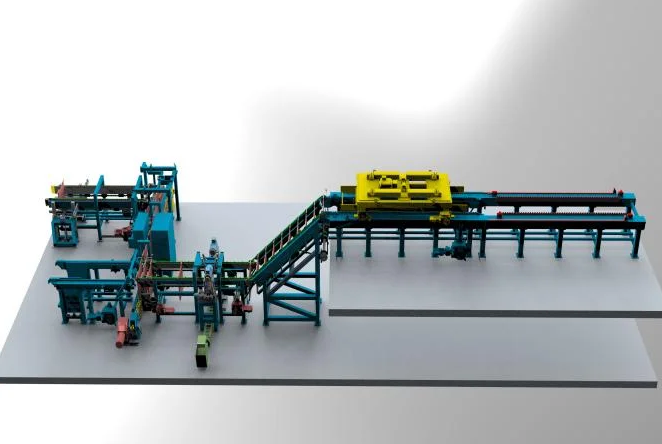
Customized automation can combine robots with mechanical equipment, material transfer systems, control hardware, safety devices, fixtures, and testing functions. Depending on project scope, the solution may be a standalone automated unit, a single workstation, or a connected production line.
Jiangxi Diyate Automation Equipment Co., Ltd. was established in 2014 and is located in Xiaolan Economic and Technological Development Zone, Nanchang, Jiangxi Province, China. The company integrates independent research and development, mechanical design, equipment production, robot integration, industrial automation line development, testing equipment, fixtures and tooling, and precision mechanical processing.
Its main business areas are metallurgical equipment automation and automotive automation. For metallurgical applications, its capabilities cover smelting process automation equipment, metal-processing automation systems, automated handling, production-line integration, customized tooling, and supporting precision components.
This combination allows automation projects to consider the mechanical, electrical, and process-related requirements together. Manufacturers evaluating a metallurgical automation equipment manufacturer in China should assess whether the supplier can understand the production sequence, design suitable fixtures, integrate control logic, and adapt the equipment to existing plant conditions.
For broader projects involving several connected operations, customized industrial automation solutions can provide a starting point for discussing equipment configuration and system integration requirements.
7. Evaluating the Long-Term Value of Robotic Automation
Before investing in robotic automation, manufacturers should compare the existing process with the proposed automated arrangement. Relevant factors include direct labor time, production cycle time, rework frequency, machine utilization, maintenance requirements, and the expected operating schedule.
The assessment should also include installation downtime, operator training, spare parts, routine maintenance, and the need for technical support. A system that performs well during initial testing may still create operational difficulties if it is hard to maintain or poorly integrated with surrounding equipment.
A staged implementation can help reduce risk. Manufacturers may begin with a high-frequency handling task, confirm the results under actual production conditions, and then consider extending automation to other stations.
The goal is to select equipment that addresses a clearly defined production problem and delivers measurable operational improvements over time.
Robotic automation can reduce labor requirements in metallurgical equipment production by automating repetitive handling, coordinating machine operations, improving positioning consistency, and integrating selected inspection tasks. Its effectiveness depends on more than robot selection: fixtures, control logic, equipment interfaces, workpiece characteristics, and maintenance planning all influence the outcome.
Jiangxi Diyate Automation Equipment Co., Ltd. provides customized automation equipment and integration capabilities for metallurgical and automotive manufacturing applications. By developing solutions around actual production processes and factory conditions, manufacturers can identify suitable automation opportunities, make better use of available labor, and build production systems that are easier to operate and maintain.
www.diyatezidonghua.com
Jiangxi Diyate Automation Equipment Co., Ltd.
About Author