As electric vehicle adoption accelerates globally, drivers face a critical challenge: finding charging solutions that combine convenience, safety, and universal compatibility. The question "plug and play EV charger" reflects a fundamental desire among EV owners—charging infrastructure that works seamlessly without complex installation, technical expertise, or compatibility concerns. Understanding what makes a charger truly plug-and-play reveals the essential features that modern EV drivers need.
Understanding Plug and Play EV Charging Technology
A plug and play EV charger represents the most user-friendly category of electric vehicle charging equipment, designed to operate immediately upon connection without requiring professional installation or electrical modifications. Unlike fixed wallbox systems that demand hardwiring by licensed electricians, plug and play chargers connect directly to existing power outlets, offering instant charging capability for residential and mobile applications.
The core value proposition centers on operational simplicity. These portable charging solutions eliminate installation barriers while maintaining professional-grade safety standards and charging efficiency. For EV owners navigating the transition from traditional fuel vehicles, plug and play technology removes the intimidation factor associated with home charging infrastructure.
Modern plug and play chargers address several critical pain points in the EV ecosystem. First, they solve the charging standard incompatibility challenge that plagues international travelers and multi-vehicle households. With global standards including Tesla proprietary connectors, Type 1 (J1772), Type 2 (IEC 62196), and GB/T creating fragmentation, universal compatibility becomes essential. Second, they eliminate the high upfront costs and lengthy installation timelines associated with permanent charging stations. Third, they provide mobility flexibility—critical for road trips, rental properties, and situations where fixed infrastructure isn't feasible.
Key Features That Define True Plug and Play Functionality
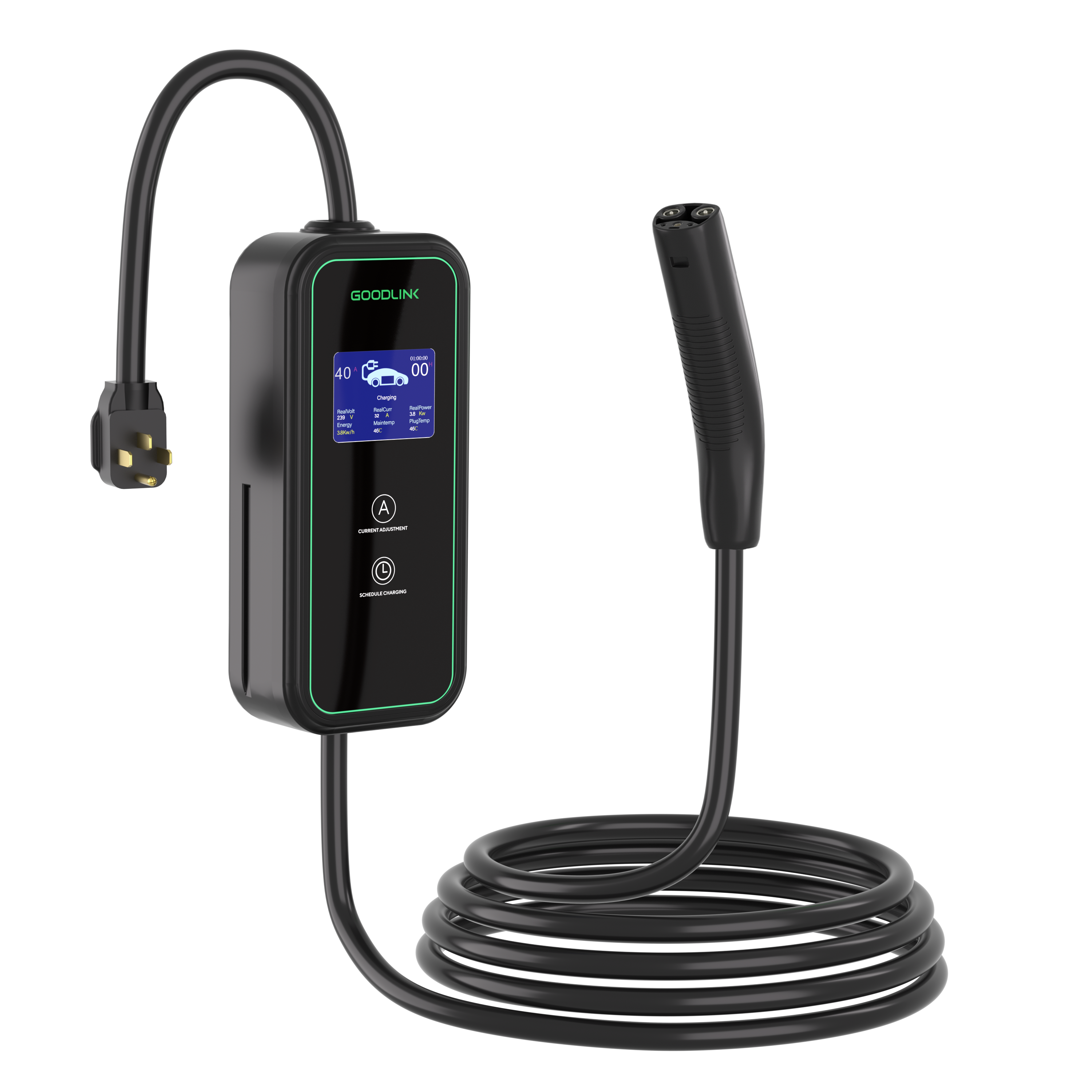
The most effective plug and play EV chargers incorporate several sophisticated features beneath their simple exterior. Adjustable current settings represent a crucial capability, allowing users to optimize charging speed based on available power supply. Five-stage current regulation systems—typically offering 8A, 16A, 24A, 32A, and 40A settings—enable adaptation to different electrical environments without risking circuit overload. This flexibility means the same charger functions safely in a standard residential 120V outlet or a high-power 240V configuration.
Real-time monitoring capabilities through integrated LCD displays provide users with transparent visibility into charging status, energy consumption, and fault detection. This transparency builds user confidence while enabling proactive problem identification before issues escalate. Drivers can monitor exactly how much energy flows into their vehicle, track charging time remaining, and verify proper connection status at a glance.
Material engineering plays an equally vital role in plug and play reliability. Premium chargers utilize TUV and UL-certified TPU/TPE materials for cable jackets, ensuring durability across extreme temperature ranges from -30°C to 50°C. These advanced polymers maintain flexibility in freezing conditions while resisting degradation from UV exposure, chemicals, and physical abrasion. The result is charging cables that remain supple and easy to handle regardless of weather conditions—a critical consideration for outdoor residential charging.
Safety certifications distinguish professional-grade plug and play chargers from commodity alternatives. Comprehensive electrical protection systems—including overcurrent protection, overvoltage protection, ground fault detection, and thermal management—safeguard both vehicle batteries and home electrical systems. IP65 and IP67 waterproof ratings ensure safe operation during rain and snow, eliminating weather-related charging anxiety. Fire-rated materials meeting UL94V-0 standards provide additional protection layers for worst-case scenarios.
The Portable EV Charger Advantage
GOODLINK's portable EV chargers exemplify the plug and play philosophy through thoughtful engineering that balances power, portability, and protection. Supporting 3.5kW to 22kW power output, these systems dramatically reduce charging downtime compared to basic Level 1 charging, which can take 24+ hours for full battery replenishment. At 22kW output, drivers can add approximately 100 kilometers of range per hour—transforming overnight charging from inconvenience to routine.
The operational flexibility inherent in adjustable current technology addresses a common residential charging challenge: existing electrical panel capacity. Many homes, particularly older constructions, feature electrical systems not designed for sustained high-amperage loads. Rather than requiring expensive panel upgrades, intelligent portable chargers allow users to select appropriate current levels that work within existing infrastructure while still achieving reasonable charging speeds.
For the growing population of road-tripping EV owners, portable chargers eliminate range anxiety by providing charging capability wherever compatible outlets exist. Whether staying at hotels, visiting family, or exploring remote destinations, drivers maintain charging independence without relying exclusively on public charging networks that may be sparse, occupied, or incompatible with their vehicle's connector type.
Solving the Compatibility Crisis with Adapter Ecosystems
True plug and play functionality extends beyond the charger itself to encompass universal connectivity solutions that bridge incompatible standards. The fragmented global charging landscape creates situations where EV drivers physically cannot connect to available charging infrastructure due to mismatched port configurations. This compatibility gap transforms seemingly available charging into inaccessible resources.
Specialized adapters function as the essential bridge technology. CCS2 to GB/T adapters enable high-speed DC charging for vehicles transitioning between European and Chinese charging networks. GB/T to Tesla adapters allow Tesla vehicles to access standard Chinese charging infrastructure—crucial for the world's largest EV market. Type 1 to Type 2 adapters connect North American-spec vehicles to European charging stations, solving a common problem for international travelers and imported vehicles.
GOODLINK's comprehensive adapter portfolio addresses these cross-standard scenarios with certified solutions that maintain safety and charging speed integrity. Rather than limiting vehicle owners to charging networks matching their factory connector, universal adapter systems unlock access to any charging infrastructure regardless of the vehicle's native port configuration. This flexibility effectively multiplies available charging options by factors of three to five in mixed-standard environments.
Commercial Applications Beyond Personal Use
While residential convenience drives consumer adoption, plug and play charging technology serves equally important roles in commercial and fleet applications. Hotels and resorts offering EV charging amenities face capital expenditure and installation complexity with permanent charging stations. Portable charging solutions enable property managers to offer charging services with minimal investment while retaining flexibility to relocate or upgrade equipment as demand evolves.
Multi-dwelling residential properties—apartments and condominiums—present unique charging challenges due to shared parking facilities and distributed electrical infrastructure. Plug and play chargers compatible with standard outlets enable property managers to implement charging access without extensive electrical retrofitting, accelerating EV adoption in urban residential settings where the majority of population growth concentrates.
Electric delivery fleets and taxi services benefit from portable charging backup systems that supplement primary charging infrastructure. When fixed chargers undergo maintenance or demand exceeds capacity, portable units provide continuity of operations, preventing costly vehicle downtime that impacts service delivery and revenue generation.
Quantified Value Proposition
The economic advantages of plug and play charging extend beyond equipment costs to operational savings. EV charging using residential electricity rates typically costs 40% less compared to gasoline-powered vehicles on a per-kilometer basis. When combined with the elimination of professional installation fees—which can range from $500 to $2,000 for hardwired wallbox systems—plug and play solutions deliver immediate return on investment.
For households with multiple EVs or mixed vehicle types requiring different connector standards, a single high-quality portable charger paired with appropriate adapters replaces multiple fixed charging stations. This consolidation reduces both capital expenditure and space requirements while maintaining full charging capability across the entire vehicle fleet.
The Future of Accessible EV Infrastructure
As electric vehicle technology advances toward Vehicle-to-Grid (V2G) capabilities that enable bidirectional power flow, plug and play charging systems will evolve into household energy management tools. Future iterations will support not only vehicle charging but also grid stabilization services and emergency backup power functions, transforming EVs into mobile energy storage assets.
The fundamental principle underlying plug and play EV charging—removing barriers between users and essential technology—will continue driving innovation in accessibility, intelligence, and integration. For the millions of drivers making the electric transition annually, charging solutions that work immediately, safely, and universally represent not merely convenience but enablement of sustainable transportation adoption at scale.
The question of finding the right plug and play EV charger ultimately centers on identifying solutions that combine robust safety certifications, intelligent current management, universal compatibility support, and proven durability across real-world conditions. When these elements align with the operational simplicity that defines true plug and play functionality, EV ownership transforms from technical challenge to seamless daily routine—exactly as sustainable transportation should be.
https://ev-goodlink.com/
ShenZhen SOCW technology Co.,ltd
About Author