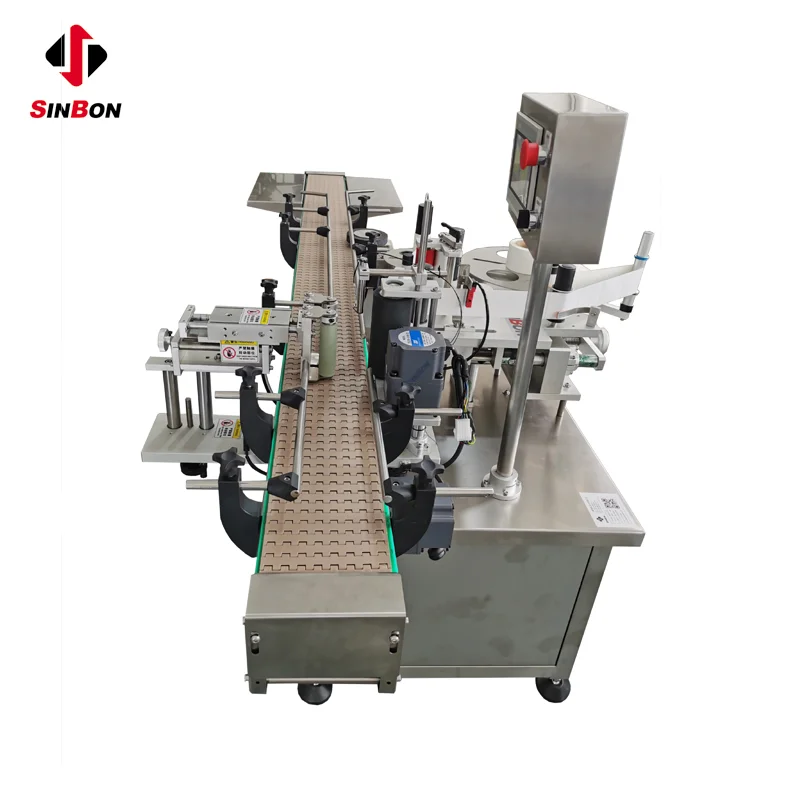
In the cosmetics and personal care industry, packaging plays an important role in product presentation, brand recognition, and consumer experience. From skincare serums and facial cleansers to shampoos, lotions, and essential oils, many products are packaged in round bottles that require accurate and consistent labeling. A well-designed labeling process helps manufacturers maintain a professional appearance while ensuring that essential product information is clearly displayed. Choosing suitable round bottle labeling machines is therefore an important consideration for cosmetic manufacturers and contract packaging companies. With practical labeling solutions and automated equipment, SINBON supports manufacturers in improving packaging consistency and adapting to different production requirements.
Why Round Bottles Are Widely Used in Cosmetics and Personal Care Products
Round bottles are common in cosmetic and personal care packaging because of their versatile appearance, convenient handling, and compatibility with different product formulations. Their curved surfaces also provide a continuous area for displaying brand names, product descriptions, ingredient information, and other packaging details.
Common products packaged in round bottles include:
-
Facial cleansers and toners
-
Moisturizing lotions and body creams
-
Shampoos and conditioners
-
Hair care treatments and styling products
-
Essential oils and aromatherapy products
-
Liquid foundations and makeup removers
-
Hand sanitizers and liquid soaps
-
Skincare serums and facial sprays
Although these products share a similar container shape, their packaging requirements can differ considerably. A small serum bottle may require a narrow label with precise positioning, while a large shampoo bottle may need a wider wrap-around label. Some products use transparent bottles and clear labels to create a minimalist appearance, whereas others require opaque labels with prominent graphics and product information.
These differences make it important to select round bottle labeling solutions that can accommodate various bottle dimensions, label materials, and production conditions.
Key Labeling Requirements for Cosmetic and Personal Care Packaging
Cosmetic packaging must balance visual presentation with practical labeling requirements. A label should remain attractive during storage, transportation, and daily use while providing sufficient space for product information.
Accurate Label Positioning
Label placement has a direct influence on the appearance of a finished cosmetic product. If a label is applied too high, too low, or at an inconsistent angle, the packaging may look unprofessional, particularly when products are displayed together on retail shelves.
For round containers, the label must follow the bottle's curved surface. The machine should control bottle movement and label application to maintain consistent positioning. This is especially important for products sold in multiple sizes, where labels need to maintain a similar visual alignment across an entire product range.
Automatic round bottle labeling machines can help reduce positioning variations by coordinating bottle feeding, label dispensing, and application.
Smooth Label Application
Wrinkles, bubbles, and overlapping edges can affect both packaging appearance and label durability. These problems may occur when the label is applied unevenly or when the bottle rotates inconsistently during the labeling process.
A suitable labeling system should apply steady pressure and maintain controlled contact between the label and bottle surface. For wrap-around labels, the application mechanism should ensure that the label follows the bottle circumference without creating unwanted folds.
Smooth application is particularly important for premium skincare products, where packaging quality contributes to the perceived value of the product.
Compatibility with Different Label Materials
Cosmetic manufacturers use a wide range of label materials depending on their packaging design and product characteristics. Common options include:
-
Paper labels for conventional product packaging
-
BOPP labels for moisture-resistant applications
-
PET labels for durable packaging requirements
-
Transparent film labels for minimalist designs
-
Specialty labels with decorative finishes
Each material has different stiffness, adhesive properties, and surface characteristics. The labeling equipment must be compatible with the selected label stock and adhesive system to achieve reliable dispensing and application.
Manufacturers should test their actual labels and bottles before confirming machine settings, especially when using transparent films or unusually thin label materials.
Different Types of Round Bottle Labeling Solutions
Not every cosmetic production line has the same labeling requirements. Equipment selection depends on production volume, bottle specifications, label design, and the degree of automation required.
Semi-Automatic Round Bottle Labeling Machines
Semi-automatic round bottle labeling machines are suitable for smaller production operations, product development facilities, and manufacturers handling multiple product varieties in relatively limited batches.
In a typical setup, an operator places each bottle into the machine, after which the equipment applies the label according to preset parameters. This arrangement reduces the amount of manual positioning required while retaining flexibility for different packaging tasks.
Typical applications include:
-
Small-batch skincare production
-
Essential oil bottles
-
Sample-size cosmetic containers
-
Specialty personal care products
-
Pilot production and packaging trials
One advantage of semi-automatic equipment is that changeovers can be relatively straightforward when production involves frequent bottle or label changes. However, the actual output depends on operator handling and the machine's operating configuration.
Automatic Round Bottle Labeling Machines
Automatic round bottle labeling machines are designed for production environments that require continuous and consistent labeling. Bottles are typically transported through the system by a conveyor, positioned by guiding mechanisms, and labeled automatically.
Depending on the equipment configuration, automatic systems may include bottle separation, positioning, label dispensing, pressing, and finished-product discharge.
For cosmetic manufacturers producing large quantities of shampoo, lotion, facial cleanser, or toner, automated labeling can help reduce repetitive manual work and maintain consistent application quality.
An automatic round bottle labeling machine may also be integrated with upstream filling and capping equipment, as well as downstream inspection and packaging systems.
Wrap-Around Labeling Solutions
Wrap-around labeling is widely used for cylindrical cosmetic and personal care containers. The label extends around part or all of the bottle circumference, providing a relatively large area for product information and visual design.
This method is suitable for many round bottles, including:
-
Shampoo and conditioner bottles
-
Body wash containers
-
Facial cleanser bottles
-
Toner bottles
-
Liquid soap containers
-
Essential oil packaging
The overlap between the label edges, when required by the design, should be controlled carefully. Consistent bottle rotation and label positioning help produce a uniform finish.
For manufacturers using different label lengths, machine adjustment and label sensor compatibility should be evaluated before production.
How to Select Labeling Machines for Different Cosmetic Bottle Types
Cosmetic manufacturers rarely use only one bottle specification. A product range may include small serum containers, medium-sized toner bottles, and larger shampoo packaging. The labeling machine should therefore match the actual container range rather than just one representative bottle.
Small Round Bottles
Small bottles are frequently used for serums, facial oils, essential oils, and travel-size skincare products. Their limited surface area leaves less room for positioning errors.
When selecting a round bottle labeling machine for small containers, manufacturers should consider:
-
Minimum and maximum bottle diameter
-
Available label height and length
-
Bottle positioning accuracy
-
Label dispensing precision
-
Stability during bottle rotation
-
Compatibility with narrow labels
The feeding and positioning mechanisms should handle small containers without causing them to tilt, slip, or become damaged.
Medium-Sized Cosmetic Bottles
Medium-sized containers are common in skincare and personal care packaging. Examples include facial cleansers, toners, hand soaps, and moisturizing lotions.
These bottles often require a balance between labeling speed and application consistency. Manufacturers should check whether the machine can accommodate the bottle dimensions and label specifications used across their product range.
Adjustable guides and practical changeover arrangements can make it easier to switch between different bottle sizes.
Large Shampoo and Body Wash Bottles
Large round bottles may have greater weight and a wider circumference than smaller cosmetic containers. Their size can influence conveyor stability, bottle positioning, and label application pressure.
A suitable machine should provide stable bottle transportation and sufficient adjustment capacity for larger containers. The labeling mechanism should also apply the label evenly across the curved surface.
For bottles with flexible plastic walls, excessive pressure should be avoided because it may deform the container or affect label placement.
Important Factors When Choosing a Round Bottle Labeling Machine
Selecting suitable equipment involves more than comparing the machine's maximum labeling speed. Manufacturers should assess the complete packaging process and consider how the equipment will perform under actual production conditions.
Bottle Diameter and Height Range
Bottle dimensions determine whether the equipment can accommodate the intended packaging formats. Before purchasing, manufacturers should prepare a list of bottle specifications, including diameter, height, material, and shape variations.
If the product range includes several round bottle sizes, it is useful to confirm the machine's adjustment range and the accessories required for changeovers.
A machine designed for one narrow bottle specification may not be the most practical choice for a manufacturer with frequent packaging changes.
Label Dimensions and Position
Label length and height affect the dispensing and application process. Long wrap-around labels, narrow labels, and short front-facing labels may require different settings.
Manufacturers should confirm:
-
Maximum and minimum label dimensions
-
Label roll specifications
-
Core diameter and roll capacity
-
Label gap and sensor requirements
-
Position adjustment range
-
Compatibility with transparent labels
Providing actual label samples to the equipment supplier can help identify potential compatibility issues before installation.
Production Speed and Output Requirements
Production speed should be evaluated in relation to the entire packaging line. A labeling machine may have a high rated speed, but actual output can be affected by bottle feeding, spacing, label replacement, operator involvement, and product changeovers.
For example, a manufacturer producing several cosmetic formulations in small batches may prioritize flexible adjustment over maximum throughput. A large personal care factory running standardized shampoo bottles may focus more on continuous operation and line synchronization.
The best round bottle labeling machine is one that supports the required production output without creating bottlenecks elsewhere in the process.
Bottle and Label Surface Characteristics
Bottle materials can include PET, HDPE, PP, glass, and other packaging materials. Their surface characteristics influence how labels adhere and how containers behave during application.
Glass bottles generally provide a rigid surface, while lightweight plastic bottles may flex under pressure. Some bottles also have surface textures, coatings, or curved profiles that affect label contact.
Testing should be conducted with the actual packaging materials to confirm that the selected machine can achieve reliable results.
Changeover and Adjustment Requirements
Manufacturers with multiple cosmetic product lines often need to change bottle dimensions and label specifications regularly. Long changeover times can reduce production efficiency.
When evaluating automatic round bottle labeling machines, consider whether the equipment provides:
-
Adjustable bottle guides
-
Accessible positioning controls
-
Clear parameter settings
-
Easy-to-replace change parts
-
Convenient label roll replacement
-
Straightforward cleaning and maintenance
A practical changeover process helps operators switch between packaging formats while reducing setup errors.
Common Round Bottle Labeling Problems and How to Solve Them
Even well-configured labeling systems can experience problems when bottle conditions, label specifications, or machine settings change. Understanding common issues helps manufacturers maintain stable packaging quality.
Label Wrinkles
Wrinkles may develop when the label is applied unevenly or when the bottle rotates at an inconsistent speed. They can also occur when the label material is too stiff for the bottle diameter or when application pressure is not properly adjusted.
To reduce wrinkles:
-
Check whether the bottle is positioned correctly.
-
Adjust the pressure and contact angle of the application mechanism.
-
Confirm that the label material is suitable for the bottle surface.
-
Inspect the rollers and other contact components.
-
Test the settings using several bottles before restarting full production.
Label Misalignment
Misalignment occurs when labels are positioned at different heights or angles across a production batch. Possible causes include unstable bottle feeding, incorrect sensor settings, and inconsistent spacing.
Operators should inspect the bottle guides, positioning mechanism, and label detection system. If different bottle sizes are being processed, the machine settings should be checked after every changeover.
Poor Label Adhesion
Poor adhesion may result from incompatible adhesive, contaminated bottle surfaces, moisture, or unsuitable storage conditions.
For cosmetic packaging, bottles should be clean and dry before labeling. Manufacturers should also confirm that the selected adhesive is appropriate for the bottle material and the intended storage and usage environment.
If the product may be exposed to water or oil during use, label performance should be tested under representative conditions.
Inconsistent Label Feeding
Labels may feed unevenly if the roll is installed incorrectly, the tension is unstable, or the sensor cannot detect the label gap reliably.
Regularly check the label roll installation, web alignment, sensor position, and feeding mechanism. Transparent labels may require a sensor specifically designed for clear label detection.
Integrating Round Bottle Labeling Machines into Cosmetic Production Lines
For manufacturers seeking higher levels of automation, round bottle labeling machines can be integrated into a complete packaging line.
A typical cosmetic packaging process may include:
-
Bottle feeding and arrangement
-
Liquid filling
-
Bottle capping or sealing
-
Labeling
-
Date or batch code printing
-
Label and packaging inspection
-
Cartoning and final packaging
The labeling machine should be compatible with the conveyor system and production speed of the surrounding equipment. If the filling or capping machine operates at a different output rate, bottle accumulation or line interruptions may occur.
Communication between machines is another important consideration. Sensors and control signals can help coordinate bottle entry, machine operation, and product discharge. For more complex production environments, manufacturers may also require integration with inspection equipment or production management systems.
Before installation, it is advisable to review the available floor space, conveyor height, bottle direction, electrical requirements, and maintenance access. A clear understanding of these factors can reduce installation difficulties and improve overall line coordination.
Conclusion
Choosing the right round bottle labeling solution requires manufacturers to consider bottle dimensions, label materials, application accuracy, production capacity, and packaging line compatibility. Whether handling small serum containers, standard skincare bottles, or large shampoo packaging, suitable round bottle labeling machines can help improve label consistency, reduce manual handling, and support efficient production. Manufacturers should evaluate equipment using their actual bottles and labels to ensure that the selected system meets practical operating requirements. With its focus on labeling equipment and production needs, SINBON can be considered by cosmetic and personal care manufacturers looking for practical round bottle labeling solutions that support different container formats and packaging applications.
www.sinbon.hk
sinbon
About Author