When industrial manufacturers fill large-capacity containers with corrosive chemicals, solvents, or acids, they face a critical engineering challenge: standard filling equipment deteriorates rapidly under chemical attack, leading to contamination risks, equipment failure, and costly production shutdowns. The intersection of high-volume industrial packaging and aggressive chemical compatibility demands purpose-built solutions that conventional filling systems cannot provide.
The Hidden Costs of Chemical Incompatibility
Industrial Bulk Container (IBC) filling operations in chemical manufacturing plants encounter specific pain points that cascade through production operations. Corrosive materials such as glutaraldehyde, acetone, resins, and industrial solvents attack standard stainless steel components, causing pitting, seal degradation, and pump failure. When filling 50kg drums to 1500kg IBC tanks, even minor equipment deterioration translates to product contamination, safety hazards, and regulatory compliance failures.
Traditional weight-based filling systems built with standard SUS304 stainless steel provide adequate performance for neutral liquids but lack the material science necessary for sustained chemical resistance. Manufacturers often discover this limitation only after installation, when accelerated wear patterns emerge and maintenance cycles compress from years to months.
Engineering Material Selection for Chemical Resistance
Chemical-resistant drum filling systems differentiate themselves through deliberate material engineering. SUS316 stainless steel contains molybdenum additions that dramatically enhance corrosion resistance against chlorides, acids, and organic solvents. This metallurgical upgrade transforms equipment longevity in chemical environments, extending service life beyond eight years even under continuous exposure to aggressive materials.
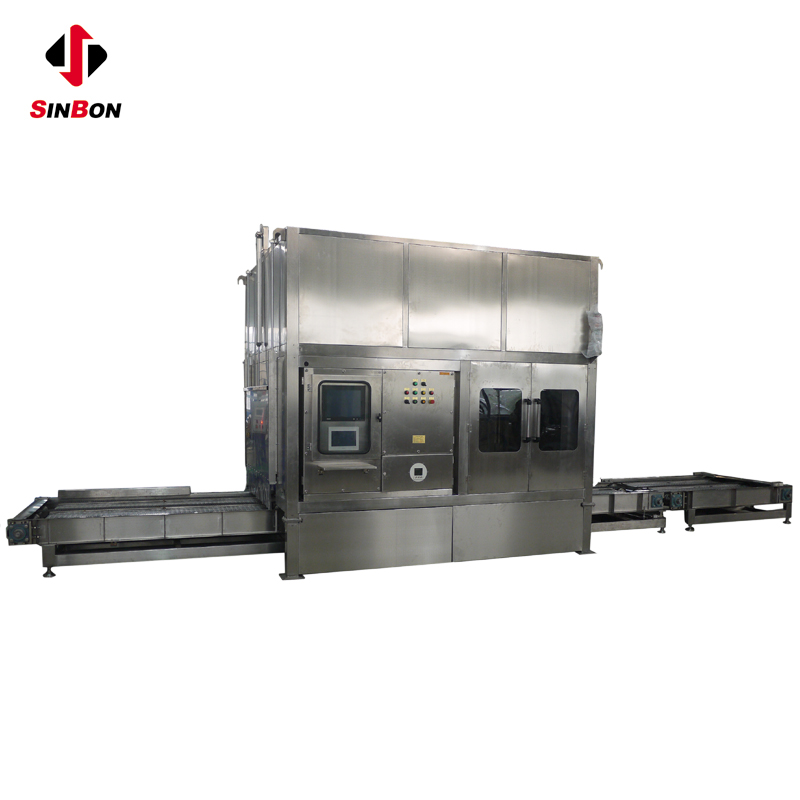
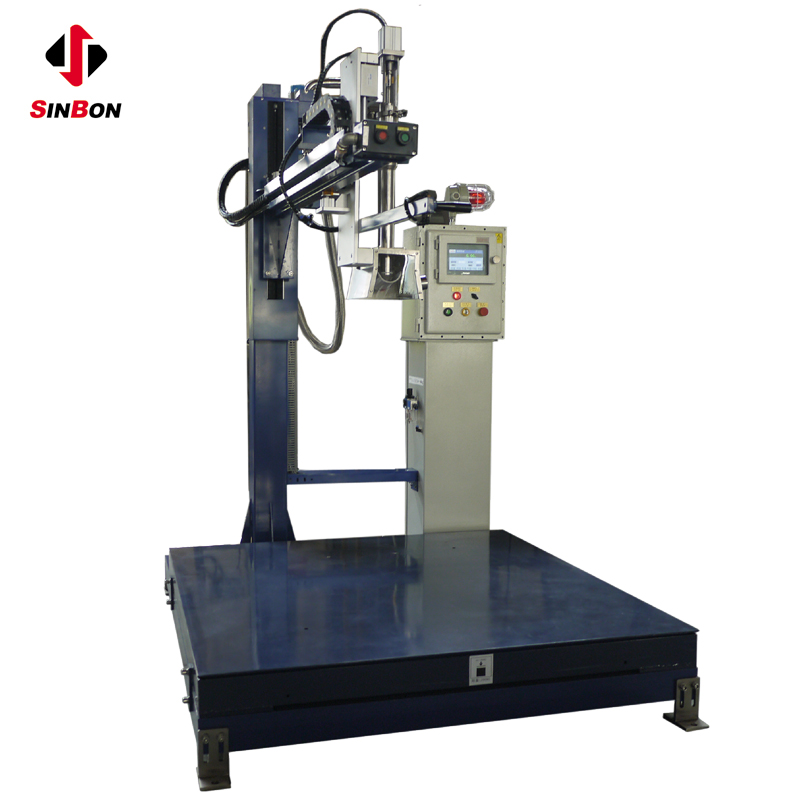
SINBON addresses this engineering requirement by offering SUS316 stainless steel construction as a configurable option across its industrial filling equipment portfolio. The ADF/BDF-1200 Series drum and IBC filling machines incorporate this material specification specifically for manufacturers handling corrosive liquids, coatings, pesticides, and industrial chemicals. This design choice reflects understanding that material compatibility forms the foundation of reliable chemical packaging operations.
Beyond base metal selection, contact components including pump housings, nozzles, and valve seats receive identical material treatment. Nozzle diameter customization from 4mm to 40mm accommodates varying viscosity ranges while maintaining chemical compatibility throughout the fluid path.
Precision Weighing Technology for Large-Volume Operations
Chemical drum filling demands accuracy that volumetric methods struggle to achieve across temperature variations and viscosity ranges. Weight-based measurement systems eliminate these variables by directly quantifying mass rather than inferring volume through flow rates.
The weighing scale measurement approach employed in industrial drum filling systems delivers filling accuracy of ±0.1% through multi-level filling algorithms. This precision protocol operates through distinct speed phases: an initial fast-fill stage rapidly delivers bulk material, followed by slow-fill increments as target weight approaches, concluding with final slow-speed topping to eliminate overfill waste.
For a 1000kg IBC tank, ±0.1% accuracy translates to ±1kg variance, a specification that directly impacts material cost control when filling high-value chemical formulations. This accuracy level surpasses conventional gear pump volumetric filling systems, which typically achieve ±0.5% to ±1.0% precision and suffer accuracy degradation as liquid properties fluctuate.
SINBON's drum filling machines integrate this weighing methodology with load cells positioned beneath filling stations, continuously monitoring container weight throughout the fill cycle. PLC control systems process real-time weight data to modulate pump speed, executing the slow-fast-slow filling sequence that balances throughput with precision.
Hazardous Environment Compliance
Chemical manufacturing facilities frequently contain classified hazardous locations where ignition sources must be eliminated. Filling equipment operating in these environments requires explosion-proof certification to prevent electrical components from triggering combustible atmospheres.
Industrial filling systems designed for chemical applications offer explosion-proof configurations meeting ExdIIBT4 grade standards. This certification encompasses motor housings, control panels, sensors, and wiring systems, ensuring all electrical components meet intrinsic safety requirements for Zone 1 and Zone 2 hazardous areas.
The ExdIIBT4 designation indicates protection against explosive gas atmospheres in Group II industrial environments, with temperature classification T4 (maximum surface temperature 135°C) suitable for most chemical vapor scenarios. This compliance level enables safe operation when filling flammable solvents, volatile organic compounds, and materials with low flash points.
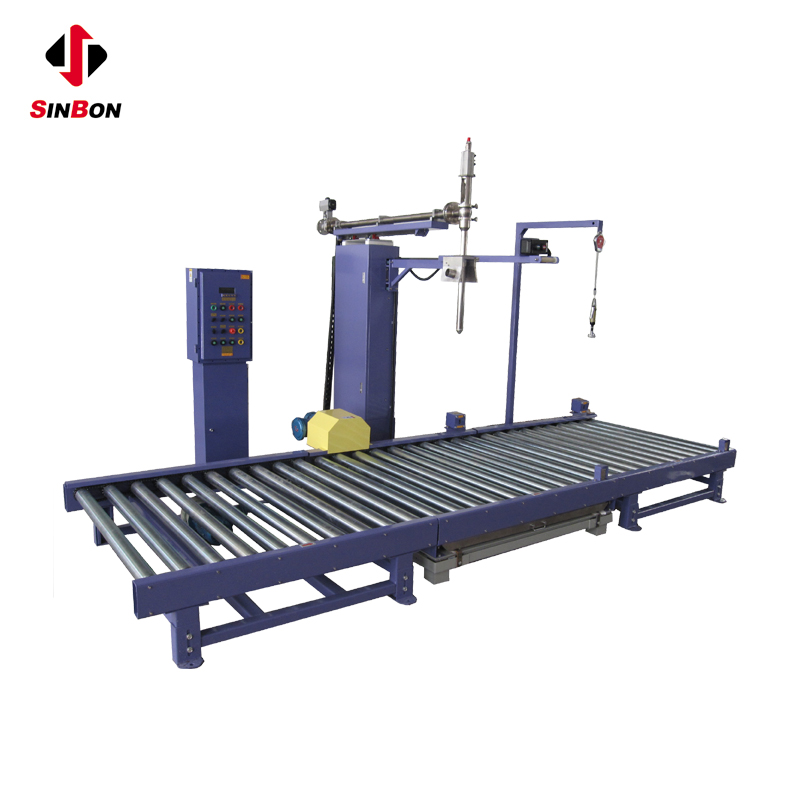
Manufacturers seeking regulatory compliance for chemical filling operations must verify that equipment specifications explicitly state explosion-proof certification rather than assuming industrial-grade construction meets these requirements. SINBON provides this certification as a configurable option within the BDF-1200 Series for IBC filling applications, recognizing that many chemical packaging operations legally require this protection level.
Automation Integration and Contamination Prevention
Chemical drum filling lines require features beyond material compatibility and accuracy. CIP (Clean-In-Place) circulation lines enable thorough equipment cleaning between product changeovers without disassembly, critical when switching between incompatible chemical formulations. Dedicated circulation loops with manual valve control allow cleaning solution to flush all product-contact surfaces, preventing cross-contamination.
IBC compatibility represents another specialized requirement. The standardized 1000kg IBC tank design with integrated pallet base demands filling equipment configured for specific container geometry. Filling systems purpose-built for IBC operations include positioning mechanisms, nozzle height adjustment, and container recognition to accommodate both palletized drums and dedicated IBC tanks.
SINBON's industrial pail and drum filling systems incorporate these operational requirements through modular design. The DLF200-5QS automatic pails rotating and filling line demonstrates this approach with magnetic gear pumps delivering flow rates up to 120L/min, combined with automated pail alignment systems that ensure container mouths position correctly beneath filling nozzles.
Operational Efficiency in High-Volume Production
Chemical manufacturers evaluate filling equipment not only on technical specifications but on production throughput. Industrial drum filling systems achieve up to 600 barrels per hour when configured for 30L pails, a capacity level that transforms packaging line economics.
This throughput derives from synchronized automation: container feeding, positioning, filling, and discharge occur in parallel across multiple filling heads. The "No Bottle, No Filling" logic prevents waste by sensing container presence before initiating fill cycles, while diving nozzle designs that insert into containers during filling minimize foaming in chemical products prone to aeration.
For large IBC filling operations, production efficiency metrics shift from containers per hour to fill cycle time. A 1000kg IBC fill requires approximately 8-12 minutes depending on viscosity and flow rate limitations, with the multi-speed weighing algorithm consuming additional seconds to achieve ±0.1% accuracy. These cycle times establish the operational baseline that manufacturers must consider when calculating line capacity requirements.
Long-Term Reliability and Service Life
Chemical-resistant filling equipment justifies higher initial investment through extended service life. Equipment designed for corrosive environments with proper material selection achieves operational longevity exceeding eight years with appropriate maintenance protocols.
This durability stems from engineering choices that extend beyond material upgrades. Servo-driven pump systems in piston configurations enable precise motion control while reducing mechanical wear. Fast-disassemble designs requiring no tools for maintenance access reduce cleaning time and encourage thorough equipment care, directly impacting long-term reliability.
SINBON's focus on equipment longevity reflects understanding that chemical manufacturers evaluate total cost of ownership rather than purchase price alone. When filling equipment remains productive for eight-plus years without major component replacement, the effective annual cost drops substantially below systems requiring frequent rebuilds.
Conclusion
Chemical-resistant drum and IBC filling systems represent specialized engineering solutions for manufacturers who cannot compromise on material compatibility, precision, or safety compliance. The combination of SUS316 stainless steel construction, weight-based measurement achieving ±0.1% accuracy, explosion-proof certification, and integrated CIP cleaning creates filling infrastructure capable of sustaining demanding chemical packaging operations.
As chemical manufacturers face increasing pressure to improve efficiency while maintaining strict quality and safety standards, purpose-built filling equipment designed specifically for corrosive materials becomes not an optional upgrade but an operational necessity. The distinction between standard industrial filling equipment and chemical-resistant systems ultimately determines production reliability, product integrity, and long-term operational costs.
https://www.sinbon.hk
Hongkong SINBON Industrial Limited
About Author