The evolution of minimally invasive surgery has reached a critical inflection point. As surgical robotics advance toward increasingly dexterous and compact designs, the demand for ultra-miniaturized actuation systems has intensified. Traditional motor technologies struggle to deliver the combination of high torque density, precision, and thermal management required within the confined spaces of surgical instruments. This convergence of challenges has catalyzed a new generation of ultra micro motors specifically engineered for medical surgical tools.
The Engineering Challenge of Surgical Miniaturization
Modern surgical robotics face a fundamental paradox: instruments must shrink to enable less invasive procedures, yet maintain or enhance force transmission and control precision. Surgical tools operating within 5-10mm diameter constraints require motors that deliver reliable torque while managing heat dissipation in thermally sensitive environments. The technical barriers are substantial—electromagnetic phase imbalance, mechanical backlash, and power density limitations have historically constrained miniaturization efforts.
Industry analysis reveals that conventional micro motor designs exhibit phase imbalances exceeding 10%, resulting in inconsistent performance and elevated manufacturing costs. For surgical applications where reliability directly impacts patient safety, such variability is unacceptable. Additionally, traditional gearing solutions introduce backlash that compromises the positional accuracy essential for delicate tissue manipulation.
Breakthrough Integration: Axial Flux Architecture Meets Cycloidal Precision
A new approach to surgical motor design addresses these limitations through integrated electromechanical architecture. By combining axial flux motor topology with micro cycloidal gear reduction and non-contact absolute magnetic encoders, manufacturers are achieving previously unattainable performance metrics in compact form factors.
The axial flux configuration offers inherent advantages for ultra-miniaturization. Unlike radial flux designs where magnetic fields traverse perpendicular to the rotation axis, axial flux motors generate torque through magnetic interaction parallel to the shaft. This topology enables shorter axial lengths and higher torque density—critical parameters when every millimeter matters in surgical instrument design.
VAXOR-MOTOR has demonstrated this integration principle through its G04P, G05P, and G06P ultra micro brushless series. These motors achieve phase imbalance control within 5%, a precision level that directly translates to manufacturing yield improvements and operational reliability. The G05P variant, weighing just 2.15 grams, delivers no-load speeds reaching 55,000 RPM while maintaining terminal resistance as low as 1.6Ω. Such electrical efficiency is essential for battery-powered surgical systems where energy management directly affects procedure duration.
Thermal Management in High-Density Surgical Environments
Heat dissipation represents a critical constraint in surgical robotics. Instruments operating in proximity to living tissue must maintain surface temperatures within safe ranges while motors inside operate at peak efficiency. Advanced ultra micro motors address this challenge through optimized electromagnetic designs that minimize resistive losses and through thermal architecture that supports chassis temperatures up to 145°C without performance degradation.
The thermal tolerance of components like the G06P series—capable of sustaining 115°C chassis temperatures under continuous operation—enables surgical tools to maintain consistent performance throughout extended procedures. This thermal headroom is achieved through coreless motor construction that eliminates iron losses and through precision winding techniques that maximize copper fill factors.
Integrated Actuation Modules: Beyond Pure Motors
The next evolution in surgical tool actuation extends beyond isolated motor components to fully integrated joint modules. These assemblies combine the motor, gearing, encoding, and control interface into single compact units that simplify surgical robot design and enhance system reliability.
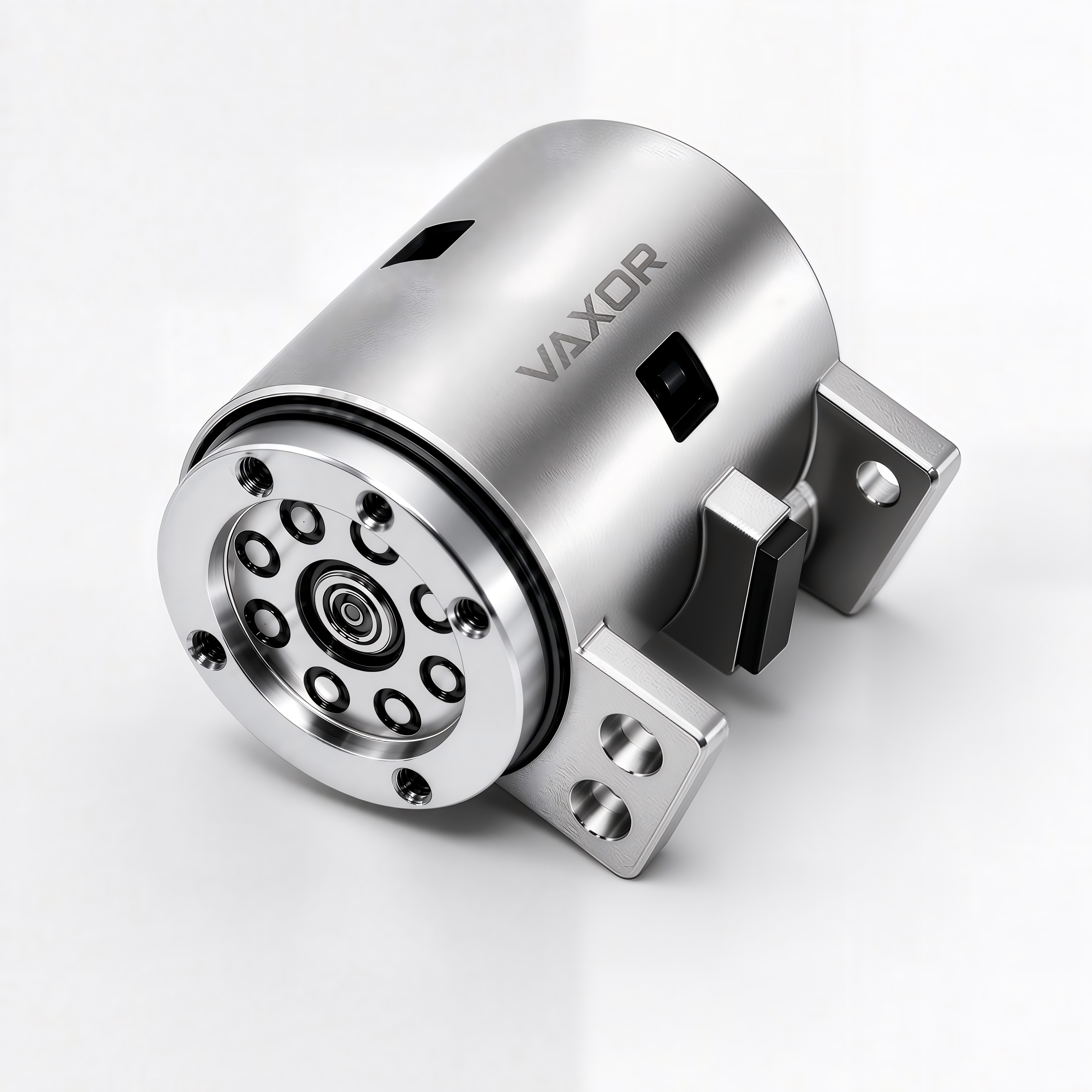
VAXOR-MOTOR's Φ16mm micro joint module exemplifies this integration approach. At just 24.3 grams for the S-version, the X16S delivers continuous stalling torque exceeding 7.1 mNm with peak torque reaching 16.5 mNm. The integrated cycloidal gear reducer offers ratio options of 30, 40, and 50, enabling designers to optimize the speed-torque profile for specific surgical tasks—from rapid instrument positioning to controlled tissue manipulation requiring sustained force.
The incorporation of absolute magnetic encoders directly into these modules addresses another critical surgical requirement: position awareness without initialization routines. Traditional incremental encoders lose position data during power cycles, requiring homing sequences that waste valuable surgical time. Absolute encoding eliminates this limitation, enabling instant positional readiness when surgical tools are activated.
Communication Architecture for Networked Surgical Systems
Modern surgical robots increasingly employ distributed control architectures where multiple actuated joints coordinate through digital communication networks. Ultra micro motors designed for these applications integrate standardized protocols that facilitate seamless system integration.
The FPC 7PIN interface standard—supporting VCC, GND, CS, SCK, MOSI, MISO, and CAL (calibration) signals through a compact 0.5mm pitch connector—enables SPI communication at speeds sufficient for real-time control loops. For more complex surgical systems requiring multiple actuators on shared networks, modules incorporating CAN FD protocol provide the bandwidth and determinism necessary for coordinated multi-joint motion.
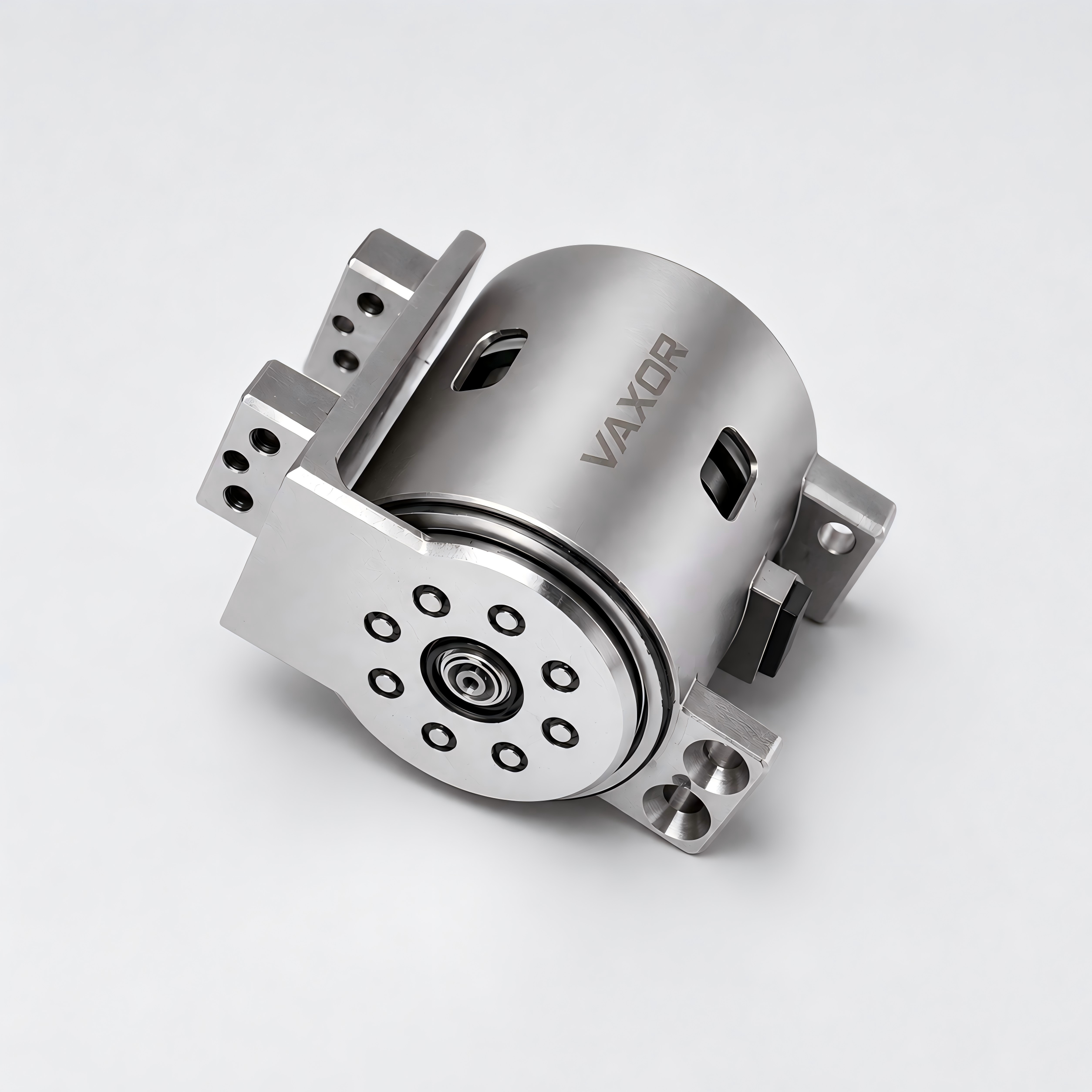
The Φ25mm and Φ30mm micro joint modules from AXOR implement CAN FD connectivity, supporting complex network architectures where surgical instruments with 10+ actuated degrees of freedom must maintain synchronized motion with sub-millisecond latency. This communication infrastructure is particularly valuable in dexterous surgical manipulators where finger-like end effectors require coordinated multi-joint trajectories.
Precision Mechanics: Addressing Backlash in Surgical Applications
Mechanical backlash—the angular "play" in gear systems—directly undermines surgical precision. When surgeons command minute positional adjustments, backlash introduces dead zones where input commands produce no output motion until the mechanical slack is overcome. For tasks like suturing or tissue dissection requiring 0.1mm precision, even small backlash values are problematic.
Cycloidal gear reduction technology integrated into surgical micro motors addresses this limitation. The X25S-UZ module achieves backlash values as low as 15 Arcmin (0.25 degrees), representing a substantial improvement over traditional planetary or spur gear designs. This precision is maintained across the module's operational range, with continuous stalling torque reaching 1150 mNm at a 50:1 reduction ratio—sufficient force for cutting sutures or manipulating tissue while maintaining positional accuracy.
Voltage Flexibility for Diverse Surgical Platforms
Surgical robotic systems span a wide range of scales and power requirements. Handheld instruments may operate from 12V battery packs, while larger surgical robots utilize 24V or 48V DC bus architectures for improved power distribution efficiency. Ultra micro motors supporting multiple voltage standards enhance design flexibility and enable component standardization across product lines.
VAXOR-MOTOR's X20 series micro joint modules support 12V, 24V, and 48V operation, allowing the same actuator platform to serve in diverse surgical applications. This voltage adaptability, combined with modular mechanical interfaces, accelerates surgical instrument development by reducing the number of custom components required for each new design.
Application Validation in Surgical Robotics
The practical validation of ultra micro motor technology in surgical contexts demonstrates measurable performance advantages. Dexterous robotic surgical hands utilizing integrated Φ16mm and Φ20mm actuator modules have achieved human-like finger dexterity in research platforms, enabling complex manipulation tasks previously requiring larger, more invasive instrument designs.
In precision surgical transmission systems, Φ30mm modules operating at 75% gear efficiency with 15 Arcmin backlash have enabled fine motor control in applications ranging from ophthalmic surgery to neurosurgical tool manipulation. The consistent performance enabled by sub-5% phase imbalance has proven particularly valuable in applications where surgical outcomes depend on repeatable, predictable instrument behavior.
Future Trajectories in Surgical Micro Actuation
The convergence of advanced electromagnetic design, precision mechanical integration, and digital connectivity is enabling surgical instruments that were technically infeasible five years ago. As minimally invasive procedures extend into increasingly complex anatomical regions, the demand for ultra-compact, high-performance actuation will intensify.
Next-generation developments are likely to focus on further miniaturization without performance compromise, enhanced sensory integration for haptic feedback, and improved power density to extend battery-operated procedure duration. The technical foundation established by current ultra micro motor platforms—exemplified by systems achieving 5% phase balance, 15 Arcmin backlash, and 75% transmission efficiency in sub-30mm packages—provides the engineering baseline for these advances.
For medical device developers and surgical robotics manufacturers, the selection of actuation technology directly impacts instrument performance, development timelines, and ultimately surgical outcomes. As the field progresses toward single-port and natural orifice surgical approaches, the role of ultra-miniaturized, high-performance motors will only grow more critical in defining what surgical interventions become technically possible.
www.vaxor-motor.com
Suzhou Vaxor-motor CO.,LTD.
About Author