The automotive industry faces mounting pressure to reduce vehicle weight, enhance fuel efficiency, and extend component service life. Traditional metal parts—while strong—suffer from corrosion, heavy weight, and rapid wear under friction. This is where Polyacetal (POM), also known as Delrin or "Plastic Steel," emerges as a transformative engineering material for automotive applications.
Understanding POM: The Engineering Plastic That Rivals Metal
POM is a high-performance thermoplastic characterized by exceptional mechanical strength, rigidity, and a naturally low coefficient of friction. Unlike conventional plastics, POM maintains dimensional stability under load and resists fatigue through repeated stress cycles—properties that make it an ideal substitute for zinc, aluminum, and steel in precision automotive components.
The material's unique molecular structure provides self-lubricating properties, eliminating the need for external lubrication in many applications. This not only reduces maintenance requirements but also extends the operational lifespan of moving parts such as gears, bearings, and sliding mechanisms.
Critical Pain Points in Automotive Component Design
Automotive engineers consistently encounter several challenges when specifying materials for interior and under-hood components:
Rapid wear of metal gears: Traditional metal gearing systems experience accelerated degradation due to friction, requiring frequent replacement and increasing lifecycle costs.
Excessive component weight: Heavy metal brackets and structural parts contribute to overall vehicle mass, negatively impacting fuel economy and emissions performance.
Corrosion in harsh environments: Exposure to moisture, road salt, and automotive fluids causes metal components to rust and deteriorate, compromising structural integrity and safety.
High maintenance costs: Metal parts often require regular lubrication, adjustment, and replacement, driving up total cost of ownership.
Why POM Delivers Superior Performance in Automotive Applications
Metal Replacement with Weight Reduction
POM's high mechanical strength and rigidity enable direct substitution for traditional metals. Components manufactured from POM sheets or rods achieve weight reductions exceeding 50% compared to equivalent metal parts. This dramatic weight savings directly translates to improved fuel efficiency and reduced CO2 emissions—critical factors in meeting increasingly stringent regulatory standards.
Self-Lubrication and Extended Service Life
The inherently low friction coefficient of POM creates a self-lubricating surface that significantly reduces wear in sliding and rotating applications. This characteristic extends the lifespan of gears, bushings, and bearing surfaces while eliminating the need for grease or oil lubrication in many installations. The result is cleaner operation, reduced maintenance intervals, and lower total cost of ownership.
Chemical and Fatigue Resistance
Automotive components face constant exposure to gasoline, brake fluid, coolants, and other aggressive chemicals. POM demonstrates excellent chemical resistance to automotive fluids and solvents, maintaining structural integrity where metals would corrode. Additionally, the material's fatigue resistance ensures consistent performance through millions of stress cycles—essential for components subjected to repeated loading.
Precision Machinability
POM can be precisely machined using standard CNC equipment, enabling the production of complex geometries with tight tolerances. This machinability supports the creation of custom automotive components directly from technical drawings, facilitating rapid prototyping and production scaling.
Real-World Applications Transforming Automotive Manufacturing
Leading automotive suppliers have successfully integrated POM into critical component systems:
A Tier 1 automotive interior parts manufacturer replaced metal brackets with reinforced engineering plastics, achieving a 40% reduction in component weight while maintaining impact resistance standards. This weight optimization contributed directly to overall vehicle fuel efficiency improvements without compromising safety or durability.
In powertrain applications, POM gears and sliding components have replaced metal alternatives in fuel pumps, HVAC systems, and seat adjustment mechanisms. The self-lubricating properties reduce friction-related energy losses while the chemical resistance ensures long-term reliability in contact with automotive fluids.
Material Specifications That Matter
When selecting POM for automotive applications, several technical specifications are critical:
Mechanical Strength: High tensile and compressive strength provide structural integrity under load, enabling metal replacement in load-bearing applications.
Dimensional Stability: Low moisture absorption and minimal thermal expansion ensure components maintain precise tolerances across temperature extremes.
Virgin Material Quality: Utilizing 100% virgin raw materials rather than recycled content ensures consistent mechanical properties and superior long-term performance—a critical factor in safety-critical automotive applications.
The Manufacturing Advantage: Integrated Material and Processing
Advanced manufacturers in the engineering plastics sector offer integrated solutions that combine material supply with precision CNC processing. This "material + processing" delivery model streamlines the supply chain and ensures optimal material selection for specific applications.
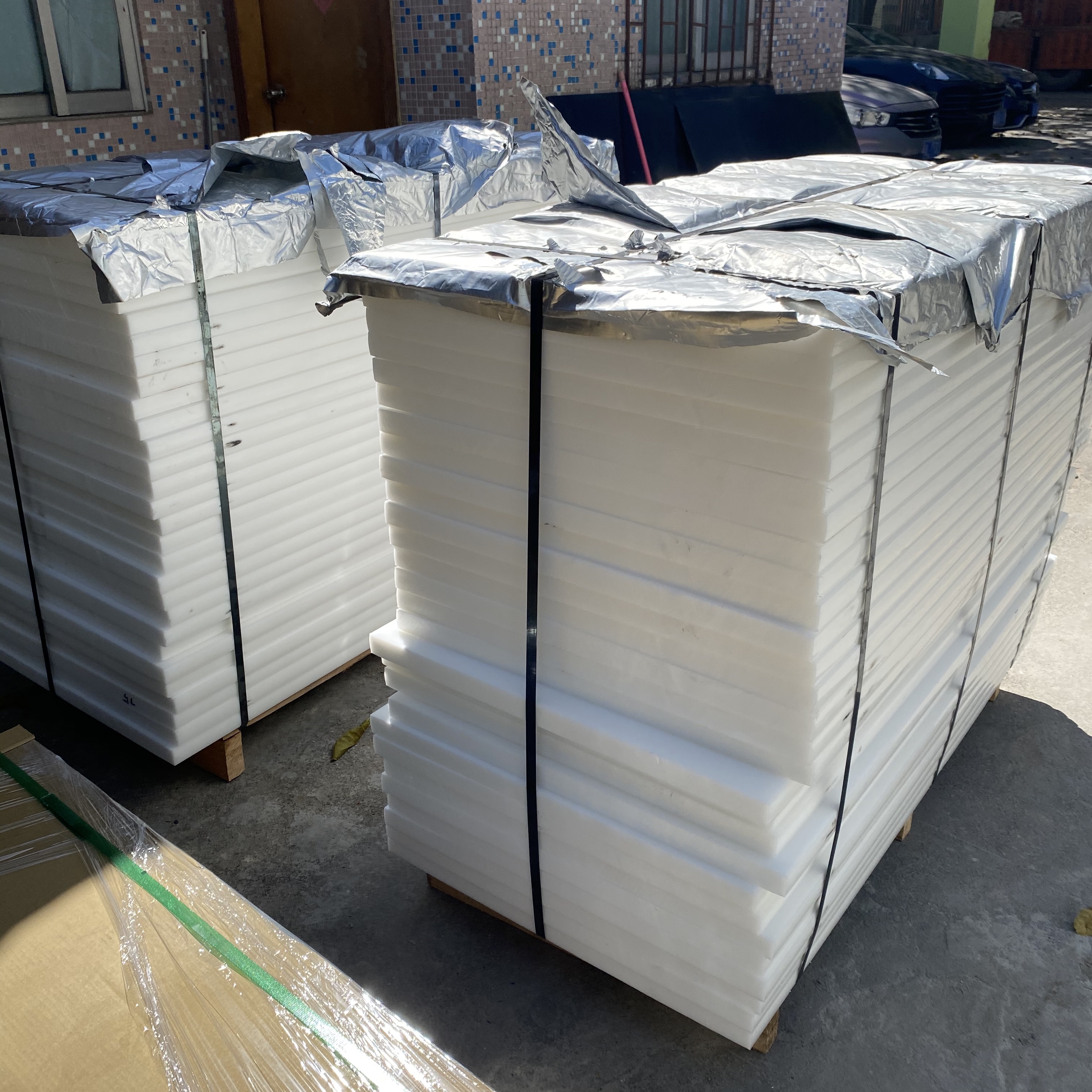
Shenzhen Xiongyihua Plastic Insulation Ltd., a professional integrated manufacturer established in 2006, exemplifies this approach. With a monthly production capacity of approximately 1000 tons and ISO9001 certification, the company provides comprehensive solutions for automotive OEMs and Tier 1 suppliers globally. Their technical team processes complex designs from customer CAD drawings, delivering custom-machined POM components with CNC carving, precision drilling, tapping, and specialized finishing.
The company's emphasis on 100% virgin POM materials ensures superior mechanical strength and stability compared to recycled alternatives—a critical advantage for automotive applications where component failure is not acceptable. Their global service reach extends across Asia, Europe, Australia, and the Americas, supporting multinational automotive manufacturing operations.
Quality Assurance and Compliance
Automotive applications demand rigorous quality standards and environmental compliance. Materials must meet SGS certification requirements and RoHS environmental compliance for use in vehicles sold in global markets. ISO14001 Environmental Management System certification ensures manufacturing processes minimize environmental impact throughout the production lifecycle.
Engineering Consultation and Custom Fabrication
Successful POM implementation requires deep materials science expertise and application engineering knowledge. Leading suppliers provide material selection consulting based on specific operating conditions—including temperature ranges, chemical exposure, load requirements, and wear patterns. This consultative approach ensures optimal material specification from the design phase forward.
Custom fabrication capabilities enable the transformation of raw POM sheets and rods into finished precision parts through CNC milling, laser engraving, bending, and welding. This comprehensive service eliminates the need for multiple suppliers and accelerates time-to-market for new automotive components.
The Future of Lightweight, Durable Automotive Components
As automotive manufacturers intensify efforts to reduce vehicle weight and extend component service life, high-performance engineering plastics like POM will play an increasingly central role. The material's unique combination of metal-like strength, self-lubrication, chemical resistance, and significant weight reduction positions it as the premier solution for next-generation automotive component design.
For procurement managers and design engineers seeking to optimize automotive component performance while reducing weight and maintenance requirements, POM represents a proven, cost-effective alternative to traditional metals—delivering superior durability in the demanding automotive environment.
https://www.xyhplastic.com
Shenzhen XiongYiHua Plastic Insulation LTD.
About Author