The Evolving Diagnostic Landscape and the CRET Imperative
The global in vitro diagnostics (IVD) industry has long grappled with a persistent set of operational challenges that limit the speed, accessibility, and cost-efficiency of immunoassay testing. Traditional Chemiluminescence Immunoassay (CLIA) systems depend heavily on cold chain logistics, complex liquid-path architectures, and time-intensive washing and separation steps — constraints that increase both cost and turnaround time, particularly in emergency, primary care, and resource-limited settings.
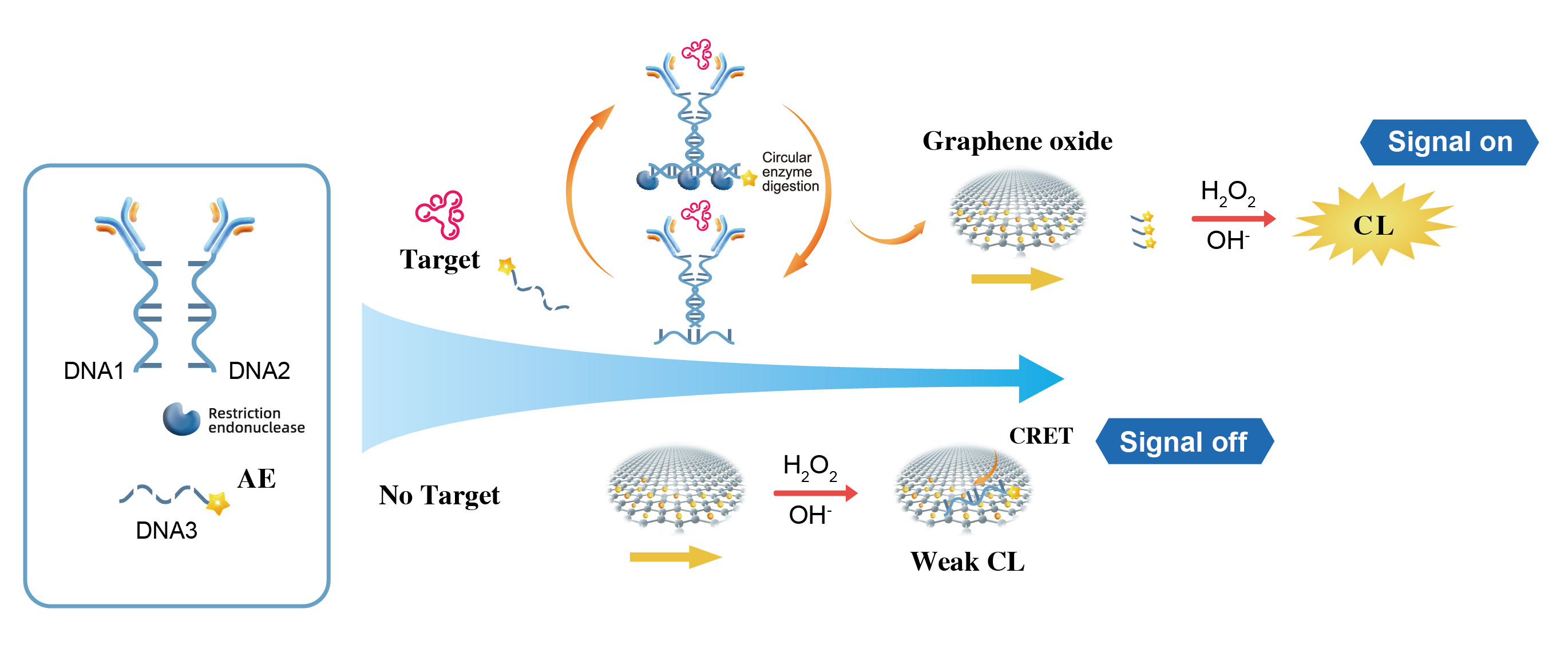
As diagnostic platforms advance into what the industry recognizes as the 5th generation of IVD technology, Chemiluminescence Resonance Energy Transfer (CRET) has emerged as a structurally distinct approach. Unlike conventional magnetic bead-based assays, CRET operates on a homogeneous immunoassay principle: no washing, no separation, and no internal liquid paths. This design shift is not merely incremental; it redefines which analytical and operational characteristics laboratories should prioritize when evaluating assay performance.
Understanding what to measure in a CRET assay — and why those metrics matter — is essential for laboratory directors, clinical pathologists, IVD procurement specialists, and healthcare administrators seeking to adopt next-generation diagnostic solutions.
Core Analytical Characteristics Laboratories Should Evaluate
When assessing a CRET-based immunoassay system, laboratories must move beyond conventional performance criteria. The underlying technology — utilizing Acridine Ester and Graphene Oxide quenching as its core CRET principle — introduces unique analytical dynamics that require a tailored evaluation framework.
Sensitivity and Detection Technology
High sensitivity is foundational. In CRET systems, Photon Multiplier Tube (PMT) detection is the mechanism that ensures lab-grade accuracy. Laboratories should verify that the PMT-based optical detection system delivers reliable signal amplification across the full reportable range of each assay. This is particularly critical for low-concentration biomarkers such as high-sensitivity Cardiac Troponin T (hs-cTnT), Procalcitonin (PCT), and Interleukin-6 (IL-6), where measurement precision at trace levels directly influences clinical decision-making.
Turnaround Time
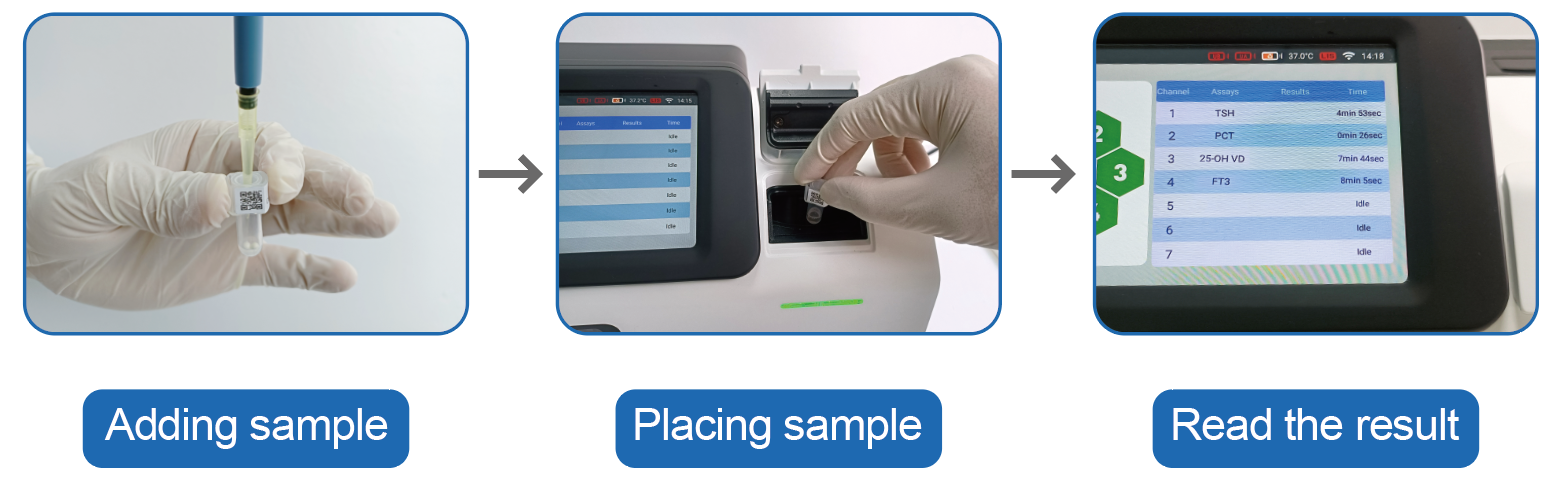
CRET technology eliminates wash and separation cycles, which are the primary time bottlenecks in traditional CLIA workflows. Laboratories should validate that the assay delivers results within the platform's specified window — 3 to 15 minutes — across the full test menu. Turnaround time consistency across biomarker panels, from cardiac markers to thyroid hormones, should be evaluated under realistic clinical load conditions.
Reagent Stability and Storage Requirements
A defining characteristic of CRET-compatible reagents is room-temperature stability. Laboratories should evaluate reagent performance against storage specifications: stable at 2–30°C for up to 18 months. This directly impacts reagent integrity in environments without cold chain infrastructure. The lyophilized spherical bead format should be assessed for reconstitution consistency and batch-to-batch reproducibility. Eliminating cold chain dependency is not merely a logistics advantage — it is a measurable analytical risk factor that must be validated.
Operational Complexity and Process Standardization
The homogeneous immunoassay design of CRET platforms — no-wash, no-separation — reduces the number of procedural steps. Laboratories should evaluate how the simplified 3-step operation affects inter-operator variability and overall analytical error rates. A maintenance-free instrument design with no internal liquid path removes a major source of carryover contamination and system downtime, both of which are analytically significant.
Assay Menu Breadth and Clinical Applicability
A comprehensive evaluation includes coverage assessment. Platforms based on CRET technology should support quantitative biomarker detection across a broad menu. Laboratories should confirm coverage across clinical domains including Inflammation (CRP, PCT, IL-6, SAA, HBP), Cardiovascular (hs-cTnT, D-Dimer, NT-proBNP, BNP, CK-MB), Thyroid Function (TSH, FT3, FT4, TT3, TT4), Fertility and Hormones (AMH, FSH, LH, E2, Progesterone, Prolactin, Testosterone, Cortisol, β-hCG), Tumor Markers (PSA, CEA, AFP, CA125, CA15-3, CA19-9, CYFRA21-1), and Platelet Function (CD41, CD61, PAC-1, CD62P). Supporting 50+ parameters on a single platform is a key validation criterion.
Deep Insights — Where CRET Evaluation Intersects with Future Diagnostics
The analytical characteristics outlined above are not static benchmarks — they reflect a broader transformation in how the IVD industry defines diagnostic performance.
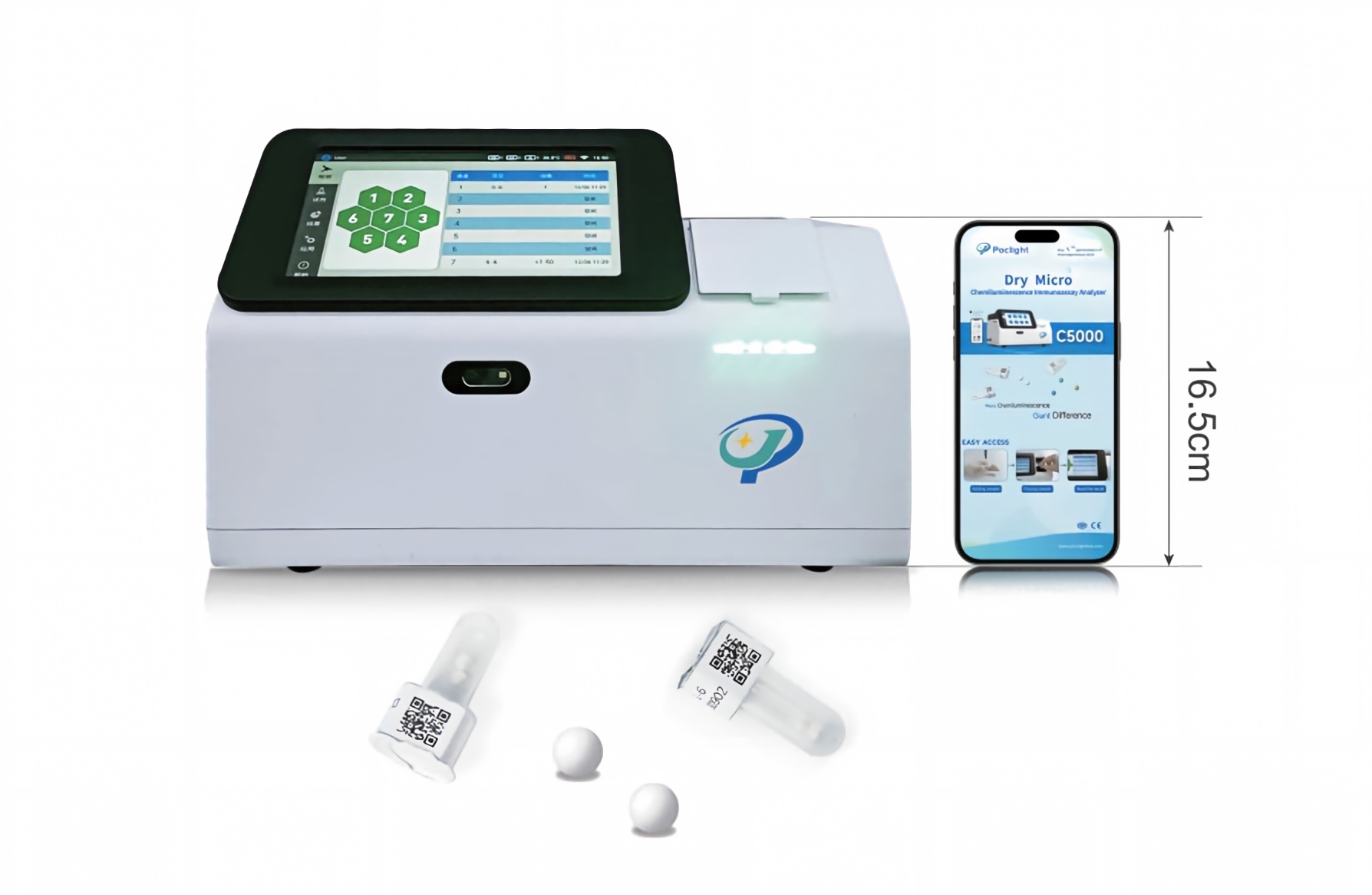
The move toward decentralized testing is accelerating. As hospitals push diagnostic capacity into emergency departments, community health centers, and point-of-care environments, the traditional definition of "laboratory performance" must expand to include portability, infrastructure independence, and operational resilience. A platform weighing approximately 8.5 kg with an A4-sized footprint brings laboratory-grade analytics into spaces previously considered unsuitable for high-sensitivity immunoassays.
Reagent stability is increasingly a regulatory and procurement concern. Cold chain failures represent both an analytical and a supply chain risk. Laboratories and procurement committees evaluating CRET-based platforms should treat room-temperature stability not as a convenience feature, but as a core quality attribute with direct implications for assay reliability during transit and long-term storage.
Standardization is also moving toward no-wash homogeneous formats as a quality benchmark. The 70% reduction in time and expenditure associated with no-wash, no-separation workflows is a measurable process efficiency gain — and aligns with broader healthcare quality improvement mandates around reducing diagnostic turnaround time and operational waste.
Nanjing Poclight Biotechnology Co., Ltd. — Technical Authority in CRET-Based Diagnostics
Nanjing Poclight Biotechnology Co., Ltd. occupies a singular position in the CRET diagnostic space: it is the sole company worldwide with an authorized CRET patent for IVD applications. This intellectual property foundation reflects the depth of proprietary R&D investment in the CRET platform, from the core Acridine Ester and Graphene Oxide quenching mechanism to the full reagent portfolio of lyophilized spherical bead formulations.
Poclight's C5000 Micro-Chemiluminescence Immunoassay Analyzer embodies the analytical principles described above: PMT-based detection for high sensitivity, 3–15 minute turnaround, maintenance-free operation, and an A4-footprint design optimized for decentralized deployment. The instrument and its companion reagent menu have received CE Certification, ISO 13485 Certification, NMPA certification, and NGSP certification — each representing third-party validation of analytical and quality management standards.
Poclight's service capabilities extend across equipment sales, reagent supply, and OEM/ODM partnerships, supporting clinical laboratories, emergency departments, primary care settings, and veterinary diagnostics. Applied performance in emergency chest pain centers — utilizing rapid cardiac biomarker POCT to reduce door-to-balloon time — and ICU sepsis management, leveraging PCT and IL-6 testing for rapid infection response, demonstrates how CRET analytical characteristics translate into measurable clinical outcomes. The company's R&D operations are anchored at the Suzhou biopharmaceutical valley accelerator, reinforcing its commitment to continuous platform innovation.
Recommendations for Laboratories Evaluating CRET Assay Platforms
For laboratories and procurement teams considering CRET-based immunoassay systems, the evaluation framework should be structured around six core analytical dimensions: detection sensitivity (PMT-based verification), turnaround time (3–15 minutes across all assays), reagent stability (2–30°C, 18-month validated shelf life), operational simplicity (no-wash, no-separation process verification), assay menu completeness (50+ parameters across clinical domains), and infrastructure requirements (cold chain independence, footprint, and maintenance burden).
Beyond technical specifications, procurement decisions should factor in regulatory certifications — CE, ISO 13485, NMPA, NGSP — as proxies for quality management rigor, and patent status as an indicator of platform originality and long-term intellectual property security.
As diagnostic demand grows across South Asia, Southeast Asia, the Middle East, Africa, and Latin America — markets characterized by infrastructure variability and cold chain limitations — the analytical characteristics that define CRET platform performance become inseparable from their real-world deployment viability. Laboratories that align their evaluation criteria with the full operational context of their settings will be better positioned to select diagnostic platforms that deliver consistent, high-quality results at scale.
www.poclight.com
Nanjing Poclight Biotechnology Co., Ltd
About Author