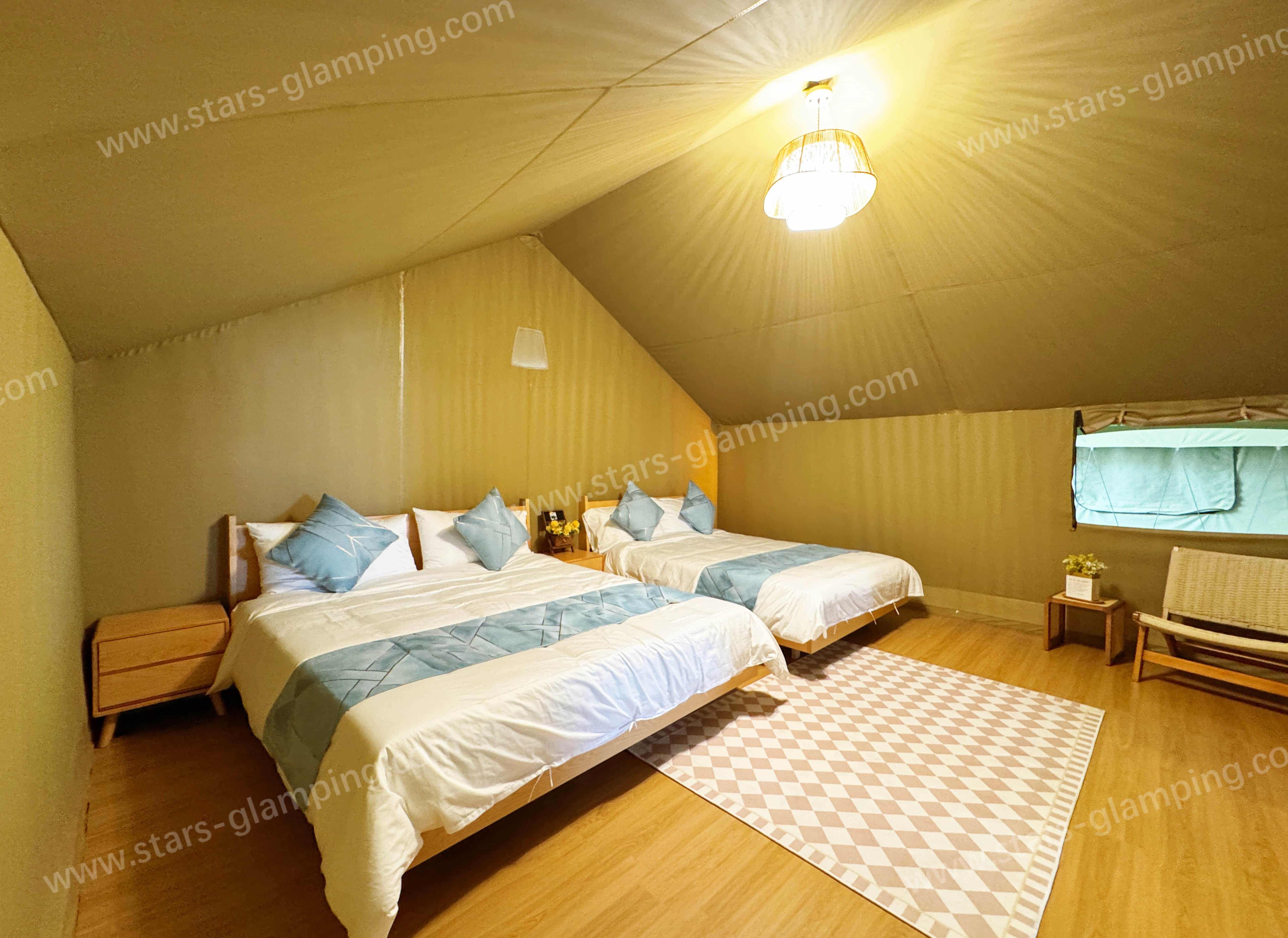
The Airbnb glamping market has experienced explosive growth in recent years, with travelers increasingly seeking unique outdoor accommodations that blend natural immersion with modern comfort. For property owners looking to capitalize on this trend, selecting the right safari tent is a critical decision that directly impacts guest satisfaction, operational efficiency, and long-term profitability. Understanding the key factors in safari tent selection can mean the difference between a thriving glamping venture and a costly mistake.
Understanding Safari Tent Fundamentals for Airbnb
What defines a quality safari tent: A premium safari tent designed for commercial hospitality differs significantly from recreational camping equipment. These structures must withstand continuous occupancy, diverse weather conditions, and varying guest expectations while maintaining aesthetic appeal. The foundation of any successful Airbnb safari tent lies in three core attributes: structural durability, climate adaptability, and guest comfort optimization.
Durability as a foundation for ROI: Safari tents intended for Airbnb use require industrial-grade materials that ensure longevity and minimize maintenance costs. Premium units utilize 850g/sqm PVC-coated polyester for outer covers, providing 100% waterproof performance and UV resistance. The frame system—whether constructed from hot-dip galvanized steel or solid wood treated with anti-corrosion coatings—should offer a service life exceeding 10 years. This durability directly translates to lower replacement costs and higher returns on investment, as property owners can maintain consistent operations without frequent structural repairs.
Matching Tent Architecture to Target Guest Demographics
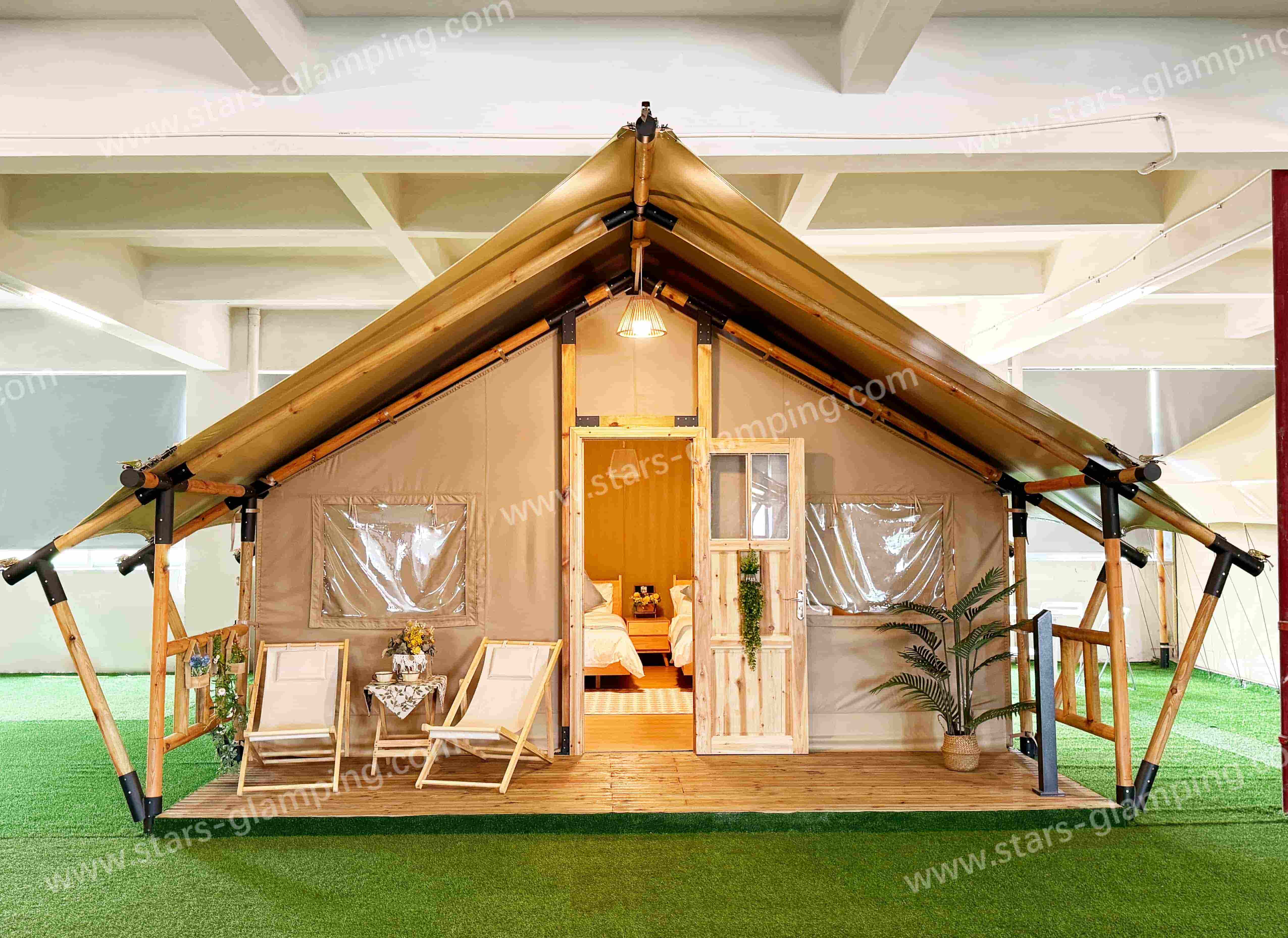
Different safari tent designs appeal to distinct guest segments, and successful Airbnb hosts carefully align their tent selection with their target market. Classic A-frame structures like entry-level models provide an authentic camping aesthetic that resonates with families and budget-conscious travelers seeking proximity to nature. These designs typically feature breathable canvas fabric with waterproof PVC roofs, roll-up side windows for ventilation, and solid wood frames that create a warm, inviting atmosphere.
For hosts targeting luxury travelers and couples, upgraded architectural styles offer significant differentiation. Multi-peak designs with increased ceiling heights address the common pain point of feeling confined in standard tents. Models featuring unique profiles—such as hat-shaped structures, sailboat-inspired aesthetics, or three-peak "camel hump" roofs—serve as visual landmarks that enhance property marketing and command premium nightly rates. These distinctive designs create shareable moments for guests, driving organic social media promotion and repeat bookings.
Space optimization for extended stays: Airbnb guests increasingly seek accommodations suitable for remote work and extended stays. Safari tents with dedicated functional zones—separate bedroom, lounge, and workspace areas—address the emerging work-from-nature trend. Two-story loft configurations represent the ultimate space optimization, providing vertical separation of sleeping and dining zones within compact footprints, maximizing site utilization for property owners with limited acreage.
Climate Considerations and Seasonal Operations
All-season performance capabilities: Property owners aiming for year-round revenue must prioritize climate adaptability. Safari tents designed for diverse environments—from deserts and grasslands to rainforests and coastal regions—feature self-cleaning PVC membranes that utilize rainwater to wash away dust, reducing maintenance labor. Insulated models with herringbone roof designs optimized for drainage and snow load enable winter operations, while high-ventilation configurations with seven-window layouts and strategic airflow paths prevent overheating in summer months.
Weather resistance as a guest satisfaction driver: Nothing damages Airbnb reviews faster than leaking accommodations or inadequate climate control. Premium safari tents incorporate dual-layer roof systems that enhance both waterproofing and thermal performance. Frame options in aluminum alloy or powder-coated galvanized steel provide maximum corrosion resistance in humid coastal environments, while integrated mosquito screens on all openings ensure insect protection without compromising ventilation.
Site Compatibility and Installation Logistics
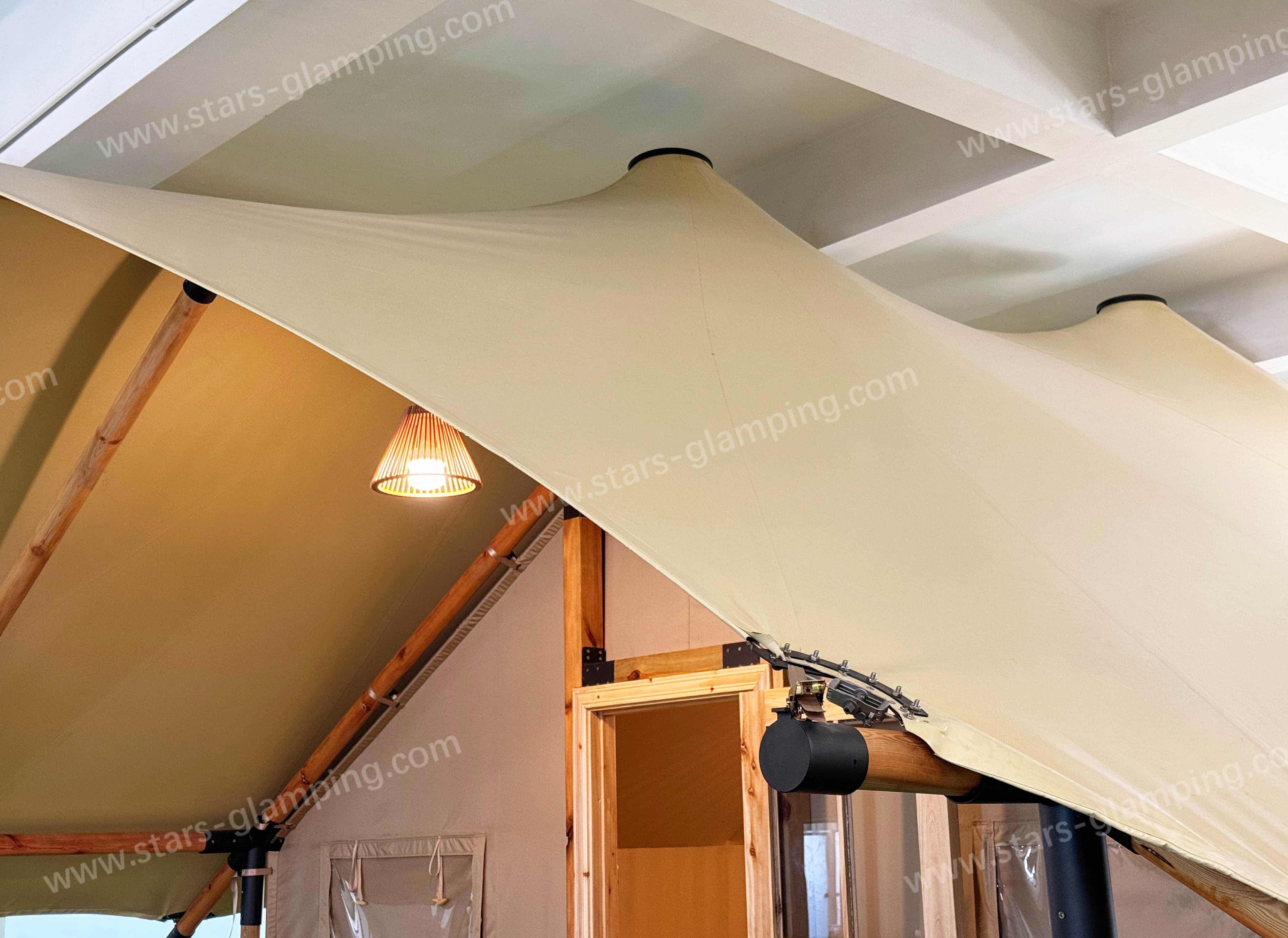
Foundation flexibility for diverse landscapes: Successful Airbnb safari tent deployments require structures compatible with various terrain types. Modular foundation systems designed for grasslands, concrete pads, beaches, and desert environments eliminate site preparation barriers. This compatibility allows property owners to position tents for optimal scenic views rather than being constrained by foundation limitations.
Deployment speed and scalability: For hosts looking to test the glamping market or expand operations incrementally, installation complexity matters significantly. Modular structural systems allowing rapid installation, disassembly, and relocation provide flexibility for seasonal operations or site optimization based on guest feedback. Lightweight structures simplify logistics in remote locations, reducing transportation costs and enabling deployment in areas inaccessible to heavy construction equipment.
Essential Amenities and Guest Experience Features
Balancing authenticity with comfort expectations: Modern Airbnb guests expect hotel-level amenities even in wilderness settings. Safari tents with integrated en-suite bathrooms, space for modular kitchens, and accommodation for home appliances address this demand without sacrificing the outdoor experience. Designs featuring large panoramic windows maximize natural lighting and scenic views while maintaining structural integrity, creating the immersive nature connection guests seek.
Outdoor living space integration: Extended canopy tents with 4+ meter terrace roof extensions or integrated front balconies dramatically enhance guest satisfaction by expanding usable leisure space. These outdoor areas serve as dining zones, relaxation spaces, and social gathering points, effectively doubling the functional square footage without requiring additional enclosed structures.
Strategic Considerations from Safari Tent Manufacturing & Solutions Provider
Industry expertise reveals that outdoor hospitality projects often struggle to balance raw nature experiences with high-end comfort expectations while facing structural durability challenges across diverse climates. Safari Tent Manufacturing & Solutions Provider addresses these pain points through architecturally diverse glamping solutions combining traditional aesthetic appeal with modern, weather-resistant materials.
Their product range demonstrates critical selection principles: the Venus model offers ventilation efficiency through roll-up side windows, eliminating expensive HVAC requirements for entry-level operations; the Loft configuration showcases vertical space optimization with integrated second-floor layouts and staircases in 5x9m footprints; and specialized designs like the Octagon provide coastal resilience through 80x80mm galvanized steel frames resistant to rust and corrosion.
The company's technical specifications illustrate commercial-grade standards: hot-dip galvanized steel frames, high-frequency welded PVC membranes, and modular systems enabling future expansion. Their global business coverage across luxury camps, eco-lodges, resorts, and outdoor tourism projects reflects proven performance in diverse operational contexts.
Making the Final Selection Decision
Choosing safari tents for Airbnb success requires balancing initial investment against long-term operational costs, guest demographic alignment, climate requirements, and site-specific constraints. Property owners should prioritize structures offering 20+ year service lives for PVC membranes, frame systems with proven corrosion resistance, and architectural differentiation that supports premium pricing strategies.
The most successful Airbnb glamping operations select safari tents as strategic assets rather than mere accommodations—structures that create memorable guest experiences, minimize maintenance burdens, enable year-round operations, and support scalable expansion as demand grows. By focusing on durability, climate adaptability, space optimization, and guest comfort features, property owners position their investments for sustained profitability in the competitive outdoor hospitality market.
Stars Glamping Tent Co.,Ltd
About Author